

 |
| The tea plants reap the "gifts from heaven" accumulated by over 60 days of enduring the cold of winter. |
"Hibernating" to preserve the essence.
Tea growers in Thai Nguyen often say that winter is the season when tea plants "sleep." But in reality, it's a sleep filled with restlessness. While tea plants only need about 35 to 37 days to sprout buds and offer a fresh, vibrant harvest during the year's harvest season, winter tea cultivation is a journey that is far more persistent and patient.
When the cold weather sets in, life seems to slow down. The tea plants shrink, growing slowly, taking up to 60 days—two long months, twice as long as the main tea crop—to ripen enough for harvest.
It is this slow pace, combined with the bone-chilling cold and harshness of nature, that forces the tea plant to turn inward, filtering and accumulating the finest essence of the land. Farmers informally call this "accumulating the essence," while science calls it the accumulation of supreme intrinsic nutrients.
Like fine wines that require time to ferment in dark cellars, or like plum blossoms that must endure the biting cold to bloom brilliantly, winter tea is the condensation of time.
Thanks to its extended growth cycle, winter tea buds become richer in flavor, with a deep aroma and a remarkably persistent sweet aftertaste. That's why winter tea is always so valuable. One kilogram of winter tea on the market today can be worth the same as five kilograms of seasonal tea.
It's not just about the price difference, but about affirming a truth: the most valuable things are often born from patience and challenges.
Dance of Fire and Bare Fingers
 |
| Amidst the rising steam, the artisan acts like a conductor, directing a symphony of temperature to elevate the flavor of the winter tea. |
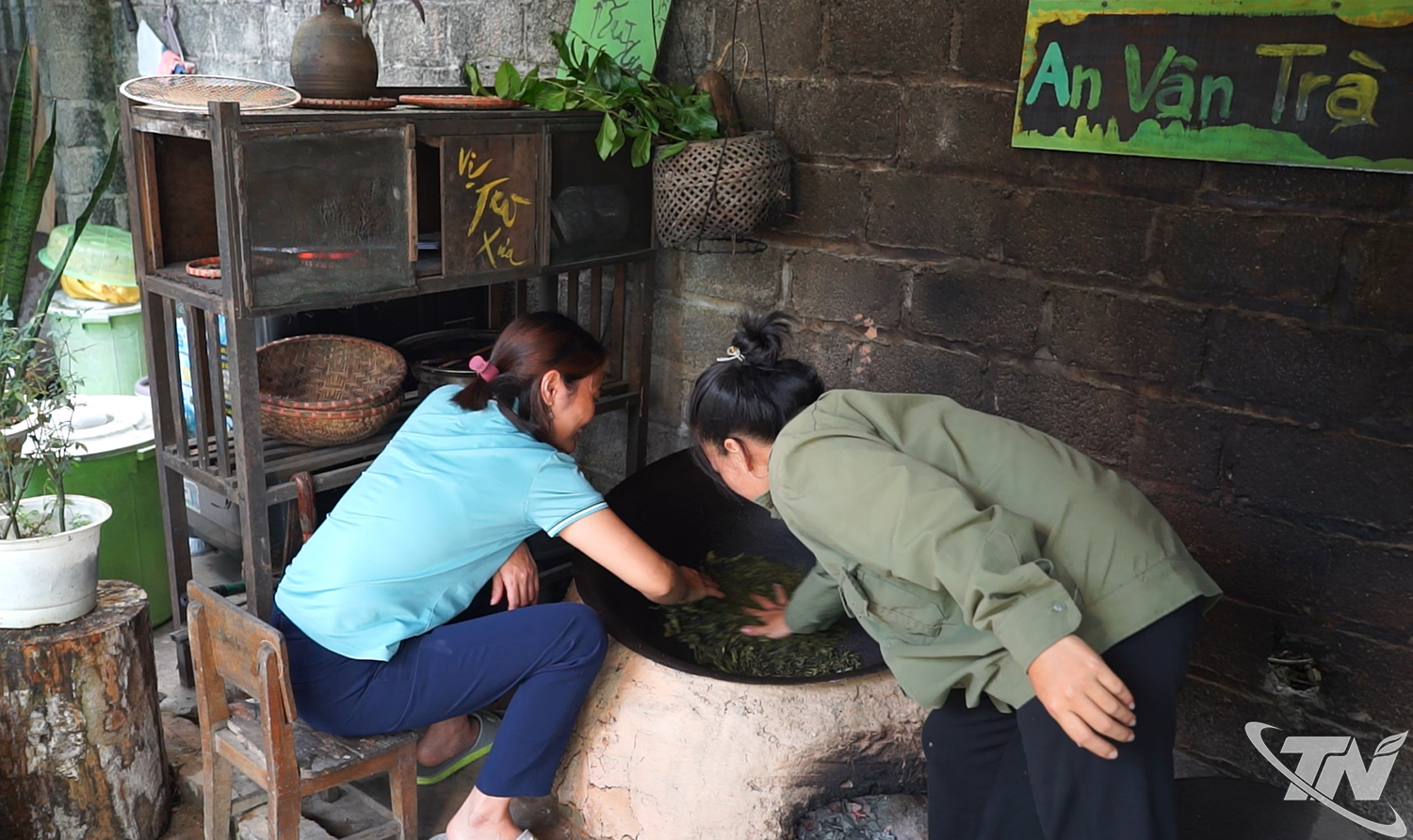
If the raw materials for making tea are a gift from nature, then the traditional "roasting" method is a testament to human skill and dedication. In this age of industrialization, when electric and gas-powered tea roasting machines with daily outputs of hundreds of kilograms have become commonplace, in Lang Dang hamlet, La Bang commune, the thick cast-iron pan still glows with fire, preserving a unique tradition.
The method of roasting tea leaves in a cast iron pan is not for the impatient. It is an elaborate process where the artisan must transform into a conductor, directing a symphony of temperature. Tea buds, harvested in the early morning dew and glazed to preserve their green color, embark on a refining journey in the hot pan.
The key secret lies in two words: "control." At the An Van Tea Cooperative in Lang Dang hamlet, La Bang commune, the young tea artisan, Ms. Hoang Thi Thuy Van, shared: "The fire must be very even and the pan must be evenly heated. This is the first secret. The amount of fire must be absolutely consistent during the continuous hand-roasting process. A fierce, blazing flame should not be used; instead, use well-burned charcoal. A thick cast-iron pan retains heat well, helping the tea to cook thoroughly from the inside out, preventing the outside from burning while the inside remains slightly bitter, unlike a thin tin pan."
Imagine, for over three hours straight, the tea maker stands by the stove, using their bare hands to directly stir each tea bud in a hot cast-iron pan. Those ten fingers are both tools and the most sensitive temperature sensors. They must "feel the heat" at each stage: when to use high heat to kill the enzymes, when to lower the temperature for rolling, and most importantly, the stage of extracting the aroma.
The story of winter tea cultivation doesn't just stop at the techniques; it also tells of life-changing experiences stemming from the sweat and toil of those who watered the land. At the An Van Tea Cooperative in Lang Dang hamlet, La Bang commune, Mr. Hoang Van Truyen, father of Ms. Hoang Thi Thuy Van, still vividly remembers the difficult times. To improve their economic situation, his family invested in winter tea cultivation in 1992. During the winter, tea plants lacked water, and to cultivate this crop in the freezing cold, tea growers toiled tirelessly, carrying heavy loads of water for irrigation. Then, year after year, those winter tea harvests have transformed into lush green tea hills.
The taste of memories
 |
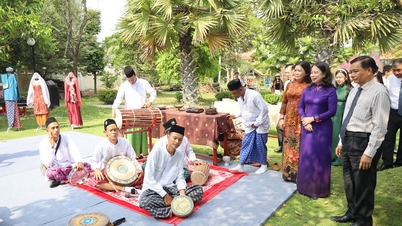
| Guests are guided through the experience of making star anise tea. |
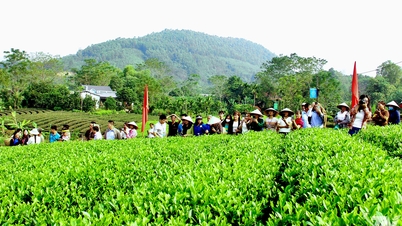
The winter tea harvest is worth many times more than the main harvest and has become an important source of livelihood, helping tea growers in Thai Nguyen not only escape poverty but also become wealthy in their homeland. Furthermore, they have elevated tea culture into a unique tourism product. Visiting An Van Tea Cooperative today, tourists will have many interesting experiences.
Ms. Dao Thi Nhu, a tourist who traveled all the way from Binh Duong province, couldn't hide her joy as she personally picked the tender tea buds, roasted them over a glowing fire, and then brewed a steaming pot of tea. "Enjoying Thai Nguyen tea can still be intoxicating, but it's an intoxication of aroma and flavor, befitting its reputation as the source of every story," Ms. Nhu shared. That intoxication, perhaps, is the intoxication of understanding, of appreciating the sweat poured to create this exquisite flavor.
Holding a cup of star-shaped winter tea in my hand, I feel as if I'm seeing an entire cultural sky. The tea's shimmering, golden-green color is beautiful and clear, like the rare sunlight of winter. Bringing the cup to my nose, a rich aroma of roasted rice wafts through the air, mingled with the warmth of charcoal and the smell of cast iron pans—a scent people call "the scent of fire," evoking memories of old kitchens and the warmth of family gatherings of yesteryear.
Take a sip, and a fleeting bitterness is followed by a lingering sweetness that spreads and permeates the throat, remaining persistently present. This is the original, rich flavor, the characteristic "bitter at first, sweet aftertaste" of Thai Nguyen tea, but in winter tea, it's deeper, more profound, and, notably, can be brewed many times.
Amidst the hustle and bustle of modern life and the rise of technology, there are still farmers in Thai Nguyen quietly preserving the traditional method of roasting tea leaves by the fire, cherishing it as a precious treasure. Roasted tea leaves are not just an agricultural product; they are a heritage, a memory, and a source of pride for the land of tea...
Source: https://baothainguyen.vn/van-hoa/202601/thuong-nho-vi-che-dong-sao-suot-a305c60/














































































Comment (0)