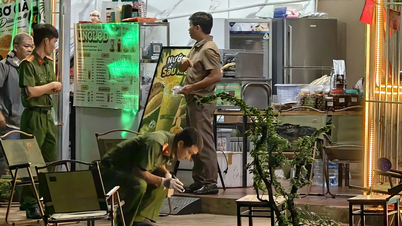
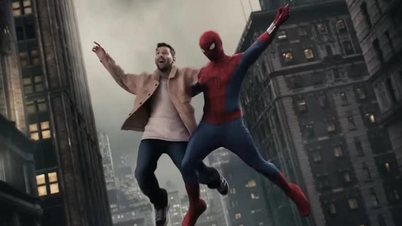
Each episode of The Devil's Diner reveals the personal story of each character, showcasing their haunting experiences and little-known hidden aspects.
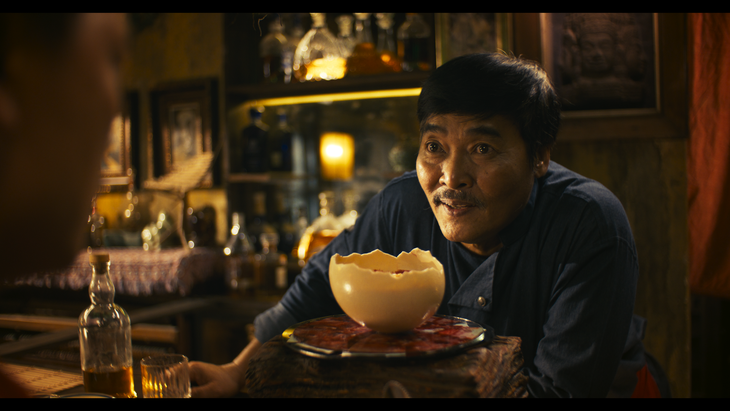
Devil's Diner This is a horror series marking the return of Vietnamese- American director Ham Tran. The series consists of 6 episodes and is currently ranked #1 on Netflix Vietnam.
Each episode focuses on one of the five deadly sins according to Buddhist teachings: greed, anger, delusion, pride, and doubt. The final episode discusses karma and the price to pay for stubbornly committing sins and refusing to let go and repent.
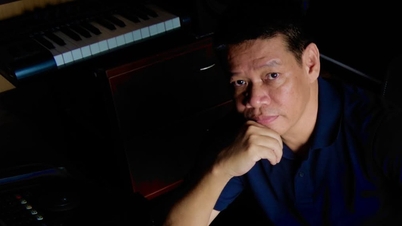
The film revolves around a restaurant run by a mysterious owner and chef (played by Lê Quốc Nam). This place not only serves delicious food but also helps customers fulfill their deepest desires.
However, nothing is free. Like Faust in Western literature, a scholar disillusioned with life who makes a pact with the devil in exchange for knowledge and supernatural power, each diner in Devil's Diner They also have to accept sacrificing their soul, body, or something important to obtain what they desire.
The price of sin in Devil's Diner
Devil's Diner not just entertainment series It is not simply a film, but also a deeply allegorical work about sin, compromise, and human nature. The film explores the hidden corners of society through a mysterious, unnamed diner, a place that symbolizes instinct, desires, and uncontrollable cravings.
People are always tempted by shortcuts, quick ways to achieve success, money, or love, but no one can escape the consequences.

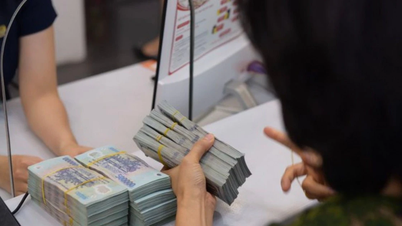
The main sins explored reveal a deeper insight into alienation. The more greedy a person is, the more they lose themselves. Those consumed by anger and a thirst for revenge ultimately destroy themselves.
Ignorant people, blinded by illusions, will never recognize the true nature of things.



Overconfident people fail to foresee the consequences of their mistakes. Those who doubt the law of cause and effect are ultimately punished by their own choices.
The film offers a realistic feel with relatable stories and characters from all walks of life, each with their own flaws.
In real life, people are constantly faced with such cruel "deals": bending the law to make money, betraying loved ones to achieve goals, exploiting others to get ahead...
Karma is the part of the film that summarizes all sins, showing that whether it's greed, anger, or pride, they all lead to one common path: destruction.
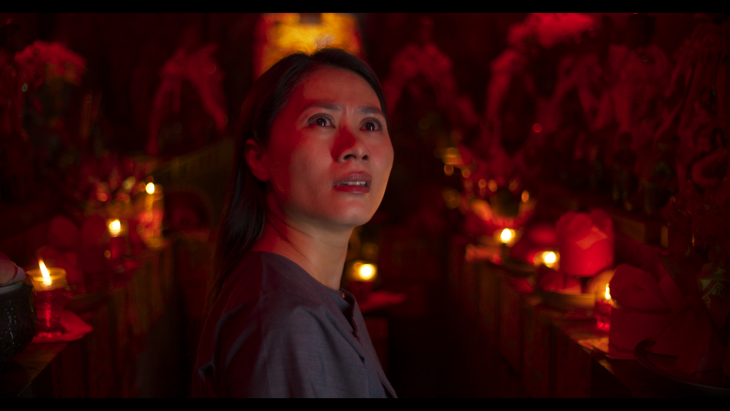
The image of the devil in the film is not explicitly shown, implying that the devil is not the mastermind but rather a silent witness to the decline of humanity. Humans do not need the devil to tempt them; they have created their own hell.
The film serves as a cautionary tale: be careful with your life choices. Wrong decisions may not kill you immediately, but they will haunt you for life. And what comes easily also goes easily; all deceit has consequences.
The return of Ham Tran
Ham Tran He is a director with a modern cinematic mindset, combining the spirit of Hollywood with Vietnamese essence. He emphasizes psychological elements and character depth, reflecting the authentic aspects of human nature rather than superficial drama.
In The Devil's Diner The director capitalized on his strengths by bringing horror story It incorporates psychological issues and philosophical metaphors. The series doesn't follow a linear progression but is divided into several independent episodes of moderate length.
This storytelling style gives the film the feel of a collection of modern-day fables, where each story has its own moral lesson.
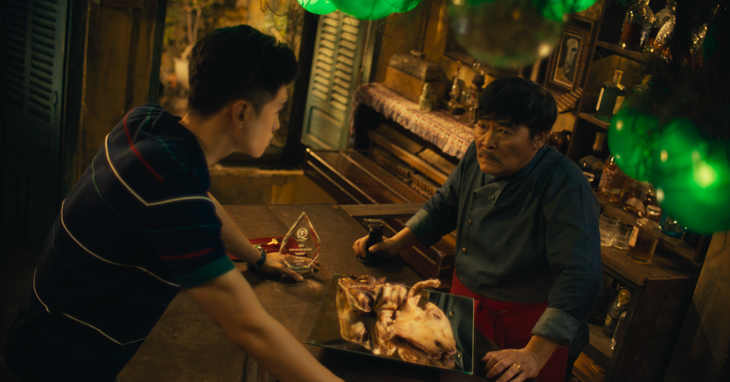



Ham Tran limits the use of jump scares, focusing instead on psychological tension. The director intentionally creates an initial sense of normalcy before gradually transitioning to a terrifying atmosphere.
The film's slow pace, with many moments of silence, allows the characters to express complex emotions. Long, static shots with dim lighting are used to create a sense of unease and tension without the need for loud sound effects.
This also creates a sense of ambiguity and surrealism, like a nightmare from which none of the characters in the film can escape.
The film also uses a cyclical structure, implying that no matter how hard people try to change their fate, they will still face the consequences and karma of their own actions.
From this, the work poses a question for viewers to reflect on their life decisions: Are we sometimes falling into a cycle of mistakes without even realizing it?
Source