

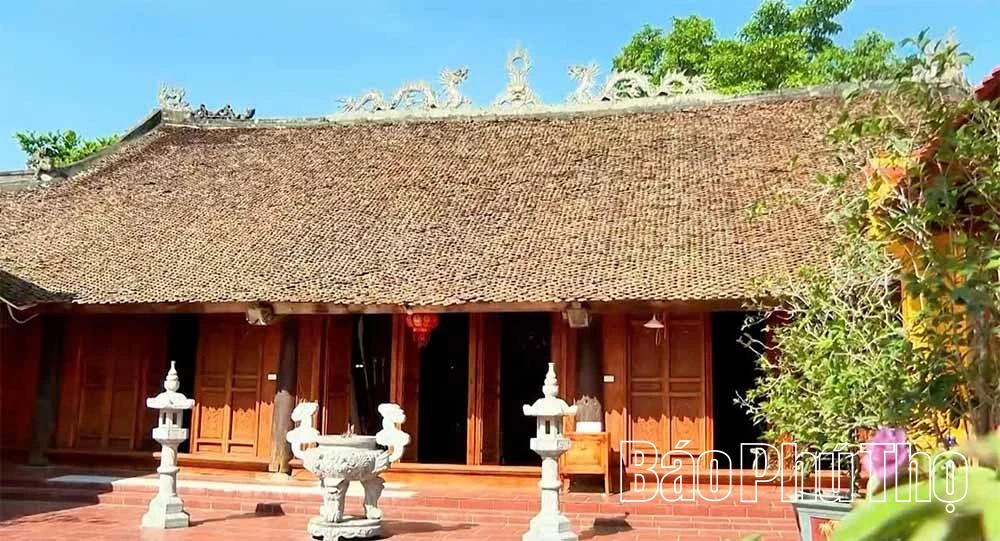
Tien Lu communal house possesses the profound and majestic beauty of traditional Northern Vietnamese village communal house architecture.
"Stacked beam and bracket" architecture
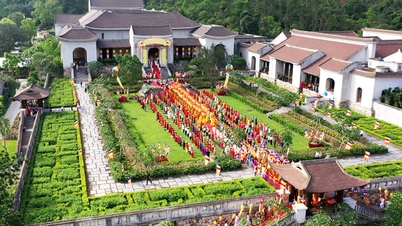
From the very first glance, Tien Lu Temple captivates with its profound and majestic beauty, characteristic of Northern Vietnamese village temple architecture. Built in a graceful, "Chi" shape, harmoniously combining a grand main hall with a solemn sanctuary, the temple creates a spiritual space that is both expansive and intimate.
The most unique highlight of Tien Lu Temple's architecture lies in the truss and crossbeam system of the main hall, with its "stacked beam and bracket" technique. This is the most exquisite part, where each beam and support is connected to each other with tightly fitted traditional mortise and tenon joints, showcasing top-notch carpentry skills and creating extraordinary stability and durability for the structure over nearly two centuries.
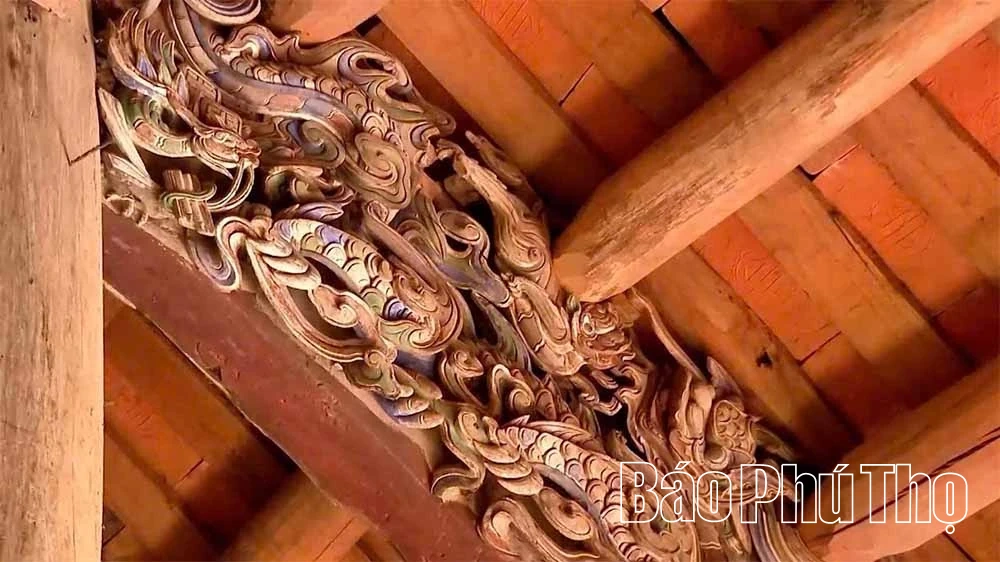
The truss and crossbeam system of Tien Lu Temple was constructed using the "stacked beam and bracket" technique.
Every wooden detail, such as rafters, braces, and tie beams, is meticulously carved, not for ostentation, but to balance yin and yang. Motifs like "dragon carrying scriptures" and "phoenix playing with books" are not only exceptional works of art but also reflect profound folk beliefs and thoughts about wisdom and power.
The image of the long, supple dragon with a pearl in its mouth symbolizes power and authority; the phoenix with its long, cloud-like tail symbolizes nobility and glory. A total of 48 massive ironwood columns create a sense of solidity, while the wide, curved roof, covered with dark, moss-covered tiles, creates a feeling of softness, grace, and harmony with the overall structure.
Mr. Dao Quang Huynh, from the Tien Lu Temple Relic Management Board, informed: "The temple was built in 1834. It still preserves 7 royal decrees and seals."
History and beliefs
Tien Lu Temple is not only a place to admire art but also a witness to glorious history. The temple is dedicated to three deities known as Dong Nha Tam Vi Dai Vuong (also called the First, Second, and Third Princes, all surnamed Tran). These deities are worshipped for their great contributions to the war against the Champa invaders in the late 14th century (1376-1396).
Further into the inner chambers, the gilded and lacquered horizontal plaques and couplets add to the grandeur. The deep red lacquer symbolizes loyalty and righteousness, while the gold leaf represents respect for ancestors.
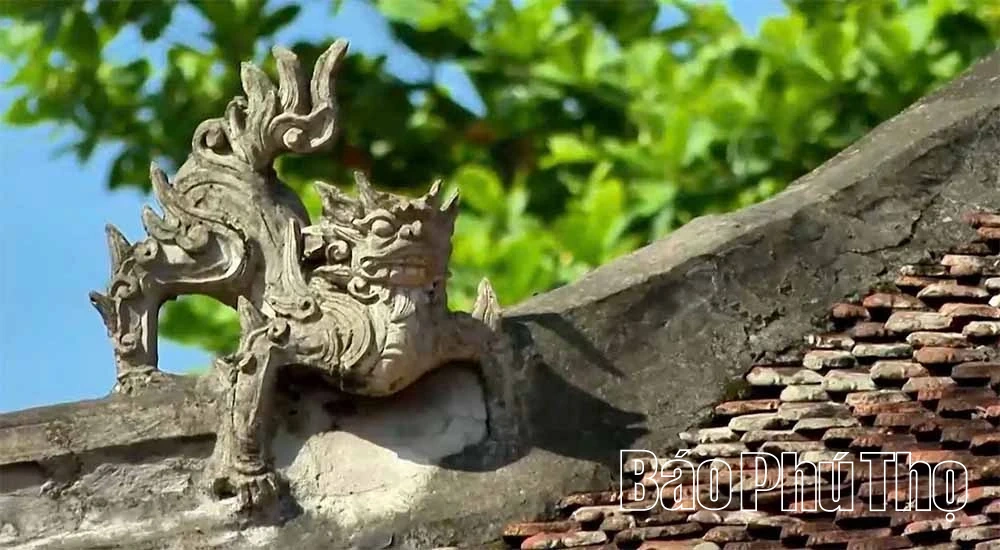
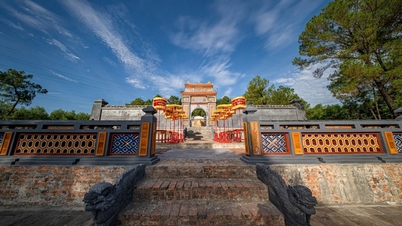
The temple roof is covered with curved tiles and has become dark with moss.
Ms. Nguyen Thi Thuy, a native of Tien Lu who works in Hanoi, expressed: "Every time I pass through the village gate and see the banyan tree, the well, and the communal house, a feeling of peace washes over me. Tien Lu communal house embodies the essence of the local people's architecture and beliefs."
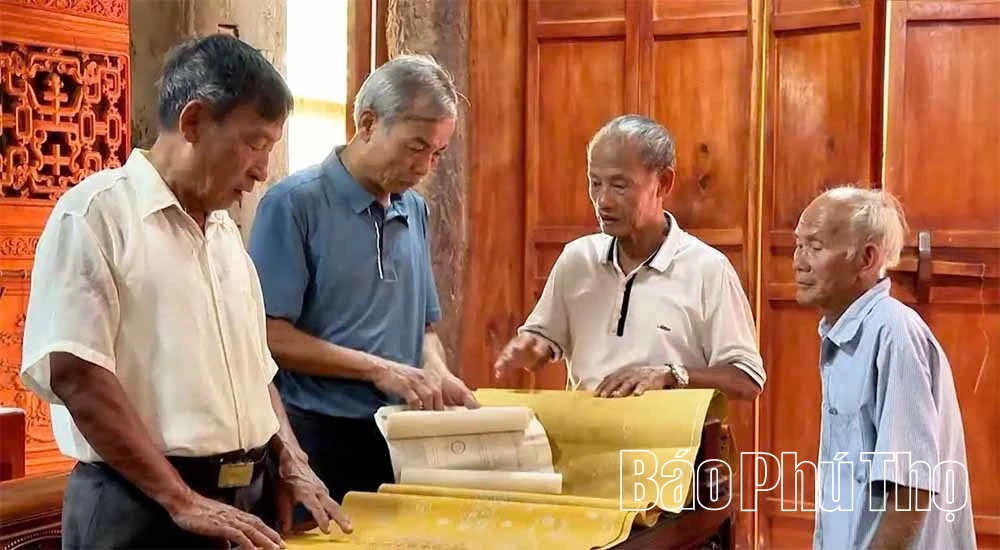
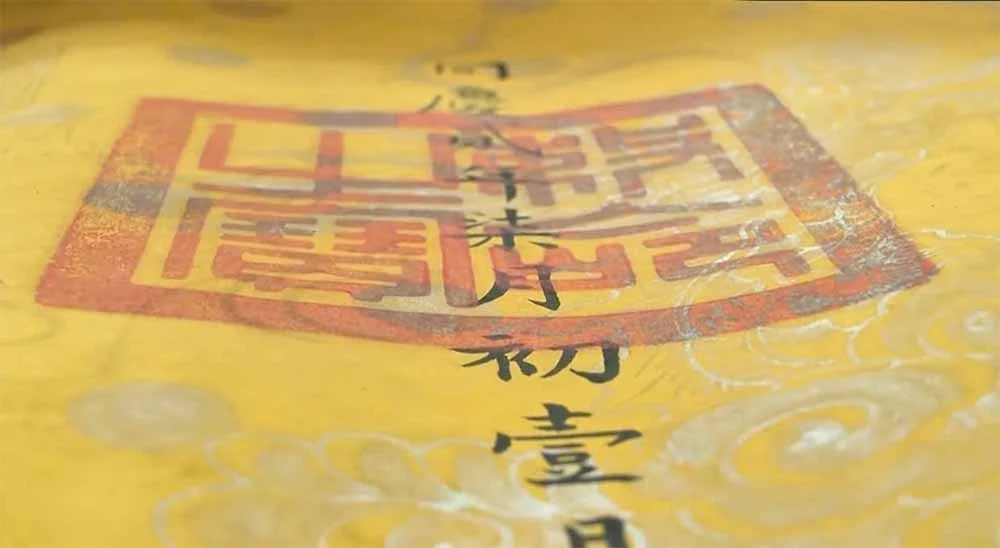
At Tien Lu Temple, seven royal decrees and seals are still preserved.
Recognized as a National Historical Monument since 2000, Tien Lu Temple is an invaluable asset. Mr. Dao Quang Ha, Vice Chairman of the People's Committee of Tien Lu Commune, affirmed: "The commune always pays attention to protecting and restoring the monument to preserve its identity, customs, and traditions."
Tien Lu Temple is not only a place of religious practice but also a "gem" polished over time and continues to be cherished and cared for because of its historical, cultural, and artistic value.
Ngoc Thang
Source: https://baophutho.vn/dinh-tien-lu-vien-ngoc-giua-long-dat-to-244209.htm
![[Photo] Prime Minister Pham Minh Chinh receives the Governor of Tochigi Province (Japan)](/_next/image?url=https%3A%2F%2Fvphoto.vietnam.vn%2Fthumb%2F1200x675%2Fvietnam%2Fresource%2FIMAGE%2F2025%2F12%2F16%2F1765892133176_dsc-8082-6425-jpg.webp&w=3840&q=75)

![[Photo] Prime Minister Pham Minh Chinh receives Lao Minister of Education and Sports Thongsalith Mangnormek](/_next/image?url=https%3A%2F%2Fvphoto.vietnam.vn%2Fthumb%2F1200x675%2Fvietnam%2Fresource%2FIMAGE%2F2025%2F12%2F16%2F1765876834721_dsc-7519-jpg.webp&w=3840&q=75)

![[Image] Leaked images ahead of the 2025 Community Action Awards gala.](/_next/image?url=https%3A%2F%2Fvphoto.vietnam.vn%2Fthumb%2F1200x675%2Fvietnam%2Fresource%2FIMAGE%2F2025%2F12%2F16%2F1765882828720_ndo_br_thiet-ke-chua-co-ten-45-png.webp&w=3840&q=75)
![[Live] 2025 Community Action Awards Gala](/_next/image?url=https%3A%2F%2Fvphoto.vietnam.vn%2Fthumb%2F1200x675%2Fvietnam%2Fresource%2FIMAGE%2F2025%2F12%2F16%2F1765899631650_ndo_tr_z7334013144784-9f9fe10a6d63584c85aff40f2957c250-jpg.webp&w=3840&q=75)



























































Comment (0)