

The One Commune One Product (OCOP) program was launched in Ho Chi Minh City in 2019 and quickly became a driving force for urban agricultural development . From the initial small-scale product groups, the city has now formed an increasingly professional network of OCOP participants, including businesses, cooperatives, production facilities, and traditional craft villages.
The OCOP program in Ho Chi Minh City is also highly regarded for its innovative products, its ability to connect with urban tourism , and its dynamism in trade promotion. However, the challenges of branding, packaging, and penetration into modern distribution systems remain bottlenecks that need to be addressed.
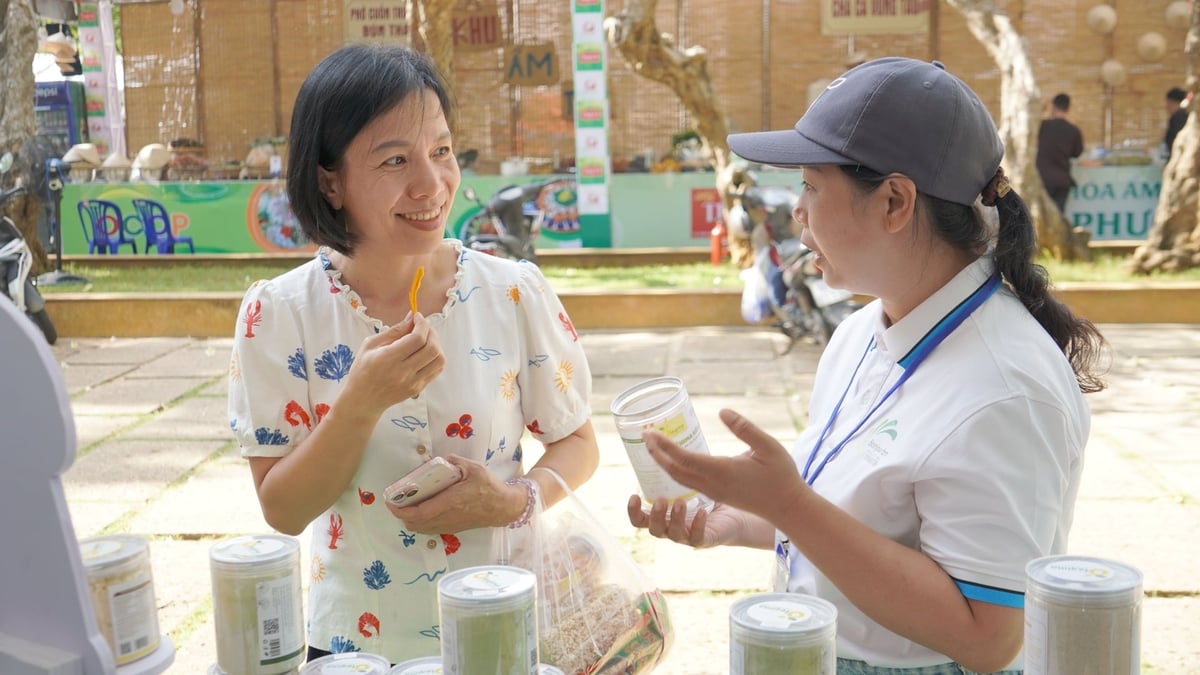
Ho Chi Minh City has great potential to strongly develop and make breakthroughs in OCOP products. Photo: Le Binh .
To address these challenges facing OCOP products in Ho Chi Minh City, Mr. Nguyen Minh Tien, Director of the Agricultural Trade Promotion Center ( Ministry of Agriculture and Environment ), emphasized that OCOP is not just about star ratings, but rather the "crystallization of branding," reflecting the cultural identity of the locality. According to Mr. Tien, for OCOP products in Ho Chi Minh City to achieve breakthroughs, businesses need to build both product quality and a compelling product story.
“The story is the message that touches the emotions of buyers. Each OCOP product in Ho Chi Minh City needs to tell its own story to create differentiation and enhance its value,” said Mr. Nguyen Minh Tien. Specifically, investing in local culture, distinctive elements, and traditions in products will help OCOP not only attract the domestic market but also have the potential to reach further.
Mr. Tien also noted that a well-structured OCOP brand will build trust through a rigorous evaluation process, thereby opening opportunities to enter modern distribution systems and affirming regional identity. The city needs to expand sales points linked to tourism and culture, develop themed pedestrian streets, and create product experience zones right at the production sites. Another important direction is to promote Ho Chi Minh City's OCOP through diplomatic channels, using it as official gifts to enhance the city's image internationally.
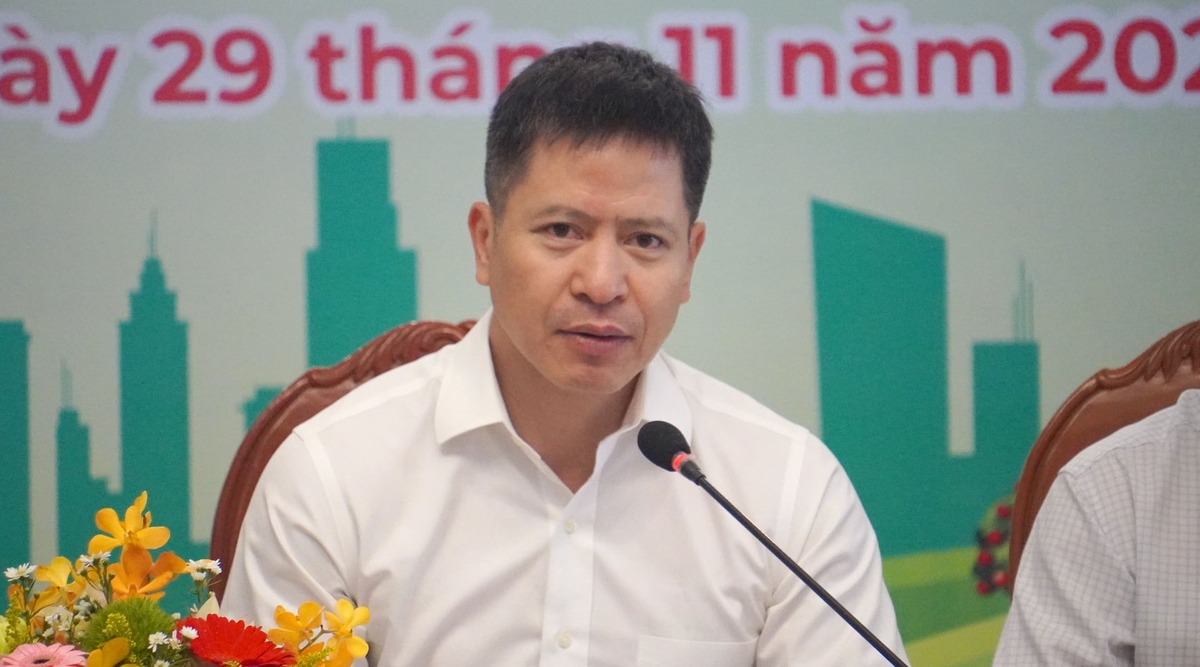
Mr. Nguyen Minh Tien: "Each OCOP product tells a cultural story, and Ho Chi Minh City should take advantage of this to use these products as gifts." Photo: Le Binh .
From a distribution perspective, Ms. Bui Thi Luu Ly, Deputy Director of the Center for Consulting and Support for Agricultural Economic Restructuring (Ho Chi Minh City Department of Industry and Trade), stated that the city, with over 14 million inhabitants and a network of 12 large retail systems, 300 supermarkets, and 66 shopping malls, is a huge market but not easy to access.
"Many OCOP products from Ho Chi Minh City cannot enter supermarkets due to inconsistent quality, unattractive packaging, incomplete traceability information, and limited marketing capabilities," Ms. Luu Ly stated, highlighting the current situation. Meanwhile, systems such as Saigon Co.op, Big C, AEON, Satra, etc., all set very high standards for food safety and packaging.
To support OCOP (One Commune One Product) businesses, the Ho Chi Minh City Department of Industry and Trade has implemented a series of solutions including the "Responsibility Green Tick" program, market stabilization, supply-demand connection, inter-agency coordination, and the organization of specialized trade fairs. The M2C (factory-to-consumer) model, the ketnoicungcau.vn platform, and AI-based Live Commerce are helping producers shorten their path into the distribution chain. Currently, Ho Chi Minh City has 358 suppliers with 3,617 products that have been granted the "Responsibility Green Tick," and e-commerce platforms such as TikTok, Tiki, and Lazada, along with KOLs/KOCs, are creating significant reach for OCOP products.
From the distribution system's perspective, Ms. Vo Thi Bich Thuy, Senior Manager of the product category at the Ho Chi Minh City Commercial Cooperative Union (Saigon Co.op), stated that the unit has distributed over 500 OCOP products from various provinces and cities. According to her, OCOP products align with the priority given to Vietnamese goods and have a significant advantage due to their local value.
“Urban consumers appreciate products with cultural stories and unique characteristics. That is the natural advantage of OCOP,” Ms. Thuy remarked, suggesting strengthening specialized promotional programs such as “Regional OCOP Week” and “Vietnam OCOP Product Space” in supermarket systems.
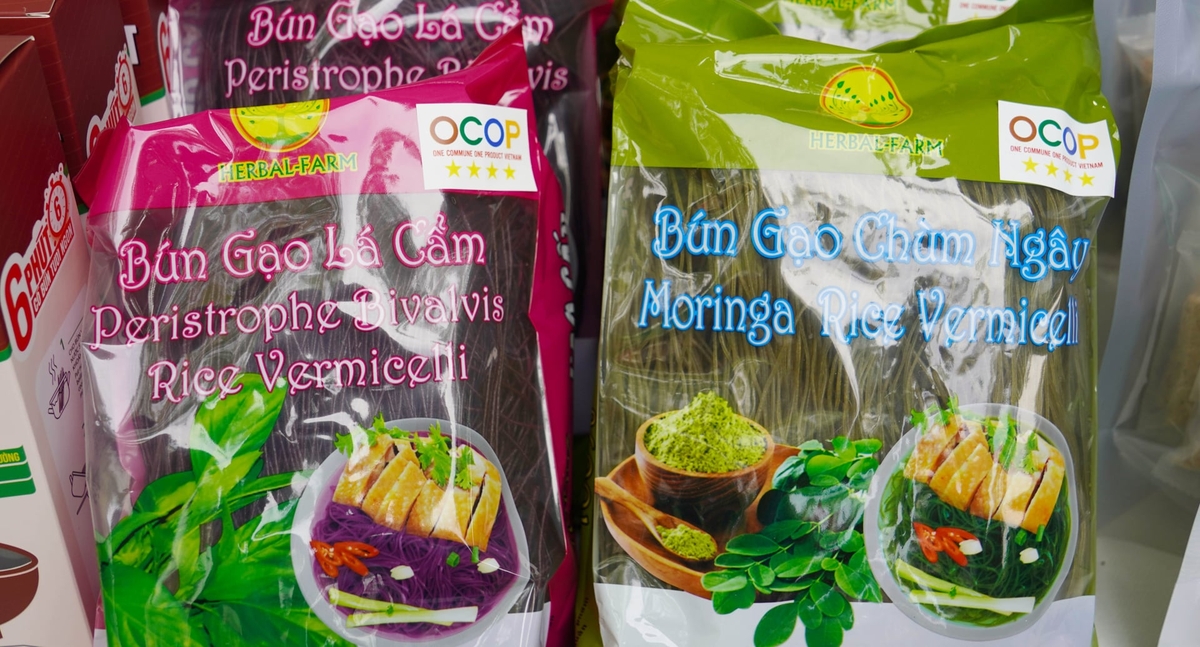
Ho Chi Minh City is one of the top 5 localities with the most OCOP products, coupled with a large local market... therefore, there is still much room for development. Photo: Le Binh .
A prime example of effective and systematic investment in branding is the story of Hoa Long Mushroom Cultivation Co., Ltd. Ms. Cao Thi Hong Van, the company's director, stated that the company achieved OCOP 4-star and 5-star ratings thanks to its consistent quality standardization, raw material control, and strict adherence to food safety regulations.
“After obtaining the certification, we focused on perfecting our brand identity, packaging design, slogan development, and expanding our distribution channels from supermarkets and retailers to e-commerce and travel souvenirs. Creating quality products is the key to building a sustainable brand,” Ms. Van emphasized.
After more than 5 years of implementation, the OCOP program in Ho Chi Minh City has achieved many positive results, with 1,006 products rated 3 stars or higher, and many brands initially establishing a position in the market. Several product groups, such as processed foods, beverages, herbal products, souvenirs, and tourism-related products, are becoming highlights, contributing to affirming the city's urban agriculture in a modern and high-value-added direction.
Building on its existing foundation, Ho Chi Minh City is moving towards a deeper stage of development: raising quality standards, telling the story of regional culture, expanding distribution channels, and promoting digital commerce. At that point, OCOP products will not only be distinctive goods but will also become brand assets, contributing to positioning Ho Chi Minh City as a dynamic, creative, and distinctive city in the eyes of domestic and international consumers.
Source: https://nongnghiepmoitruong.vn/tphcm-xay-dung-thuong-hieu-ocop-mo-rong-thi-truong-d787687.html






![[Infographics] Criteria and procedures for evaluating and classifying OCOP products](https://vphoto.vietnam.vn/thumb/402x226/vietnam/resource/IMAGE/2026/06/01/1780307493571_infographics-bo-w1200t0-di2622d199d1164352t11358l1-ocop-023.webp)





![When forestry is a 'weakness' for Nghe An?: [Part 3] Forest owners worry about the challenge of financial self-sufficiency](https://vphoto.vietnam.vn/thumb/402x226/vietnam/resource/IMAGE/2026/06/01/1780328200116_pu-hoat-014846_425-223223.jpeg)







![The Essence of Viet Bac Villages: [Part 3] The Precious Fragrance of Nghinh Tuong](https://vphoto.vietnam.vn/thumb/402x226/vietnam/resource/IMAGE/2026/05/29/1780020600366_5237-tinh-tuy-ban-lang-viet-bac-bai-3-chuyen-o-nghinh-tuong-050626_700.jpeg)
![The Quintessence of Northern Vietnam's Villages: [Part 2] The Famous Cassava Noodles of Kunming](https://vphoto.vietnam.vn/thumb/402x226/vietnam/resource/IMAGE/2026/05/28/1779937455892_3929-3144-mien-dong-15-nongnghiep-023138.jpeg)
![The Essence of the Village: [Part 1] Wine on the mountain, tea in the clouds - Bang Phuc](https://vphoto.vietnam.vn/thumb/402x226/vietnam/resource/IMAGE/2026/05/27/1779841729178_3821-1jpg-nongnghiep-103814.jpeg)
![[Photo] Reception to welcome General Secretary and President To Lam and his wife on their State visit to the Philippines](https://vphoto.vietnam.vn/thumb/1200x675/vietnam/resource/IMAGE/2026/06/01/1780295488620_vna-potal-chieu-dai-chao-mung-tong-bi-thu-chu-tich-nuoc-to-lam-va-phu-nhan-tham-cap-nha-nuoc-toi-philippines-8798060-7855-jpg.webp)


















































Comment (0)