

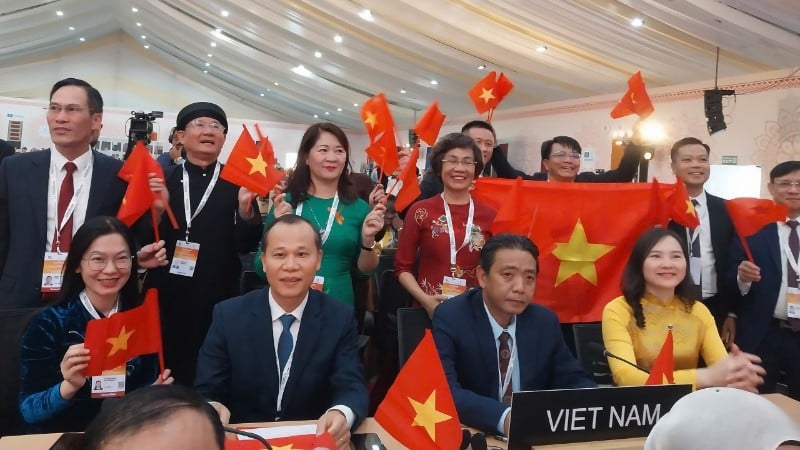
The decision was adopted at the 20th session of the Intergovernmental Committee of the 2003 Convention on the Protection of Intangible Cultural Heritage of UNESCO (United Nations Educational , Scientific and Cultural Organization), at 2:38 PM on December 9th (local time), in New Delhi, India. This inscription has opened a new phase in the process of protecting and promoting the value of traditional crafts, from preserving ancient handicraft techniques and supporting artisans to enhancing education and developing livelihoods associated with the heritage.
To further clarify the key directions and tasks after the heritage site was inscribed, a reporter from Nhan Dan Newspaper had an interview with the Deputy Minister of Culture, Sports and Tourism , and Vice Chairman of the Vietnam National UNESCO Committee, Hoang Dao Cuong.
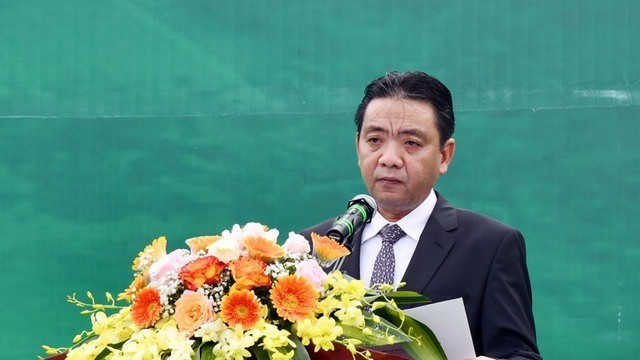
Reporter: Mr. Deputy Minister, what is the most significant meaning for Vietnam when the Dong Ho folk painting craft is inscribed on UNESCO's List of Intangible Cultural Heritage in Need of Urgent Safeguard?
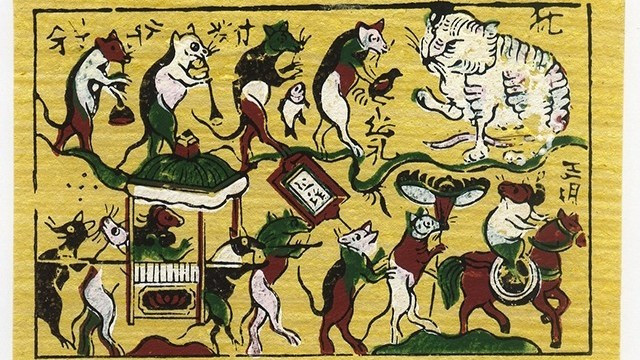
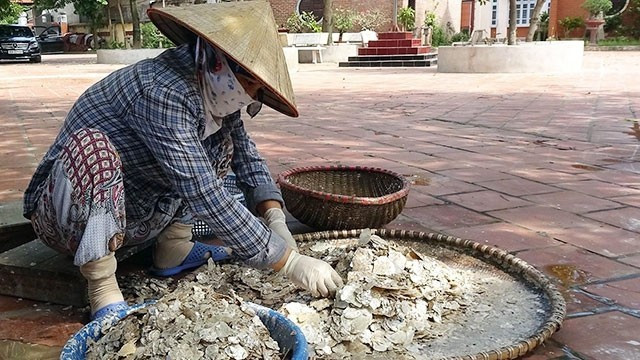
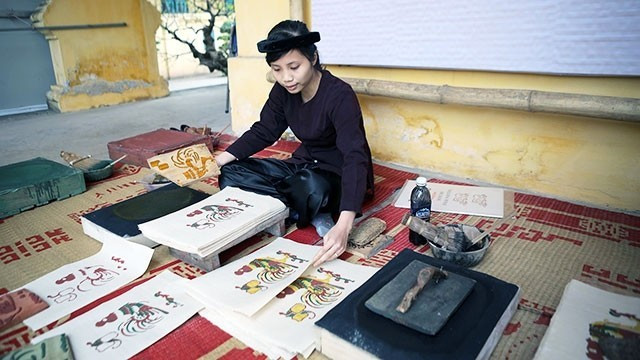
Dr. Hoang Dao Cuong, Architect and Deputy Minister of Culture, Sports and Tourism: The inclusion of Dong Ho folk painting by UNESCO on the List of Intangible Cultural Heritage in Need of Urgent Safeguard has profound significance for Vietnam in many aspects. First and foremost, it affirms the unique value of a painting style deeply rooted in Vietnamese identity, a culmination of the traditional techniques of making gilded paper, woodblock carving, and hand-mixing colors, all imbued with folk philosophy in every composition and story.
This recognition shows that the international community sees Dong Ho folk painting not only as a fine art product, but also as a vivid testament to the thinking, aesthetics, and lifestyle of Vietnamese people across generations. More importantly, being classified as a heritage in need of urgent protection is a strong reminder of its declining status. This is not merely an honor, but an international commitment that compels us to act promptly and effectively. This creates a foundation for the State, localities, and artisans to access resources, experts, and support programs to restore the creative environment, pass on the craft, and expand the space for introducing Dong Ho paintings to the public.
I believe the greatest significance lies in prioritizing and protecting this heritage as an integral part of national identity amidst rapid modernization. UNESCO's inscription also provides an opportunity to rekindle pride, encourage younger generations to engage with the heritage, and ensure its sustainable transmission. This is precisely why we feel a greater and more urgent responsibility than ever to preserve the Dong Ho folk painting craft.

Reporter: UNESCO has pointed out many dangers that are seriously threatening the Dong Ho folk painting craft. How does the Deputy Minister assess the biggest challenges facing the craft at the present time?
Dr. Hoang Dao Cuong, Architect and Deputy Minister of Culture, Sports and Tourism: UNESCO's assessments accurately reflect the current challenging situation of Dong Ho folk painting. In my opinion, the biggest challenge lies in the significant decline in the number of artisans. This is a highly skilled craft with many elaborate steps, from making the paper and mixing colors manually to the woodblock carving technique. However, the number of people pursuing this craft is rapidly decreasing, and young people are less likely to stay involved for long periods, disrupting the transmission of knowledge and leading to the risk of losing the core techniques.
Furthermore, the shrinking consumer market also creates significant pressure. Traditional handicrafts require considerable time and expense to produce, while modern tastes are shifting towards mass-produced decorative items. This mismatch between artistic value and practical needs makes it difficult for craft households to maintain their livelihoods, leading to a risk of declining motivation to preserve the craft.
Another challenge is that the creative environment is no longer as favorable as it was during its heyday. Natural materials for the craft are no longer abundant, and many manual processes require significant investment to improve production conditions. At the same time, urbanization is changing the landscape of the craft villages, disrupting the elements that make up the traditional creative ecosystem. I believe that the combination of these factors creates significant pressure on the Dong Ho folk painting craft. It is crucial that we clearly identify each difficulty in order to find effective solutions for recovery and ensure the craft has a sustainable development environment in the future.
Reporter: Yes, Mr. Deputy Minister, in the context of a dwindling number of skilled artisans and difficulties in passing on traditional crafts, what solutions will the Ministry of Culture, Sports and Tourism prioritize to ensure a successor generation and maintain traditional knowledge within the community?
Dr. Hoang Dao Cuong, Architect and Deputy Minister of Culture, Sports and Tourism: In the context of a sharp decline in the number of skilled artisans, the Ministry of Culture, Sports and Tourism has identified the urgent goal of retaining those who pass on their knowledge and creating a successor generation.
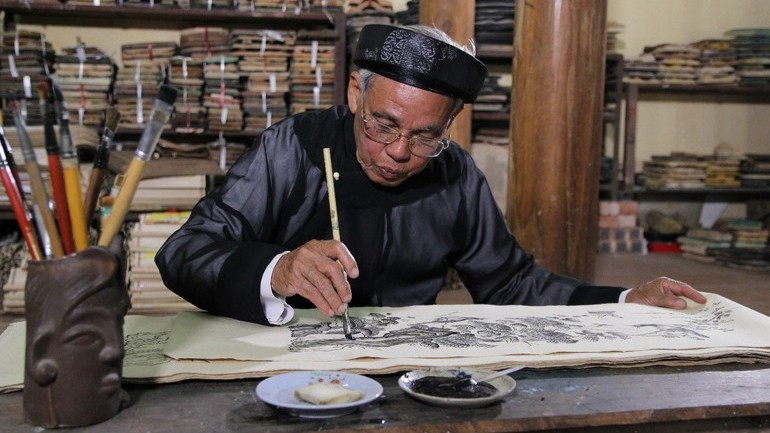
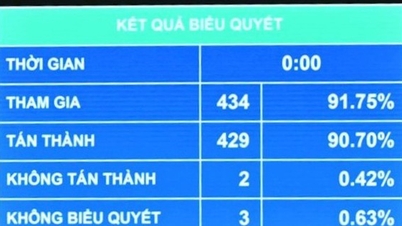
On November 23, 2024, the National Assembly passed the 2024 Law on Cultural Heritage, marking a major shift in heritage management and creating a more comprehensive legal framework for carrying out these tasks. Based on this, we will prioritize programs that directly support artisans. These artisans hold the core skills of Dong Ho folk painting, from the techniques of making the "diep" paper to the woodblock carving system and traditional color combinations. The Ministry will continue to review incentive policies, creating conditions for artisans to confidently pursue their craft, while also encouraging their participation in teaching through apprenticeship classes, practice clubs, or long-term mentoring programs.
Simultaneously, the Ministry of Culture, Sports and Tourism will promote the integration of vocational training into schools and cultural institutions through experiential programs, extracurricular activities, and collaborations with art schools. When students are exposed to these skills early on, their interest in the profession will naturally develop, thus creating a future workforce. The Ministry of Culture, Sports and Tourism is also researching mechanisms to support students pursuing advanced studies to ensure the quality and sustainability of the training process.
Another important direction is to build a standardized archive of craft documentation, including detailed records of techniques, processes, creative styles, and a system of ancient woodblock prints. This will serve as a foundation for preserving craft knowledge in the long term, ensuring uninterrupted transmission of knowledge even as the number of artisans decreases.
The Ministry of Culture, Sports and Tourism also prioritizes combining preservation with development, supporting artisans and households involved in the craft to experiment with new products based on the spirit of Dong Ho, thereby expanding market access opportunities and creating motivation for young people to stay committed to the craft. These activities are implemented synchronously with the coordination of local authorities and relevant organizations, aiming to maintain the craft's knowledge in a solid and long-term manner.
Reporter: In the nomination dossier submitted to UNESCO, the protection plan with its seven task groups was considered a strong point. What specific steps will the Ministry of Culture, Sports and Tourism take to support livelihoods, expand markets, and create conditions for artisans to remain committed to their craft in the long term, Mr. Deputy Minister?
Dr. Hoang Dao Cuong, Architect and Deputy Minister of Culture, Sports and Tourism: In the protection plan comprising 7 task groups, the Ministry of Culture, Sports and Tourism focuses heavily on solutions to create sustainable livelihoods and expand consumer markets. First, the Ministry will coordinate with Bac Ninh province to build a production and business model suitable to the conditions of the craft, helping artisans maintain stable income. Support includes guidance on accessing preferential capital, investing in improving production facilities, and organizing training courses on market knowledge, promotion, and digital communication.
The Ministry of Culture, Sports and Tourism will also promote the development of a product line associated with the Dong Ho folk art identity, from traditional paintings to applied products such as decorations, gifts, and art publications. As the market expands, the craft will have more impetus to maintain regular activities and attract young people. In addition, the Ministry of Culture, Sports and Tourism will develop trade promotion programs, bringing products to domestic and international fairs, exhibitions, and cultural festivals, helping Dong Ho folk paintings reach a more diverse customer base.
Another important task is to create a long-term support mechanism for artisans. The Ministry of Culture, Sports and Tourism will continue to refine its incentive policies in a practical way, including medical support, regular allowances, awarding titles commensurate with their level of contribution, and creating conditions for artisans to participate in teaching, performing, and creative activities. These solutions aim to help artisans feel secure in their craft, while creating a favorable environment for the sustainable preservation and development of the values of Dong Ho folk paintings.
Reporter: UNESCO's recommendation for Vietnam to incorporate heritage into formal and informal education is a new direction. How does the Deputy Minister assess the prospects and roadmap for integrating Dong Ho folk painting into experiential education programs for young people?
Dr. Hoang Dao Cuong, Architect and Deputy Minister of Culture, Sports and Tourism: UNESCO's recommendation to integrate heritage into formal and informal education creates opportunities for Dong Ho paintings to reach a large, sustainable, and long-term audience of young people. The art of painting embodies a unique system of knowledge, from the techniques of making the "diep" paper, creating natural colors, woodblock carving, and artistic thinking to folk philosophy reflecting Vietnamese lifestyles, customs, and worldviews. This is a highly evocative material, very suitable for inclusion in the educational environment to develop students' observational skills, aesthetic sense, cultural and historical understanding, and creativity.
Regarding prospects, the Ministry of Culture, Sports and Tourism assesses that Dong Ho paintings meet the requirements for integration into the new curriculum of the education sector, which focuses on developing qualities, abilities, and practical experiences. When students are directly exposed to the painting process, they have the opportunity to explore the diversity of natural materials, understand the meticulousness of the craft, and simultaneously access the visual thinking deeply rooted in Vietnamese identity. These elements help the craft become a vibrant, exploratory learning resource capable of fostering a love for heritage.
Regarding the implementation roadmap, the Ministry of Culture, Sports and Tourism will closely coordinate with the Ministry of Education and Training to develop a standard set of learning materials, including digital documents, videos simulating techniques, lesson plans for teachers, and guidance materials for students. At the primary school level, the focus will be on visual experience: exploring natural colors, becoming familiar with traditional Vietnamese paper, and trying out handcrafted color printing methods. At the lower and upper secondary levels, the level will be higher through exploring the thematic system, structural composition, folk symbols, and aesthetic value of each painting style. For art schools, the Ministry of Culture, Sports and Tourism will encourage the development of in-depth modules, direct access to the original woodblock printing archives, and comparison of techniques between Dong Ho paintings and other traditional painting styles.
In addition to formal education programs, the Ministry of Culture, Sports and Tourism aims to expand the non-formal education ecosystem through practical workshops, long-term workshops, creative camps for students, and art projects led by artisans. These activities help artisans become natural and effective transmitters of knowledge, contributing to the preservation of their craft in modern life. The Ministry of Culture, Sports and Tourism also plans to collaborate with cultural institutions, museums, and art centers to organize learning tours, interactive experiences, and exhibitions specifically for young people.
If implemented consistently, incorporating Dong Ho folk paintings into education will create a new foundation, helping the younger generation deeply understand traditional values and motivating them to participate in protecting the heritage voluntarily and responsibly. This approach will help sustain the craft in the long term, strengthening professional knowledge while opening up opportunities for sustainable development in the future.
Source: https://nhandan.vn/tao-nen-tang-ben-vung-cho-di-san-nghe-lam-tranh-dan-gian-dong-ho-sau-khi-duoc-ghi-danh-post929112.html

![[Photo] Explore the US Navy's USS Robert Smalls warship](/_next/image?url=https%3A%2F%2Fvphoto.vietnam.vn%2Fthumb%2F1200x675%2Fvietnam%2Fresource%2FIMAGE%2F2025%2F12%2F10%2F1765341533272_11212121-8303-jpg.webp&w=3840&q=75)
![[Photo] The captivating scenery of the fragrant maple forest in Quang Tri](/_next/image?url=https%3A%2F%2Fvphoto.vietnam.vn%2Fthumb%2F1200x675%2Fvietnam%2Fresource%2FIMAGE%2F2025%2F12%2F10%2F1765353233198_lan09046-jpg.webp&w=3840&q=75)















![[Video] The craft of making Dong Ho folk paintings has been inscribed by UNESCO on the List of Crafts in Need of Urgent Safeguarding.](https://vphoto.vietnam.vn/thumb/402x226/vietnam/resource/IMAGE/2025/12/10/1765350246533_tranh-dong-ho-734-jpg.webp)














































Comment (0)