

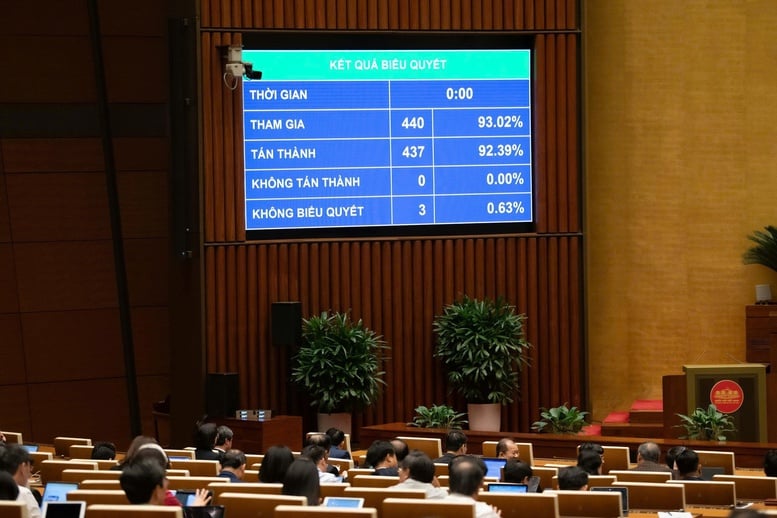
The National Assembly passed the amended Press Law.
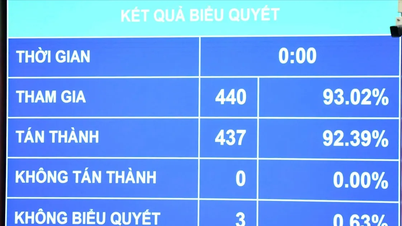
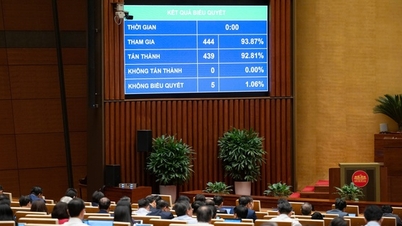
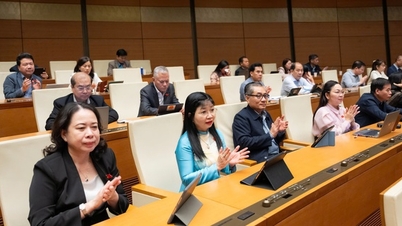
On the morning of December 10th, with 437 out of 440 delegates voting in favor, the National Assembly passed the amended Press Law.
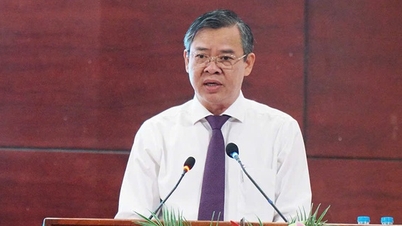
Before proceeding to the vote, the National Assembly heard a report presented by the Chairman of the Committee on Culture and Society, Nguyen Dac Vinh, on the acceptance, explanation, and revision of the draft Law on the Press (amended).
New regulations on key media outlets.
The draft Law, after being revised and amended, consists of 4 chapters and 51 articles. It closely adheres to the major goals, viewpoints, and policies approved by the National Assembly, promptly institutionalizing the Party's guidelines and policies, and meeting the practical requirements of managing and developing the press in the current period.
Regarding types of media, taking into account the opinions of National Assembly deputies, the Standing Committee of the National Assembly directed the revision of the name of the media type "audio and visual media" to "radio and television broadcasting".
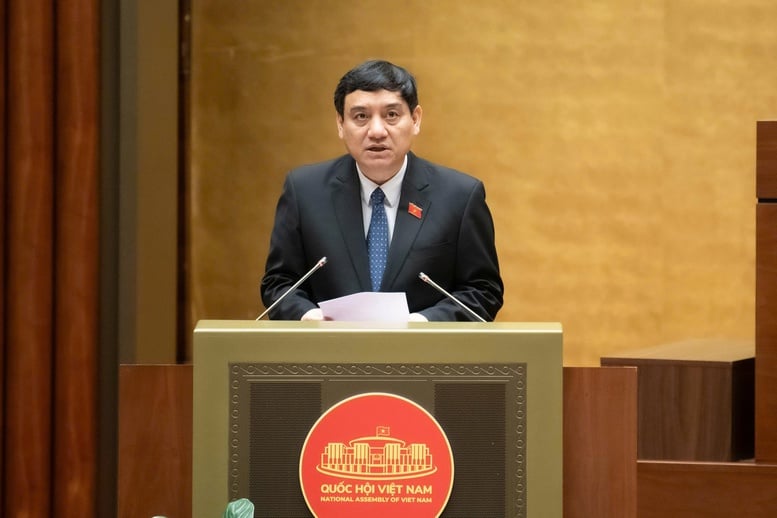
Chairman of the Committee on Culture and Social Affairs Nguyen Dac Vinh presented the summary report on the reception, explanation, and revision of the draft Law on the Press (amended).
Regarding the key multimedia press agencies (Article 15), in response to the opinions of National Assembly deputies, the Standing Committee of the National Assembly directed the revision of the phrase "key multimedia media agency" to "key multimedia press agency" to ensure accuracy and consistency with the scope of the draft Law.
Regarding the pilot program for a multi-media flagship press group or corporation in Hanoi and Ho Chi Minh City, the National Assembly Standing Committee stated that the Government has directed the Ministry of Culture, Sports and Tourism to summarize the Plan for the Development and Management of the Press, and is expected to propose to the competent authorities to continue implementing some of the Plan's viewpoints and add new viewpoints, including the establishment of a multi-media flagship press agency in Hanoi and Ho Chi Minh City.
Based on the direction and approval of competent authorities, the Ministry of Culture, Sports and Tourism will specify these contents in the Strategy for development and management of the press system, ensuring feasibility, consistency and conformity with the national press development orientation.
Regarding journalistic activities in cyberspace (Article 29), in response to the opinions of National Assembly deputies, the Standing Committee of the National Assembly directed a review and revision of Article 29 of the draft Law to stipulate state management measures for journalistic activities in cyberspace, ensuring the same level of strictness as for traditional forms of journalism, while integrating online services and ensuring the integrity of information already published and broadcast on the national digital journalism platform.
At the same time, review and supplement regulations related to the use of artificial intelligence (AI) in journalistic activities in Article 39 and related articles; assign the Government to specify in detail the responsibilities of press agencies in using artificial intelligence systems.
Regarding corrections in the press (Article 34), in response to the opinions of National Assembly deputies, the Standing Committee of the National Assembly directed a review and the addition of a new article stipulating the removal of infringing information and the recall of printed press products in Article 35 of the draft Law, and assigned the Government to provide detailed regulations on this matter.
Regarding the contents related to "the economics of journalism," in response to the opinions of National Assembly deputies, the Standing Committee of the National Assembly directed a review and revision of regulations related to public investment, autonomy mechanisms, and regulations on revenue sources from business activities of press agencies in Articles 9, 20, and 23 of the draft Law.
Compared to the current law, the draft Law has fundamental new points such as: clearly defining types of media in the new context; supplementing policies for media development and ensuring resources for implementation, from financial mechanisms to infrastructure investment and tax incentives in a more feasible direction; clarifying the conditions for media operation, licensing mechanisms and organizational structure; identifying key multimedia media agencies, representative offices, and resident reporters.
In addition, specific regulations are needed regarding journalist cards, legal responsibility for information content; the right to request corrections and removal of infringing information on platforms; and the improvement of regulations on managing journalistic activities in cyberspace and the application of new technologies, including the regulation of the application of artificial intelligence (AI).
Thu Giang
Source: https://baochinhphu.vn/quoc-hoi-thong-qua-luat-bao-chi-sua-doi-voi-nhieu-diem-moi-102251210151521456.htm




























![[Video] The craft of making Dong Ho folk paintings has been inscribed by UNESCO on the List of Crafts in Need of Urgent Safeguarding.](https://vphoto.vietnam.vn/thumb/402x226/vietnam/resource/IMAGE/2025/12/10/1765350246533_tranh-dong-ho-734-jpg.webp)























































Comment (0)