

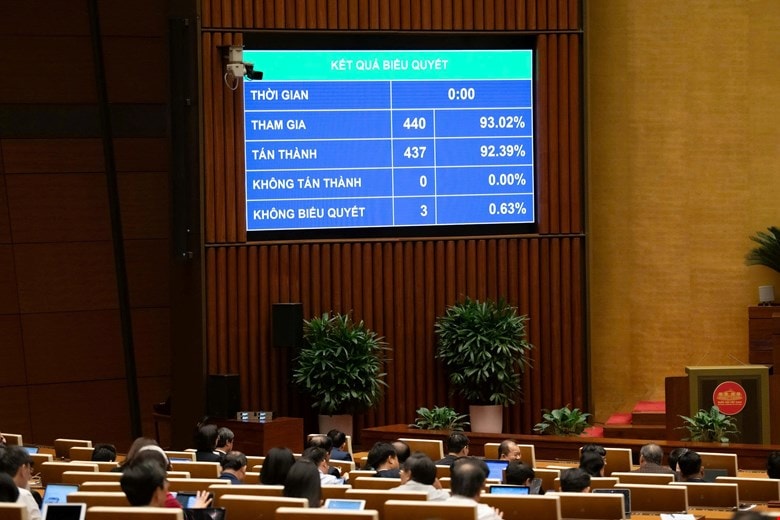
The law shall come into effect on July 1, 2026, except as provided in Clause 2 of this Article.
Clearly define the types of journalism in the new context.
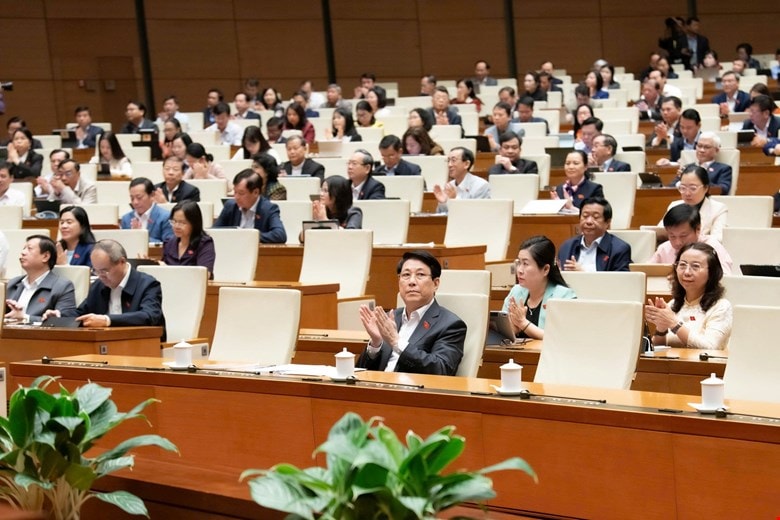
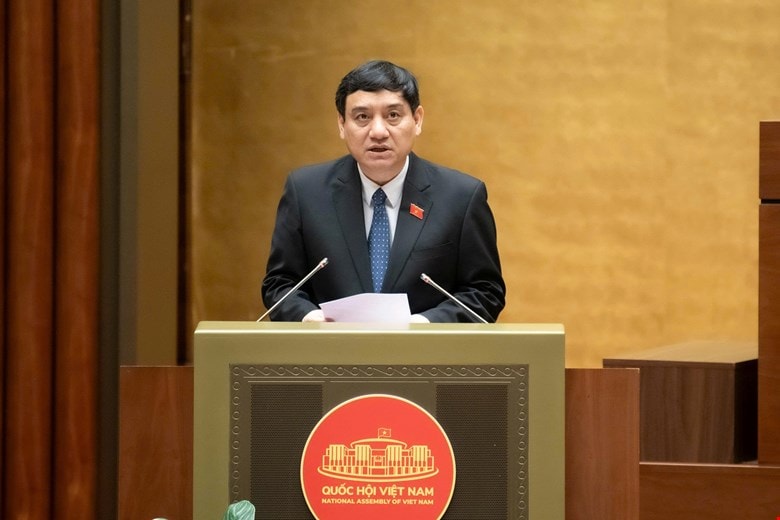
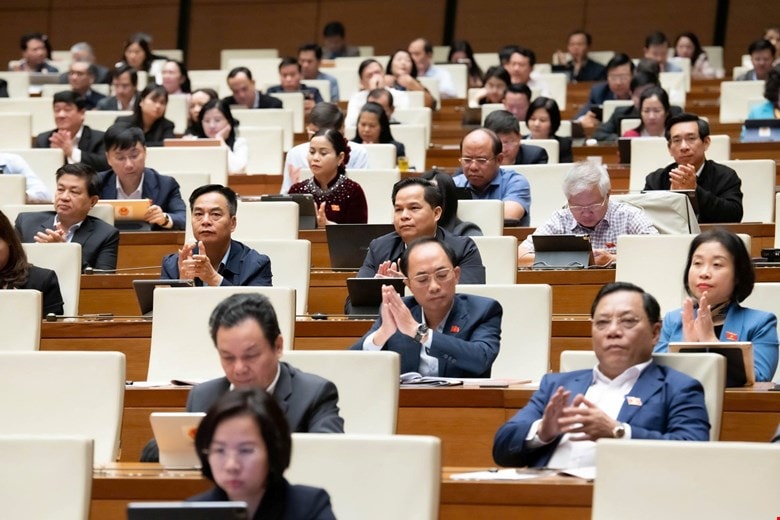
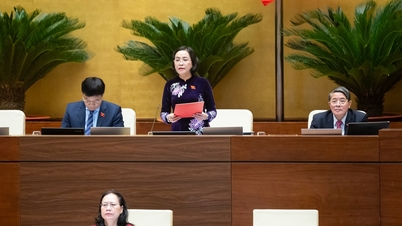
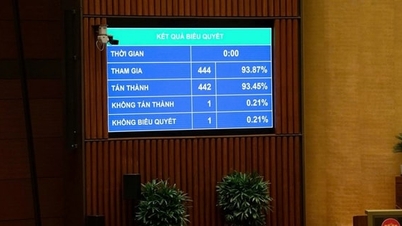
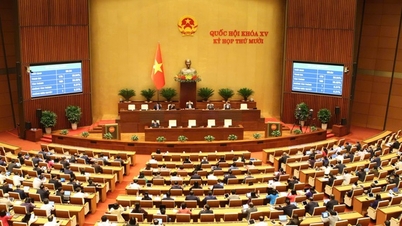
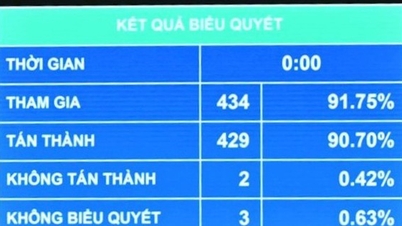
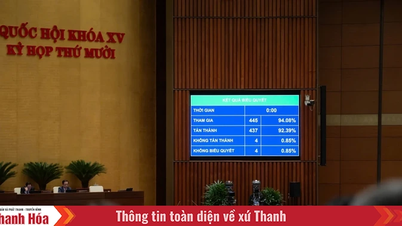
Before the adoption, the Chairman of the National Assembly's Committee on Culture and Society, Nguyen Dac Vinh, presented a report on the acceptance, explanation, and revision of the draft Law on the Press (amended).
The draft Law, after being revised and amended, consists of 4 chapters and 51 articles. It closely adheres to the major goals, viewpoints, and policies approved by the National Assembly, promptly institutionalizing the Party's guidelines and policies, and meeting the practical requirements of managing and developing the press in the current period.
Mr. Nguyen Dac Vinh stated that, compared to the current law, the draft law has the following fundamental new points: Clearly defining the types of journalism in the new context;
Supplementing press development policies and ensuring resources for implementation, from financial mechanisms to infrastructure investment and tax incentives in a more feasible direction;
Clarifying conditions for press operations, licensing mechanisms and organizational structure; identifying key multimedia press agencies, representative offices, and resident reporters.
The draft law specifies regulations regarding journalist cards, legal responsibility for information content; the right to request corrections and removal of infringing information on platforms; and the improvement of regulations on managing journalistic activities in cyberspace and the application of new technologies, including the regulation of the application of artificial intelligence (AI).
Specifically, there have been suggestions to change the term "major media, multi-media organization" to "major press organization," or to rename it "major multi-media press and media organization."
The Standing Committee of the National Assembly acknowledges and reports as follows: The phrases "leading multimedia media agency" and "leading multimedia press agency" are being used in various documents; they are not the names of the agencies but merely identify the "leading" status and "multimedia" nature of the six leading press agencies as defined in Decision No. 362/QD-TTg of the Prime Minister approving the National Plan for the Development and Management of the Press.
Based on the scope of the Law's regulation, which is the organization and operation of the press, the Standing Committee of the National Assembly directed that it be revised to "leading multi-media press agencies" to ensure accuracy and consistency.
Regarding suggestions to pilot a model of a multi-media flagship press or corporation in Hanoi and Ho Chi Minh City, the Standing Committee of the National Assembly acknowledges these suggestions and reports as follows: Currently, the Government has directed the Ministry of Culture, Sports and Tourism to summarize the Plan for the Development and Management of the Press, and plans to propose to the competent authorities to continue implementing some of the Plan's viewpoints and add new viewpoints, including the content on establishing multi-media flagship press agencies in Hanoi and Ho Chi Minh City.
Based on the direction and approval of competent authorities, the Ministry of Culture, Sports and Tourism will specify these contents in the Strategy for development and management of the press system, ensuring feasibility, consistency and conformity with the national press development orientation.
There was a suggestion that clear principles should be established before the Government is tasked with specifying the organizational model, tasks, and specific mechanisms for different types of media. The Standing Committee of the National Assembly accepted this suggestion and directed a review, stipulating in Clause 7, Article 15 that the Government is tasked with specifying the specific financial mechanisms for each major multi-media news agency, in accordance with the level of autonomy assigned by the Party and the State, to ensure flexibility in management.
Some opinions suggested prioritizing investment in key multimedia press and media agencies. The Standing Committee of the National Assembly accepted this suggestion and directed a review and revision of Clause 2, Article 9 of the draft Law to stipulate that the State invests in the national digital press platform.
In addition, Clause 5 of Article 15 of the draft Law stipulates that a leading multi-media press agency is a press agency with many types of media, affiliated press agencies, and a specific financial mechanism as prescribed by the Government.
It is prohibited to post or broadcast AI-generated content intended for fraudulent purposes.
Regarding the suggestion to add Clause 2, which prohibits the posting and broadcasting of AI-generated content intended to falsify, distort, defame, or infringe on the privacy rights of organizations and individuals, the Standing Committee of the National Assembly has accepted this suggestion and reports as follows:
Article 8 of the draft Law stipulates prohibited acts in the publication and dissemination of information, according to which the legally responsible parties are the press agency, the head of the press agency, and the author of the journalistic work. AI is a tool to assist in the creation of journalistic works, used by humans.
Therefore, the law only regulates the subjects of press agencies, the heads of press agencies, and authors of journalistic works. However, in response to the opinions of delegates, the Standing Committee of the National Assembly directed the revision of Article 39 of the draft Law to include a provision that press agencies and authors of journalistic works using artificial intelligence to support journalistic activities must comply with regulations on intellectual property, artificial intelligence, and professional ethics.
There was a suggestion to clearly define the responsibilities of governing bodies and media organizations regarding content created or supported by AI. The Standing Committee of the National Assembly accepted this suggestion and directed a review of the powers and responsibilities of media governing bodies in Article 14 of the draft Law.
Accordingly, AI is a tool to support the journalistic process; when publishing or broadcasting journalistic products created by humans or AI, the head of the media organization is responsible for the content of the information. In addition, Article 39 of the draft Law adds a provision that media organizations and authors of journalistic works using artificial intelligence to support journalistic activities must comply with regulations on intellectual property, artificial intelligence, and professional ethics.
Types of activities and revenue sources of news organizations
Regarding the types of activities and revenue sources of press agencies (Article 20), some opinions suggested clarifying the concepts of "non-profit organization," "public non-profit organization," and "public non-profit organization" when applied to press agencies, and at the same time, rephrasing the regulations in a more specific and transparent way to ensure uniformity in implementation... The Standing Committee of the National Assembly accepted these suggestions and directed a review and revision to remove the provision that scientific journals operate in accordance with the type of their governing body and to amend it as in Clause 1, Article 20 of the draft Law.
Regarding suggestions to specifically address revenue sources from journalistic collaborations, to prevent the misuse of these mechanisms for commercializing journalistic content, the Standing Committee of the National Assembly has accepted this and reports as follows: Clause 2, Article 20 of the draft Law already stipulates revenue sources from journalistic collaborations. The specific determination of these revenue sources will depend on the nature and scope of each collaboration activity. The head of the media agency must bear full responsibility for the content and activities of the collaboration, ensuring adherence to the principles and objectives and preventing the commercialization of journalism. Therefore, the Standing Committee of the National Assembly requests that the draft Law be retained as is.
There was a suggestion to add a provision authorizing the Government or the Ministry of Culture, Sports and Tourism to regulate in detail the legitimate sources of revenue for press agencies such as advertising and sponsorship. The Standing Committee of the National Assembly accepted this suggestion and directed a review and revision of the draft Law to include points d, e, and h of Clause 2, Article 20 to clarify the legitimate sources of revenue for press agencies. Legitimate revenue from advertising activities is already regulated in point b, Clause 2, Article 20.
The addition of regulations on legitimate revenue sources has been agreed upon by the Ministry of Culture, Sports and Tourism and the Ministry of Finance, ensuring compliance with laws on finance, accounting, and the autonomy mechanism.
Some argue that the current Press Law does not allow private enterprises or state-owned corporations to establish press agencies. Therefore, freedom of the press should be exercised through joint ventures, partnerships, advertising, or through associations and organizations. Specific regulations are requested.
The Standing Committee of the National Assembly has received and provided the following information: Clause 1, Article 17 of the draft Law stipulates the entities permitted to establish press agencies. Accordingly, only agencies and organizations that meet the prescribed conditions are allowed to establish press agencies.
Currently, according to the Plan for the Development and Management of the Press until 2025 and the draft Law (on the Strategy for the Development and Management of the Press System), one principle is established: Private enterprises and state-owned economic groups are not allowed to establish press agencies; they are only allowed to publish information products of a journalistic nature and carry out activities of collaboration, joint ventures, and advertising with press agencies.
This regulation aims to ensure unified management direction, maintain the independence of the press system, and at the same time ensure the transparent development of the information market in the context of implementing the policy of planning and streamlining the press system.
There was a suggestion to retain the phrase "other legitimate sources of revenue" to provide a legal basis for press agencies to diversify their revenue sources. The Standing Committee of the National Assembly accepted this suggestion and directed the amendment of point h, clause 2, Article 20 of the draft Law as follows: Revenue from legitimate sponsorships and aid from domestic and foreign organizations and individuals, and other legitimate sources of revenue (if any).
Regarding the suggestion that a state budget mechanism is needed to ensure funding for press agencies under Party, State, and Vietnam Fatherland Front organizations, the Standing Committee of the National Assembly reports as follows: Operating expenses and the financial autonomy mechanism of press agencies that are public non-business units are implemented according to the provisions of the State Budget Law and Government Decree No. 60/2021/ND-CP on the financial autonomy mechanism of public non-business units (amended and supplemented by Decree No. 111/2025/ND-CP).
In addition, Article 10 stipulates the State's policies to ensure the resources for carrying out the political tasks of press agencies, including: assigning tasks, placing orders, and bidding for propaganda activities serving political purposes, policy communication, and other key tasks.
These regulations are consistent with current laws on public finance and provide a legal basis for media agencies to exercise autonomy while still fulfilling their assigned tasks. Therefore, the Standing Committee of the National Assembly requests that the draft law be retained as is.
Source: https://hanoimoi.vn/trinh-cap-co-tham-quyen-ve-viec-ha-noi-va-thanh-pho-ho-chi-minh-thanh-lap-co-quan-bao-chi-chu-luc-da-phuong-tien-726279.html




![[Photo] Explore the US Navy's USS Robert Smalls warship](/_next/image?url=https%3A%2F%2Fvphoto.vietnam.vn%2Fthumb%2F1200x675%2Fvietnam%2Fresource%2FIMAGE%2F2025%2F12%2F10%2F1765341533272_11212121-8303-jpg.webp&w=3840&q=75)





















![[Video] The craft of making Dong Ho folk paintings has been inscribed by UNESCO on the List of Crafts in Need of Urgent Safeguarding.](https://vphoto.vietnam.vn/thumb/402x226/vietnam/resource/IMAGE/2025/12/10/1765350246533_tranh-dong-ho-734-jpg.webp)
















































Comment (0)