

With agricultural land becoming increasingly scarce, Ho Chi Minh City is forced to seek new production models suitable for its urban characteristics. In reality, instead of expanding acreage, many agricultural models are choosing to enhance value through a circular economy approach, maximizing resource utilization, reducing emissions, and increasing production efficiency.
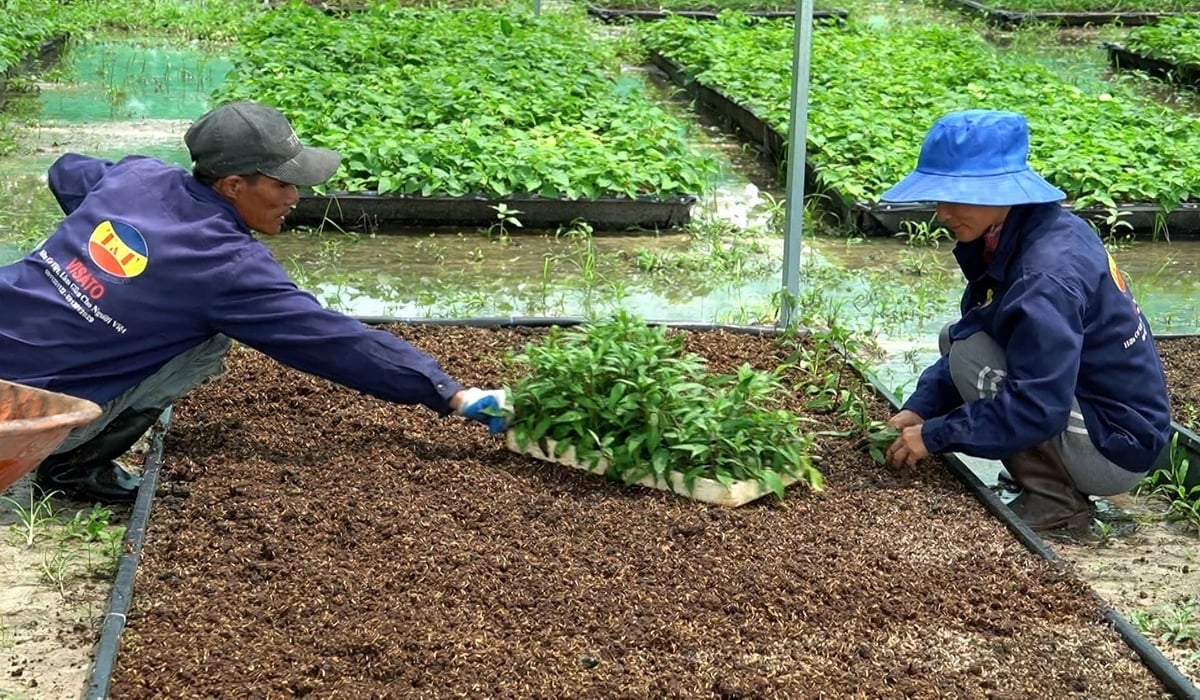
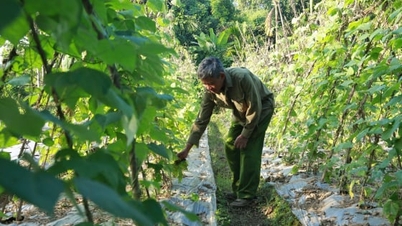
The circular organic vegetable farming model at T&T Farm, where waste is recycled into fertilizer and growing media for urban agriculture . Photo: Tran Phi.
One exemplary model is T&T Farm in An Nhon Tay commune, Ho Chi Minh City. Coming from the field of environmental treatment, Mr. Pham Dinh Thi - Director of T&T Environmental Engineering Services Trading Company Limited - noticed that a large amount of sludge and organic waste from businesses was being discarded, which was both wasteful and posed a potential risk of environmental pollution. “I always wondered why waste only had one option: landfilling. If properly treated, it could completely become a resource for agriculture,” Mr. Thi shared.
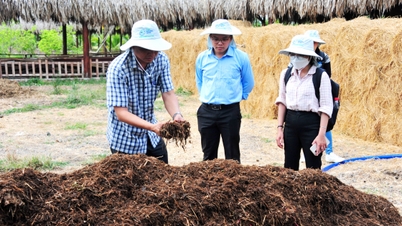
Based on that idea, Mr. Thi began researching and experimenting with various mixing formulas to transform organic waste into fertilizers and growing media for vegetables. This process was not simple because each type of waste had different characteristics, easily causing odors or decomposing quickly. After many adjustments, the T&T line of organic fertilizers was put into practical use.
Spanning approximately 1 hectare, T&T Farm currently cultivates various leafy vegetables and fruit trees, supplying an average of nearly 100kg of produce daily to the inner-city market. Producing right in Ho Chi Minh City shortens transportation time, reduces logistics costs, and maintains product freshness – an advantage that distant production areas struggle to compete with.
According to Mr. Pham Dinh Thi, the most important aspect of this circular model is not just yield but sustainability. "Organic fertilizers help loosen the soil, retain nutrients for longer, make plants healthier, reduce pests and diseases, and most importantly, build consumer trust in the product," Mr. Thi said.
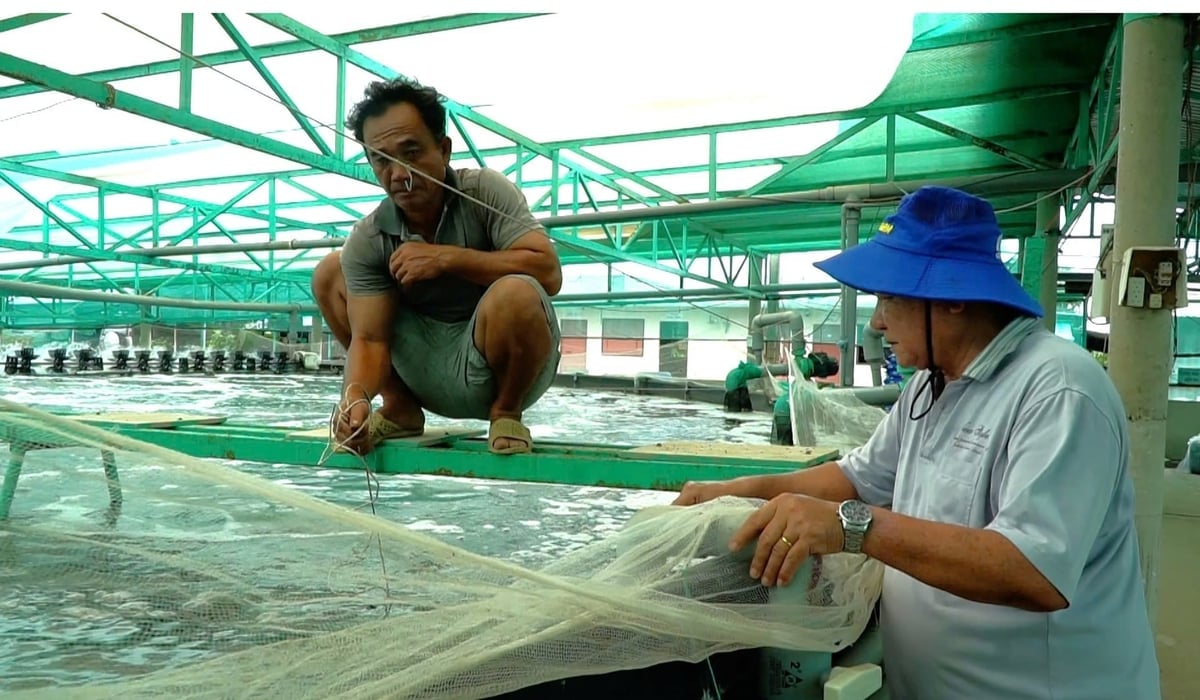
A shrimp pond using a recirculating water treatment system helps control the farming environment and limit disease outbreaks. Photo: Tuong Tu.
Alongside crop cultivation, the aquaculture sector in Ba Ria ward, Ho Chi Minh City, is also clearly demonstrating the effectiveness of the circular economy model. Here, many high-tech shrimp farms have switched from traditional methods to closed-loop systems that treat and reuse water.
The ponds are lined with tarpaulin, covered, equipped with automatic aeration systems and environmental monitoring devices to tightly control pH, salinity, and temperature. As a result, high-density shrimp farming models still ensure quality and limit disease outbreaks – a problem that used to cause significant losses for farmers.
Mr. Nguyen Kim Chuyen, Director of Quyet Thang Agricultural Cooperative (Ba Ria Ward, Ho Chi Minh City), said: “High technology helps us proactively control the shrimp farming environment. When the weather changes, the warning system helps us adjust immediately, no longer relying entirely on experience as before.”
According to Mr. Chuyen, this circular model not only helps reduce risks but also limits wastewater discharge into the environment. Water is treated and reused multiple times before being discharged, contributing to the protection of the ecosystem surrounding the shrimp farming area.
From organic vegetable gardens to high-tech shrimp farms, circular farming and aquaculture models are demonstrating that urban agriculture in Ho Chi Minh City can absolutely develop in an efficient, safe, and sustainable direction. This is a crucial foundation for the city's agriculture to adapt to rapid urbanization and climate change.
Source: https://nongnghiepmoitruong.vn/nong-nghiep-do-thi-tphcm-chuyen-minh-theo-huong-tuan-hoan-d789543.html


![[Photo] Prime Minister Pham Minh Chinh receives Lao Minister of Education and Sports Thongsalith Mangnormek](/_next/image?url=https%3A%2F%2Fvphoto.vietnam.vn%2Fthumb%2F1200x675%2Fvietnam%2Fresource%2FIMAGE%2F2025%2F12%2F16%2F1765876834721_dsc-7519-jpg.webp&w=3840&q=75)
![[Image] Leaked images ahead of the 2025 Community Action Awards gala.](/_next/image?url=https%3A%2F%2Fvphoto.vietnam.vn%2Fthumb%2F1200x675%2Fvietnam%2Fresource%2FIMAGE%2F2025%2F12%2F16%2F1765882828720_ndo_br_thiet-ke-chua-co-ten-45-png.webp&w=3840&q=75)
![[Live] 2025 Community Action Awards Gala](/_next/image?url=https%3A%2F%2Fvphoto.vietnam.vn%2Fthumb%2F1200x675%2Fvietnam%2Fresource%2FIMAGE%2F2025%2F12%2F16%2F1765899631650_ndo_tr_z7334013144784-9f9fe10a6d63584c85aff40f2957c250-jpg.webp&w=3840&q=75)
![[Photo] Prime Minister Pham Minh Chinh receives the Governor of Tochigi Province (Japan)](/_next/image?url=https%3A%2F%2Fvphoto.vietnam.vn%2Fthumb%2F1200x675%2Fvietnam%2Fresource%2FIMAGE%2F2025%2F12%2F16%2F1765892133176_dsc-8082-6425-jpg.webp&w=3840&q=75)
































![[Photo] Prime Minister Pham Minh Chinh attends the Vietnam Economic Forum 2025](https://vphoto.vietnam.vn/thumb/402x226/vietnam/resource/IMAGE/2025/12/16/1765893035503_ndo_br_dsc-8043-jpg.webp)
















Comment (0)