

Starting from the 2025-2026 winter-spring crop season, An Giang province will officially pilot 10 models of high-quality, low-emission rice production linked to green growth, with a total budget of over 38 billion VND. This is considered an important step towards realizing the project of 1 million hectares of high-quality, low-emission rice in the Mekong Delta region within the province.
According to Mr. Tran Thanh Hiep, Deputy Director of the Department of Agriculture and Environment of An Giang province, the pilot models not only provide direct support to farmers but also serve as a "practical laboratory" to refine technical processes, laying the foundation for the expansion of sustainable rice production in the coming period.
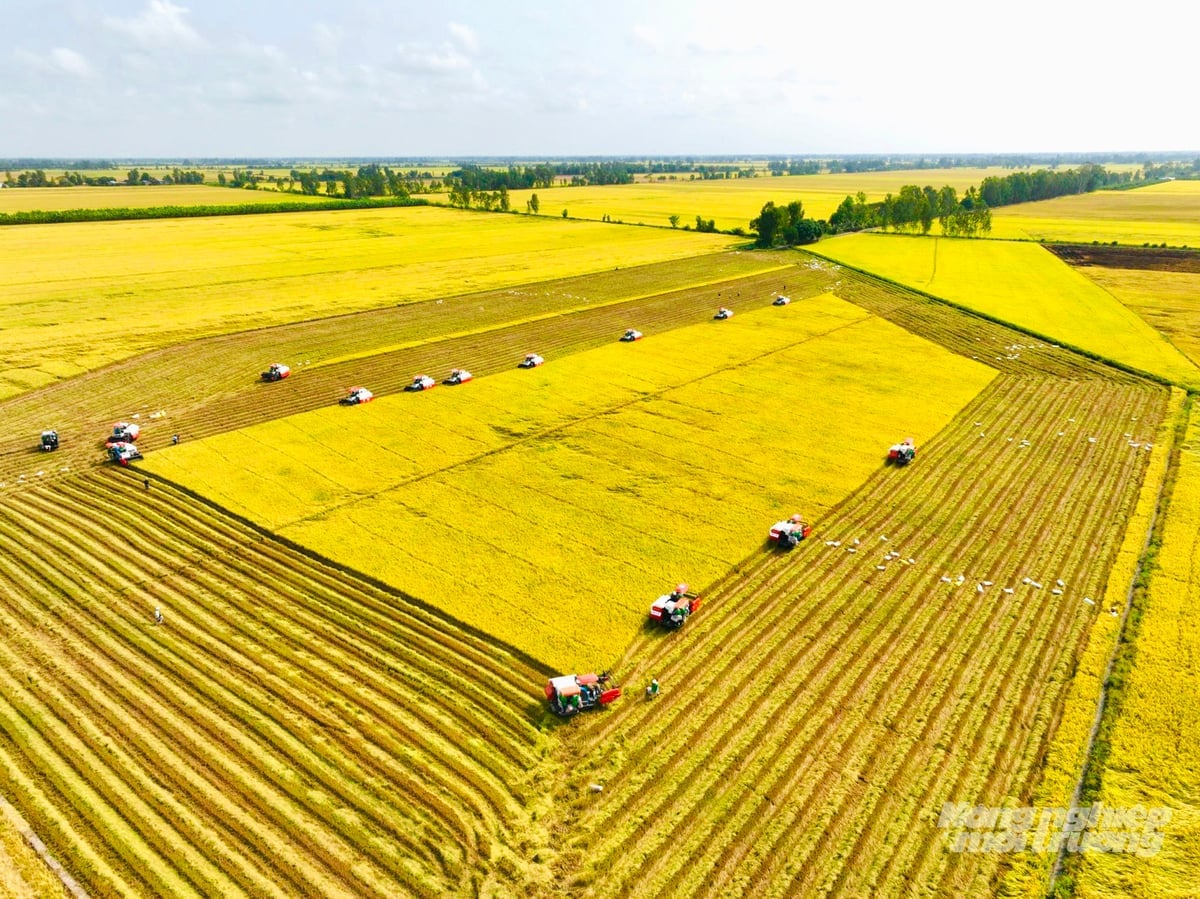
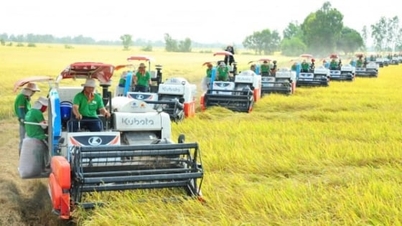
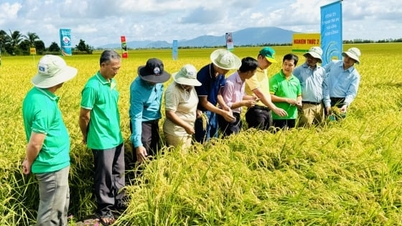
An Giang province is piloting a high-quality, low-emission rice model starting from the 2025-2026 winter-spring crop, laying the foundation for expanding the project to cultivate 1 million hectares of rice in the Mekong Delta. Photo: Le Hoang Vu.
Specifically, 10 models will be implemented in the following communes and wards: Can Dang, Co To, Chau Phong, Thoai Son, Long Dien, Phu An, Nui Cam, Nhon Hoi, My Thanh Tay, and Vinh Te ward. Each model covers 50 hectares and will be implemented throughout three production seasons, from the 2025-2026 winter-spring season to the end of the 2026 autumn-winter season. The continuous implementation over multiple seasons aims to generate comprehensive data for monitoring greenhouse gas emissions and to comprehensively assess economic and environmental effectiveness.
The models uniformly apply the technical process for producing high-quality, low-emission rice according to Decision No. 145/QD-TT-CLT dated March 27, 2024, of the Department of Crop Production. Participating farmers receive support covering up to 50% of seed costs, 50% of fertilizer costs, and 30% of pesticide costs; the remaining portion is contributed by the farmers, thereby enhancing their responsibility and proactiveness in production.
Funding exceeding 38 billion VND will be allocated from the rice cultivation land protection and development support fund, distributed to the Department of Agriculture and Environment over the two years 2025-2026. This is a crucial resource that will help An Giang gradually build a technical foundation for low-emission rice cultivation areas, in line with the green growth orientation.
One of the highlights of the pilot models is the application of synchronized mechanization throughout the entire production chain, from land preparation, sowing, care, fertilization, pest and disease control to harvesting and post-harvesting. The amount of seed sown has been significantly reduced: 80 kg/ha for the 2025-2026 winter-spring crop, and down to 65 kg/ha for the 2026 summer-autumn and autumn-winter crops.
Simultaneously, the models aim to reduce the use of chemical fertilizers and pesticides by 30% and irrigation water by 20% compared to traditional farming methods. The entire area participating in the pilot program must apply at least one sustainable farming process such as the "1 must, 5 reductions" model, alternating wet and dry irrigation, SRP standards, or other certified good agricultural practices standards, and must be assigned a planting area code.
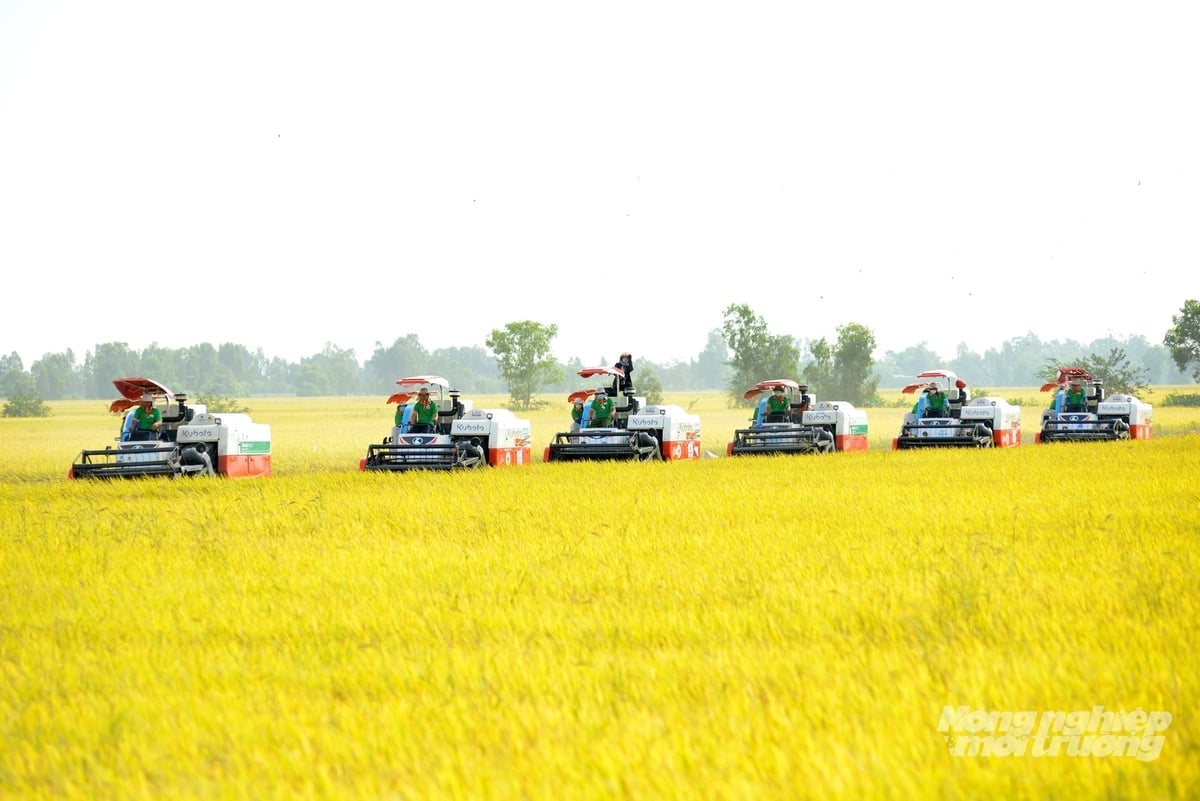
Synchronized mechanization from land preparation and sowing to harvesting helps farmers in An Giang reduce production costs, improve efficiency, and decrease greenhouse gas emissions. Photo: Le Hoang Vu.
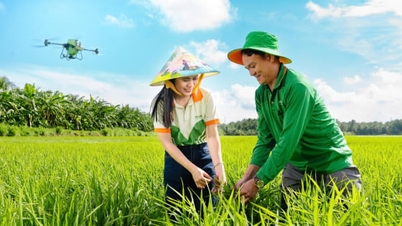
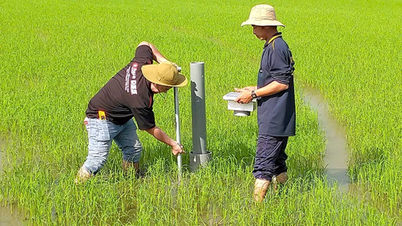
Notably, 100% of the model area was leveled using laser technology and utilized modern equipment and technologies such as rice transplanters, cluster seeders with integrated fertilization, row seeders, sensors and automatic irrigation systems, and drones for sowing, fertilizing, and spraying pesticides.
An Giang's agricultural sector also encourages farmers to minimize the use of pesticides, conserve biodiversity, and aim for safe production. Rice is harvested at the right time, when it is 85-90% ripe, using combine harvesters to reduce post-harvest losses. Rice straw is collected for mushroom cultivation, animal feed, organic fertilizer production, or other economic purposes, instead of being burned and causing environmental pollution.
Restricting straw burning, avoiding burying fresh straw in flooded fields, combining straw chopping with the use of microbial preparations for decomposition are also important solutions to reduce greenhouse gas emissions in rice production.
According to Mr. Tran Thanh Hiep, through pilot models, the agricultural sector will strengthen propaganda and guidance for farmers to uniformly apply high-quality, low-emission rice production processes. This is a prerequisite for An Giang to organize the expansion of sustainable rice-growing areas, aiming to establish 351,362 hectares of high-quality, low-emission rice linked to the reorganization of production along the value chain by 2030.
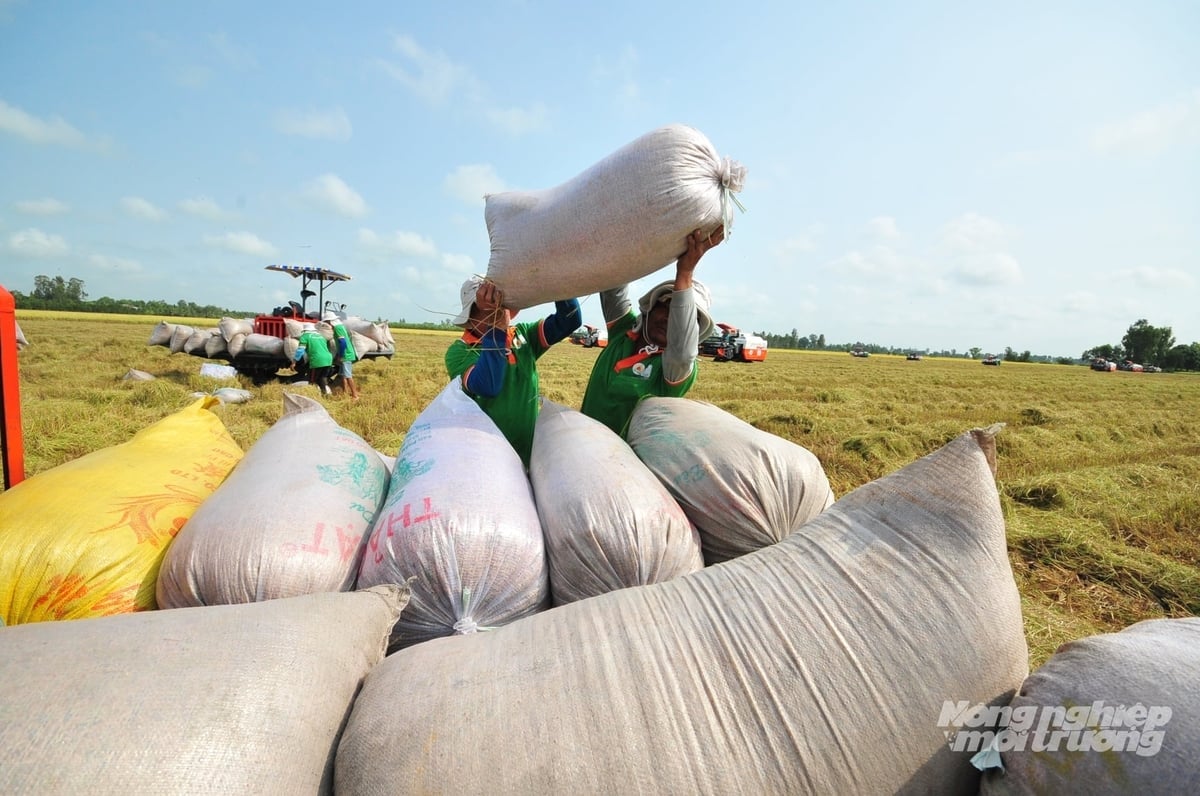
Farmers participating in the model receive support in terms of seeds, fertilizers, and the application of sustainable farming techniques such as the "1 must, 5 reductions" model, alternating wet and dry irrigation, and a focus on green production. Photo: Le Hoang Vu.
More importantly, these steps contribute to concretizing Vietnam's commitment at COP26, aiming for net-zero emissions by 2050, while simultaneously enhancing the income and position of An Giang rice in domestic and international markets.
Source: https://nongnghiepmoitruong.vn/an-giang-chi-hon-38-ty-dong-nhan-rong-lua-chat-luong-cao-d789640.html


![[Image] Leaked images ahead of the 2025 Community Action Awards gala.](/_next/image?url=https%3A%2F%2Fvphoto.vietnam.vn%2Fthumb%2F1200x675%2Fvietnam%2Fresource%2FIMAGE%2F2025%2F12%2F16%2F1765882828720_ndo_br_thiet-ke-chua-co-ten-45-png.webp&w=3840&q=75)
![[Photo] Prime Minister Pham Minh Chinh receives the Governor of Tochigi Province (Japan)](/_next/image?url=https%3A%2F%2Fvphoto.vietnam.vn%2Fthumb%2F1200x675%2Fvietnam%2Fresource%2FIMAGE%2F2025%2F12%2F16%2F1765892133176_dsc-8082-6425-jpg.webp&w=3840&q=75)
![[Photo] Prime Minister Pham Minh Chinh receives Lao Minister of Education and Sports Thongsalith Mangnormek](/_next/image?url=https%3A%2F%2Fvphoto.vietnam.vn%2Fthumb%2F1200x675%2Fvietnam%2Fresource%2FIMAGE%2F2025%2F12%2F16%2F1765876834721_dsc-7519-jpg.webp&w=3840&q=75)




























![[Photo] Prime Minister Pham Minh Chinh attends the Vietnam Economic Forum 2025](https://vphoto.vietnam.vn/thumb/402x226/vietnam/resource/IMAGE/2025/12/16/1765893035503_ndo_br_dsc-8043-jpg.webp)



















Comment (0)