

Transforming production thinking from a practical standpoint.
In the context of increasingly severe climate change and a consumer market demanding higher quality and traceability, An Giang province has been accelerating the restructuring of its agricultural sector towards modernization and sustainability. From adjusting crop structures and developing high-quality rice raw material areas linked to the 1 million hectare project, to developing cooperative economics , applying high technology, and investing in irrigation infrastructure, An Giang is shaping a new image for its high-value agriculture, adapting flexibly to climate change.
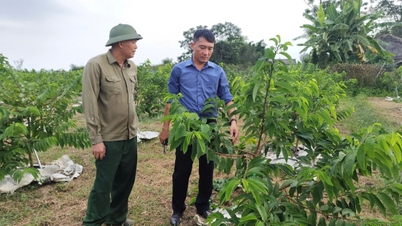
Farmers in An Giang are boldly converting low-yield rice fields to fruit tree cultivation according to VietGAP standards, helping to increase income, use land sustainably, and adapt better to climate change. Photo: Le Hoang Vu.
An Giang's agricultural restructuring is not a mere movement, but is built on a thorough assessment of natural conditions, market demands, and economic efficiency. In the first 10 months of 2025, the province's agricultural production continued to maintain stable growth. Specifically in the crop sector, the total area planted with rice reached over 1.34 million hectares, with an estimated annual output of over 8.9 million tons, exceeding the set plan. However, the focus is no longer solely on production volume, but on expanding the area of high-quality rice, organic rice, and low-emission rice, meeting the requirements of the export market.
Simultaneously, the province proactively converted nearly 10,000 hectares of low-yield rice land to other crops such as vegetables, fruit trees, and aquaculture. This conversion not only helps farmers adapt to drought and salinity conditions but also creates higher economic value per unit area.
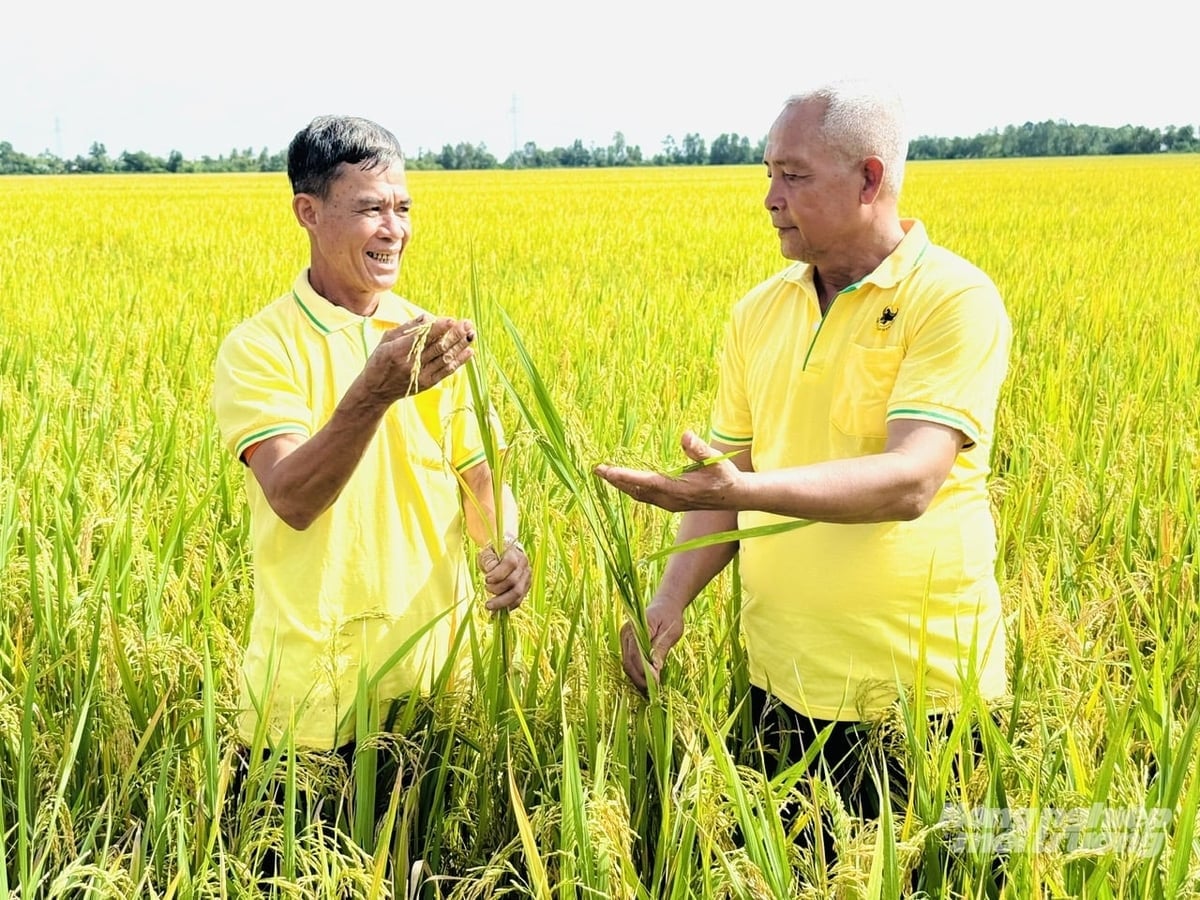
As one of the pioneering farmers in converting rice fields to fruit orchards, Mr. Nguyen Van Hoa (Cho Moi commune, An Giang province) shared that previously, his family's 3 acres of rice land were frequently affected by erratic weather, and profits were only enough to cover expenses. Since receiving support from the local agricultural sector to switch to growing mangoes according to VietGAP standards, his income has increased many times over.
Mr. Hoa said: "Growing rice yields 2-3 harvests per year, but the profit is low. Growing mangoes, although the initial investment is higher, is more stable and has a good market. Importantly, I receive technical training and connections with traders and businesses, so I feel very secure."
According to him, restructuring is not just about changing crops, but also about changing the mindset and working methods of farmers.
If farmers are the key players in restructuring, then cooperatives are the crucial link between production and the market. An Giang province currently has nearly 700 agricultural cooperatives, with an increasing number applying high technology and participating in production and consumption linkages with businesses.
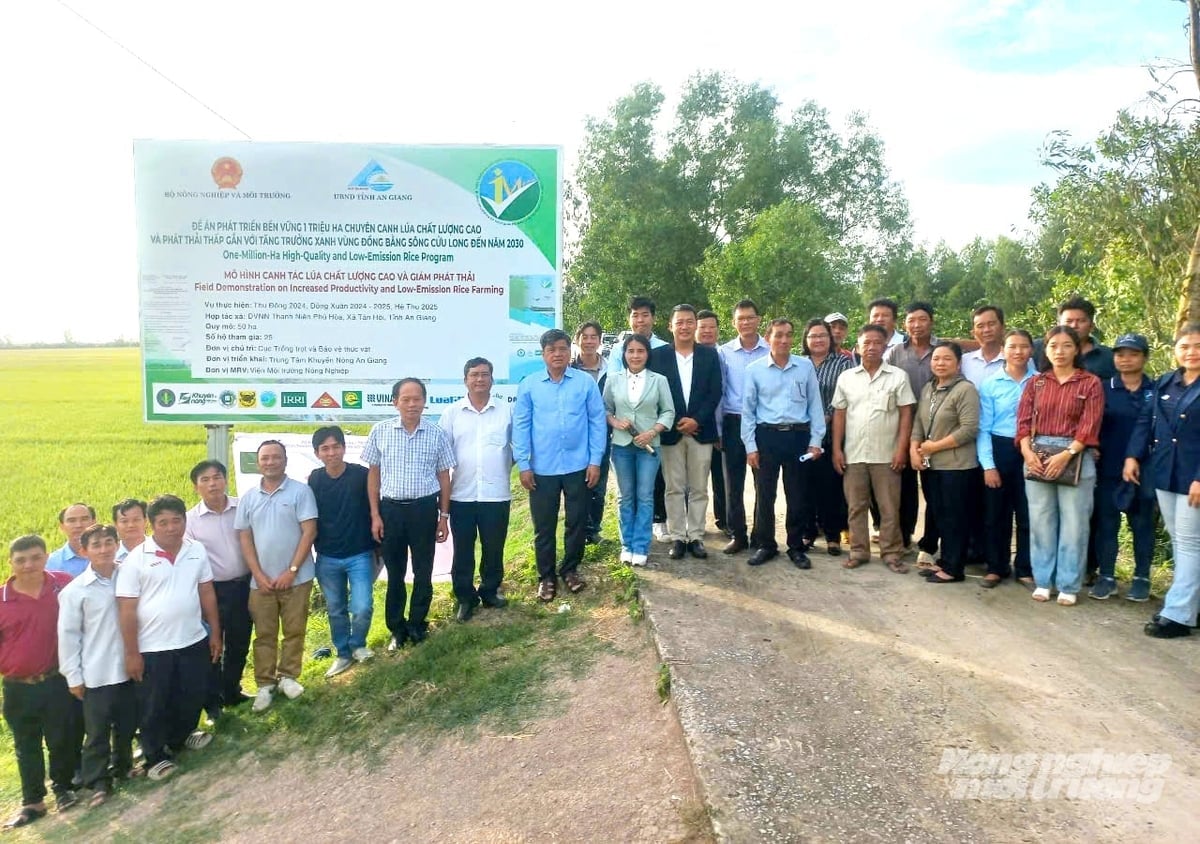
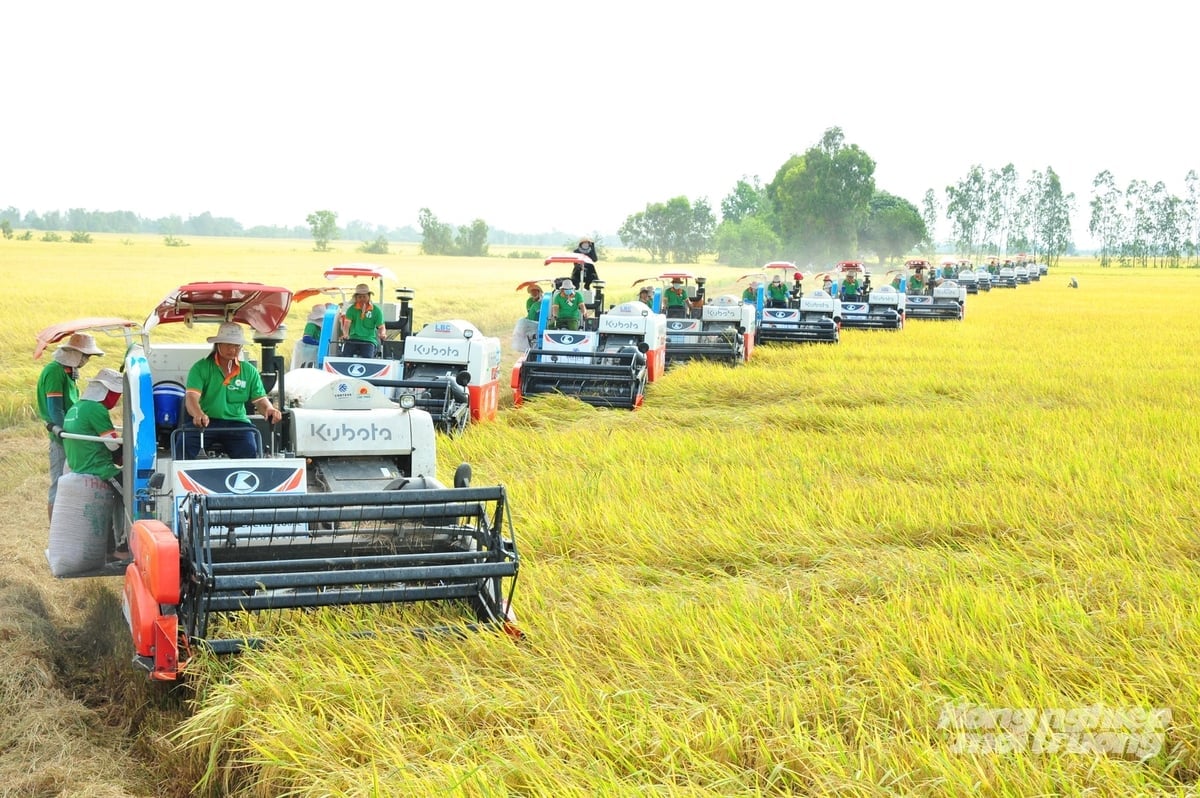
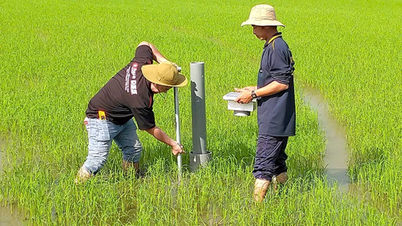
High-quality, low-emission rice production areas in An Giang are organized according to the large-scale field model, applying smart farming processes to reduce costs, increase productivity, and enhance the value of rice grains. Photo: Le Hoang Vu.
Phu Thuan Agricultural Cooperative (Phu Hoa commune, An Giang province) is a prime example. The cooperative has reorganized rice production towards uniform varieties, planting schedules, and cultivation processes that reduce costs and emissions. Thanks to contracts with export businesses, the rice of cooperative members is purchased at prices 100-400 VND/kg higher than the market price.
Mr. Tran Van Linh, Director of Phu Thuan Cooperative, said that previously, farmers produced in a fragmented manner, each working independently, resulting in high costs and low profits. Upon joining the cooperative, farmers received support ranging from seeds and techniques to marketing. Thanks to this collaboration, members' profits increased significantly, averaging several million dong more per hectare compared to individual production.
Developing large-scale high-quality rice raw material areas.
One of the key pillars of An Giang's agricultural restructuring is the implementation of the "Sustainable Development of One Million Hectares of High-Quality, Low-Emission Rice Cultivation" project. By 2025, An Giang province (after merger) will have over 144,000 hectares participating in the project, aiming for over 350,000 hectares by 2030.
Through demonstration models, the economic and environmental benefits are clearly demonstrated: production costs are reduced by 3–4 million VND/ha, productivity increases, profits increase by 6–9 million VND/ha, and greenhouse gas emissions are reduced by 7–8 tons of CO₂/ha. This is an important foundation for building a high-quality An Giang rice brand, meeting the demands of discerning markets such as the EU and Japan.
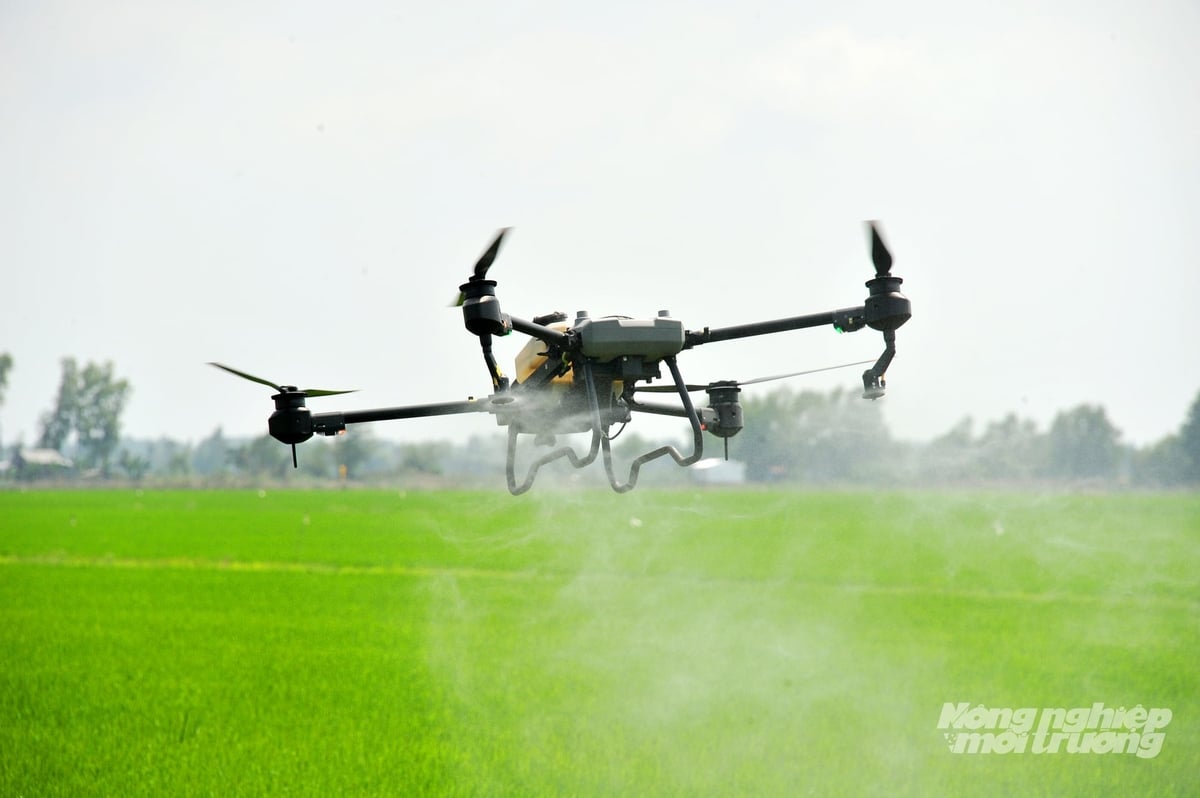
Applying Industry 4.0 technology to agricultural production aims to reduce costs and increase profits. Photo: Le Hoang Vu.
The restructuring of agriculture in An Giang is closely linked to the application of science, technology, and digital transformation. The province has granted over 1,290 planting area codes covering more than 46,000 hectares, serving both export and domestic consumption. Many cooperatives have OCOP products with 3 stars or higher, contributing to the diversification of agricultural products and increasing added value.
In addition, emphasis is placed on developing new rice varieties, fruit tree varieties, and livestock breeds adapted to climate change, ensuring a supply of high-quality seeds for large-scale production. Digital applications in production management, traceability, and market connectivity are being gradually implemented, helping farmers access information more quickly and transparently.
Modern irrigation infrastructure is considered the "backbone" of agricultural restructuring. An Giang has focused on managing, exploiting, and effectively protecting irrigation works, proactively forecasting and preventing natural disasters, and ensuring water supply for production. The synchronized investment in infrastructure not only serves rice cultivation but also creates favorable conditions for crop diversification, aquaculture, and the development of multi-value agriculture.
An Giang agricultural cooperatives sign agreements to link agricultural production and consumption with businesses, creating stable outlets, increasing profits for members, and promoting agricultural restructuring along the value chain. Photo: Le Hoang Vu.
In an overall assessment of the restructuring process, Mr. Tran Thanh Hiep, Deputy Director of the Department of Agriculture and Environment of An Giang province, said: Agricultural restructuring in recent years has gone into depth, focusing on reducing costs, improving quality and efficiency of production. More importantly, farmers have proactively adapted to climate change, shifting from a production mindset to an agricultural economic mindset.
It can be said that the restructuring of An Giang's agriculture is gradually affirming the right direction, in line with the trend of green and sustainable development. When farmers, cooperatives, businesses, and the State work together, agriculture is not only a pillar of the economy, but also becomes a modern economic sector, bringing high value and contributing to building An Giang into a smart agricultural center of the Mekong Delta region.
According to Mr. Hiep, in the coming time, An Giang province will continue to improve its production structure based on the advantages of each region, expand large-scale raw material areas, strengthen linkages between cooperatives and businesses, and promote the application of high technology and digital transformation. The goal is to create safe, high-quality agricultural products that are competitive in the domestic and export markets, while helping farmers reduce costs and increase sustainable income.
Source: https://nongnghiepmoitruong.vn/tai-co-cau-nong-nghiep-an-giang-huong-den-thong-minh-va-gia-tang-gia-tri-d789483.html

![[Photo] Two flights successfully landed and took off at Long Thanh Airport.](/_next/image?url=https%3A%2F%2Fvphoto.vietnam.vn%2Fthumb%2F1200x675%2Fvietnam%2Fresource%2FIMAGE%2F2025%2F12%2F15%2F1765808718882_ndo_br_img-8897-resize-5807-jpg.webp&w=3840&q=75)


































































Comment (0)