

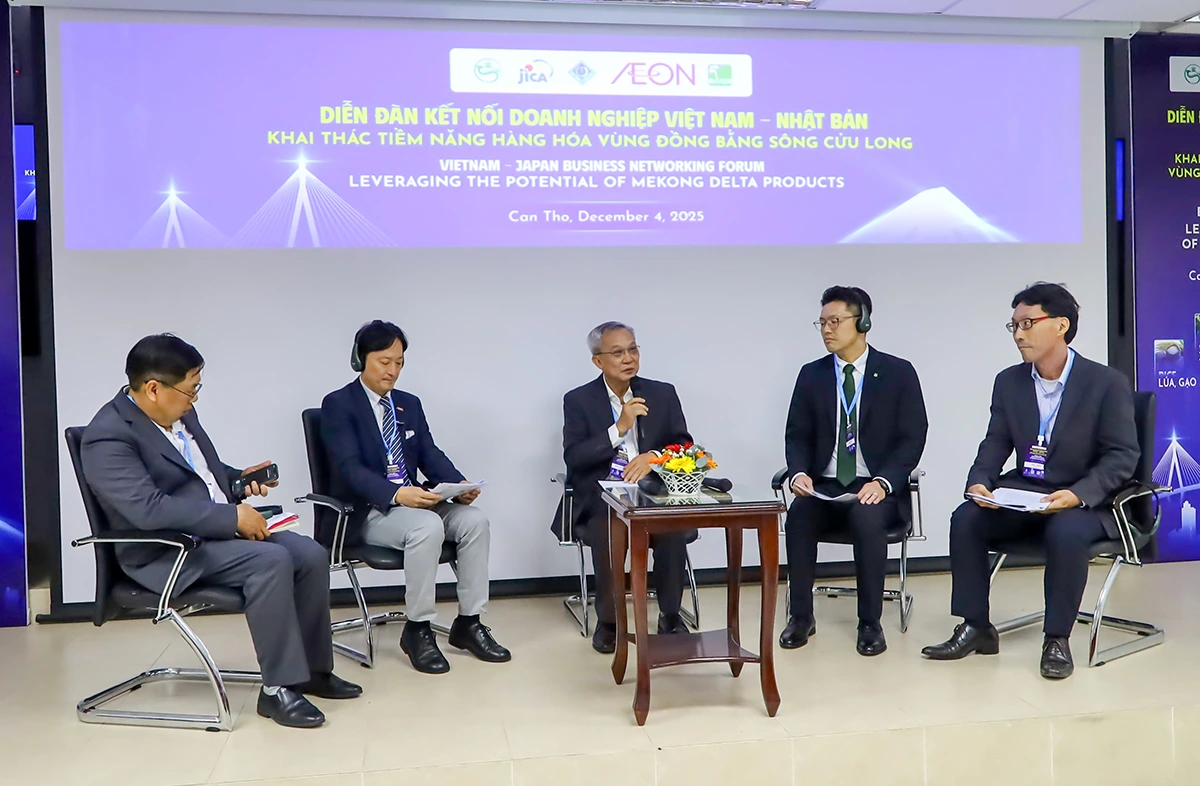
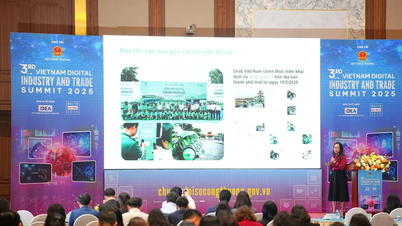
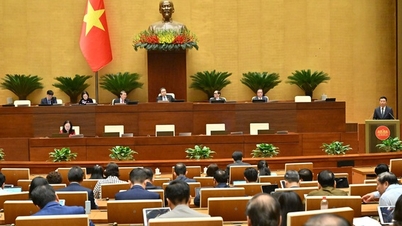
Delegates at the forum discussion session.
Great potential
Emphasizing the great potential of goods from the Mekong Delta region to meet the high standards of the Japanese market, Mr. Truong Canh Tuyen, Chairman of the People's Committee of Can Tho City, stated that in the fields of processing, industry, and trade, Japan is one of the markets with the highest standards in the world , and agricultural products from the Mekong Delta have begun to conquer this market. Typical examples include several key fruits (such as mangoes, longan, and dragon fruit) and high-quality seafood that have been successfully exported to Japan. The Mekong Delta plays a crucial role in national food security and exports. Can Tho, as the central city, is a gateway connecting the provinces in the region with the rest of the country and internationally, with an increasingly improved transportation and logistics system. Goods from the Mekong Delta, from agricultural products and seafood to processed products, have enormous potential to meet the stringent standards of the Japanese market.
As a key national university and the largest training and research center in the Mekong Delta region, Can Tho University always plays a crucial role as a bridge in transferring knowledge, supporting businesses in improving production capacity, product quality, and technological innovation. At the same time, the university also serves as a key coordinating body with international organizations, especially Japanese partners, in many large-scale and sustainable cooperation programs and projects.
Professor Tran Ngoc Hai, Vice Rector of Can Tho University, stated that the university not only transfers knowledge, enhances production capacity, product quality, and technological innovation for businesses in the Mekong Delta region, but also closely collaborates with international organizations, particularly by implementing many large-scale cooperation projects with partners such as JICA, AEON, and Takesho (Japan), contributing to the development of high-quality human resources and building a sustainable business cooperation environment.
The Japan External Trade Organization (JETRO) acts as a bridge between Japanese businesses and potential markets around the world. In Vietnam, JETRO is one of the organizations actively supporting businesses from both countries to strengthen trade, investment, and technological cooperation. Speaking at the Vietnam-Japan Business Networking Forum, Mr. Okabe Mitsutoshi, Head of the JETRO office in Ho Chi Minh City, noted that agriculture and fisheries in the Mekong Delta are areas with great potential for cooperation with Japanese businesses. Currently, localities in the region are focusing on developing high-quality agricultural products, reducing carbon emissions, and training high-quality human resources in this field. This is also a strength for cooperation with Japanese businesses, thanks to their advanced technology. However, Vietnamese businesses' interest in this area remains limited.
Chairman of the People's Committee of Can Tho City, Truong Canh Tuyen, acknowledged that the results of investment and cooperation with Japanese partners have not yet met expectations and are not commensurate with the potential that the region possesses. “We recognize the necessity of attracting investment capital, advanced technology, and modern management experience from Japan to enhance the added value of goods in the Mekong Delta. In the context of globalization and rapidly changing climate, exploiting the potential of goods in the Mekong Delta region is not just about increasing production, but about a fundamental transformation from traditional agriculture to smart agriculture, from raw exports to deep processing, from single supply chains to sustainable, environmentally friendly value chains. We believe that the key to unlocking the full potential of the abundant goods from this ‘rice bowl, fruit bowl’ is the strategic partnership with Japanese partners, a leading country in technology, quality management, and green standards,” Mr. Truong Canh Tuyen shared.
Expectations for “Made in Mekong”
At the Vietnam-Japan Business Networking Forum, experts raised questions and discussed the reasons why Japanese investment in the Mekong Delta has not yet taken off, despite the region's great potential. Analysis indicated that bottlenecks in accessing capital, technology, logistics infrastructure, quality standards, and market strategies need to be clarified to foster deeper cooperation. In this context, many expressed hope that "Made in Mekong" products would soon appear on Japanese supermarket shelves.
On February 14, 2025, Can Tho University, together with AEON Vietnam, Takesho Food and Ingredients Company, and Takesho Food Company, signed a memorandum of understanding to cooperate in developing processed food products under the AEON TOPVALU private label, produced by businesses in the Mekong Delta region. The project aims to exploit abundant raw materials, research and develop processed food products under the TOPVALU brand, contributing to strengthening the food processing industry and building the "Made in Mekong" brand. The project is expected to promote public-private partnerships and develop high-quality human resources for the region.
To attract investment to Vietnam in general and Can Tho in particular, representatives of Japanese organizations and businesses believe that attention should be paid to training human resources, especially those that meet global standards. This includes not only proficiency in their professional field and foreign languages (such as Japanese) but also a certain understanding of the culture of foreign businesses. The sociable and friendly nature of the people of the Mekong Delta is an advantage; the important thing is to leverage this strength as a key selling point to attract investors.
A representative from AEON Vietnam stated that a key challenge in operating its retail segment in Vietnam is the underdeveloped cold chain logistics system. The lack of cold chain carriers sometimes affects the quality of goods from manufacturers' warehouses to retail outlets (supermarkets). Along with this, the company expects that in the future, more products from the Mekong Delta, such as seafood and fruits, will be distributed more extensively within AEON's global network of 20,000 stores.
Mr. Vuong Thanh Nam, Deputy Director of the Can Tho City Department of Finance, said that the city is accelerating administrative procedure reforms towards speed and clarity, including promoting digitalization to shorten processing times, ensure transparency, and prevent unnecessary bureaucratic delays. Along with this, the city is maintaining legal stability, improving the quality of planning; preparing land and the ecosystem for industrial zones and clusters; developing logistics infrastructure and supply chains… Notably, the city has allocated 30 hectares of land to establish the Vietnam-Japan Friendship Industrial Park to be ready to welcome Japanese investors.
Associate Professor Tran Trung Tinh, Rector of Can Tho University, outlined three key expectations: building a "co-creation" ecosystem between the university, businesses, and localities; developing a chain of high-quality "Made in Mekong" products; and strengthening the role of Can Tho University in training and supplying high-quality human resources. Specifically, the university hopes to collaborate with AEON, Takesho, and other Japanese businesses to form research and innovation groups, joint laboratories, and joint R&D projects to develop new products from agriculture and aquaculture in the Mekong Delta; apply processing, preservation, and standardization technologies; and create a workforce that meets the needs of Japanese businesses. The university is committed to designing training programs according to the needs of Japanese businesses; expanding internships and dual training; and improving foreign language proficiency and professional skills. At the same time, the university hopes for businesses to partner in training, commissioning research, and recruiting students. Can Tho University is committed to designing training programs according to the needs of Japanese businesses; and will continue to play a leading role in coordinating cooperation, translating forum discussions into concrete programs that bring practical value to the Mekong Delta.
“We believe that ‘Made in Mekong’ is not just a brand, but will become a long-term strategy to elevate the quality of products from the Mekong Delta,” Associate Professor Dr. Tran Trung Tinh affirmed.
Text and photos: KHANH NAM
Source: https://baocantho.com.vn/mo-loi-cho-hang-hoa-dong-bang-song-cuu-long-vuon-xa-a195238.html


![[Photo] Explore the US Navy's USS Robert Smalls warship](/_next/image?url=https%3A%2F%2Fvphoto.vietnam.vn%2Fthumb%2F1200x675%2Fvietnam%2Fresource%2FIMAGE%2F2025%2F12%2F10%2F1765341533272_11212121-8303-jpg.webp&w=3840&q=75)















![[Video] The craft of making Dong Ho folk paintings has been inscribed by UNESCO on the List of Crafts in Need of Urgent Safeguarding.](https://vphoto.vietnam.vn/thumb/402x226/vietnam/resource/IMAGE/2025/12/10/1765350246533_tranh-dong-ho-734-jpg.webp)










































Comment (0)