

Straw is still wasted
Vietnam is one of the leading rice producing and exporting countries in the world , producing about 43-44 million tons of rice each year, along with that our country also has an equivalent amount of straw. Straw can serve many purposes to bring great benefits to people such as growing straw mushrooms, covering vegetable roots, making animal feed, fuel, household items, biological materials or organic fertilizers.
With the many practical uses and benefits that straw brings, recently, people in localities where rice is grown in the country have been interested in collecting straw to serve many purposes, helping to improve the rice value chain. However, due to difficulties in collecting, consuming straw and developing effective models in exploiting and using straw, in many places straw is still burned in the fields. Many farmers have not yet realized the full value of straw, want to quickly process straw to produce the next rice crop, so they still maintain the habit of burning straw after harvesting rice.
In the country's key rice production region, the Mekong Delta, there are about 24-25 million tons of straw every year. According to reports and assessments by authorities, straw in the Mekong Delta has not been optimized for efficiency. Over 50% of the amount of straw in the region is still burned or left in the fields, causing pollution, greenhouse gas emissions and loss of economic value.
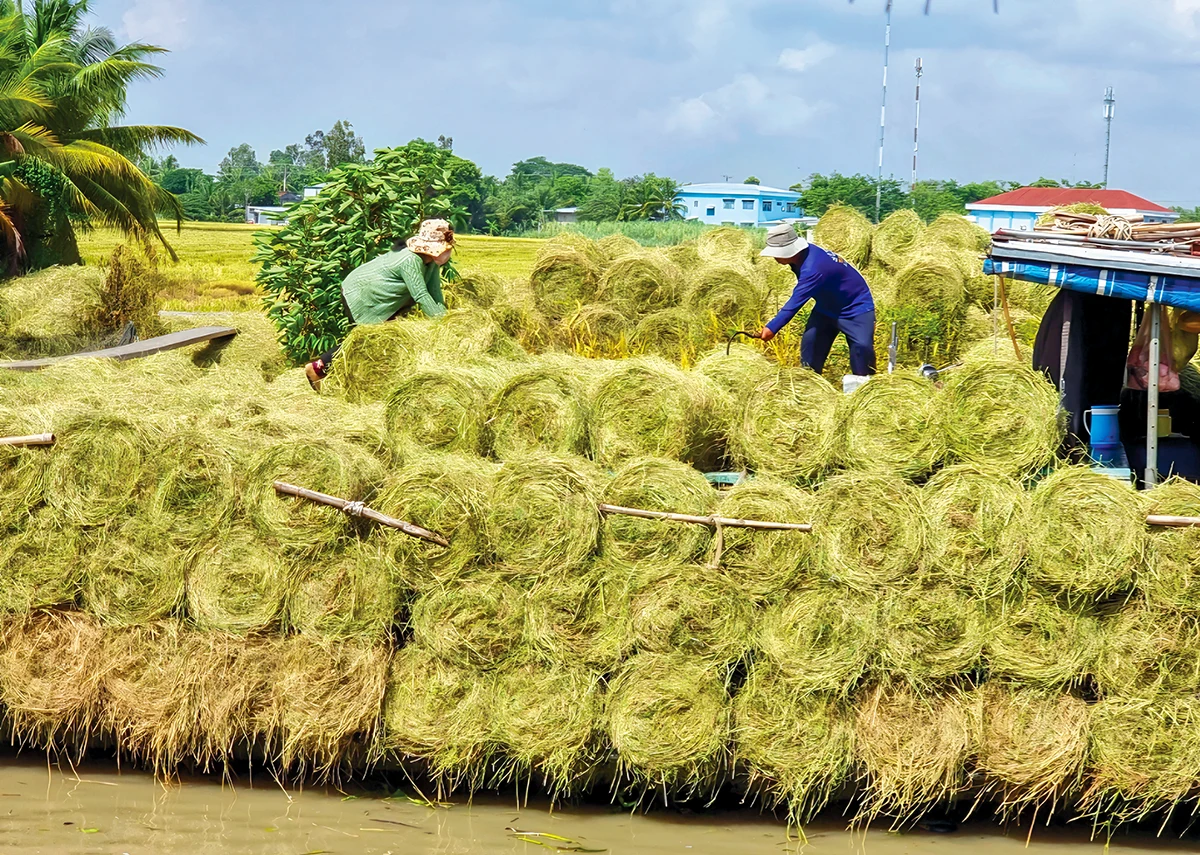
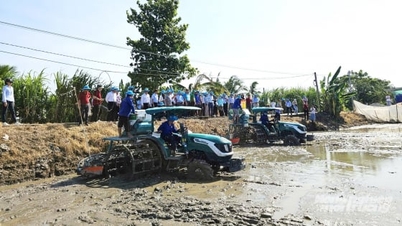
The Mekong Delta region has an abundant source of straw. In the photo: Straw collection in Can Tho City.
According to the survey and assessment of the research team including experts from Can Tho University and the International Rice Research Institute (IRRI), the management, exploitation and use of straw resources in the Mekong Delta are still facing difficulties due to high collection, transportation, loading and unloading costs and low straw prices. There are not many sustainable and inclusive business models. There is a lack of large-scale collection mechanisms and straw has not been integrated into agricultural logistics planning. The straw value chain is still scattered, lacking connections, and the roles and benefits between actors are unclear. The added value is low, the market is unstable, and there is a lack of standards and price information. Straw is still considered a by-product, not recognized as a biomass resource, and lacks national technical standards.
Focus on optimizing the efficiency of straw use
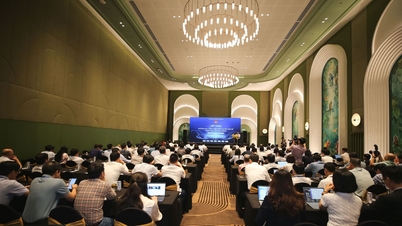
To promote the implementation of solutions, good practices and policy proposals for effective management and exploitation of straw, the Department of Cooperative Economics and Rural Development under the Ministry of Agriculture and Environment (MARD) in collaboration with IRRI and the Vietnam Rice Industry Association organized a workshop on "Straw Value Chain: Policy and Investment Opportunities". At this workshop, many delegates recommended that competent authorities should promote propaganda and training to improve knowledge for farmers and cooperatives on how to manage and use straw. Support the development of circular economic models from straw, as well as expand the market for straw consumption and carbon credits to motivate farmers in straw collection. Timely complete the policy framework and data system to manage and exploit straw resources well and control and completely handle straw burning. Develop mechanized service models and logistics systems to reduce costs in straw exploitation and use. There are preferential policies to support farmers in terms of capital, technology and promote value chain linkages.
Mr. Cao Duc Phat, former Minister of Agriculture and Rural Development (now the Ministry of Agriculture and Environment), said: “It is necessary to identify straw as a resource and use it effectively. From such awareness, we can have appropriate responses and consider straw treatment as an important content in the development strategy of the rice industry and green, low-emission agriculture.”
According to Mr. Cao Duc Phat, it is necessary to build a synchronous policy system, focusing on the market and technology as a lever. Currently, 50% of straw is still burned or buried in the fields, which means that supply is far exceeding demand and the price of straw in many places is only about 1,000 VND/kg. Therefore, it is necessary to have policies to stimulate the market, remove difficulties and obstacles to activate and create a vibrant market both domestically and internationally. Encourage investment and technology development to increase the value of straw.
According to Mr. Robert Caudwell, IRRI Representative in Vietnam, rice straw must be viewed as a valuable resource that needs to be exploited. The utilization of rice straw has great potential to promote a green economy in Asia, support sustainable agriculture and create new income streams for farmers through conversion into many value-added products such as animal feed, biofertilizer and other materials.
In Vietnam, IRRI has been actively coordinating with authorities, cooperatives and partners to support farmers in developing circular economic models from straw and implementing sustainable straw management solutions, contributing to Vietnam's successful implementation of the Project on one million hectares of high-quality, low-emission rice associated with green growth in the Mekong Delta by 2030.
In the context of the Government approving the One Million Hectare High-Quality, Low-Emission Rice Project under Decision 1490/QD-TTg and committing to Net Zero by 2050, straw management is no longer a purely technical issue, but has become a strategic pillar of green transformation in the rice industry. If we do not thoroughly address the straw story, the goal of reducing emissions and improving the value chain will be difficult to achieve.
According to Mr. Le Duc Thinh, Director of the Department of Economic Cooperation and Rural Development, to solve the problem of straw, we need to focus on three key issues. Firstly, we need to improve the institutions and legal framework to recognize straw as a biomass resource, not a waste by-product. At the same time, we need to issue standards and technical regulations on collection, preservation, transportation, and reuse, creating a legal foundation for the sustainable development of the straw market. Secondly, we need to reorganize the value chain with the central role of cooperatives, develop a cooperative model that provides mechanized straw collection services, form a collection point, closely link with enterprises processing organic fertilizers, biochar, biomass pellets and apply technology. This connection will bring a stable supply, share value and increase income for farmers. Third, it is necessary to synchronously mobilize financial resources and integrate carbon mechanisms, such as taking advantage of chain credit packages and linkage support mechanisms according to Decree 98/ND-CP... At the same time, promptly build a measurement, reporting and verification (MRV) system for straw, integrate it into the carbon credit mechanism, thereby creating clear economic incentives for people and businesses to participate in sustainable models.
Article and photos: KHANH TRUNG
Source: https://baocantho.com.vn/phat-huy-nguon-loi-to-lon-tu-rom-a194996.html
![[Photo] 60th Anniversary of the Founding of the Vietnam Association of Photographic Artists](/_next/image?url=https%3A%2F%2Fvphoto.vietnam.vn%2Fthumb%2F1200x675%2Fvietnam%2Fresource%2FIMAGE%2F2025%2F12%2F05%2F1764935864512_a1-bnd-0841-9740-jpg.webp&w=3840&q=75)

![[Photo] National Assembly Chairman Tran Thanh Man attends the VinFuture 2025 Award Ceremony](/_next/image?url=https%3A%2F%2Fvphoto.vietnam.vn%2Fthumb%2F1200x675%2Fvietnam%2Fresource%2FIMAGE%2F2025%2F12%2F05%2F1764951162416_2628509768338816493-6995-jpg.webp&w=3840&q=75)


































































Comment (0)