

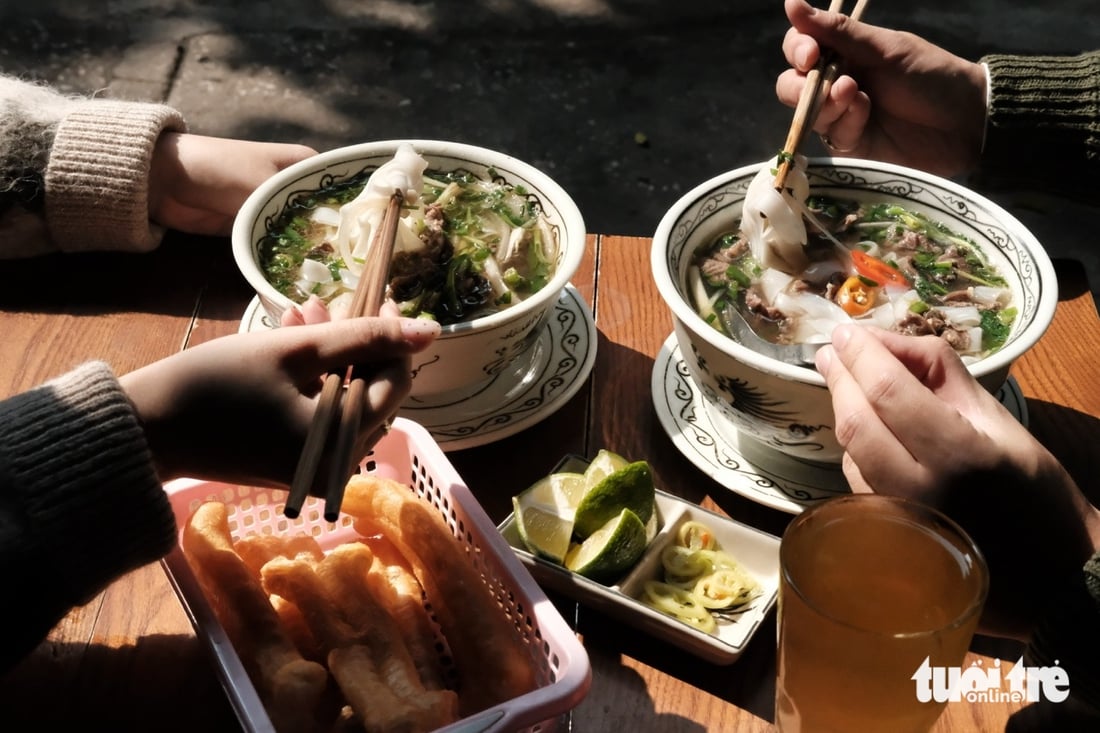
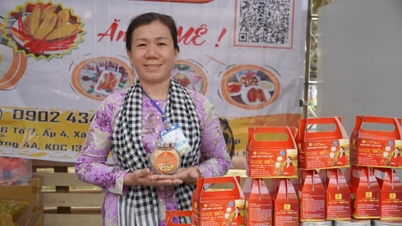
Pho Ngoc Vuong's homemade rice noodles - Photo: DAU DUNG
The signature of this brand is the homemade pho noodles, which are large, soft, and smooth. The broth is sweet from the bones, carrying the beloved Vietnamese flavor.
In a conversation held ahead of Pho Day, which took place on December 13th and 14th in Ho Chi Minh City, Mr. Vuong shared with Tuoi Tre Online his firsthand experiences about the journey of pho in his area, some of which he finds quite amusing when he thinks back on them now. The days of selling pho were "wild and uninhibited"!
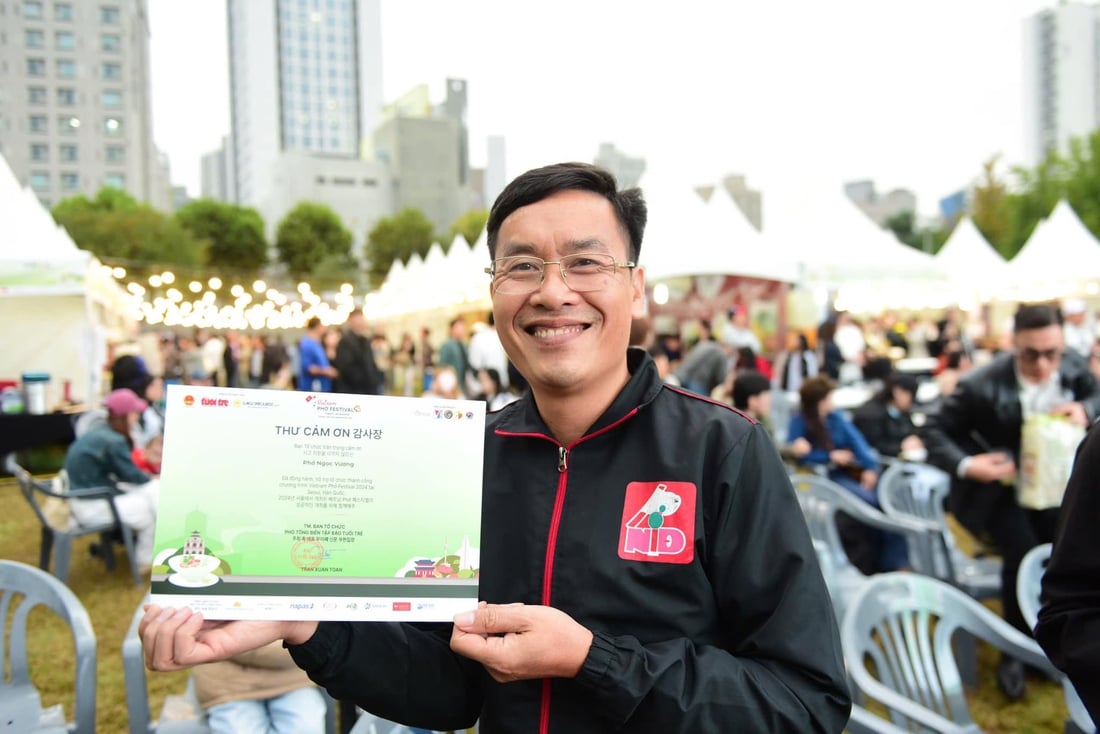
Mr. Vu Ngoc Vuong received a thank you letter from Tuoi Tre newspaper for participating in Vietnam Pho Festival 2024 in Korea - Photo: NVCC
We need to announce to the world what are the core ingredients in a bowl of traditional Vietnamese pho so that we can have a coherent strategy to promote pho.
Vu Ngoc Vuong
"My hometown is Van Cu, but pho has reached its peak in Hanoi ."
Mr. Vuong told the 6X, 7X generation like him, if you are a person from Van Cu village, pho is "infused" into your blood from a young age. When he grew up, he saw a couple of pho shops in the village, the best one was Mr. Quynh's pho. He himself often had pho cooked for him by his paternal and maternal grandfathers.
According to the predecessors, the shift from agriculture to pho making in Van Cu was prompted by the economic difficulties of the period after 1954. The agricultural cooperative model could not ensure the livelihood of the people, forcing them to find other livelihoods.
Since the 1980s, an informal but very strong supply line has been established between Van Cu village and the pho-selling community in Hanoi. Even today, about 70-80% of pho noodles for pho restaurants in Hanoi are supplied by people from this village.
Mr. Vuong's mother once carried 50kg of rice, took a horse cart from Van Cu to Nam Dinh bus station and then took the train to Hang Co station (Hanoi). From here, she carried the rice to deliver to her relatives' pho noodle factories on Kham Thien and Nam Ngu streets, up to the old town.
Villagers brought rice to Hanoi to sell; when they returned, they bought tools and materials that were scarce in their hometowns, such as iron and steel, to build houses.
In the summer of 1991, after finishing secondary school, Mr. Vuong started going to Hanoi to trade rice, selling it to pho noodle making establishments. According to him, the best rice to make pho noodles is old rice, not new rice; among which, Vietnam 10 rice and 203 rice produce the best pho noodles. Later, when Vietnam 10 rice became scarce, people switched to using five-number rice, for example code 17494. Currently, establishments often use Khang Dan rice.
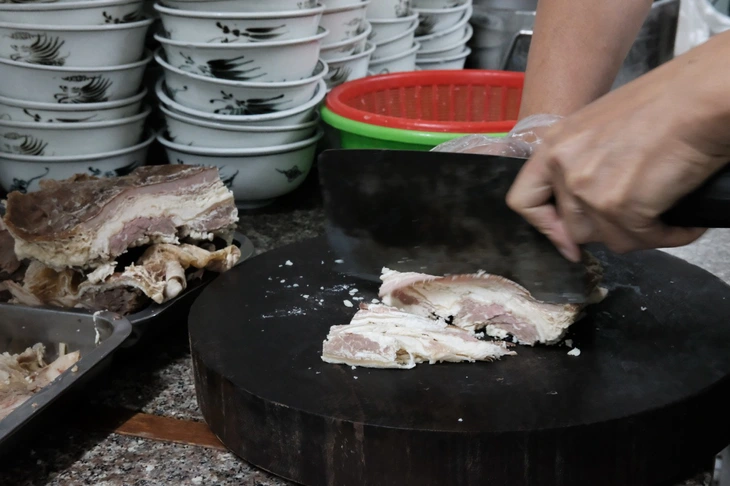

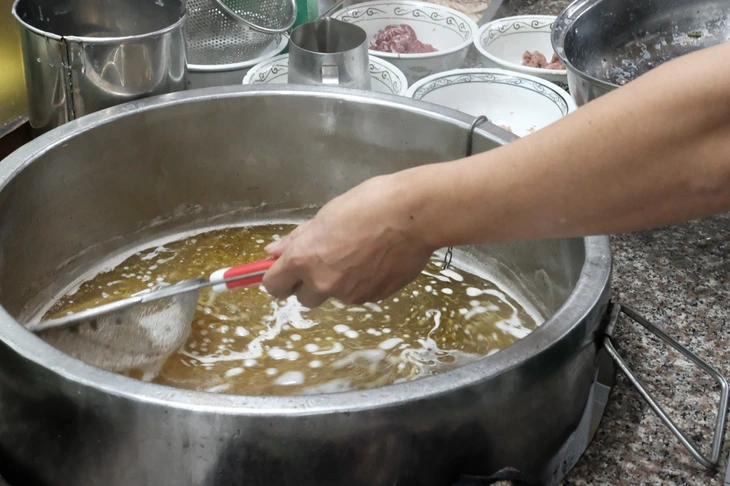

Mr. Vuong cooks pho in the traditional style - Photo: DAU DUNG
However, in those days there was not always enough rice to make it. People had to combine braised rice (a type of rice that had no plastic, cheap) with cold rice or a little borax to increase the stickiness and toughness of the rice noodles.
After that, he worked as a waiter for a restaurant, learning how to operate the model; in 1998, Vu Ngoc Vuong opened the first pho restaurant on Thai Ha street and has been selling pho since then for nearly 30 years.
His village has a hundred-year-old pho tradition, but clearly "pho is most popular in Hanoi. People here have the means and taste. The population is large, so the market is more vibrant. This is where pho reaches its greatest prosperity and commercial development."
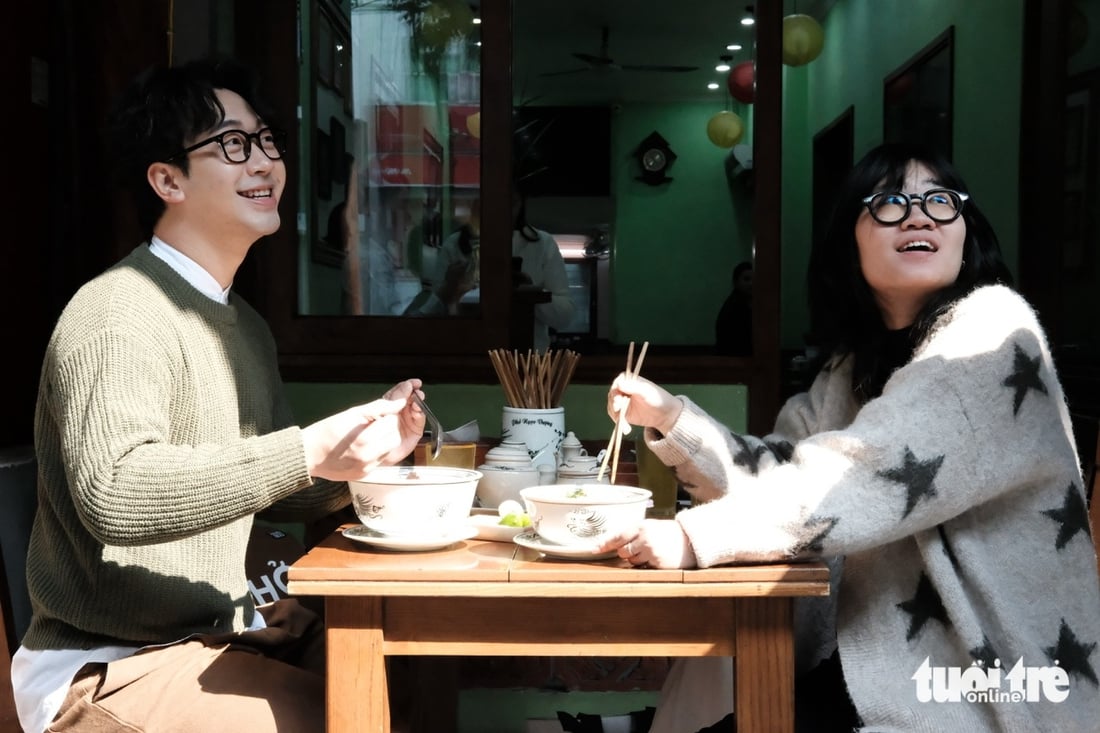
Eating pho in winter is even more delicious - Photo: DAU DUNG
Hormonal crisis and the stubbornness of young people in their twenties.
In the late 1990s, the shift from manual to machine production significantly increased pho noodle production.
The lack of temperature control leads to the use of formalin - an antibacterial additive that prevents bacteria from growing - in pho noodles to help them last longer. In addition, to compete with each other, some establishments apply a policy of returning unsold noodles, leading to the use of formalin to prolong the storage time.
This caused the pho and vermicelli industry to be shaken, almost boycotted by the public in 2000 when the press and media reported it.
"Can you imagine? Pho Ngoc Vuong in Thai Ha was very famous at that time, sometimes serving thousands of customers in the morning, but it became as deserted as a temple," he recalled. However, instead of closing like many other restaurants, Pho Ngoc Vuong still opened to welcome customers.
He said the restaurant has a group of regular customers including party secretaries, police officers, and ward chairmen, but after the news reported it, they still come and order instant noodles.
At that time, the restaurant owner was stubborn: "You guys eat pho today."
"- No, we eat instant noodles.
- Normally I sell instant noodles but today I won't sell them. I know you guys are afraid of pho noodles but these are homemade noodles. If necessary, I'll eat them for you to see. Or you guys can go buy instant noodles and bring them to me so I can make them for you, but I won't sell them. I can't bear to see you guys eating instant noodles."
Because in the opinion of the young Vu Ngoc Vuong in his early 20s at that time, pho must have pho noodles. How stubborn! Remembering that ancient conversation, he laughed out loud.
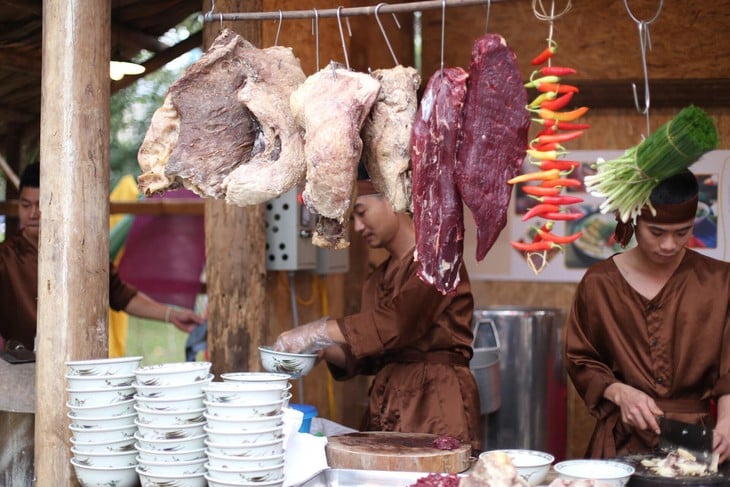
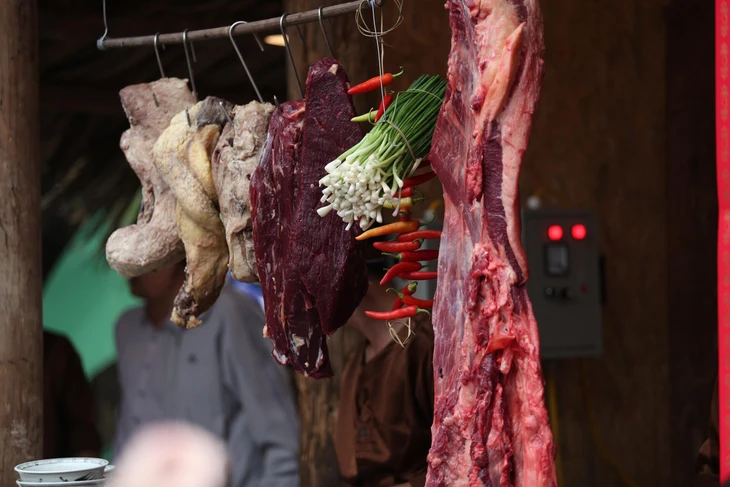
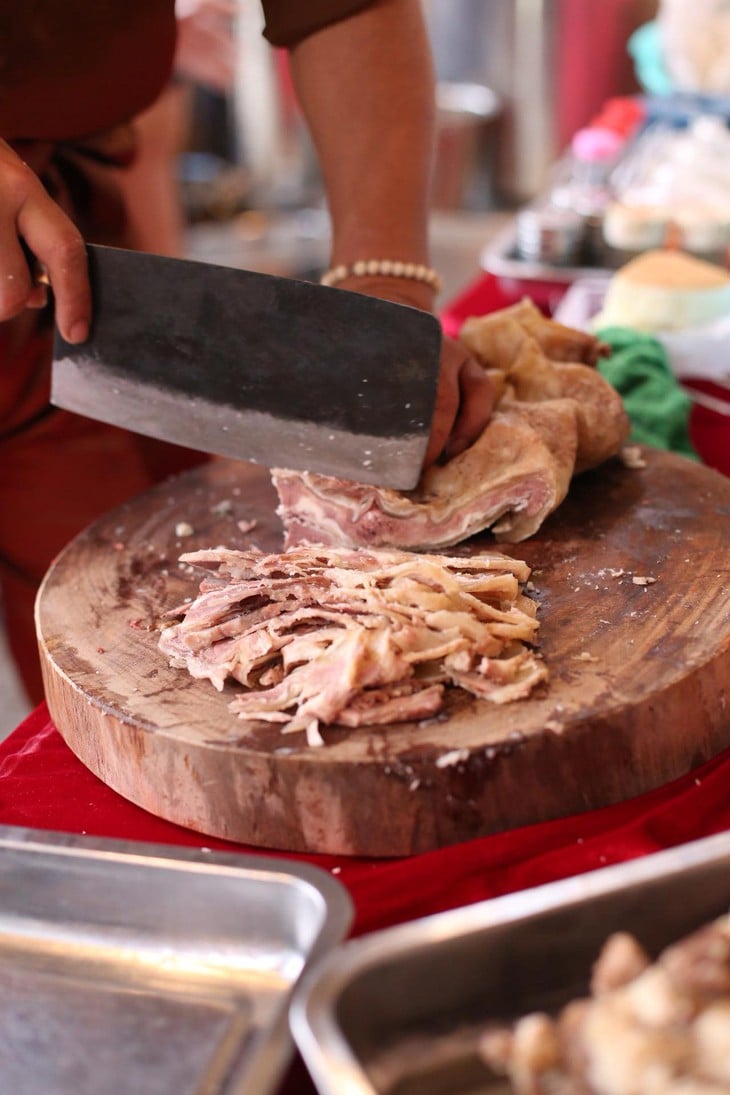
Pho is the national dish of Vietnam - Photo: NVCC
He said that after that, the authorities took positive steps to ensure food safety, forcing businesses to sign commitments and test their products. Pho noodle production facilities must be confirmed and certified by the Department of Health or the district health center.
The crisis came like a storm and passed like a storm. After this incident, the pho industry recovered quickly and moved into a phase of greater attention to food safety and hygiene standards.
Looking back now, Mr. Vuong believes that people working in traditional professions, especially in craft villages, often have certain limitations in their awareness and production is mainly based on word of mouth and practice passed down from father to son.
They also do not understand that there are things that not only negatively affect the environment but also negatively affect themselves and their families. For example, many years of producing pho noodles with coal, that is not a good thing.
Even the use of formaldehyde that shocked public opinion, was not because people were evil, but because of ignorance. Hearing this person or that person say that using that additive could preserve the cake longer, people encouraged each other to use it, without fully realizing its dangers.
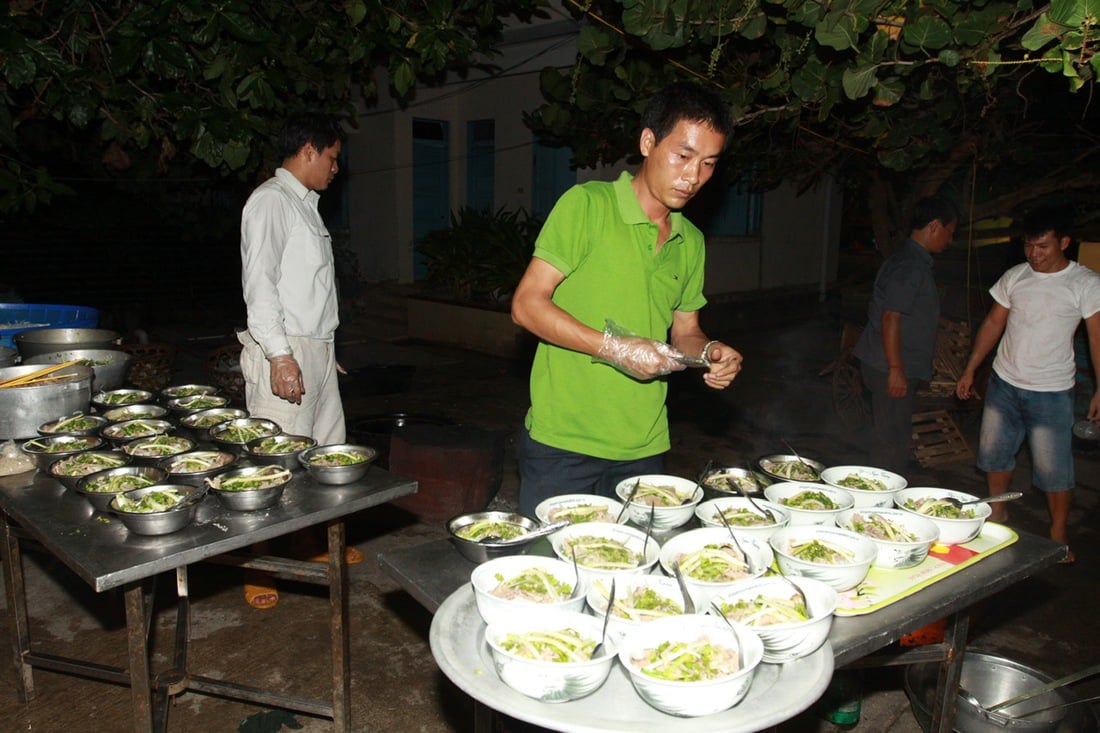
Pho Ngoc Vuong goes to Truong Sa island to serve soldiers on the island - Photo: NVCC

Mr. Vuong told the story of the joy of the soldiers on the island when eating pho, which warmed his heart - Photo: NVCC
A bowl of pho embodies the culture and transformation of the country.
Pho Ngoc Vuong, the owner of Pho, also recalls the changes in the pho industry over time. In a bowl of pho, there is culture, rice, Vietnamese agricultural products, and the history of the country's development. Like the country, this industry also "changes every day".
In the early stages, pho businesses had difficulty ensuring food hygiene and safety due to lack of facilities.
Selling for months, sometimes there is not enough money to buy a refrigerator to preserve the food. Around 2000, a used refrigerator cost 7-8 million VND, a fortune (while a bowl of pho only cost 4,000 VND). At that time, pho shops were simple, only the oldest ones had fans. Now, every shop has electric stoves, ensuring cleanliness.

In a bowl of pho there is culture and history - Photo: NVCC
Before 2000, due to limited economic conditions, people had to be frugal. Breakfast food in Hanoi was quite limited, mainly vermicelli, pho, and sticky rice; but from 2000 to 2005, the market economy began to develop. Dishes from other provinces (such as Hai Phong crab noodles, Hue dishes, Thai Binh fish noodles...) and global cuisine (KFC, Korean noodles, Japanese food...) began to be introduced to Hanoi. Before, only big hotels had Italian noodles, but after 2000, people ate freely.
The emergence of many new dishes has affected traditional dishes, but not so much with pho.
Last year, the Ministry of Culture, Sports and Tourism announced the list of national intangible cultural heritage for the folk knowledge of pho Nam Dinh and pho Hanoi. Currently, Vietnam is completing the dossier to submit to UNESCO to register pho as a representative intangible cultural heritage of humanity.
Pho is present from North to South; Pho "goes abroad", present in many places around the world. "Pho" has become an international noun, requiring no translation. And among many short-lived trends and the huge culinary world, Pho still reigns supreme. Mentioning Pho, we immediately know it is the national dish of Vietnam.

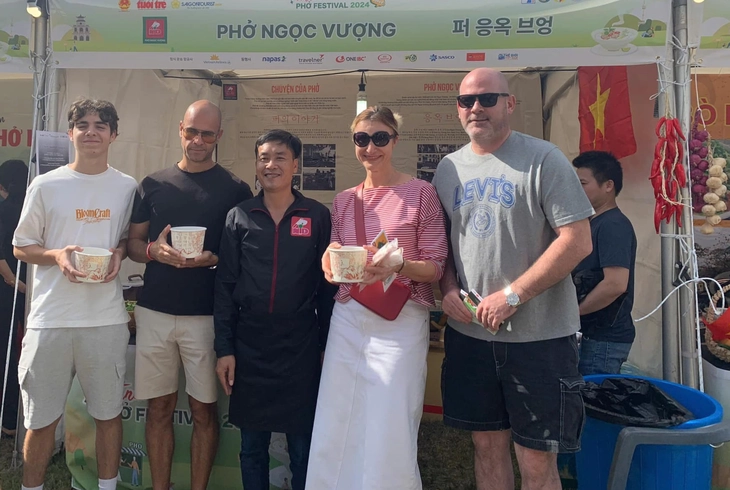
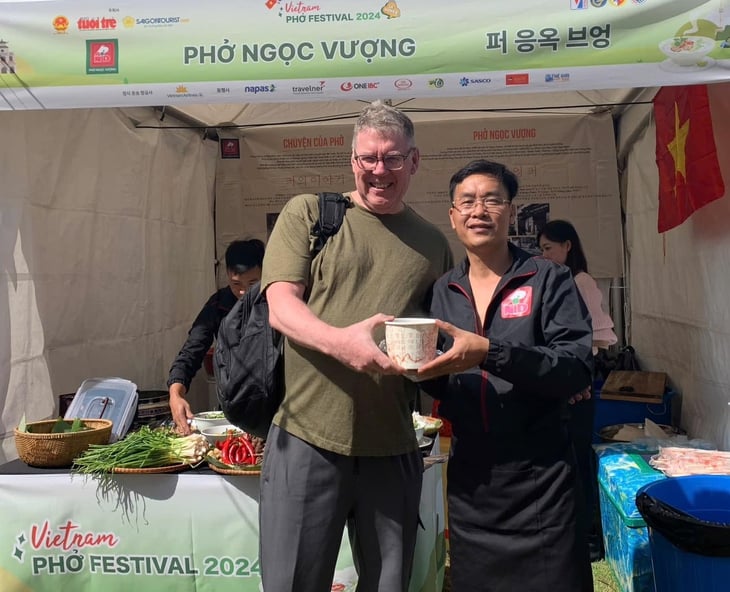
Pho Ngoc Vuong at Vietnam Pho Festival 2024 in Korea - Photo: NVCC
Pho now is better than pho before!
Having participated in Pho Day with Tuoi Tre newspaper since its early days, Mr. Vu Ngoc Vuong expressed his "deep gratitude because, thanks to the newspaper, pho industry professionals have a place to gather and share the legendary story of Vietnamese pho in particular, and the essence of Vietnamese culinary art in general."
So is pho today or pho in the past better? Pho today is definitely better! The ingredients are fresher, cleaner, and more hygienic than in the past.
"However, pho today has also lost some of its "countryside scent" on the high-speed train that is rushing forward," he said, "for example, it is not easy to find a sprig of Lang basil, the scent we put in a bowl of pho." But oh well!
But we can still keep the traditional flavor of pho. "Traditional" in his opinion means "having pho noodles made from rice grains, and broth made from bones". As for how to prepare it, how to season it, whether to add vegetables or bean sprouts, it depends on each person's taste and each region.
"You can be creative and change anything, but you have to understand what traditional pho is, what the core of Vietnamese pho is, and creative pho cannot be equated with traditional pho. Otherwise, it is easy to lead to confusion about the value and dissemination of heritage," the founder of Pho Ngoc Vuong sent a message.
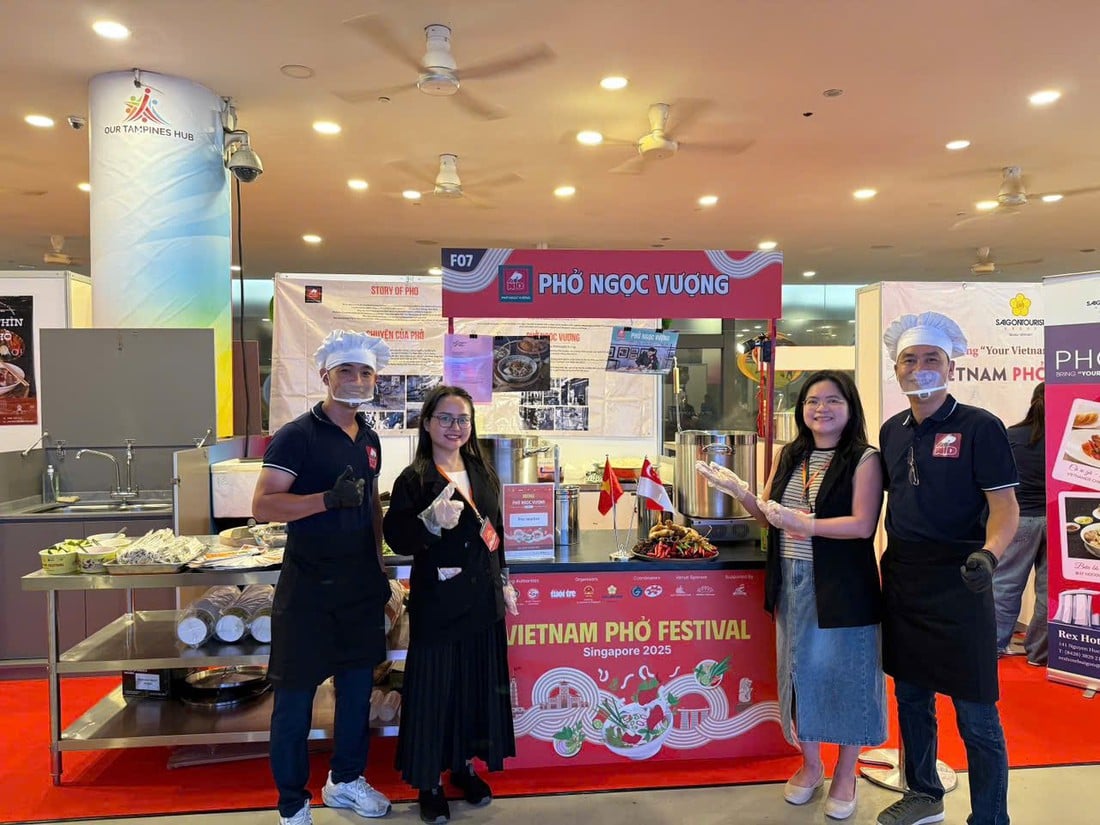
Pho Ngoc Vuong goes to Singapore at this year's Vietnam Pho Festival - Photo: FBNV
The Pho Day 12-12 program enters its 9th year with the theme "Raising the level of Vietnamese rice - Spreading to five continents" and will take place on December 13 and 14 at the Tax Trade Center (old), 135 Nguyen Hue, Saigon Ward, Ho Chi Minh City.
Participating in the program is the presence of nearly 30 famous and unique pho brands from North to South, converging many diverse types of pho with characteristics of regions and local cultures.
With a price of 40,000 VND per bowl, the Pho Day festival on December 12, 2025, is expected to serve more than 20,000 servings over two days. The organizers will donate at least 10% of the pho sales revenue to the "Pho of Love" program, cooking and serving pho to people in the flood-stricken areas of Dak Lak province (formerly Phu Yen), which recently suffered damage from natural disasters.
The Pho Day 12-12 program is supported and coordinated by the Department of Foreign Affairs and Cultural Diplomacy - Ministry of Foreign Affairs, the Trade Promotion Department - Ministry of Industry and Trade, the Ho Chi Minh City Department of Industry and Trade, and the Vietnam Culinary Culture Association, with the diamond partnership of Acecook Vietnam Joint Stock Company for many years, and this year with the additional support of Ho Chi Minh City Development Commercial Bank (HDBank), Cholimex Food Joint Stock Company, Saigon Trading Corporation Limited (SATRA)...
BEAN DUNG
Source: https://tuoitre.vn/ong-chu-pho-ngoc-vuong-que-toi-van-cu-nhung-pho-thang-hoa-nhat-o-ha-noi-20251209153657341.htm


![[Photo] Explore the US Navy's USS Robert Smalls warship](/_next/image?url=https%3A%2F%2Fvphoto.vietnam.vn%2Fthumb%2F1200x675%2Fvietnam%2Fresource%2FIMAGE%2F2025%2F12%2F10%2F1765341533272_11212121-8303-jpg.webp&w=3840&q=75)














![[Video] The craft of making Dong Ho folk paintings has been inscribed by UNESCO on the List of Crafts in Need of Urgent Safeguarding.](https://vphoto.vietnam.vn/thumb/402x226/vietnam/resource/IMAGE/2025/12/10/1765350246533_tranh-dong-ho-734-jpg.webp)
















































Comment (0)