

Vietnam is at a historical turning point, where old growth drivers have dried up and are no longer suitable for the requirements of rapid, sustainable development in the new era.
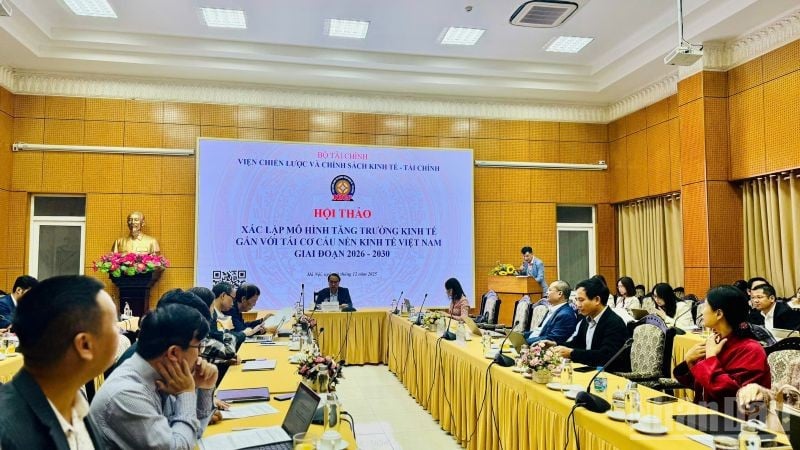 |
| The workshop took place in Hanoi on the morning of December 10th. (Photo: HNV) |
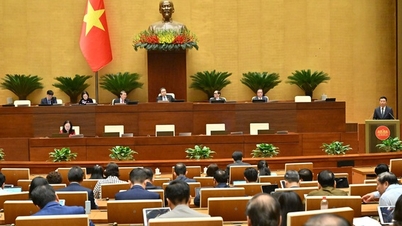
On the morning of December 10th, in Hanoi, the scientific workshop "Establishing an economic growth model associated with the restructuring of the Vietnamese economy in the period 2026-2030," organized by the Institute of Economic and Financial Strategy and Policy ( Ministry of Finance ), attracted a large number of delegates, including managers and economic experts.
At the conference, delegates unanimously agreed that, after the 2021-2025 period, the macroeconomic situation remained stable and achieved many positive results. However, these achievements also showed that the "old growth model" is becoming increasingly restrictive. The advantage of cheap labor is gradually disappearing as Vietnam moves deeper into the global value chain. Productivity growth remains modest, while capital and natural resources are not a sustainable foundation for the future.
Accordingly, the general sentiment is that the period from 2026 to 2030 will be a "golden opportunity" to determine the economic destiny of Vietnam. If we lag behind, we will lose our advantages and find it difficult to improve our position. Conversely, if we dare to take the plunge, Vietnam can create a "dragon leap" in development.
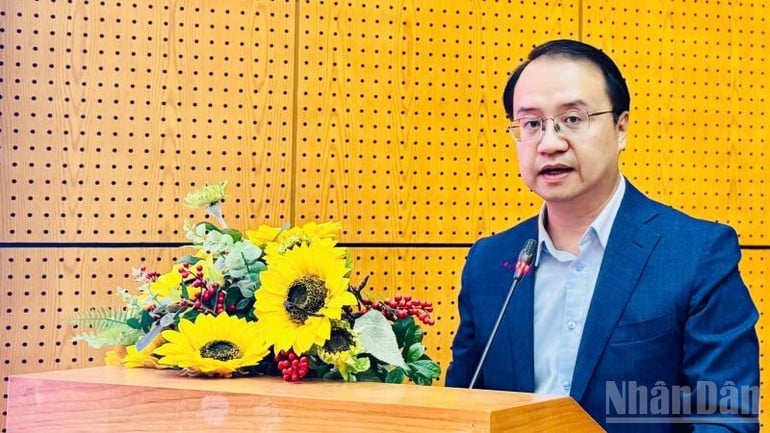 |
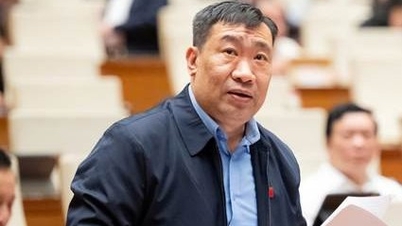
| Mr. Nguyen Quoc Anh, M.Sc., Deputy Director of the Institute of Economic and Financial Strategy and Policy (Ministry of Finance). |
Achieving double-digit growth and ending the low-cost labor model.
According to Master's degree holder Nguyen Quoc Anh, Deputy Director of the Institute of Economic and Financial Strategy and Policy (Ministry of Finance), a new growth model based on innovation, technology, and a green economy is needed to achieve double-digit GDP targets in the 2026-2030 period, aiming towards becoming a high-income country by 2045.
According to Mr. Nguyen Quoc Anh, to escape the middle-income trap, a challenge that has caused many countries to stagnate once their economies reach a certain level, Vietnam needs a sufficiently strong shift to achieve its aspiration of becoming a developed, high-income country by 2045. Therefore, the goal of double-digit GDP growth in the 2026-2030 period is not just an ambition, but a vital requirement. "A challenging goal, but entirely achievable if the economy is transformed based on science and technology, innovation, digital transformation, and a green economy," he emphasized.
To achieve this, Mr. Nguyen Quoc Anh outlined three key strategic priorities. Firstly, Vietnam needs to shift from extensive to intensive growth, with total factor productivity (TFP) becoming the primary indicator. Improving labor productivity through the application of technology, training high-quality human resources, and promoting modern management will be decisive factors.
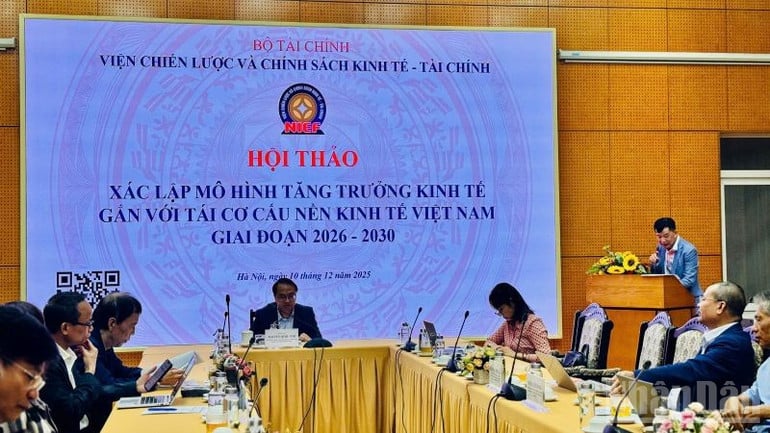 |
| The workshop reached a consensus: the period from 2026 to 2030 will be a "golden time" to determine the economic destiny of Vietnam. |
Secondly, a strong restructuring of the economy towards modernization is necessary. Long-term bottlenecks such as institutions, infrastructure, and human resource quality must be addressed simultaneously. The digital economy, green economy, and circular economy will be the "key" to unlocking deep integration and global competitiveness. Building innovation centers, developing the semiconductor chip industry, renewable energy, and a low-carbon economy are no longer options but inevitable trends.
Thirdly, we need to build a transparent and substantive system of performance indicators. Policies cannot rely on slogans but must be monitored by concrete figures such as: the proportion of the digital economy in GDP, social labor productivity, the contribution of TFP to growth, or the percentage of businesses innovating technologically.
Another important point mentioned by the Deputy Director is the role of the private sector. It must be the leading force in the transformation of the growth model. Knowledge-based, modernly managed, and globally-minded businesses will create a strong impetus for the economy. At the same time, policies must create a fair competitive environment and encourage investment in high-tech and green sectors.
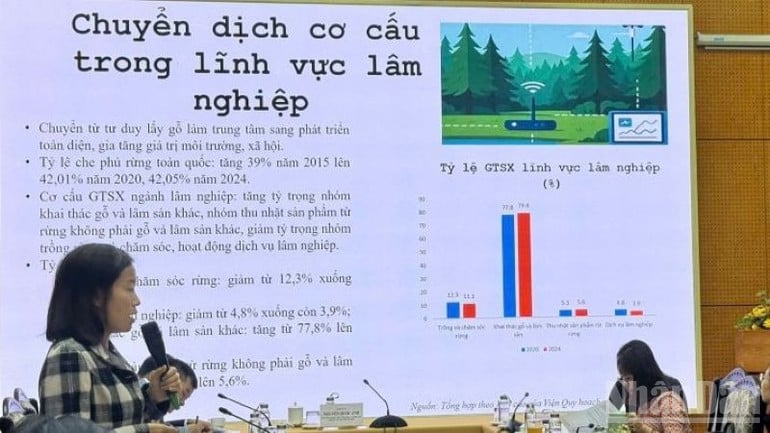 |
| The speaker shared insights on the current transformation in the agricultural sector. |
The role of the State in creating a "runway" for innovation: perfecting institutions, removing barriers, and mobilizing financial resources to develop strategic infrastructure such as logistics, clean energy, and national digital infrastructure. Alongside this, it is necessary to open up new opportunities through international cooperation, venture capital, and technology transfer.
“We need to definitively break away from the traditional growth model based on cheap labor and resources. The road ahead is full of challenges but also full of opportunities. Vietnam can and should make a strong breakthrough to become a powerful economy by 2045,” Mr. Nguyen Quoc Anh shared.
Continue researching and developing new economic models linked to high growth.
In a report assessing the situation and results of the 5-year implementation of Resolution No. 31/2021/QH15 dated November 12, 2021, of the National Assembly on the Plan for restructuring the economy in the period 2021-2025, representatives from the Institute of Economic and Financial Strategy and Policy noted that Vietnam began a comprehensive economic restructuring process after the 2008 global financial crisis, especially from the Resolution of the 11th Party Congress (2011) and concretized through important decisions in 2012-2013, focusing on three key areas: restructuring public investment, state-owned enterprises, and the financial and banking system; however, the foundation of the economic transformation process began with the Doi Moi (Renovation) process from 1986.
Delegates agreed that restructuring Vietnam's economy plays a crucial and indispensable role in the transition from the old growth model (heavily reliant on capital, cheap labor, and resources) to a new, more efficient, and sustainable model based on science and technology, high labor productivity, addressing bottlenecks such as low productivity, bad debt, and pollution, and moving towards green, innovative, and inclusive growth.
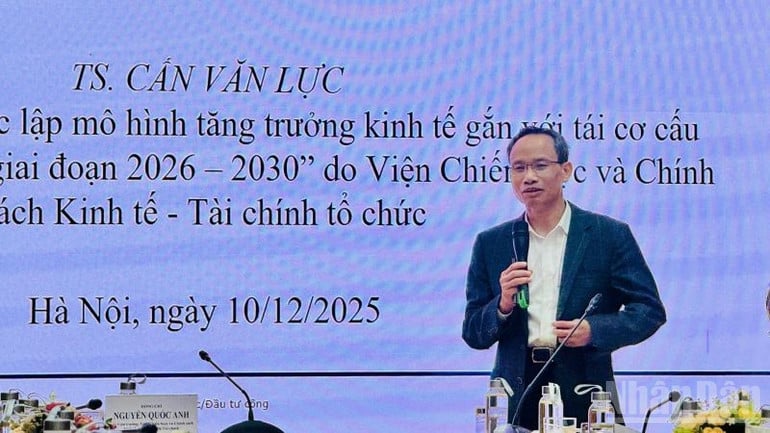 |
| Dr. Can Van Luc, Chief Economist of BIDV, member of the Prime Minister's Policy Advisory Council. |
At the same time, restructuring the economy is a necessary "major surgery" for Vietnam to escape the middle-income trap, build a modern, high-productivity economy with sustainable growth and better resilience to global fluctuations, in line with the requirements of the Fourth Industrial Revolution.
In analyzing and evaluating public investment, Dr. Can Van Luc, Chief Economist of BIDV and member of the Prime Minister's Policy Advisory Council, proposed developing a more synchronized and balanced financial market, strengthening international cooperation, diversifying capital mobilization channels, and establishing a financial sector reform plan; strengthening the role of the Vietnam Development Bank (VDB) through restructuring, applying information technology, streamlining the organization and apparatus, improving governance quality and human resources, and perfecting the process and methods of coordination between VDB and relevant parties; enhancing the effectiveness of policy coordination to ensure that the capital investment needs of the entire society and public investment capital are met according to approved plans; focusing on forecasting and monitoring the safety of the financial system, and improving the resilience, transparency, and sustainability of Vietnam's financial system. Improving public investment data and statistics, and strengthening the application of information technology and data in monitoring, forecasting, and evaluating public investment progress will both serve management and administration and ensure timely capital allocation for sustainable development.
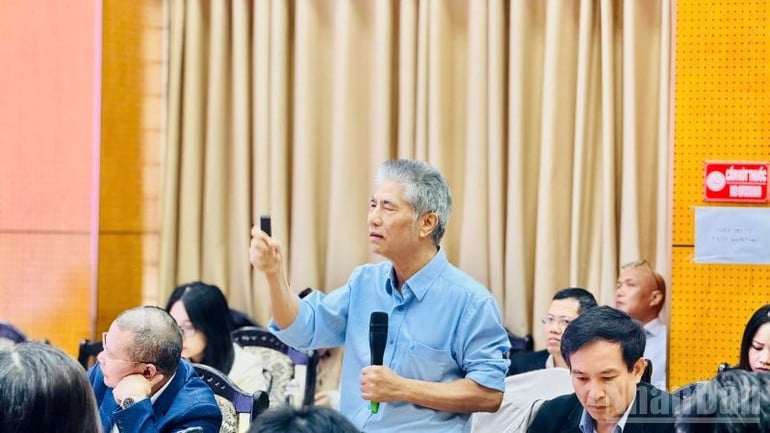 |
| Associate Professor, Dr. Le Xuan Ba, former Director of the Central Institute for Economic Management Research (CIEM). |
Meanwhile, Associate Professor, Dr. Le Xuan Ba, former Director of the Central Institute for Economic Management Research (CIEM), proposed several necessary actions: shifting education and training from passive to active learning; promoting learning by doing, linking theory with practice, and connecting training with the needs of socio-economic development and scientific and technological progress; focusing on training to meet market demands, not training based on existing resources of training institutions; and further promoting autonomy and accountability for public training institutions, especially vocational schools and universities.
Referring to international experience in transforming and innovating economic development models in the current context, Dr. Vo Tri Thanh, Director of the Institute for Strategic Brand and Competition Research, stated that many issues related to economic development strategies, artificial intelligence (AI), semiconductor industry, biotechnology, new materials, supporting industries, etc., require increasingly effective restructuring. Importantly, there needs to be a new way of thinking about the growth model, notably inclusive sustainable development, a shift from "brown" to "green," and a real economy linked to the digital economy so that everyone can benefit. "The question of efficiency remains the ultimate goal. And restructuring now is about continuing to do or building something new," Dr. Thanh questioned.
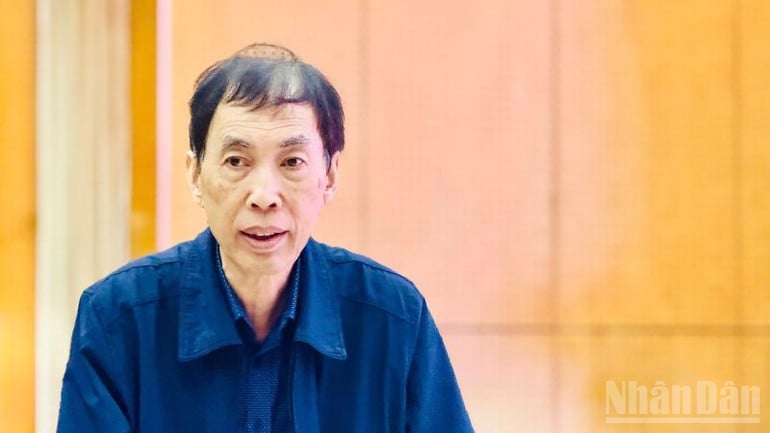 |
| Dr. Vo Tri Thanh, Director of the Institute for Brand and Competition Strategy Research. |
According to Dr. Vo Tri Thanh, international experience shows that countries with a high degree of success in transforming their growth models all have financial policies that play a constructive role in development, promoting innovation and proactively leading the restructuring of the economy. At the same time, attention should be paid to perfecting the financial policy framework, contributing to promoting the transformation of the growth model towards sustainability, transparency, and efficiency.
Regarding agriculture, Dr. Truong Thi Thu Trang, Deputy Director of the Institute of Agricultural and Environmental Policy Strategy (Ministry of Agriculture and Environment), mentioned scenarios related to the agricultural sector, including the baseline scenario (KB0), which maintains the growth trend of the 2011-2020 period; scenario 1 (KB1) with an average growth rate; scenario 2 (KB2) with a high growth rate; and scenario 3 (KB3) with comprehensive and inclusive growth.
In addition, delegates also exchanged views on growth practices from Bac Ninh province, on issues of employment and labor, and high-quality human resources... in order to support the new growth process.
According to LE NGUYEN/nhandan.vn
Source: https://baovinhlong.com.vn/kinh-te/202512/xac-lap-mo-hinh-tang-truong-gan-voi-tai-co-cau-nen-kinh-te-viet-nam-giai-doan-2026-2030-5962f1b/
![[Photo] The captivating scenery of the fragrant maple forest in Quang Tri](/_next/image?url=https%3A%2F%2Fvphoto.vietnam.vn%2Fthumb%2F1200x675%2Fvietnam%2Fresource%2FIMAGE%2F2025%2F12%2F10%2F1765353233198_lan09046-jpg.webp&w=3840&q=75)


![[Photo] Explore the US Navy's USS Robert Smalls warship](/_next/image?url=https%3A%2F%2Fvphoto.vietnam.vn%2Fthumb%2F1200x675%2Fvietnam%2Fresource%2FIMAGE%2F2025%2F12%2F10%2F1765341533272_11212121-8303-jpg.webp&w=3840&q=75)

















![[Video] The craft of making Dong Ho folk paintings has been inscribed by UNESCO on the List of Crafts in Need of Urgent Safeguarding.](https://vphoto.vietnam.vn/thumb/402x226/vietnam/resource/IMAGE/2025/12/10/1765350246533_tranh-dong-ho-734-jpg.webp)





























































Comment (0)