

Bat Trang village, Bat Trang commune, Hanoi city is not only famous for its pottery making but also preserves a lot of rich folk knowledge about culinary culture, especially in traditional cooking methods.
A feast of "eight treasures" and dishes with the distinctive "Bat Trang" style.
Traditional Bat Trang ceramic feasts were often "eight treasures" (6 bowls, 8 plates), symbolizing luxury and abundance. Middle-class families might prepare a feast with 4 bowls and 4 plates. A traditional feast must be substantial, aesthetically pleasing, and adhere to proper rituals. Although it has changed over time, the traditional feast still retains essential dishes such as boiled chicken, bamboo shoot and squid soup, stir-fried kohlrabi with squid, banh chung (rice cake), sweet soup, and stewed pigeon...
Among them, bamboo shoot and squid soup and stir-fried kohlrabi with squid are two dishes that bear the distinctive mark of Bat Trang, requiring high skill and meticulous attention to detail in every step. Both dishes not only enrich the feast but also serve as vivid evidence of the intermingling of lowland and coastal produce, while showcasing the culinary expertise passed down through generations of Bat Trang people.
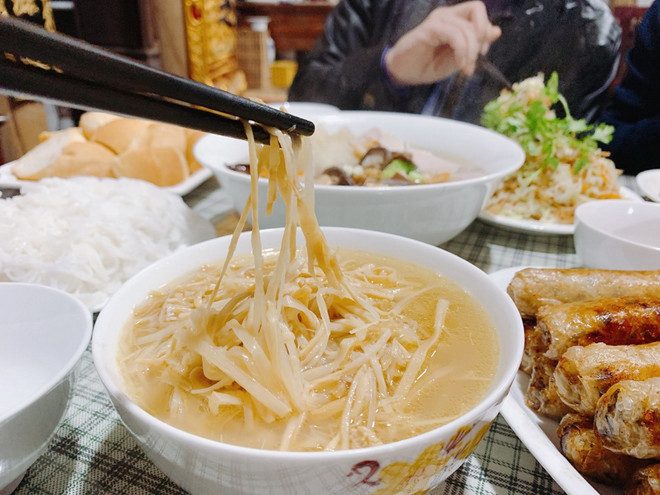
Squid and bamboo shoot soup is a dish that showcases an understanding of ingredients, cooking techniques, and aesthetic presentation. The squid selected must be high-quality sun-dried squid, usually from Co To or Thanh Hoa . The squid is pre-processed with ginger wine to remove the fishy smell and clean the membrane, then grilled until cooked through, dry on the surface but not burnt, and shredded into small strands along the grain. Afterward, the squid is stir-fried in lard or cooking oil until lightly golden, fragrant, and moderately crispy.
Dried bamboo shoots are from Tuyen Quang , carefully selected, with the tough parts removed, trimmed clean, and split lengthwise into even strips. The bamboo shoots are boiled several times to reduce sourness, then stir-fried with fish sauce, salt, and fried onions for a rich flavor. The broth is a combination of chicken broth, bone broth, and shrimp broth, creating a subtly sweet taste. After stir-frying, the bamboo shoots and squid are added to a pot and simmered over low heat for about 45 minutes. The finished dish should have a clear broth, crispy bamboo shoots, tender and chewy squid, and a rich, sweet flavor – a simple dish that demonstrates meticulous preparation and high standards. The distinctive aroma of the bamboo shoots blends with the sweet taste of the squid to create a soup that is both flavorful and evokes the essence of the countryside along the Red River.
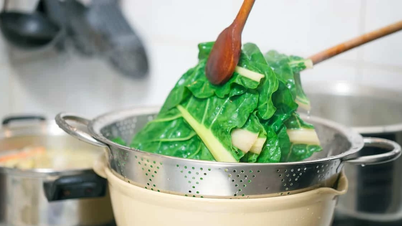
To make stir-fried kohlrabi with squid, choose young, tender kohlrabi, thinly slice it evenly, mix with salt to soften, then quickly blanch in hot water and squeeze gently to maintain its natural crispness. The squid, prepared like in a soup, is pre-stir-fried and mixed with kohlrabi, carrots, and seasonings. Sauté dried onions until fragrant, then add the ingredients and stir-fry until cooked through. Add pepper and cilantro for garnish. The dish requires skill in controlling the heat, stirring time, seasoning, and presentation. The dish should be crispy, not greasy, not fishy, and have the natural sweetness of the squid combined with the refreshing taste of the vegetables, creating a unique blend of the sweetness of the vegetables and the savory, aromatic flavor of the sea.
The trays of food of Bat Trang people are always prepared elaborately, with a harmony between form and flavor, balance and neatness from savory dishes, soup, stir-fries, boiled dishes to desserts such as sweet soup, sticky rice with sweet soup... all reflect the sophistication and ingenuity of the housewives here.
Community spirit in Bat Trang trays
The preparation of the Bat Trang feast is not simply about cooking; it's a well-structured process of collective effort and adherence to rituals. Before each festival or village celebration, a "feast-cooking group" is formed, where women meet to plan the menu, assign the main cook, those in charge of each dish, and those who arrange the food... The preparation process lasts from 3 to 7 days.
Everyone participates in the cooking with a special mindset: to create the most delicious dishes to offer to the tutelary deity protecting their village, and to express gratitude to their ancestors who contributed to the founding of the village. Everyone works with joy, sharing, and pride in their homeland. The ingredients, cooking methods, dish combinations, and presentation reflect the harmonious coordination of those involved in preparing the feast, a refinement passed down through generations.
The value of Bat Trang cuisine lies not only in the dishes themselves, but also in the community spirit in preserving and promoting the heritage from generation to generation. The division of labor within the cooking guild, the organizational process, the folk sayings ("Don't boil the chicken until it boils, the broth will be sweeter," "A skillful feast is better than a lavish one," etc.), along with the strong sense of community and high symbolic value in each dish, show that Bat Trang's culinary knowledge is not just a skill, but a living heritage that embodies the spirit, culture, and traditions of the Vietnamese people.
In addition, the process of cooking together has helped connect generations, pass on cultural values and foster community spirit. This knowledge is taught mainly through practice and word of mouth, especially during holidays and weddings.
Preserving and promoting the culinary knowledge of Bat Trang.
In the ancient villages along the Red River, the development of pottery in Bat Trang and a stable economic life have created conditions for the art of preparing feasts to be elevated to an expression of culture, ritual, and social norms within the local community. The knowledge of preparing feasts here is not just about "delicious food" but also reflects the dignity, status, and understanding of family and lineage rituals. In particular, the cooking and serving utensils often utilize Bat Trang ceramic products, creating a unique link between cuisine and traditional crafts.
The culinary traditions of Bat Trang are passed down from generation to generation through learning, primarily within families, and especially through the skilled hands of women who are both adept at cooking and homemaking. Bat Trang feasts are typically held during holidays, weddings, ancestral commemorations, village festivals, etc., with each feast reflecting the thoughtfulness, knowledge, and status of the host.

Bat Trang's culinary knowledge is not only reflected in cooking techniques but also in the arrangement of the tray, the use of seasonal ingredients, the rules of etiquette and the way of behaving in hospitality culture. Bat Trang's dishes are a harmony between rusticity and sophistication, aiming for balance, simplicity, both nourishing and good for health, rich in symbolism, containing profound culinary knowledge.
Bat Trang's culinary knowledge is closely linked to the more than 500-year history of the pottery village, a vivid expression of ritual culture and community spirit. The feast is not only a dish but also an art of culinary organization, reflecting the aesthetics, philosophy of yin-yang, and the five elements in Vietnamese life.
With the values of heritage, the Ministry of Culture, Sports and Tourism has listed Bat Trang cooking knowledge in the National List of Intangible Cultural Heritage (Decision No. 2229/QD-BVHTTDL dated June 27, 2025).
It can be said that Bat Trang's traditional feast cooking is a long-standing culinary tradition of the Bat Trang pottery village, nổi not only for its delicious dishes but also for its sophisticated and elaborate preparation techniques, reflecting the distinct identity of the nation. This is not just an art of food preparation but also a part of cultural heritage that needs to be preserved and promoted.
Preserving the culinary knowledge of Bat Trang not only helps safeguard a valuable part of cultural heritage but also creates opportunities for future generations to better understand the traditional cultural values of their homeland. Therefore, it is essential to have activities to teach and document the processing procedures, as well as organize classes and workshops so that young artisans and chefs can continue and develop this traditional craft.
Restoring festivals and culinary events related to Bat Trang dishes will also help raise public awareness about the importance of preserving this cultural heritage./.
Source: https://www.vietnamplus.vn/tim-hieu-ve-tri-thuc-nau-co-bat-trang-di-san-van-hoa-phi-vat-the-quoc-gia-post1081971.vnp


















![[Photo] Explore the US Navy's USS Robert Smalls warship](/_next/image?url=https%3A%2F%2Fvphoto.vietnam.vn%2Fthumb%2F1200x675%2Fvietnam%2Fresource%2FIMAGE%2F2025%2F12%2F10%2F1765341533272_11212121-8303-jpg.webp&w=3840&q=75)





























































Comment (0)