

In the lush green coconut groves of Vinh Long, farmers no longer rely on chemical pesticides to control pests. Instead, they choose to "hire" nature's soldiers, such as parasitic wasps, earwigs, and yellow ants, to protect their organic coconut plantations. This biological solution not only reduces costs and protects the environment but also affirms a new step forward in the development of green and sustainable agriculture in the Mekong Delta region.
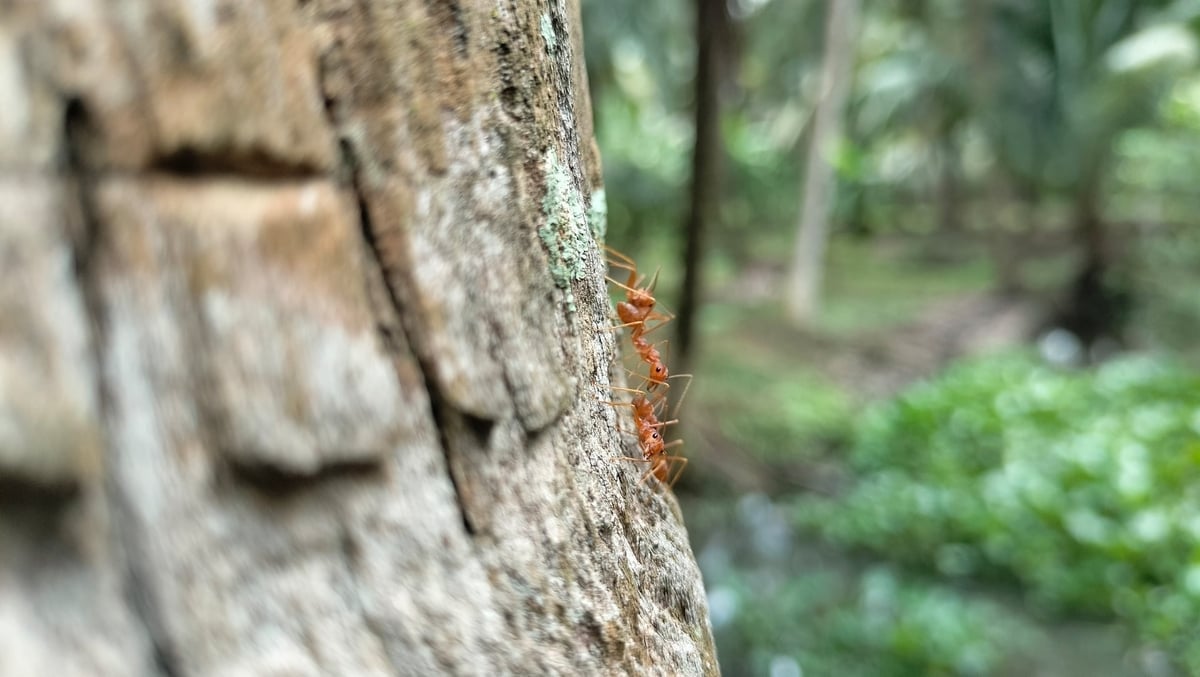
Yellow ants - tiny warriors protecting organic coconut gardens from black-headed caterpillars, weevils, beetles... Photo: Minh Dam.
Vinh Long currently has over 120,000 hectares of coconut trees, accounting for over 50% of the total coconut area nationwide. Of this, 30,355 hectares are industrial coconut plantations producing according to organic standards (USDA, EU, China, JAS, Kora...), representing 25.45% of the total area.
In recent years, black-headed caterpillars and coconut beetles have been a "nightmare" for coconut farmers in the Mekong Delta. In Vinh Long province alone, according to the Department of Agriculture and Environment, by November 2025, black-headed caterpillars had damaged approximately 55.1 hectares, and coconut beetles had damaged 2,614 hectares, a decrease of nearly 40 hectares compared to the same period.
This positive result was achieved thanks to the province's intensified efforts in pest control using biological methods. Notably, the province released over 145.7 million parasitic wasps and 33,000 earwigs, and encouraged farmers to breed yellow ants in their gardens to control pests naturally. These "tiny warriors" helped control pests, restore the ecosystem, and significantly reduce the use of chemical pesticides.
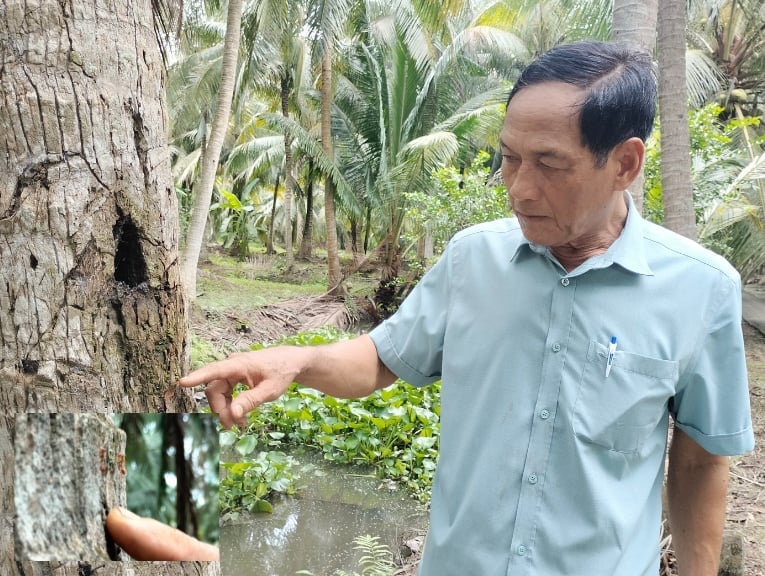
Mr. Nguyen Thanh The raises yellow ants to control black-headed caterpillars. Photo: Minh Dam.
Along with biological control measures implemented by the province, many households and cooperatives have also proactively applied natural enemies in cultivation. Without waiting for external support, many farmers have proactively "nurtured" natural enemies in their orchards. Mr. Nguyen Thanh The, from Phu Hung 2 hamlet, Binh Phu commune, who owns 1.7 hectares of organic coconut trees, shared: "Before, spraying pesticides was both expensive and harmful. Now, we have yellow ants and parasitic wasps working all day, both killing pests and keeping the orchard green and healthy."
Thanks to the application of biological methods and organic farming, Mr. The saves 40-50% of costs while maintaining stable yields. The coconuts are purchased by the cooperative at a higher price of 15,000-20,000 VND per dozen, bringing in an income of 250 million VND per year.
At Van Hung Cooperative (Binh Phu commune), 1,250 hectares of organic coconut trees are regularly managed using parasitic wasps. Mr. Ngo Huu Su, Director of the Cooperative, said: “Initially, farmers worried that natural predators wouldn’t be as effective as pesticides, but after a few cycles, everyone saw that the trees were healthier, produced more fruit, the costs were lower, and the environment was cleaner and the air fresher. Organic farming is about learning to live in harmony with nature.”
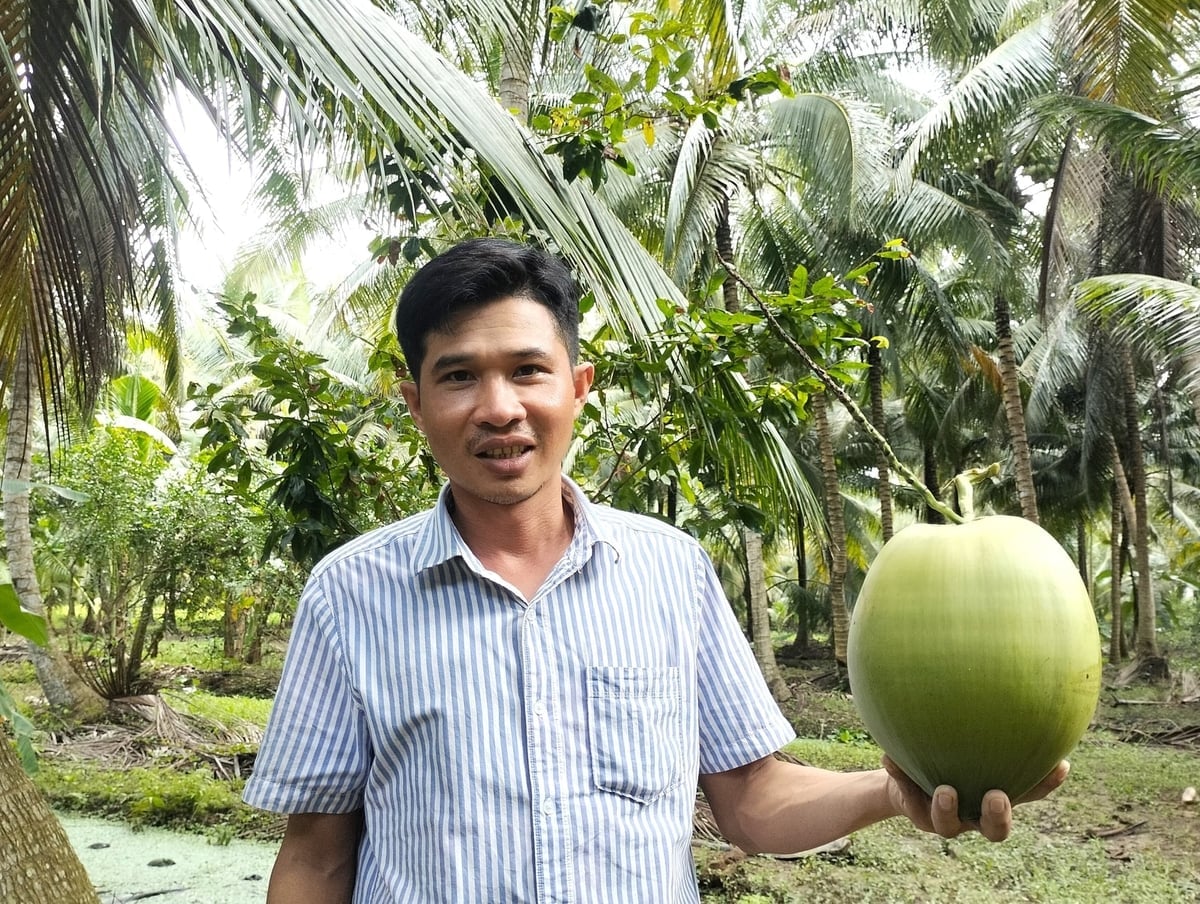
Mr. Ngo Huu Su, Director of Van Hung Cooperative, said that the cooperative focuses on biological methods to protect its organic coconut raw material area. Photo: Minh Dam.
According to Ms. Huynh Thi Ngoc Diem, Deputy Director of the Southern Center for Crop Production and Plant Protection (under the Department of Crop Production and Plant Protection), the Mekong Delta is the largest coconut growing region in the country. One of the solutions to improve the quality of the raw material area is to promote sustainable farming, prioritizing organic fertilizers, biological agents, and protecting soil and water resources.
She also emphasized the implementation of integrated crop health management (IPHM): “It is necessary to release natural enemies such as parasitic wasps, earwigs, and yellow ants, use green and white fungi to control pests, and at the same time adhere to the 'four correct principles' when using pesticides.”
According to Ms. Diem, applying IPHM will help coconut trees develop stably, increase productivity, improve fruit quality, and meet safety, traceability, and export standards, contributing to building a sustainable coconut value chain for the entire Mekong Delta region.
From tiny parasitic bees to diligent yellow ants, these "green protectors" are contributing to changing the way coconuts are grown throughout the Mekong Delta. The use of natural predators not only helps reduce costs and limit pollution but also paves the way for organic and circular agriculture.
Mr. Van Huu Hue, Deputy Director of the Department of Agriculture and Environment of Vinh Long province, shared: The province aims to build specialized organic coconut farming areas that meet international standards. Besides organic farming processes, water conservation, and emission reduction, the province also focuses on biological pest management, developing ecotourism , traditional crafts, and OCOP products associated with coconut trees, especially products from waxy coconuts.
Source: https://nongnghiepmoitruong.vn/nhung-chien-binh-ti-hon-bao-ve-vuon-dua-huu-co-d787549.html




![[Photo] Two flights successfully landed and took off at Long Thanh Airport.](/_next/image?url=https%3A%2F%2Fvphoto.vietnam.vn%2Fthumb%2F1200x675%2Fvietnam%2Fresource%2FIMAGE%2F2025%2F12%2F15%2F1765808718882_ndo_br_img-8897-resize-5807-jpg.webp&w=3840&q=75)





























































Comment (0)