

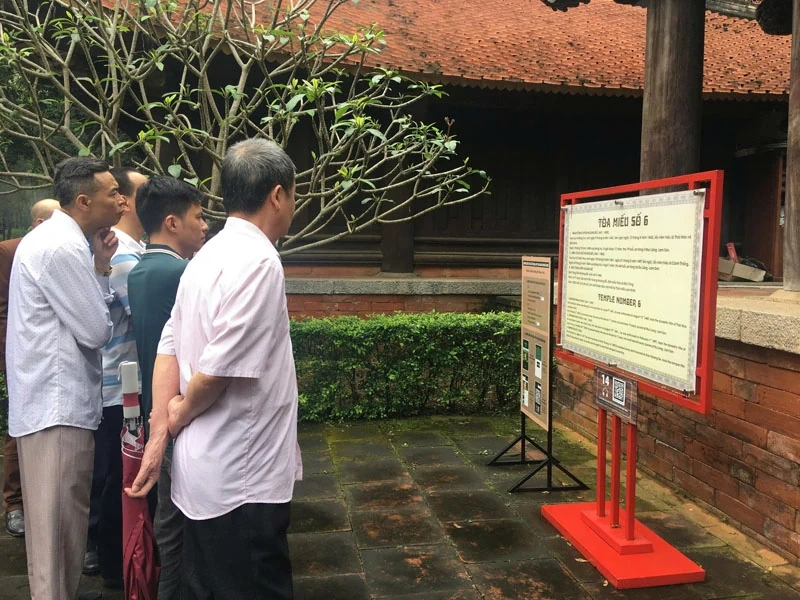
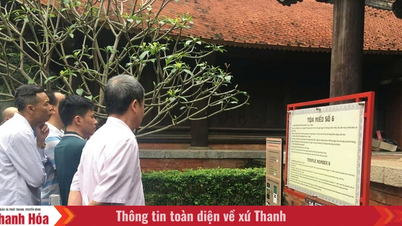
The Lam Kinh National Special Historical Site features an automated audio guide system to assist visitors.
A new rhythm for old values...
Thanh Hoa province boasts 1,535 historical and cultural relics and scenic spots that have been classified and inventoried for protection; along with a rich system of intangible cultural heritage, including hundreds of festivals, rituals, folk games, performances, and traditional crafts. In recent years, various levels of government and localities in the province have actively implemented numerous projects to digitize relics, gradually forming a digital heritage ecosystem and creating a new rhythm for traditional values. From the provincial museum to historical sites, many digital technology applications are being effectively implemented, creating a vibrant "meeting point" between heritage and technology, past and present, which is highly attractive to the public.
The provincial museum is one of the pioneering institutions, digitizing hundreds of documents and artifacts; applying interactive virtual reality technology to help visitors learn about national treasures (the Nua Mountain short sword, the Cam Thuy bronze cauldron, and the Cam Giang bronze drum). In addition, the data system is being built in an open manner, updated thematically, and capable of integrating online exhibitions in the future. Here, QR code boards with automatic narration have become a familiar tool to support visitors during each tour, helping them learn about documents and artifacts. This is an important step, as these applications help viewers access complete information, not relying entirely on tour guides.
According to Mr. Trinh Dinh Duong, Director of the Provincial Museum, the application of technology not only serves the public in visiting and learning but also opens up the possibility of sustainable preservation for valuable documents and artifacts, helping to preserve original information and, on the other hand, creating more favorable conditions for research. In the period 2025-2030, the Provincial Museum aims to digitize 20-30% of its artifacts and documents. Simultaneously, it will apply Industry 4.0 technology to its four permanent exhibition rooms, arranged chronologically, using an automated audio guide system. This aims to introduce and promote the value of the distinctive collections of artifacts representing the land, history, culture, and people of Thanh Hoa province to a wider audience, making the Provincial Museum a smart and attractive destination.
...to make the legacy resonate with digital sounds
At the Lam Kinh National Special Historical Site, history is not only preserved in every historical relic but also speaks vividly thanks to the connection of technology. Since 2021, the site has implemented the Lam Kinh Audio Guide automated commentary system. Particularly noteworthy is the significant upgrade in 2022, with the deployment of technological applications such as QR code scanning; a system of 28 automated commentary points; and Smart Travel Platform technology. The automated commentary system, combined with AI cameras, further enhances the visitor experience and solves the manpower problem during peak seasons. Now, Lam Kinh is not just a historical site but also a shining example of smart tourism in Thanh Hoa province – where the past and present meet in a digital space. Sharing his experience using the Audio Guide device, Mr. Phan Ngoc (Ho Chi Minh City) said: “Using this automatic audio guide device is very convenient because I can be proactive during the tour, listening to the commentary clearly and accurately. Importantly, it makes the heritage site more vibrant, bridging the gap between the past and the present, and making the tour more complete and meaningful.”
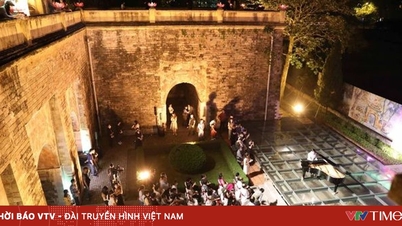
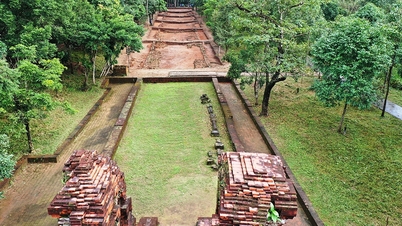
Along with historical sites, many technology projects implemented by businesses, young creative groups, or social organizations have also contributed to expanding access to heritage. The 3D simulation of cannons at the Ho Dynasty Citadel Cultural Heritage site, or graphic-style films introducing the heritage, have helped Thanh Hoa's heritage transcend geographical boundaries and reach a wider audience. Simulations of ancient architecture, historical scenes, and visualizations of cultural layers allow the public to "see" things that previously only existed in documents and historical records. This trend opens up many new opportunities, but also poses challenges regarding accuracy, scientific rigor, and the need for information synchronization regarding heritage. Some experts believe that the application of technology is only truly effective when linked to in-depth research, ensuring that the fundamental value of the heritage is not altered. Therefore, the process of digitizing heritage requires close coordination among management agencies, experts, researchers, and stakeholders.
In the context of the nationwide effort to promote the interconnection of national digital data on cultural heritage, the early establishment and public disclosure of a database for identifying Thanh Hoa's cultural heritage on the internet is truly necessary. These steps will not only create a new image for the province's heritage preservation efforts but also lay the foundation for community participation, especially among young people – those who will continue to tell the story of heritage using their own language and tools in the digital age.
Text and photos: Hoai Anh
Source: https://baothanhhoa.vn/giu-hon-di-san-trong-khong-gian-so-bai-1-di-san-va-cong-nghe-nbsp-cuoc-gap-go-giua-truyen-thong-va-hien-dai-271771.htm












































































Comment (0)