

Within the financial system, Agribank has emerged as a pioneering institution in deploying large-scale green capital flows, making positive contributions to clean production programs and agricultural modernization.
Green capital expands production.
In recent years, green transformation and sustainable agricultural economic development have become strategic directions for Vietnam. Along with this, the demand for capital to support clean, circular production and emission reduction models in agriculture has become increasingly evident. However, the increase in demand for green capital does not necessarily mean easier absorption of funds. Green credit in the agricultural sector remains a market with great potential, but there are still many gaps to fill, from the legal framework to data infrastructure and the ESG capabilities of businesses.
|
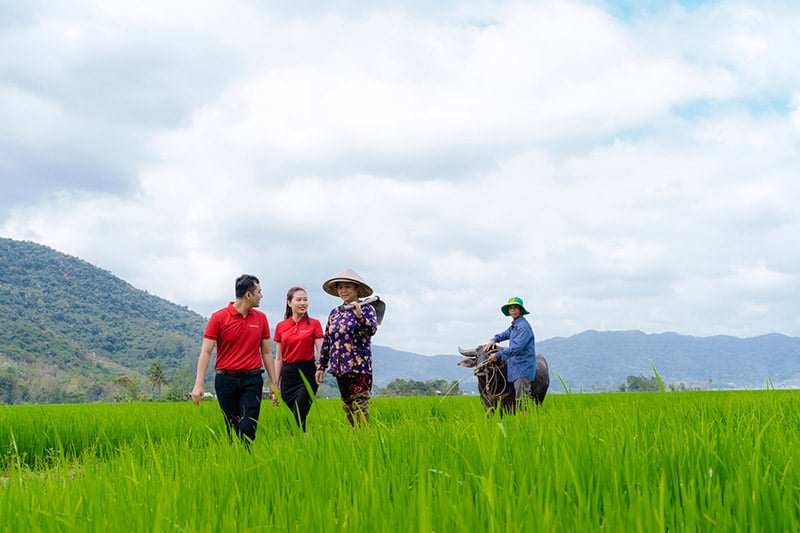
Experts believe that agriculture is a sector heavily impacted by climate change, yet it also has the opportunity to lead in emission reduction if capital is allocated appropriately. However, for green capital to be effective, the banking system needs to play a guiding role and standardize criteria from the appraisal stage to project monitoring. In this context, Agribank – as the leading commercial bank in agricultural financing – becomes one of the key pillars of green capital.
Since 2016, Agribank has recognized the market's transformation trend and launched a 50 trillion VND credit program for clean agriculture and high-tech agriculture. With interest rates 0.5-1.5% lower than usual, this was considered a pioneering step by Agribank in encouraging green production models – a trend that was still quite new at the time. These financial supports helped many businesses and cooperatives confidently invest in technology, while also opening up new approaches to managing environmental and social risks in the agricultural sector.
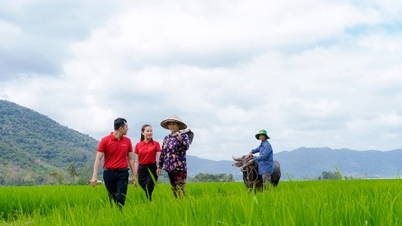
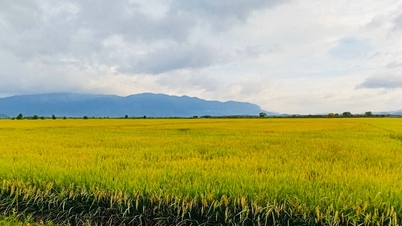
Recently, Agribank has continued to promote green credit through a 30,000 billion VND package for the project to cultivate 1 million hectares of high-quality, low-emission rice in the Mekong Delta. The credit package is designed according to a closed value chain, supporting production, procurement, processing, logistics, and consumption. The minimum 1% interest rate reduction during the pilot phase demonstrates the bank's high priority on reducing emissions in the rice industry – a sector crucial not only economically but also for food security.
In parallel, Agribank maintains numerous credit programs for agriculture, forestry, and fisheries, providing loans for seasonal production and supporting cooperatives, farms, and businesses in the agricultural supply chain. Some loans apply interest rates 1-2% lower than the market average, creating conditions for farmers and businesses to access flexible financial solutions suitable to the specific characteristics of their production cycles.
Raising access to capital standards
However, the expansion of green credit in agriculture has not been entirely smooth. The biggest challenge currently is the fragmented nature of data on emissions, climate change, and environmental impacts, making it difficult for banks to develop standardized risk assessment models. Furthermore, most agricultural businesses – especially small and medium-sized enterprises – lack a systematic ESG management system, are unfamiliar with regular data disclosure, and do not have sufficient resources to invest in emission measurement technology.
|
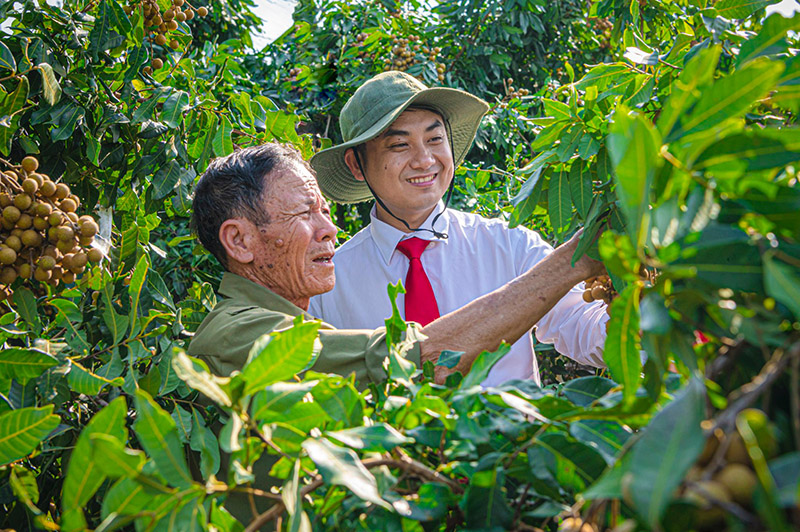
These obstacles keep the cost of green transition for businesses high, while the financial benefits are not fully reflected. This is why many banks remain hesitant to expand green lending, due to significant production risks and inadequate appraisal processes. To address this issue, it is necessary to improve the data ecosystem, standardize green criteria, and promote transparency in corporate governance.
From a business perspective, to access long-term green financing, building an ESG system is not only a requirement of banks but also a condition for maintaining future competitiveness. Standardizing production processes, applying emission measurement technology, transparently disclosing information, and proactively cooperating with banks in pilot programs are considered practical steps to create a foundation for accessing capital.
In reality, when businesses standardize their production processes towards greener practices, their access to capital improves significantly. This is true not only for Agribank but also for the international financial system, where investment funds and development finance institutions are strongly prioritizing green projects in agriculture, energy, clean water, and the circular economy.
|

Meanwhile, for credit institutions, the focus in the coming period will be on completing the green portfolio, strengthening climate risk assessment capacity, and proactively mobilizing green capital from international financial institutions. The application of digital technology in project appraisal and monitoring will also help improve the efficiency of capital allocation and ensure that environmental goals are implemented as committed.
The government and the State Bank of Vietnam have been continuously improving the legal framework for green finance, including guidance on Decision No. 21/2025/QD-TTg of the Prime Minister: Regulations on environmental criteria and the confirmation of investment projects belonging to the green classification category, criteria for classifying green projects, guidance on managing social risks in credit granting activities, and promoting mechanisms to support the transformation of businesses. A fully operational carbon market will create further incentives for agricultural businesses to invest in emission reduction and technology upgrades.
Many experts predict that 2026 will be the year when green credit could experience a strong breakthrough in Vietnam, as the legal framework becomes more complete and businesses gradually adapt to ESG standards. Synchronized coordination between the Government, the State Bank of Vietnam, credit institutions, and the business community will be the decisive factor in the success of this process.
In this context, Agribank continues to be expected to lead the flow of green capital in the agricultural sector thanks to its extensive network, experience in supporting farmers and businesses, and its focus on prioritizing low-emission models. The bank's proactive and consistent participation will significantly contribute to the goal of sustainable agricultural development and the fulfillment of Vietnam's emission reduction commitments in the coming years.
Source: https://baodautu.vn/agribank-chu-luc-trong-thuc-day-dong-von-phat-thai-thap-d456010.html































































































Comment (0)