

From new policy requirements to adaptation problems
According to Resolution No. 198/2025/QH15 of the 15th National Assembly , from January 1, 2026, business households and business individuals will no longer apply the lump-sum tax payment method but will pay taxes according to the provisions of the law on tax administration. Accordingly, business individuals will pay taxes according to the declaration method based on actual revenue, in order to gradually eliminate the situation of hiding under the cover of lump-sum households to evade taxes - a behavior that is quite common in the context of strong development of online business and electronic transactions.
To implement this policy synchronously, on October 6, 2025, the Ministry of Finance issued Decision No. 3389/QD-BTC approving the Project on converting the model and method of tax management for business households when eliminating lump-sum tax. Next, the Director of the Tax Department issued Decision 3352/QD-CT dated October 31, 2025 on the Plan "60 peak days of converting the model from lump-sum tax to declaration for business households". According to the plan, this peak period will be implemented from November 1, 2025 to December 30, 2025 to create a foundation for official operation from 2026.
The overarching goal of the 60-day peak plan is to substantially transform the tax management model from the contract method to the declaration method for business households in accordance with the spirit of the 2019 Tax Administration Law, Resolution 68-NQ/TW and Resolution 198/2025/QH15. Along with that, it is necessary to promote propaganda and support so that business households and individuals can clearly understand the regulations, voluntarily convert to a declaration household or gradually move to the enterprise model. Another important goal is to complete the technical infrastructure, data system and electronic management tools, ensuring synchronous connection between tax authorities and taxpayers, towards registration, declaration and tax payment in the "one-touch" method.
From a policy perspective, many experts believe that the policy of abolishing lump-sum tax, clearly defined in Resolution 68-NQ/TW, is a necessary step to modernize the economy , increase transparency, improve accountability and reduce risks in management. The shift to declaration also forces business households to form new management methods in a more scientific and professional direction, gradually familiarizing themselves with electronic invoices, digital payments and transparent reporting. Thereby, the reputation of business households is enhanced, access to capital is more favorable, opportunities to sign large contracts are expanded, and the risk of being fined for lack of documents is reduced. This is also considered a "big turning point" in modernizing tax management in the 4.0 era, requiring business households to proactively adapt, fully comply with obligations and move towards sustainable development.
In fact, the scale of the subjects affected by the policy is very large. According to data from the Tax Department (Ministry of Finance), by October 2025, the country will have about 3.83 million business households. Of which, 1.7 million business households (accounting for 44.4%) with revenue under VND 200 million will continue to be exempt from tax; 883,000 business households (accounting for 23%) with revenue from over VND 200 million to VND 3 billion are the group mainly affected by the elimination of lump-sum tax; 39,000 business households (1%) have revenue over VND 3 billion. These figures show that the transition from lump-sum tax to declaration is not only a change in management methods, but also a major adaptation problem for millions of business households in the coming period.
|
Agribank affirms its creative role towards the business community |
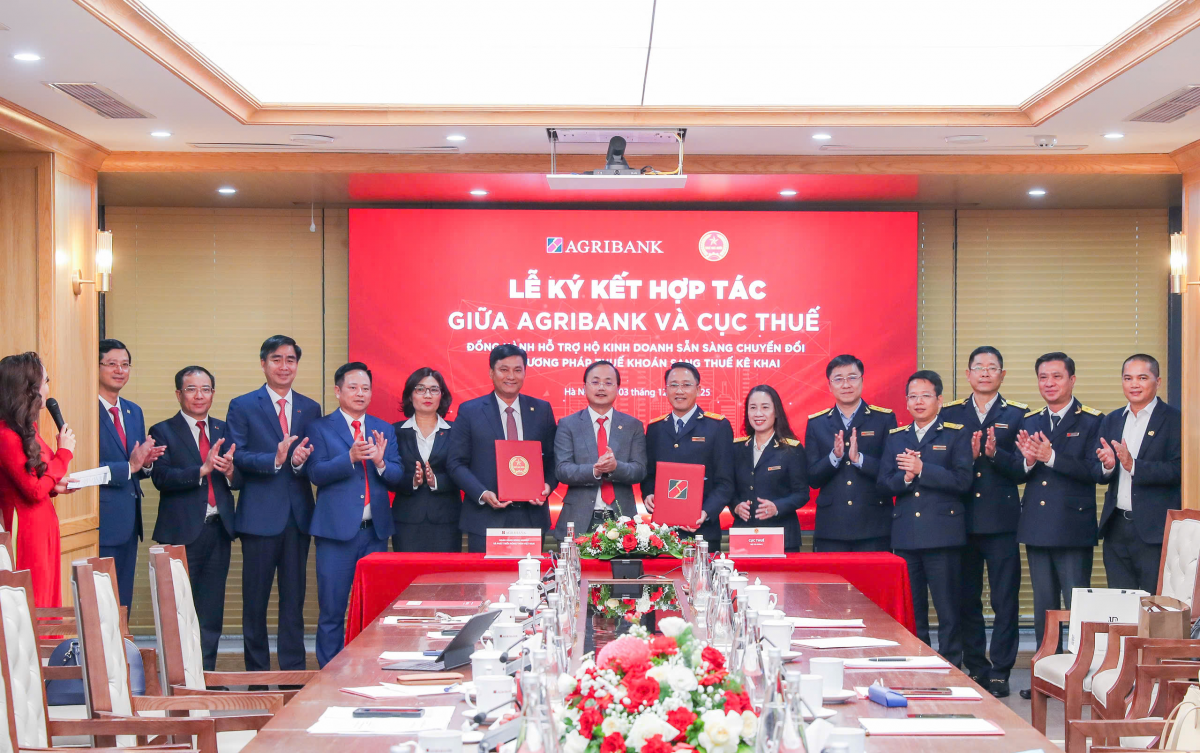
Creative "handshakes"
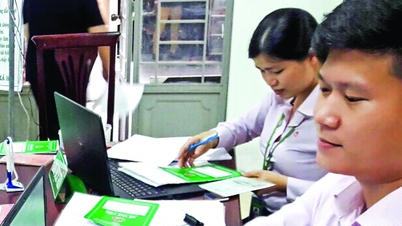
It is easy to see that the subjects most affected by the new regulations are small businesses, which have long operated based on manual recording habits and have not invested properly in the management system. Recognizing the importance of digital transformation for small businesses, Agribank - the bank with the widest coverage in the rural market - has become the frontline force in guiding, supporting and "holding hands" to help businesses adapt to the new mechanism.
Recently, on December 1, Agribank and VNPAY signed a cooperation agreement to deploy a digital transformation solution package for business households. Accordingly, this solution package is low-cost but highly effective, helping business households confidently and conveniently enter the digital transformation roadmap. This support does not only stop at providing financial services but also includes sales management tools, issuing electronic invoices and connecting data with tax authorities, thereby improving transparency and stabilizing cash flow for business people.
The solution set includes VNPAY-Invoice electronic invoices, data storage using VNPAY Cloud, VNPAY-CA digital signatures, sales management software, and payment devices such as VNPAY-POS and PhonePOS. This solution set will help business households fully comply with tax declaration requirements, manage revenue in real time and make business operations transparent, a key factor in moving from an empirical model to a data-based model.
In addition to technological support, Agribank will offer free opening and maintenance of payment accounts, preferential account numbers, and free balance notification via OTT on the Agribank Plus application. In particular, the bank is implementing a preferential credit package from 4.5%/year for business households, a meaningful level of support in the context that business people have to invest in additional equipment, digital platforms and change operating procedures to meet new legal requirements.
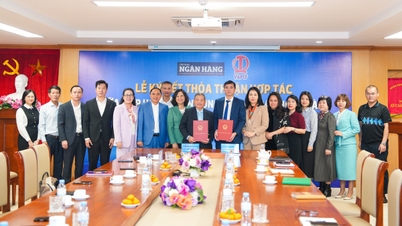
Mr. Pham Toan Vuong - General Director of Agribank emphasized that this is a strategic step to accompany business households in the important transition period, from lump-sum tax to declaration according to Decree 70/2025/ND-CP and new regulations of the Ministry of Finance. The General Director of Agribank said that millions of business households will have to apply electronic invoices, automatically transmit tax data and build standardized management processes - requirements that are not easy to implement for customer groups with limited digitalization. To concretize the policy of accompanying businesses in digital transformation, on December 3, Agribank continued to sign a cooperation agreement and accompany the Tax Department to support business households to be ready to convert from lump-sum tax to declaration tax.
The agreement between Agribank and the Tax Department aims to support business households in implementing the tax management model transformation; and to strengthen the connection between the tax system and the bank in convenient tax registration, declaration, and payment through Agribank's digital platforms. This significantly contributes to providing solutions to help customers comply with regulations and creates a foundation for customers to transform into SME businesses in the future.
Speaking at the signing ceremony, Mr. To Huy Vu - Chairman of the Board of Directors of Agribank affirmed that the signing ceremony of cooperation between Agribank and the Tax Department is an important event, not only for the two agencies, but also for the common goal of the financial sector in the process of modernization, digital transformation, serving people and businesses better and better. "The event takes place in the context that the entire financial sector is making efforts to synchronously implement the policies of the Party, the National Assembly and the Government on promoting national digital transformation, reforming administrative procedures, modernizing tax management, expanding non-cash payments and ensuring that national budget revenue is developed in a long-term and sustainable direction. This is not only an inevitable trend, but also a strategic task, requiring the joint efforts and consensus of all organizations in the financial - banking ecosystem", the Chairman of the Board of Directors of Agribank emphasized.
Representative of the Tax sector, Deputy Director of the Tax Department Mai Son highly appreciated the close coordination between the two agencies in the past time, as well as the important contributions of Agribank in the state budget collection. In particular, the technological solutions that Agribank developed and deployed have effectively supported the interconnection process between finance - tax - customs - treasury and the commercial banking system. Thereby, every year, the implementation of budget collection and the reform and modernization of the tax sector have made very important progress.
Many opinions believe that the strategic partnership between Agribank, the Tax Department and VNPAY is making an important contribution to the modernization of tax administration, promoting cashless payments, supporting business households in digital transformation and improving the quality of taxpayer services. These are also steps in line with the direction of the Government and the Ministry of Finance on building a modern, transparent and effective public finance system.
Over the past years, in addition to the deep, wide, and synchronous digital transformation, implementing ESG criteria in governance, the proactive work in supporting business households and small enterprises in digital transformation shows Agribank's pioneering role in activities accompanying major policies of the Party and State. In addition, Agribank has affirmed its creative role for the business community through providing diverse financial solutions, supporting digital transformation and accompanying sustainable economic development.
Source: https://thoibaonganhang.vn/agribank-dong-hanh-cung-ho-kinh-doanh-trong-chuyen-doi-so-174850.html


![[Photo] Closing Ceremony of the 10th Session of the 15th National Assembly](/_next/image?url=https%3A%2F%2Fvphoto.vietnam.vn%2Fthumb%2F1200x675%2Fvietnam%2Fresource%2FIMAGE%2F2025%2F12%2F11%2F1765448959967_image-1437-jpg.webp&w=3840&q=75)

![[Photo] Prime Minister Pham Minh Chinh holds a phone call with the CEO of Russia's Rosatom Corporation.](/_next/image?url=https%3A%2F%2Fvphoto.vietnam.vn%2Fthumb%2F1200x675%2Fvietnam%2Fresource%2FIMAGE%2F2025%2F12%2F11%2F1765464552365_dsc-5295-jpg.webp&w=3840&q=75)











































![[OFFICIAL] MISA GROUP ANNOUNCES ITS PIONEERING BRAND POSITIONING IN BUILDING AGENTIC AI FOR BUSINESSES, HOUSEHOLDS, AND THE GOVERNMENT](https://vphoto.vietnam.vn/thumb/402x226/vietnam/resource/IMAGE/2025/12/11/1765444754256_agentic-ai_postfb-scaled.png)











































Comment (0)