

Transportation infrastructure is considered the "lifeblood" of the economy . With this vision, Can Tho City recognizes that good transportation infrastructure will create conditions for expanding urban and industrial development, generating new impetus for growth.
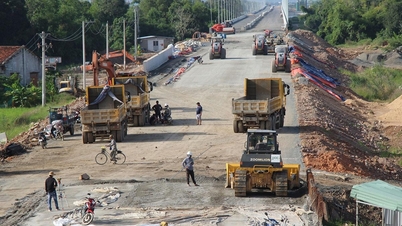
Regarding road infrastructure, the Ministry of Construction, along with local authorities in the Mekong Delta region, is urgently implementing a series of large-scale projects, aiming to complete 600km of expressways by 2026.
Among these, several routes of particular significance to Can Tho will be completed in 2025, such as Can Tho – Ca Mau and Lo Te – Rach Soi. Upon completion, these projects will not only shorten travel time but also open up vast development opportunities, boosting the city's industry, agriculture , trade, and tourism.
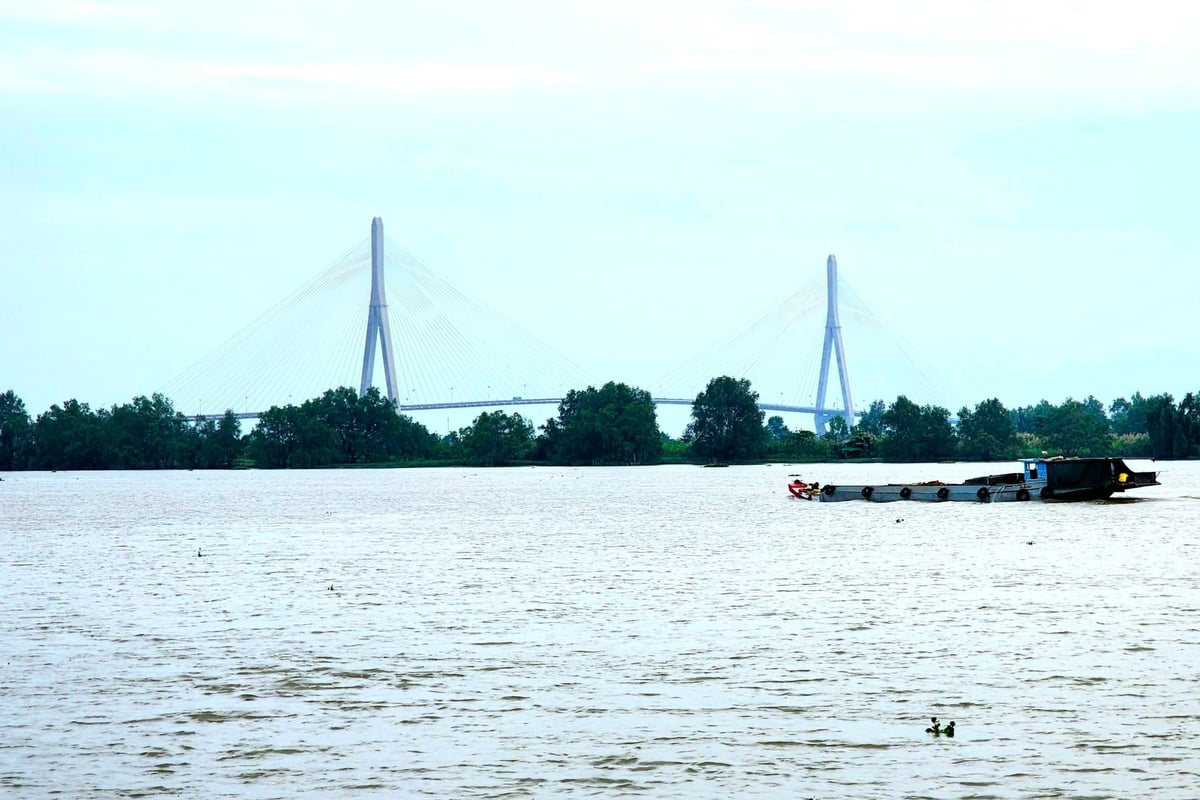
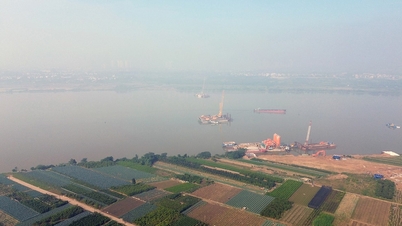
In recent years, Can Tho's transportation infrastructure has undergone a significant transformation, forming a fairly comprehensive network encompassing roads, waterways, seaports, and air transport. Photo: Kim Anh.
According to statistics from the Can Tho City Department of Construction, the city currently has 9 national highways, with a total length of approximately 565km, spread throughout the area. Among these are vital routes connecting regions and driving development, such as National Highway 1, National Highway 60, National Highway 61C, and National Highway 80...
Mr. Mai Van Tan, Director of the City's Department of Construction, said that in recent times, the department has collaborated with the Ministry of Construction to invest in, upgrade, and expand many important national highways. To date, the main national highways have been largely expanded, meeting the needs of people and businesses for transporting goods.
In addition, the network of 40 provincial roads, with a total length of approximately 817km, continues to play a crucial role as a "bridge" connecting localities within the city and provinces in the Mekong Delta region.
Besides its strong road transport infrastructure, Can Tho also possesses a significant advantage in waterway transport. The city currently has 16 centrally-managed waterways with a total length of 344km. Of these, two routes have high transport volumes, connecting Ho Chi Minh City - Ca Mau (via the Can Tho canal and Xa No canal) and Ho Chi Minh City - Kien Luong (via the Rach Soi canal - Hau Giang).
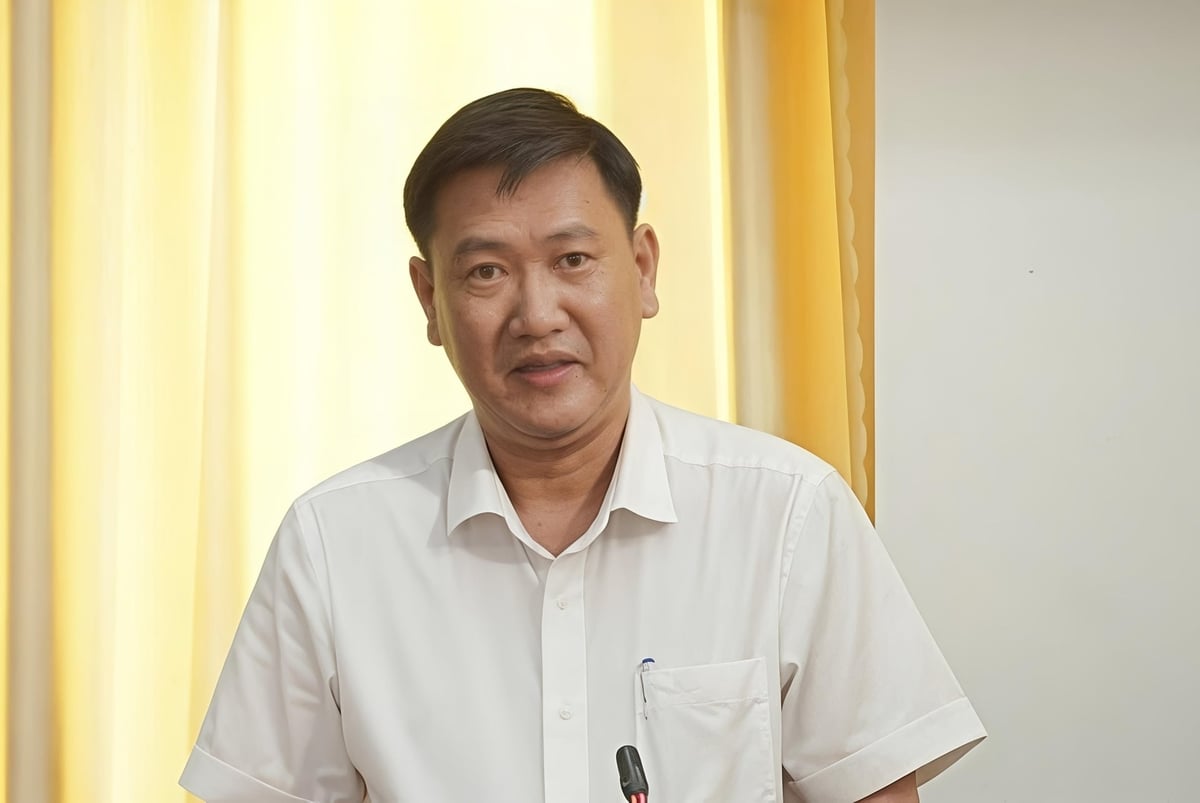
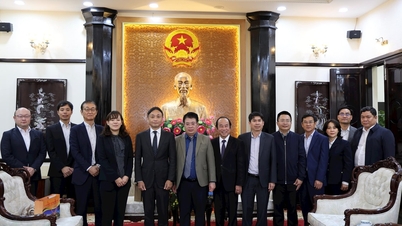
Mr. Mai Van Tan, Director of the Department of Construction of Can Tho City, assessed that the city's transportation infrastructure will develop rapidly and sustainably in the near future. Photo: Kim Anh.
In addition, the locally managed waterway infrastructure comprises 678 routes, spanning over 3,600 km, playing a crucial role in the transshipment of goods, especially for the agricultural and logistics sectors.
In terms of maritime transport, after the merger, Can Tho City possesses 72km of coastline and 177km of the Hau River shipping route, connected to the East Sea via two main shipping channels: the channel for large cargo ships entering the Hau River (Quan Chanh Bo Canal) and the Dinh An - Hau River shipping channel.
The Director of the City's Department of Construction affirmed that these are two important maritime transport routes in the region, serving the transportation needs from the Kingdom of Cambodia to the East Sea. In the near future, these routes will connect with the Tran De international seaport. The advantages will be doubled, creating a breakthrough in the development of Can Tho's maritime economy and the region.
Currently, the total volume of goods handled through Can Tho seaport (in 2024) is expected to reach approximately 12 million tons per year, demonstrating the significant transportation demand and operational capacity of the port system.
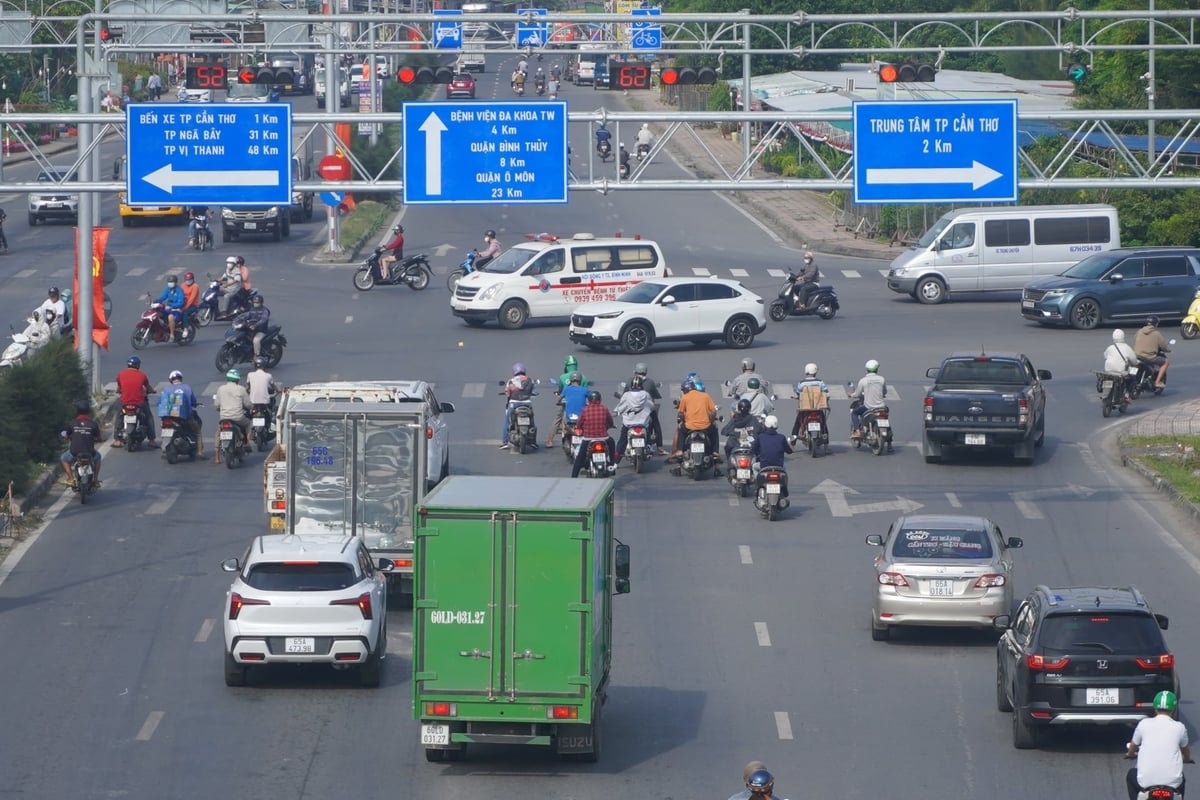
In the coming period, Can Tho City will invest in several key traffic junctions, expand urban transportation infrastructure and public transport, and develop smart transportation systems. Photo: Kim Anh.
Can Tho International Airport, spanning 268 hectares, features 6 aircraft parking positions and a 3,000-meter runway, connecting Can Tho City with countries in the region and around the world. The city aims to increase the airport's capacity to 7 million passengers per year, meeting the growing demands for trade, tourism, and investment in the new era.
The Resolution of the First Congress of the Can Tho City Party Committee, term 2025-2030, clearly states: "By 2030, Can Tho City will become a national growth pole, playing a driving role in development, spreading and leading the entire region." To realize this vision, the construction industry is focusing on completing transportation infrastructure according to the criteria of being synchronous, modern, and regionally interconnected.
Some of the key solutions Mr. Tan proposed include completing the aforementioned expressways; investing in the Can Tho 2 bridge; the coastal road; the ring road and bypasses around the urban center…in order to form a framework road network linking Can Tho with other provinces in the Mekong Delta.
The city of Can Tho will gradually invest in upgrading the provincial road system, eliminating all weak bridges, to form a basic transportation infrastructure network. At the same time, the Department of Construction will continue to invest in the network of commune roads to serve the needs of connectivity and advanced rural development.
In addition, the sector will study investment in Tran De seaport, with a capacity to receive ships from 100,000 to 200,000 tons; dredge the national inland waterway channel to meet level III standards; and build modern port and waterway transport infrastructure connected to a multimodal transport axis.
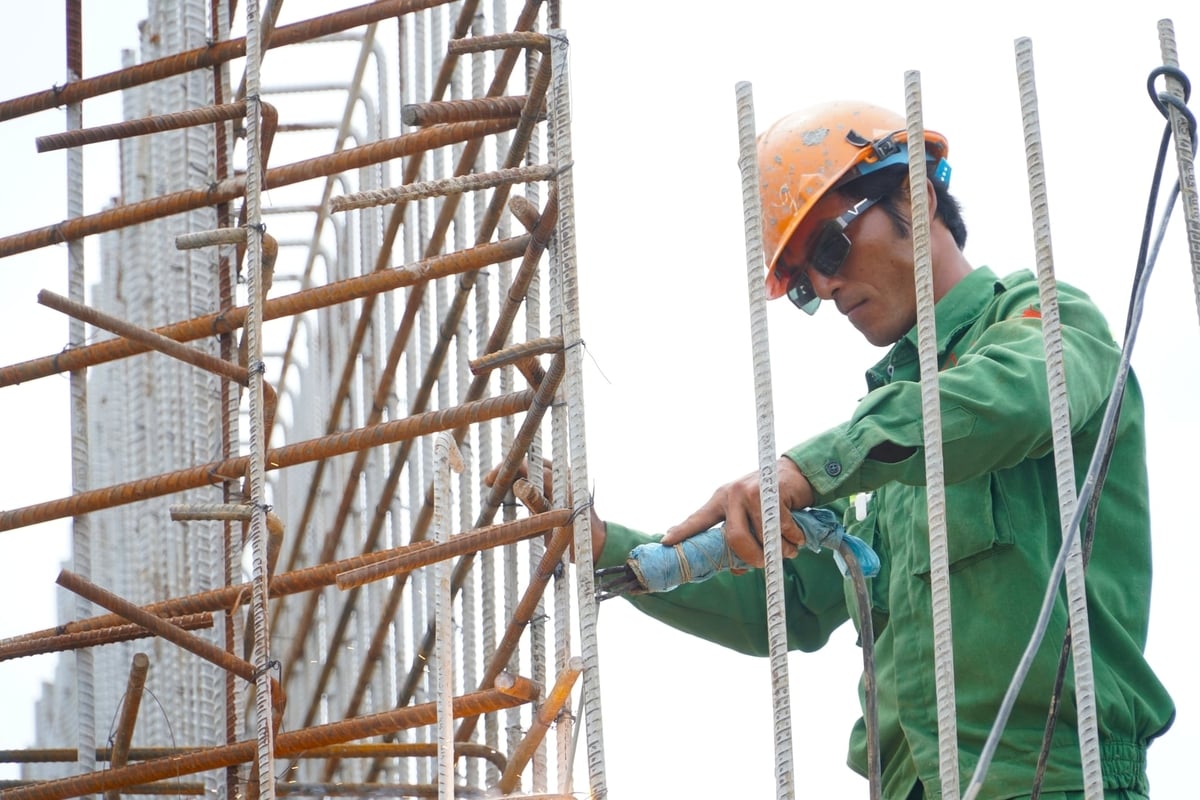
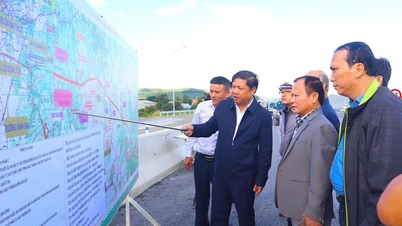
Developing transportation infrastructure is a prerequisite for promoting economic growth and improving people's quality of life. Photo: Kim Anh.
In particular, Can Tho will consider investing in and constructing the Ho Chi Minh City - Can Tho railway project, approximately 174km long, to serve the passenger and freight transport needs of the entire Mekong Delta region, connecting with Ho Chi Minh City and other areas nationwide.
Director of the Department of Construction Mai Van Tan emphasized that developing transportation infrastructure is not only an urgent task but also a prerequisite for promoting economic growth, ensuring social welfare, and improving the quality of life for the people. He expressed confidence that with the infrastructure network that has been and will be formed in the near future, the city will develop rapidly and sustainably in a synchronized and modern direction, meeting the needs of regional connectivity to develop the city's spatial area.
Source: https://nongnghiepmoitruong.vn/dot-pha-ha-tang-giao-thong-mo-ra-khong-gian-phat-trien-moi-cho-can-tho-d788827.html


![[Photo] Prime Minister Pham Minh Chinh holds a phone call with the CEO of Russia's Rosatom Corporation.](/_next/image?url=https%3A%2F%2Fvphoto.vietnam.vn%2Fthumb%2F1200x675%2Fvietnam%2Fresource%2FIMAGE%2F2025%2F12%2F11%2F1765464552365_dsc-5295-jpg.webp&w=3840&q=75)


![[Photo] Closing Ceremony of the 10th Session of the 15th National Assembly](/_next/image?url=https%3A%2F%2Fvphoto.vietnam.vn%2Fthumb%2F1200x675%2Fvietnam%2Fresource%2FIMAGE%2F2025%2F12%2F11%2F1765448959967_image-1437-jpg.webp&w=3840&q=75)



































![[OFFICIAL] MISA GROUP ANNOUNCES ITS PIONEERING BRAND POSITIONING IN BUILDING AGENTIC AI FOR BUSINESSES, HOUSEHOLDS, AND THE GOVERNMENT](https://vphoto.vietnam.vn/thumb/402x226/vietnam/resource/IMAGE/2025/12/11/1765444754256_agentic-ai_postfb-scaled.png)














































Comment (0)