

The money market is holding its breath ahead of a series of interest rate decisions.
Global financial markets opened the week cautiously, as investors focused their attention on a series of upcoming key monetary policy meetings. Against this backdrop, the US dollar tended to weaken slightly, while the euro and British pound remained relatively stable.
In early trading this week in Asia, major currencies fluctuated within a narrow range, reflecting cautious investor sentiment ahead of a busy schedule of economic data releases. In particular, US inflation figures and the non-farm payrolls report are being closely watched, as these are key indicators guiding the Federal Reserve's next policy moves.
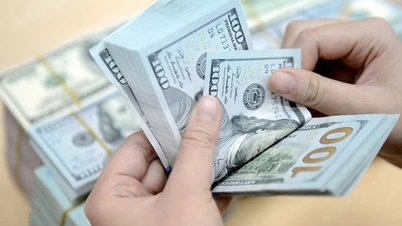
Illustrative image
Following the Bank of Japan's (BOJ) release of survey results showing that business confidence among major manufacturing corporations had risen to its highest level in four years, the Japanese yen remained largely unchanged in early week trading. While this positive signal somewhat supported market sentiment, the yen still edged down slightly by about 0.1% against the US dollar, trading around 155.94 yen/USD.
The survey results further reinforce expectations that the BOJ could raise interest rates as early as this week, a historic move given Japan's decades-long ultra-loose monetary policy. Analysts are closely watching Governor Kazuo Ueda's guiding message on the future interest rate hike trajectory.
According to experts at Societe Generale, the Bank of Japan (BOJ) is expected to raise its policy interest rate to 1% next July. Upon reaching this level, Japanese monetary policy will enter "unprecedented territory," forcing the BOJ to raise interest rates very cautiously, by 25 basis points each time, with a minimum interval of nine months to a year between adjustments.
The US, Europe, and the year-end policy dilemma.
Besides Japan, the market is also awaiting interest rate decisions from the Bank of England (BoE) and the European Central Bank (ECB). Currently, the market has almost fully reflected the likelihood of the BoE cutting interest rates, given that inflation in the UK, while still high, is showing signs of cooling. Conversely, the ECB is predicted to keep interest rates unchanged, although some investors are beginning to consider the possibility of raising interest rates again in 2026.

Joseph Capurso, Head of Foreign Exchange and Geopolitical Economics at Commonwealth Bank of Australia.
In early trading this week, the British pound fell 0.17% to $1.3359, while the euro declined 0.09% to $1.1730. According to Joseph Capurso, Head of Foreign Exchange and Geopolitical Economics at Commonwealth Bank of Australia, the Bank of Australia's decision will be a "tough nut to crack," especially if inflation data released this week alters expectations for further interest rate cuts.
In the US, a series of delayed economic data due to the historic government shutdown are about to be released, providing a more comprehensive picture of the health of the world's largest economy ahead of the year-end. The November jobs report is expected on Tuesday, while inflation figures will be released on Thursday.
On the international market, the USD Index remained around 98.43, near its lowest level in two months. The AUD fell 0.11% to 0.6647 USD, while the NZD edged up 0.08% to 0.5807 USD.
Last week, the Fed cut interest rates by 25 basis points amid signs of a weakening labor market. However, Fed Chairman Jerome Powell signaled that borrowing costs are unlikely to fall further in the short term, as the Fed needs more data to assess economic trends.
Notably, US President Donald Trump has indicated he is considering either former Fed Governor Kevin Warsh or National Economic Council Director Kevin Hassett as the next Fed chairman, a political factor that could continue to create volatility in global financial markets in 2026.
Key monetary policy milestones this week:
Bank of Japan (BOJ): Markets expect the BOJ to raise interest rates, marking a significant shift after decades of maintaining ultra-loose monetary policy.
Bank of England (BoE): The likelihood of an interest rate cut has been largely anticipated by the market, but the final decision depends on the inflation data released this week.
The European Central Bank (ECB) is expected to keep interest rates unchanged, while investors are beginning to consider the possibility of policy adjustments in 2026.
US: The November jobs report and inflation figures will be key indicators for the Fed to assess its monetary policy outlook for the end of the year and the beginning of next year.
Source: https://congthuong.vn/usd-suy-yeu-dau-tuan-khi-thi-truong-cho-quyet-dinh-lai-suat-toan-cau-434822.html

![[Image] Leaked images ahead of the 2025 Community Action Awards gala.](/_next/image?url=https%3A%2F%2Fvphoto.vietnam.vn%2Fthumb%2F1200x675%2Fvietnam%2Fresource%2FIMAGE%2F2025%2F12%2F16%2F1765882828720_ndo_br_thiet-ke-chua-co-ten-45-png.webp&w=3840&q=75)
![[Photo] Prime Minister Pham Minh Chinh receives Lao Minister of Education and Sports Thongsalith Mangnormek](/_next/image?url=https%3A%2F%2Fvphoto.vietnam.vn%2Fthumb%2F1200x675%2Fvietnam%2Fresource%2FIMAGE%2F2025%2F12%2F16%2F1765876834721_dsc-7519-jpg.webp&w=3840&q=75)

![[Live] 2025 Community Action Awards Gala](/_next/image?url=https%3A%2F%2Fvphoto.vietnam.vn%2Fthumb%2F1200x675%2Fvietnam%2Fresource%2FIMAGE%2F2025%2F12%2F16%2F1765899631650_ndo_tr_z7334013144784-9f9fe10a6d63584c85aff40f2957c250-jpg.webp&w=3840&q=75)
![[Photo] Prime Minister Pham Minh Chinh receives the Governor of Tochigi Province (Japan)](/_next/image?url=https%3A%2F%2Fvphoto.vietnam.vn%2Fthumb%2F1200x675%2Fvietnam%2Fresource%2FIMAGE%2F2025%2F12%2F16%2F1765892133176_dsc-8082-6425-jpg.webp&w=3840&q=75)
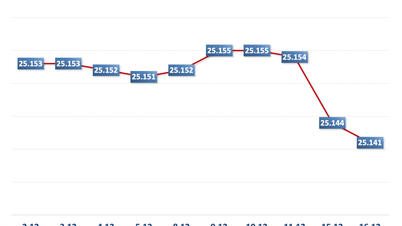

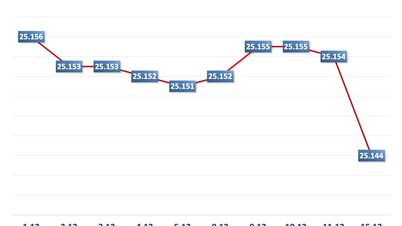


![[Infographic] Cross-exchange rates for determining taxable value from December 11-17](https://vphoto.vietnam.vn/thumb/402x226/vietnam/resource/IMAGE/2025/12/11/1765413245543_infographic-ty-gia-tinh-cheo-de-xac-dinh-tri-gia-tinh-thue-tu-11-1712-20251211021920.jpeg)
























































































Comment (0)