

The workshop took place on the afternoon of December 16th in Hall 801, Building E4, University of Economics - VNU Hanoi, in the context that ESG (Environmental - Social - Governance) is no longer a voluntary choice but is becoming an essential requirement for businesses wanting to participate deeply in the global value chain .

Globally , green finance is thriving , becoming one of the pillars of a sustainable financial system. Green finance classification systems , such as the ASEAN Green Finance Taxonomy , are gradually reshaping capital flows in the region, directing investment towards environmentally friendly projects that reduce emissions and create long-term social value.
This trend not only influences the investment decisions of international financial institutions, but also directly impacts corporate governance practices, demanding greater transparency and higher ESG risk management capabilities.
In Vietnam, the government has issued several important strategies , such as the Green Growth Strategy, energy transition programs, and a step-by-step approach to building an ESG framework in line with international practices . These policies demonstrate Vietnam's strong commitment to sustainable development and global economic integration.
However, according to experts, the implementation of ESG in Vietnam still faces many significant challenges . First, the current ESG framework is incomplete , lacking uniformity and specific guidance for businesses in its application and reporting.
Furthermore, many businesses, especially small and medium-sized enterprises (SMEs), have limited capacity to measure and report ESG data. The collection of environmental, social, and governance data is not standardized, while compliance costs and resources for green transition remain significant barriers.
Notably, the shortage of business leaders with an ESG mindset is considered a core challenge. Many businesses still approach ESG as a short-term compliance requirement, rather than viewing it as a long-term investment strategy linked to competitiveness and brand value.
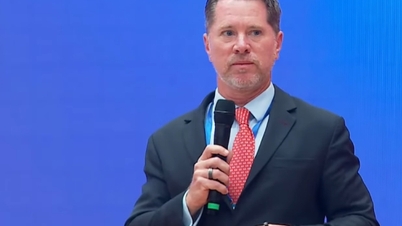
The workshop provided many important international perspectives through keynote presentations. Mr. Douglas Lee Snyder , Executive Director of the Vietnam Green Building Council (VGBC), emphasized the role of ASEAN Green Finance Taxonomy in guiding sustainable capital flows and opening up opportunities to attract investment in sectors such as real estate, infrastructure, and energy in Vietnam.

Meanwhile, Dr. Wang Weinan (University of Kent, UK) focused on analyzing the concept of Sustainable Social Value (SSV) , arguing that businesses in the new era need to go beyond mere profit objectives to create lasting value for society and the community.

From a management perspective, Robert William Kindness , Business Director of the Association of Business Executives (ABE) in the UK, emphasized the role of action-centered leadership in translating ESG commitments into concrete actions linked to operational efficiency and corporate culture.

Through the discussions, experts concluded that the implementation of ESG in Vietnam can only be effective when approached comprehensively and over the long term, combining institutional improvements, expanding green financial tools, and developing human resources with leadership capabilities in sustainable governance.
In particular, improving the quality of business management and leadership training, with ESG integrated as a core component in undergraduate and postgraduate programs, is considered a key factor in bringing sustainability standards into business operations.

In this context, the “ESG Finance and New-Generation Business Leadership” conference is seen as a space for in-depth policy and academic dialogue, bridging the gap between the public sector, the business community, and higher education institutions in exchanging experiences, proposing solutions, and orienting towards sustainable development.
Source: https://baophapluat.vn/tai-chinh-esg-va-bai-toan-xay-dung-the-he-lanh-dao-doanh-nghiep-moi-tai-viet-nam.html
![[Live] 2025 Community Action Awards Gala](/_next/image?url=https%3A%2F%2Fvphoto.vietnam.vn%2Fthumb%2F1200x675%2Fvietnam%2Fresource%2FIMAGE%2F2025%2F12%2F16%2F1765899631650_ndo_tr_z7334013144784-9f9fe10a6d63584c85aff40f2957c250-jpg.webp&w=3840&q=75)
![[Image] Leaked images ahead of the 2025 Community Action Awards gala.](/_next/image?url=https%3A%2F%2Fvphoto.vietnam.vn%2Fthumb%2F1200x675%2Fvietnam%2Fresource%2FIMAGE%2F2025%2F12%2F16%2F1765882828720_ndo_br_thiet-ke-chua-co-ten-45-png.webp&w=3840&q=75)
![[Photo] Prime Minister Pham Minh Chinh receives the Governor of Tochigi Province (Japan)](/_next/image?url=https%3A%2F%2Fvphoto.vietnam.vn%2Fthumb%2F1200x675%2Fvietnam%2Fresource%2FIMAGE%2F2025%2F12%2F16%2F1765892133176_dsc-8082-6425-jpg.webp&w=3840&q=75)


![[Photo] Prime Minister Pham Minh Chinh receives Lao Minister of Education and Sports Thongsalith Mangnormek](/_next/image?url=https%3A%2F%2Fvphoto.vietnam.vn%2Fthumb%2F1200x675%2Fvietnam%2Fresource%2FIMAGE%2F2025%2F12%2F16%2F1765876834721_dsc-7519-jpg.webp&w=3840&q=75)






























































Comment (0)