

According to Military, Sejjil is a two-stage, solid-fuel medium-range ballistic missile developed by Iran, considered a technological leap forward compared to the earlier liquid-fuel Shahab series.
The development of the Sejjil missile is believed to have begun in the late 1990s, building upon earlier missile projects such as the Zelzal. The Sejjil is equipped with an advanced inertial guidance system and maneuverability during its re-entry phase, with an estimated speed of Mach 12-14 (4,300 km/h).
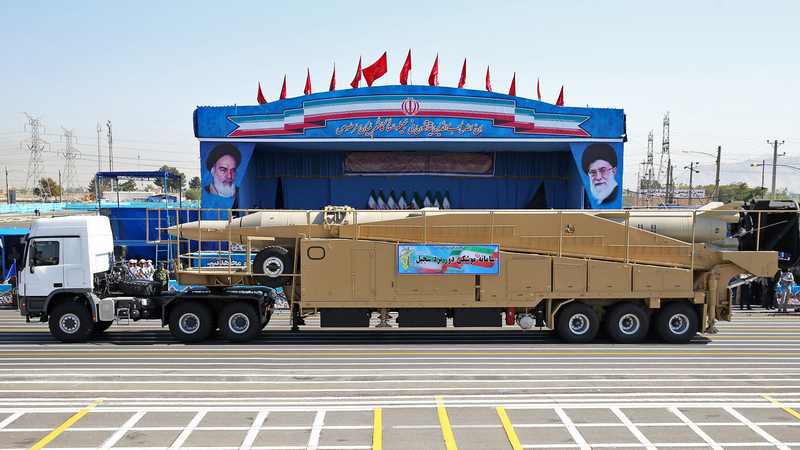
The appearance of the Sejjil indicates Iran's priority on rapid deployment capabilities and technical stability, rather than expanding the number of missile variants.
The Sejjil missile is 18 m long, 1.25 m in diameter, and has a total launch weight of 23,600 kg, as well as a payload capacity of approximately 700 kg. Its maximum range is about 2,000 km, and it can carry a high-explosive warhead weighing 500-1,500 kg.
The Sejjil prototype flew approximately 700 km during its first test launch in 2008. A second test took place a year later to evaluate the new control and guidance systems.
Despite having nearly the same size, weight, and range as the Shahab 3 variants, the Sejjil represents a significant technological difference by switching to solid fuel. This is considered a major advancement over the liquid-fueled Shahab design. Thanks to solid fuel, the Sejjil's launch preparation time is significantly shortened, thereby reducing the risk of detection and attack during deployment.
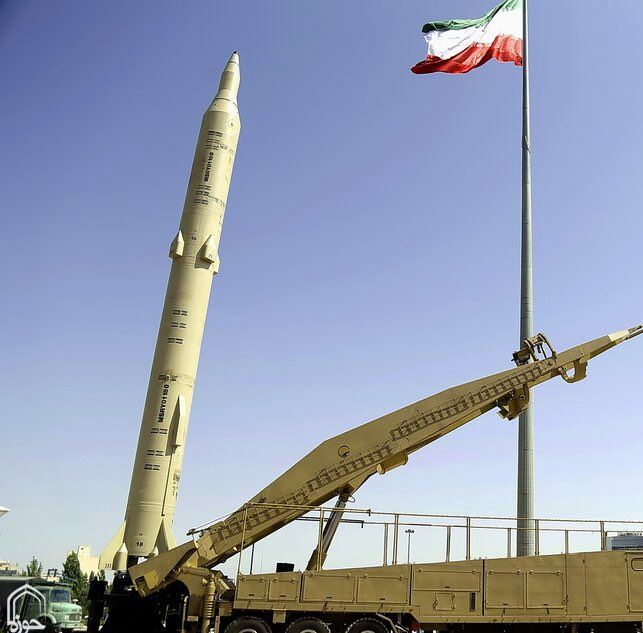
Sejjil remains highly regarded for its innovative technological platform, reflecting a shift in Iran's missile development thinking.
Not needing to refuel immediately before launch also makes solid-fuel missiles more convenient for transport, maneuverability, and concealment. However, along with these advantages, solid-fuel missiles also pose certain challenges in terms of control and guidance, as their combustion characteristics and engine efficiency make trajectory control more complex compared to liquid-fuel missiles.
Iran's Islamic Revolutionary Guard Corps appears to have begun deploying the Sejjil missile system in 2014, but the exact number in its stockpile is unclear. Experts believe Tehran continues to develop subsequent versions, including a three-stage missile design with a maximum range of 4,000 km and a launch weight of over 30 tons.
Iran is currently developing the Sejjil missile in several main variants, the most prominent being Sejjil 1 and Sejjil 2. Sejjil 1 is the foundational version, tested in 2008-2009, using a two-stage solid-fuel system, and served as proof that Iran had mastered the technology of large-scale solid-fuel engines for medium-range ballistic missiles.
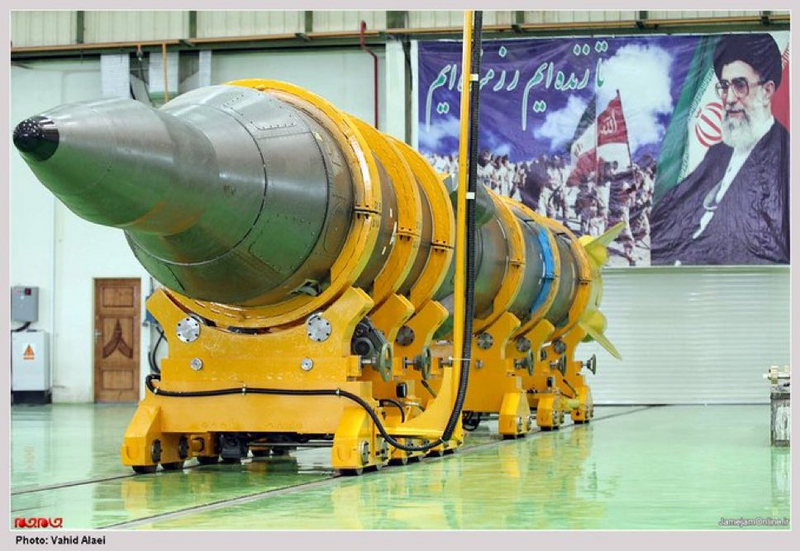
Sejjil stands out in Iran's missile arsenal due to its short launch preparation time, high maneuverability, and development focus on combat reliability.
Based on that, the Sejjil 2 was announced in 2009 and is considered a more complete combat variant, with an increased range of approximately 2,200-2,500 km, high maneuverability, short launch preparation time, and improved trajectory stability, making it suitable for a strategic deterrent role against Israel and US military bases in the Middle East.
Besides these two acknowledged variants, some Western sources have mentioned Sejjil 3 with a longer range, but Iran has never confirmed the existence of this version, so it is likely just an unofficial designation for the research or speculation phase from outside.
The Sejjil program shows that Iran is not pursuing an expansion of the number of variants, but rather focusing on perfecting core capabilities such as solid fuel, rapid deployment, and operational reliability, thereby strengthening strategic deterrence at the regional level.
Please visit the Defense Industry section to view related news and articles.
Source: https://congthuong.vn/dieu-gi-khien-sejjil-khac-biet-trong-kho-ten-lua-cua-iran-434996.html


![[Photo] Prime Minister Pham Minh Chinh receives Lao Minister of Education and Sports Thongsalith Mangnormek](/_next/image?url=https%3A%2F%2Fvphoto.vietnam.vn%2Fthumb%2F1200x675%2Fvietnam%2Fresource%2FIMAGE%2F2025%2F12%2F16%2F1765876834721_dsc-7519-jpg.webp&w=3840&q=75)
![[Image] Leaked images ahead of the 2025 Community Action Awards gala.](/_next/image?url=https%3A%2F%2Fvphoto.vietnam.vn%2Fthumb%2F1200x675%2Fvietnam%2Fresource%2FIMAGE%2F2025%2F12%2F16%2F1765882828720_ndo_br_thiet-ke-chua-co-ten-45-png.webp&w=3840&q=75)
![[Live] 2025 Community Action Awards Gala](/_next/image?url=https%3A%2F%2Fvphoto.vietnam.vn%2Fthumb%2F1200x675%2Fvietnam%2Fresource%2FIMAGE%2F2025%2F12%2F16%2F1765899631650_ndo_tr_z7334013144784-9f9fe10a6d63584c85aff40f2957c250-jpg.webp&w=3840&q=75)
![[Photo] Prime Minister Pham Minh Chinh receives the Governor of Tochigi Province (Japan)](/_next/image?url=https%3A%2F%2Fvphoto.vietnam.vn%2Fthumb%2F1200x675%2Fvietnam%2Fresource%2FIMAGE%2F2025%2F12%2F16%2F1765892133176_dsc-8082-6425-jpg.webp&w=3840&q=75)







































![[Live] Closing Ceremony and Award Presentation for the "Impressive Vietnam Tourism" Video/Clip Creation Contest 2025](https://vphoto.vietnam.vn/thumb/402x226/vietnam/resource/IMAGE/2025/12/17/1765974650260_z7273498850699-00d2fd6b0972cb39494cfa2559bf85ac-1765959338756946072104-627-0-1338-1138-crop-1765959347256801551121.jpeg)






















Comment (0)