

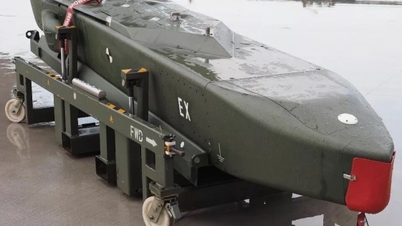
According to Military, the Hypersonic Attack Cruise Missile (HACM) is a new generation hypersonic attack cruise missile developed by the US Air Force to provide long-range, difficult-to-intercept attack capabilities, meeting the demands of combat environments against adversaries with increasingly dense air defense systems.
HACM is considered a leap forward compared to subsonic cruise missiles like the AGM-86 or Tomahawk and is a crucial piece in the US's deterrence and precision strike strategy in the 21st century.
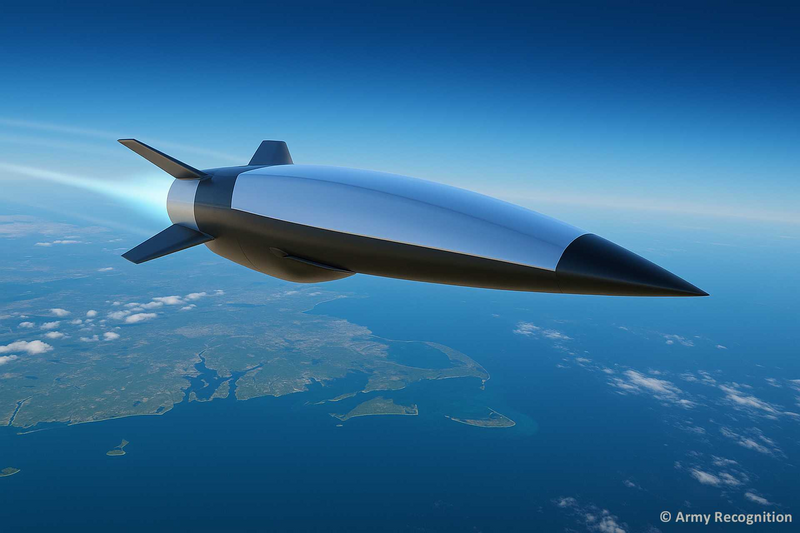
HACM marks a leap forward in hypersonic cruise weapons, where speed, range, and air defense penetration capabilities play a central role.
In 2022, the US Air Force selected Raytheon as the primary contractor for the HACM program, responsible for overall design, system integration, guidance, and combat capabilities. Northrop Grumman provided scramjet engine technology, a legacy from the previous HAWC program.
HACM will be the first mass-produced weapon to use a compressed air jet engine. Like turbofan engines, the jet draws oxygen from the surrounding atmosphere to use as fuel. The main difference is that while turbofan engines draw oxygen at subsonic speeds, compressed air jets draw oxygen at hypersonic speeds.
Hypersonic cruise missiles (HACMs) have flight speeds exceeding Mach 5, significantly shortening target approach times and drastically reducing the response capabilities of enemy air defense systems. While the exact range has not been released, experts estimate that HACMs have a range of over 1,000 km, sufficient for attacks from outside densely fortified defense areas. Regarding flight trajectory, HACMs do not follow a fixed ballistic trajectory but fly low and flexibly, capable of changing direction during flight, making detection, tracking, and interception exceptionally difficult.
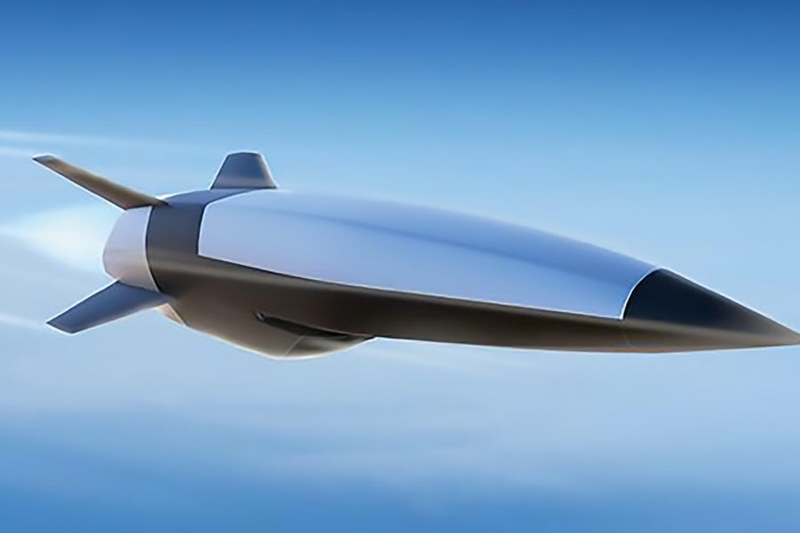
From scramjet engines to unpredictable trajectories, HACMs demonstrate how technical specifications are becoming the deciding factor in military superiority.
HACMs are designed to carry conventional warheads, serving non-nuclear precision strikes against high-value targets. Thanks to their combination of hypersonic speed, flexible flight trajectory, and maneuverability in the terminal phase, HACMs possess very high penetration capabilities against modern air defense systems, making detection and interception particularly difficult.
Regarding deployment platforms, this missile is expected to be integrated onto US Air Force strategic bombers such as the B-52H and B-21 Raider, and could potentially be extended to heavy fighter jets like the F-15EX, thereby increasing flexibility and surprise in combat.
Currently, HACM does not have any officially announced variants, as the program is still in the development and testing phase. However, the missile is designed in a modular fashion, allowing for the creation of upgraded versions in the future.
Please visit the Defense Industry section to view related news and articles.
Source: https://congthuong.vn/ten-lua-hacm-khi-thong-so-ky-thuat-tro-thanh-loi-the-chien-luoc-434714.html





























































































Comment (0)