

The capital flows for sustainable development have been established.
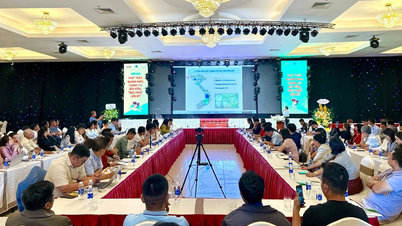
On the morning of December 15th, in Hanoi, the Finance and Investment Newspaper organized a seminar titled "Diversifying Capital for Sustainable Development" amidst the increasingly urgent need to mobilize financial resources for green growth and sustainable economic development . The seminar took place as Vietnam faced significant challenges related to climate change, environmental pollution, and the pressure to maintain long-term growth, aiming to become a developed, high-income industrialized nation by 2045.
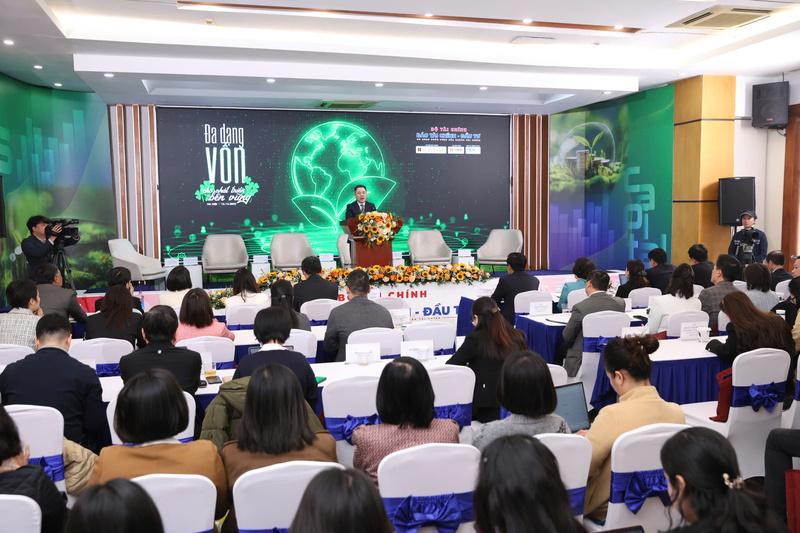
Workshop "Diversifying Capital for Sustainable Development". Photo: Lam Phong
In his opening remarks, Mr. Pham Van Hoanh, Editor-in-Chief of the Finance - Investment Newspaper, emphasized that sustainable development is no longer an option but a mandatory requirement for all countries. The three pillars of economic, social, and environmental (ESG) must be balanced to ensure prosperous growth without sacrificing the future of future generations. For Vietnam, this requirement is even more urgent as climate change increases natural disasters, storms, and floods, while environmental pollution remains at an alarming level.
In recent years, Vietnam has clearly demonstrated its political will through its participation in and signing of many important international commitments on sustainable development. Commitments on net emission reduction, methane reduction, and ending deforestation, along with a series of strategic documents and action programs, have been issued, creating a policy foundation for the green transition. Notably, Decision No. 21/2025/QD-TTg dated July 4, 2025, of the Prime Minister on establishing criteria and procedures for certifying "green" investment projects has for the first time created a national green portfolio, opening up an official framework to guide green investment flows in Vietnam.
However, a significant gap always exists between policy and reality, with the funding issue being considered crucial. Vietnam's financial needs for sustainable development and green transformation are enormous, far exceeding the capacity of the state budget and a few traditional funding channels. This reality necessitates a stronger diversification of financial resources and an expansion of opportunities for the development of the green finance market.
Over the past five years, with the guidance of the Government and the involvement of the banking system, fundraising for sustainable development in Vietnam has made significant progress. Internationally, at the 2022 ASEAN-EU Summit commemorating the 45th anniversary of relations, international partners committed to mobilizing US$15.5 billion from public and private sources over the next 3-5 years to support Vietnam in achieving net-zero emissions by 2050. In addition, international financial institutions such as the World Bank and the Asian Development Bank have provided approximately US$3.8 billion for renewable energy and green infrastructure projects between 2020 and 2024.
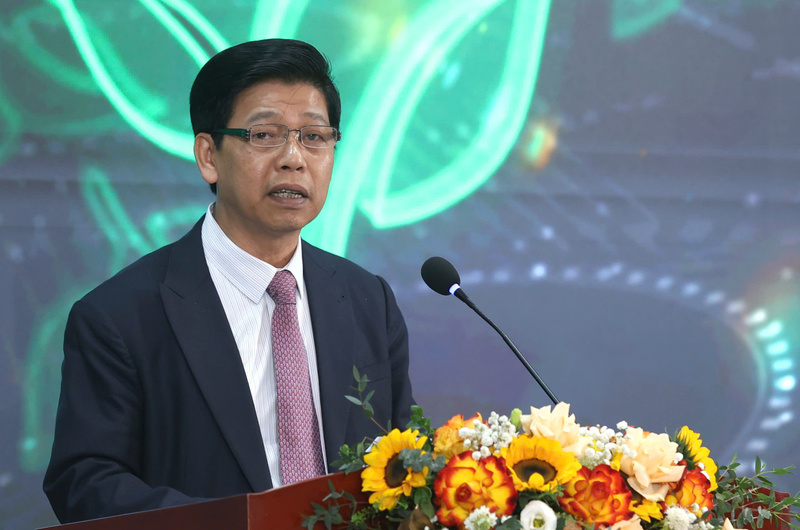
Mr. Pham Van Hoanh, Editor-in-Chief of the Finance and Investment Newspaper, delivered the opening remarks at the workshop. Photo: Lam Phong
Foreign direct investment (FDI) flows also play a significant role in this process. By the end of 2024, Vietnam had attracted nearly $32 billion in FDI related to renewable energy, circular economy, and emission reduction technologies. Many large-scale wind and solar power projects from investors from Denmark, Singapore, Thailand, and Japan continued to expand during 2023-2025, demonstrating the attractiveness of green investment in Vietnam.
Domestically, the banking system is identified as one of the important channels for capital flow into sustainable development. According to the State Bank of Vietnam, the banking sector has proactively improved the legal framework and implemented solutions to promote green credit, while integrating environmental and social factors into lending activities. As a result, green credit outstanding has continuously expanded in scale and growth rate. By November 30, 2025, green credit outstanding is expected to reach approximately VND 750 trillion, with an average growth rate of over 21% per year during the 2017-2025 period, higher than the overall credit growth rate of the entire economy.
Diversify your financial resources for the long term.
Despite achieving certain results, the reality shows that the scale of capital mobilized for sustainable development remains modest compared to the needs. Many studies indicate that Vietnam needs approximately US$20 billion annually for the green transition process. According to a report by the Ministry of Finance, in a carbon neutral scenario, the total long-term investment need for green and sustainable economic development until 2050 is approximately US$670-700 billion, of which the need for adaptation to climate change alone amounts to about US$368 billion, equivalent to 6.8% of GDP annually.
This figure clearly shows the pressure to mobilize long-term financial resources, requiring the synchronized participation of various capital channels. Besides the banking system, the capital market, especially the stock market, is identified as a crucial medium- and long-term resource mobilization channel for green projects, energy transition, and sustainable development. Developing sustainable financial instruments such as green bonds, sustainable bonds, and shares of companies practicing ESG is considered a necessary direction to expand the scope for capital mobilization.
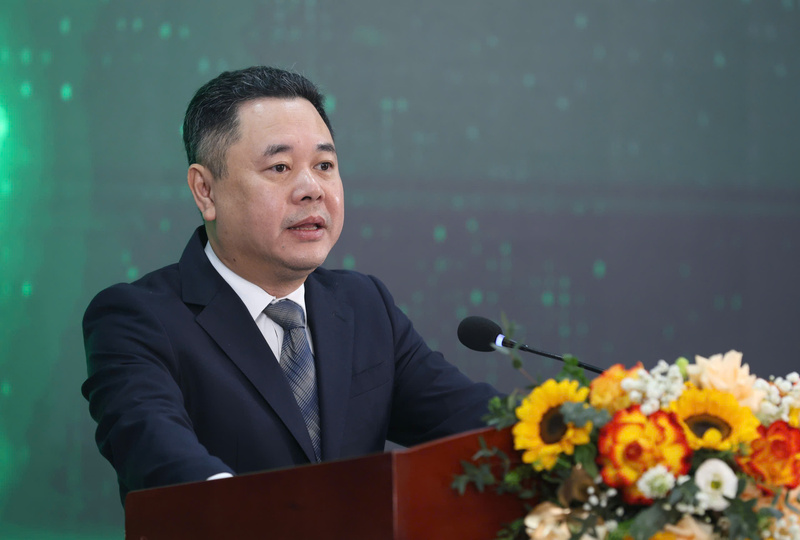
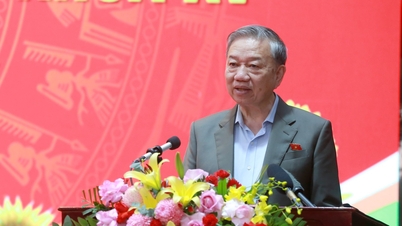
Deputy Governor of the State Bank of Vietnam, Nguyen Ngoc Canh, speaks at the workshop. Photo: Lam Phong
Speaking at the conference, Deputy Governor of the State Bank of Vietnam, Nguyen Ngoc Canh, stated that green transformation has become an inevitable trend in the context of the world facing profound changes in climate, environment, and socio-economic conditions. Vietnam is gradually adjusting its development strategy towards sustainability, balancing economic growth with global climate commitments, aiming for a low-carbon economy capable of adapting flexibly to new challenges.
According to the Deputy Governor, to meet this requirement, it is necessary to strengthen the mobilization of all resources for the national green growth goal, with particular emphasis on the capital market, green credit, carbon market, and international financial sources, in addition to funds from the state budget. At the same time, perfecting the legal framework, enhancing transparency, and aligning with international standards are crucial conditions to ensure that funds are allocated correctly and effectively.
Besides the role of financial institutions, the business community is also identified as a central entity in this process. A shift in governance mindset, viewing information transparency and long-term commitment as assets to access sustainable capital flows, along with the adoption of international reporting standards and investment in digital infrastructure to measure emissions, are considered fundamental requirements.
In that context, according to the Deputy Governor, the "Diversifying Capital for Sustainable Development" workshop creates a forum for exchange among regulatory agencies, experts, financial institutions, investment funds, and businesses. The State Bank of Vietnam leadership proposed that the workshop focus on discussing five key areas:
Firstly, the role of capital markets and stock markets in mobilizing medium and long-term resources for sustainable development is crucial. This includes clarifying the conditions under which capital markets can become effective channels for capital flow, supplementing bank credit to finance green projects, energy transition, and sustainable development.
Secondly, the solution involves developing a green capital market, encouraging the issuance of sustainable financial instruments such as green bonds, sustainable bonds, and shares of companies practicing ESG; while simultaneously enhancing the capacity of businesses and investors to access, utilize, and effectively monitor these capital flows and financial products.
Thirdly, this study examines the practical implementation of green credit in the banking sector, its results, lessons learned, and future directions to enhance the role of the banking system in leading and spreading green credit flows throughout the economy.
Fourth, priority mechanisms and policies are needed to attract more private sector capital into green and sustainable growth projects, including the regulatory role of the State in improving the legal framework, enhancing transparency, and ensuring the safety and stability of the financial system.
Fifth, strengthen coordination and close cooperation among state management agencies, financial institutions, businesses, capital markets, and international partners to effectively mobilize, allocate, and utilize financial resources for the country's green growth and sustainable development goals.
Banks' green funding is primarily raised through the issuance of green bonds and international loans. According to the International Finance Corporation (IFC), the value of green bond issuances in Vietnam is expected to exceed US$1.5 billion between 2020 and 2025. This is an important first step, reflecting the formation and development of green financial instruments within the national financial system.
Source: https://congthuong.vn/da-dang-hoa-nguon-von-mo-duong-cho-phat-trien-ben-vung-434808.html

![[Photo] Two flights successfully landed and took off at Long Thanh Airport.](/_next/image?url=https%3A%2F%2Fvphoto.vietnam.vn%2Fthumb%2F1200x675%2Fvietnam%2Fresource%2FIMAGE%2F2025%2F12%2F15%2F1765808718882_ndo_br_img-8897-resize-5807-jpg.webp&w=3840&q=75)































































































Comment (0)