

Policy "boost"
The challenge of securing capital for Vietnam's development is entering a new phase, where the scale of mobilization is no longer sufficient; the focus is shifting to the quality of capital flows, their maturity, and their alignment with green and circular growth goals.
This reality highlights the urgent need to diversify fundraising channels, gradually reduce dependence on bank credit, and form a synchronized financial ecosystem for sustainable growth.
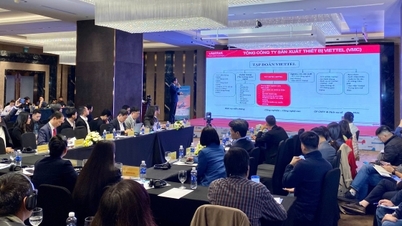
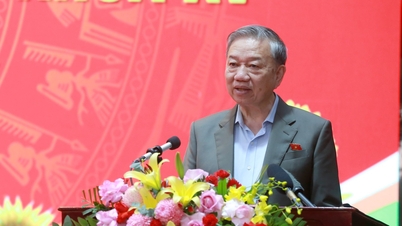
Speaking at the "Diversifying Capital for Sustainable Development" seminar organized by the Finance and Investment Newspaper on December 15th, representatives from state management agencies, banks, experts, and businesses clearly outlined new policy developments, as well as existing bottlenecks in unlocking green capital flows for the economy .
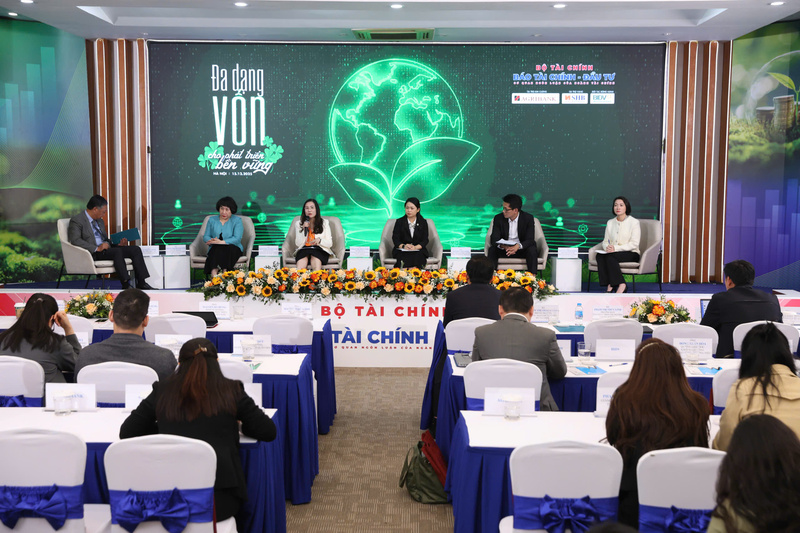
Workshop "Diversifying Capital for Sustainable Development". Photo: Lam Phong.
According to Mr. Vuong Van Quy, Deputy Head of the Credit Policy Department of the Vietnam Agricultural and Rural Development Bank ( Agribank ), 2025 marks a special time when a series of new policies will come into effect, creating more favorable conditions for green projects to access capital.
Decree 156/2025/ND-CP, which allows credit institutions to provide unsecured loans up to 70% of the project value for organic and circular economy agricultural models, has fundamentally changed lending thinking.
Instead of relying on collateral, banks can shift to evaluating projects based on cash flow and efficiency. Furthermore, Decision 21/2025/QD-TTg on the green classification list helps banks better identify eligible projects, limiting the risk of "greenwashing."
In practice, green credit at Agribank has shown significant growth. As of Q3/2025, the bank's outstanding green credit reached over VND 28,000 billion, focusing on renewable energy, green agriculture, and sustainable forestry.
However, according to Agribank representatives, in order for this capital flow to accelerate further, it is necessary to quickly complete the national database on emissions, standardize the criteria for measuring greenhouse gases, and create a foundation for more accurate and transparent risk assessment.

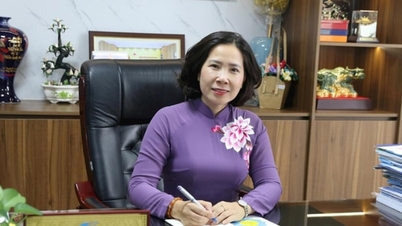
Ms. Pham Thi Thanh Tung - Deputy Director of the Department of Credit for Economic Sectors (State Bank of Vietnam) shared her insights at the workshop. Photo: Lam Phong.
Alongside the efforts of the banking system, interest rate support policies from the state budget are expected to become an important "lever." Ms. Pham Thi Thanh Tung, Deputy Director of the Department of Credit for Economic Sectors (State Bank of Vietnam), said that the agency is coordinating with the Ministry of Finance to submit to the Government a Decree supporting an interest rate of 2% per year for private enterprises and business households borrowing capital to implement green, circular projects applying ESG standards.
According to Ms. Pham Thi Thanh Tung, for this policy to be implemented effectively, it requires the synchronization of three pillars: a Decree supporting interest rates through the banking system; a Decree supporting through state funds; and especially specific regulations on criteria for identifying green projects issued by the Ministry of Agriculture and Environment. When these three components are activated together, green capital will have a basis to flow faster and in the right direction.
Solving the long-term capital problem for businesses.
While bank credit remains a crucial pillar in the short term, in the long term, the capital market is seen as a key area for solving the resource problem for sustainable development.
According to Ms. Pham Thi Thanh Tam, Deputy Director of the Department of Financial Institutions (Ministry of Finance), after Decision 21 on green criteria was issued, the green corporate bond market has recorded positive signs.
By October 2025, the outstanding balance of green corporate bonds reached approximately $1 billion, with businesses becoming more proactive in seeking long-term funding from the market.

Ms. Pham Thi Thanh Tam - Deputy Director of the Department of Financial Institutions (Ministry of Finance). Photo: Lam Phong.
Mr. Nguyen Ba Hung, Chief Economist of the Asian Development Bank (ADB) in Vietnam, emphasized that the key to sustainable development funding is not about how much capital can be raised, but rather about using that capital effectively.
Vietnam still has ample room to expand its capital market if it implements comprehensive reforms, develops new financial instruments, and strengthens public-private partnership models.
International experience shows that expanding access to international capital markets and developing blended finance models can help mobilize long-term resources at a more reasonable cost.
Ms. Nguyen Thi Hai Hoa, Deputy General Director and Head of Finance at Sun Group, stated that large-scale projects in infrastructure, tourism, or sustainable urban development require long investment periods, while current funding sources are primarily medium and short-term. To access international capital, businesses must meet a series of requirements regarding financial transparency, project efficiency, and credit rating, which entails significant costs.
According to Ms. Hoa, developing a strong domestic bond market, especially long-term bonds, would be a more suitable solution for businesses.
However, the biggest challenge now is how to make the bond market both attractive to issuing companies and ensure liquidity for investors.
Incorporating green criteria right from the project bidding and auction stages will help businesses be more proactive in developing sustainable projects and benefit from corresponding support mechanisms.
According to data from the State Bank of Vietnam, as of November 30th, outstanding green credit reached approximately 750 trillion VND, with an average growth rate of over 21% per year during the 2017-2025 period, higher than the overall credit growth rate of the economy.
However, to meet green growth targets and sustainability commitments, relying solely on bank credit is insufficient and places significant pressure on the system. Vietnam needs to mobilize approximately $45-55 billion annually (according to UNESCAP), a figure far exceeding the capacity of the state budget and the banking system.
Source: https://congthuong.vn/chinh-sach-khoi-thong-von-xanh-cho-tang-truong-ben-vung-434925.html



![[Photo] Two flights successfully landed and took off at Long Thanh Airport.](/_next/image?url=https%3A%2F%2Fvphoto.vietnam.vn%2Fthumb%2F1200x675%2Fvietnam%2Fresource%2FIMAGE%2F2025%2F12%2F15%2F1765808718882_ndo_br_img-8897-resize-5807-jpg.webp&w=3840&q=75)























































































Comment (0)