Untapped potential
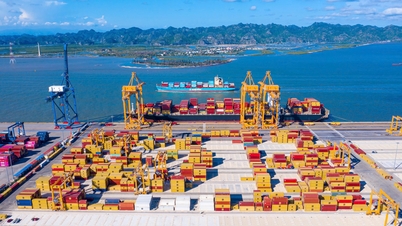
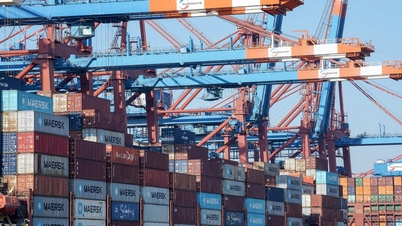
A 150-meter-long barge dock sits quietly beside the bustling piers filled with container trucks, two towering Tukan cranes are always ready for operation, and a specially designed loading and unloading line is indistinguishable from that used for ocean-going vessels.
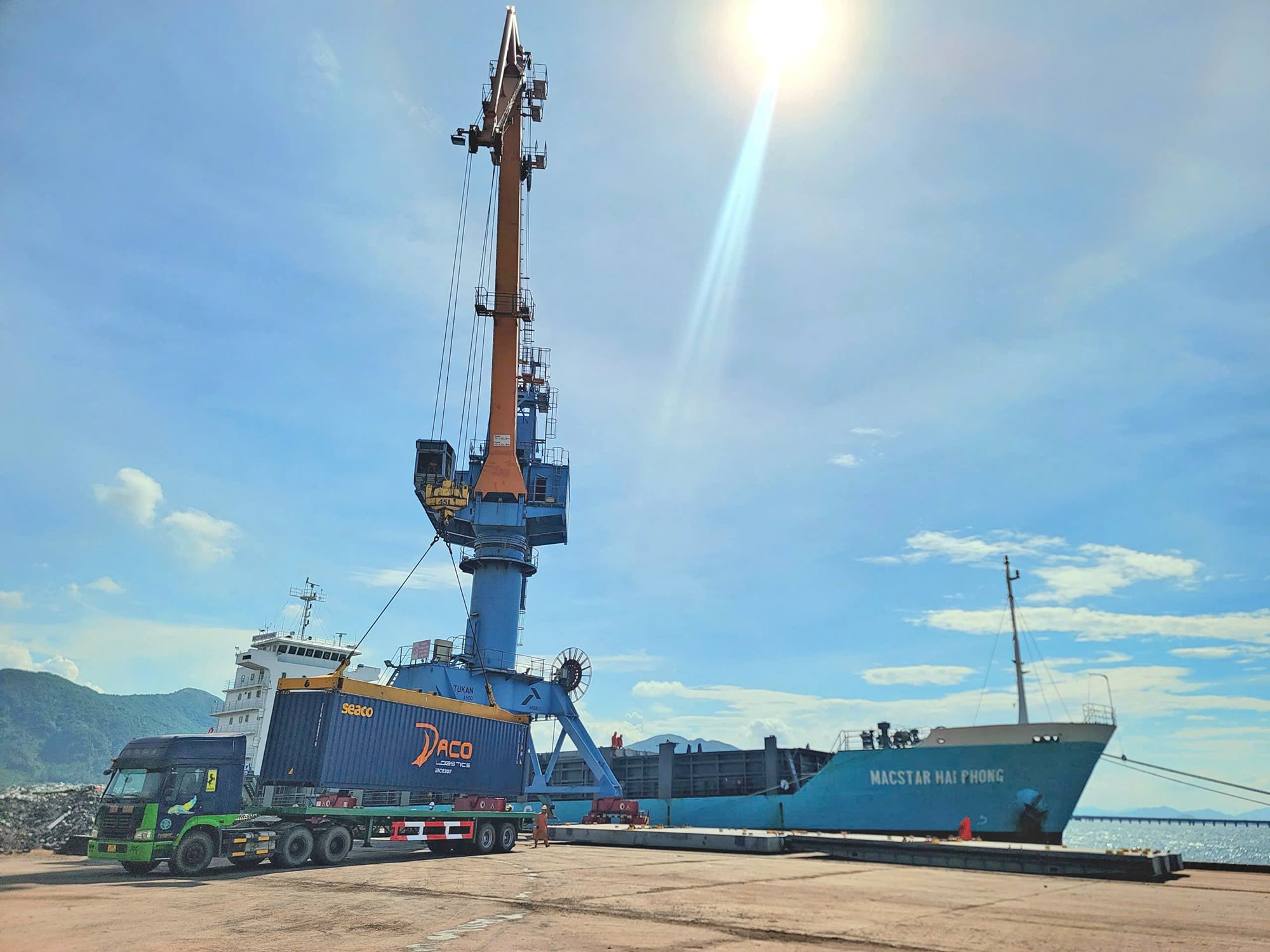
To promote inland waterway transport and cargo handling at seaports, many supportive policies are needed.
Few people know that the well-invested area at Hai Phong International Port TIL (HTIT) in Lach Huyen is actually… “waiting for customers”.
Since its inception, HTIT has identified waterway transport as a crucial connecting method to reduce pressure on road transport, save costs, and move towards green transport. However, reality shows that this path is still fraught with challenges.
According to statistics for the first 11 months of 2025, HTIT only received 102 barge visits, equivalent to 7,804 TEU. Meanwhile, container trucks entering and leaving the port by road reached 98,200 visits, accounting for 174,813 TEU. This means that water transport only accounts for 4-5% of the total volume handled at the port.
"The frequency of barges is currently inconsistent, mainly occurring at certain times or in batches of large shipments," said Mr. Le Manh Cuong, Head of Marketing at HTIT, adding that while waterway transport has cost advantages for medium and long distances, it is heavily dependent on cargo consolidation capabilities, route frequency, and the synchronization of post-port infrastructure.
Data from the Vietnam Maritime and Inland Waterways Administration shows that the proportion of container transport by waterway in the Hai Phong area is currently below 2%.
In contrast, the South has developed strongly thanks to its dense river system and significant cost differences. Barge transport costs are only about 30% of road transport costs. As a result, the Ba Ria - Vung Tau area achieves 75% of its container traffic entering and leaving ports by waterway.
The whole country currently transports 8-9.5 million TEU containers by inland waterways, with the South accounting for an overwhelming proportion.
Why is there a difference?
Explaining the significant difference, Mr. Cap Trong Cuong, General Director of MacStar Group Joint Stock Company, said that the North is facing many limitations: low bridge clearance, limited channel depth, and a relatively good road system, resulting in little difference in costs between water and road transport. This makes short water transport routes difficult to achieve efficiency.
“MacStar is developing routes between Hai Phong and Ninh Binh , Hai Phong and Nghi Son, and Hai Phong and Vung Ang. The company has offered lower freight rates than road transport to attract cargo. Longer routes like the one to Nghi Son have freight rates about $50 cheaper than road transport, but the volume of cargo on the Vung Ang route is not high,” Mr. Cuong shared.
Nevertheless, businesses still want to promote water transport, because the trend of reducing emissions will force businesses to switch to green transportation methods.
What worries Mr. Cuong is the lack of specific policies and mechanisms to support businesses developing waterway transport. Besides ports with dedicated berths, most seaports prioritize large vessels, causing barges to wait; and there are no preferential treatment for loading and unloading costs.
Sharing the same view, Mr. Pham Quoc Long, Vice Chairman of the Vietnam Shipowners Association, said that infrastructure serving inland waterway transport such as ICDs and depots still has many shortcomings; localities have not yet had preferential policies to help businesses access land for the development of inland waterway ports.
Furthermore, according to regulations, only river-sea vessels (VR-SB) are permitted to operate in the open sea to deep-water ports, while SI vessels are only allowed to operate on certain routes, limiting their operational potential.
According to him, to promote inland waterway transport, it is necessary to readjust the port infrastructure fees charged to inland waterway transport businesses, reducing the cost burden on these businesses.
More support policies are needed.
Vietnam possesses a 42,000km long river system with significant transport potential, a 3,260km coastline, and numerous natural estuaries and bays. However, this potential has not been exploited to its full extent. Road transport still bears the burden of goods transportation, even on routes with parallel waterways.
The North has good connectivity between Hai Phong – Cai Lan and the Red River and Thai Binh River systems, but limitations in bridge clearance and container handling capacity by barges prevent the formation of a complete river-sea transport chain. The South, while more advantageous, still faces limitations in depth or turning radius in some sections.
From the business perspective, HTIT stated that it is implementing various measures to promote waterway transport. The port has developed a more competitive loading and unloading fee policy at the barge terminal, prioritized the allocation of separate equipment, and shortened waiting times.
The port also collaborates with logistics companies, waterway transport operators, and major shippers to organize integrated shipping solutions, combining waterway transport with a final leg by road. This solution allows goods to travel "in one go," facilitates cost comparisons, and reduces concerns about switching transport modes.
"For port businesses' efforts to be effective, more macro-level support policies are needed, such as developing ICD systems, inland waterway terminals, supporting green logistics costs, and improving waterway infrastructure," Mr. Cuong shared.
Construction Newspaper
Source: https://vimc.co/khi-ben-thuy-ngong-sa-lan/









































































Comment (0)