

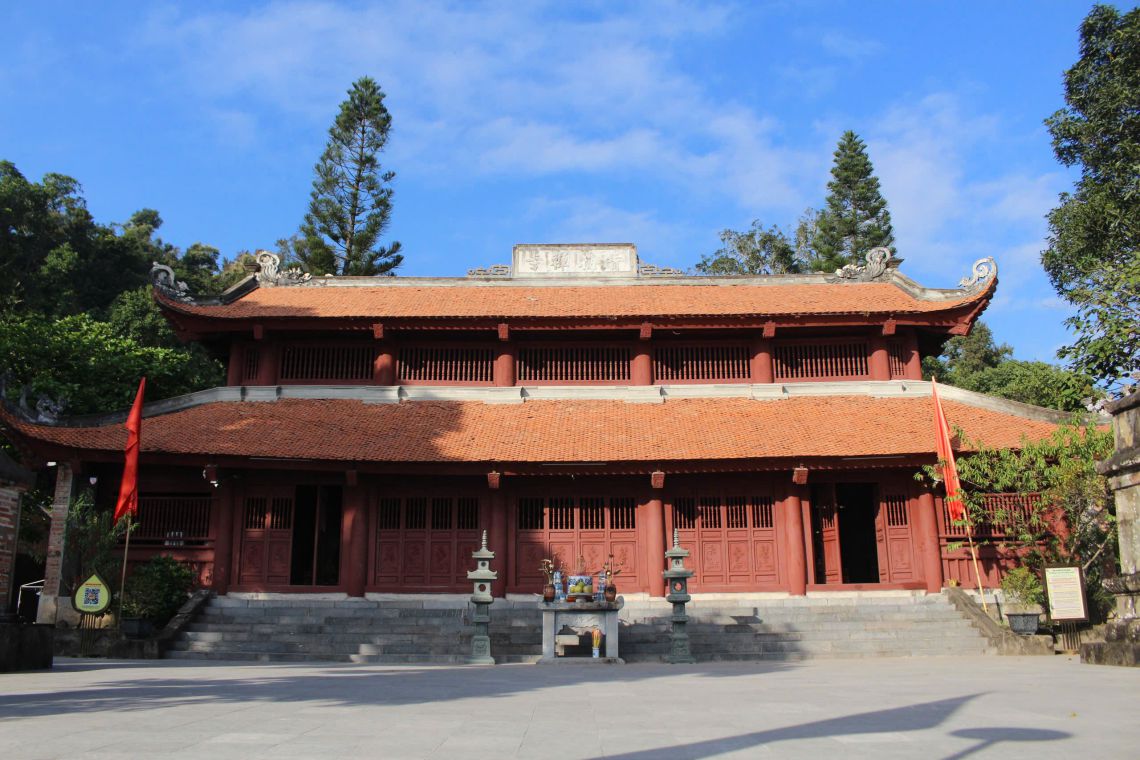
Thanh Mai Pagoda is located halfway up the mountain, amidst ancient maple forests in Hai Phong . Photo: Le Tuyen
The season of fragrant maple leaves at the ancient temple.
Before the autumn foliage season arrives, the area around Thanh Mai Pagoda (Nguyen Trai Ward, Hai Phong) is covered in a blanket of white chestnut blossoms. Once the chestnut blossom season is over, the lush green forest here is subtly tinged with vibrant yellow under the sun. This is the season when the maple leaves on the slopes above Thanh Mai Pagoda begin to change color, blending with the bright red of the lychee trees sprouting new leaves. During this time, Thanh Mai Pagoda attracts the most pilgrims, who come to admire the scenery, climb the mountain to see the maple leaves, and gaze at the reeds on the mountaintop.
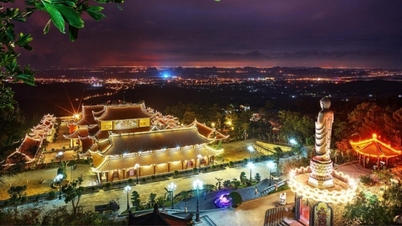
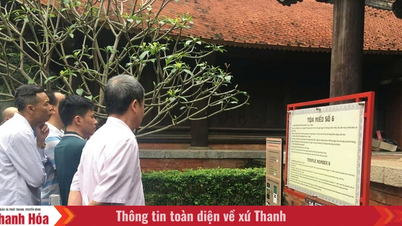
Thanh Mai Pagoda was built during the Tran Dynasty (14th century) and is associated with the Second Patriarch of the Truc Lam Zen sect, Venerable Phap Loa. Currently, the pagoda houses a collection of artifacts including four stone steles and eight ancient pagodas built between the 14th and 18th centuries. Geographically and historically, Thanh Mai Pagoda is part of the Truc Lam Yen Tu Zen sect's system of pagodas.
After visiting and learning about the history of the temple, we officially began our journey to climb the mountain to admire the maple leaves and the reed-covered hills. The path was quite crowded with tourists, including many children. Below the temple, it was quiet, but behind the mountain, the sounds of laughter and chatter from people seeking the unique maple leaf season, found only here in Hai Phong, filled the air.
Each of us grabbed a walking stick, strapped our backpacks securely, and began climbing step by step; the path was still quite gentle. Amidst the thick foliage and large tree trunks of teak, rosewood, and mahogany, I gradually began to see glimpses of orange-yellow leaves. The maple trees (also known as the "sau sau" tree) in the Thanh Mai temple area stretched from the parking lot in front of the temple to the center of Thanh Mai mountain. On average, the trees were about 30 meters tall and had three lobes. In the midst of the green leaves bathed in the golden winter sun, the maple leaves had a yellow-orange hue at the edges, sometimes dotted with red, creating a magical beauty. "Look!" my friend called out, and I looked down. Among the layers of dry leaves in the Thanh Mai temple area, the vibrant red of fallen maple leaves was scattered.
I enjoyed bending down to pick up the maple leaves, gathering them together and tilting them to examine them in the sunlight. A vibrant red glow shone through, reminiscent of the beauty of the maple forests I had seen on television in the provinces of Cao Bang , Son La, and further south to Quang Tri and Da Lat. But most familiarly, this red color resembled the banyan tree canopy in the schoolyard, along the small village roads, which also blazed red in the cold wind during winter.
The colder the weather gets, the more yellow the leaves become. In front of me, tourists excitedly raised their phones, taking pictures with the maple leaves. This area, about 200 meters from Thanh Mai Pagoda, has many maple trees clustered around a wide open space, allowing visitors more freedom to take photos and admire the foliage. "The vibrant yellow of the maple leaves stands out against the green forest. Being able to see the maple leaves right here in Hai Phong is a very enjoyable experience," shared Ms. Kim Anh ( Hai Duong Ward, Hai Phong).
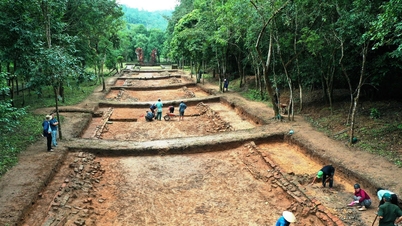
Along the mountain climbing route for viewing autumn foliage, the Con Son - Kiet Bac Relic Management Board has set up a campsite halfway up the mountain to allow visitors to both admire the winter foliage and explore the Thanh Mai 2 archaeological site. The archaeological site covers an area of 400 square meters and includes a three-layered foundation system with architectural remains from the Tran Dynasty (14th century), Le Trung Hung Dynasty (17th-18th centuries), and Nguyen Dynasty (19th-20th centuries), along with over 1,000 artifacts. This is a valuable source of information that will significantly contribute to the process of building the dossier for the Yen Tu - Vinh Nghiem - Con Son - Kiet Bac complex of relics and scenic spots, which is being proposed to UNESCO for recognition as a World Cultural Heritage site.
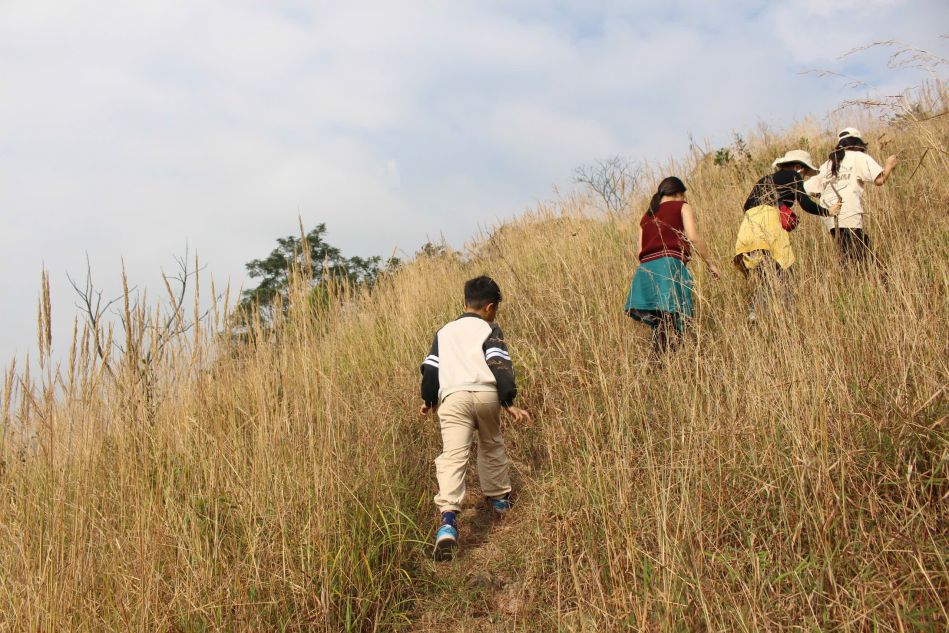
Many families bring their young children to climb Thanh Mai mountain for the experience and to improve their physical fitness. Photo: Le Tuyen
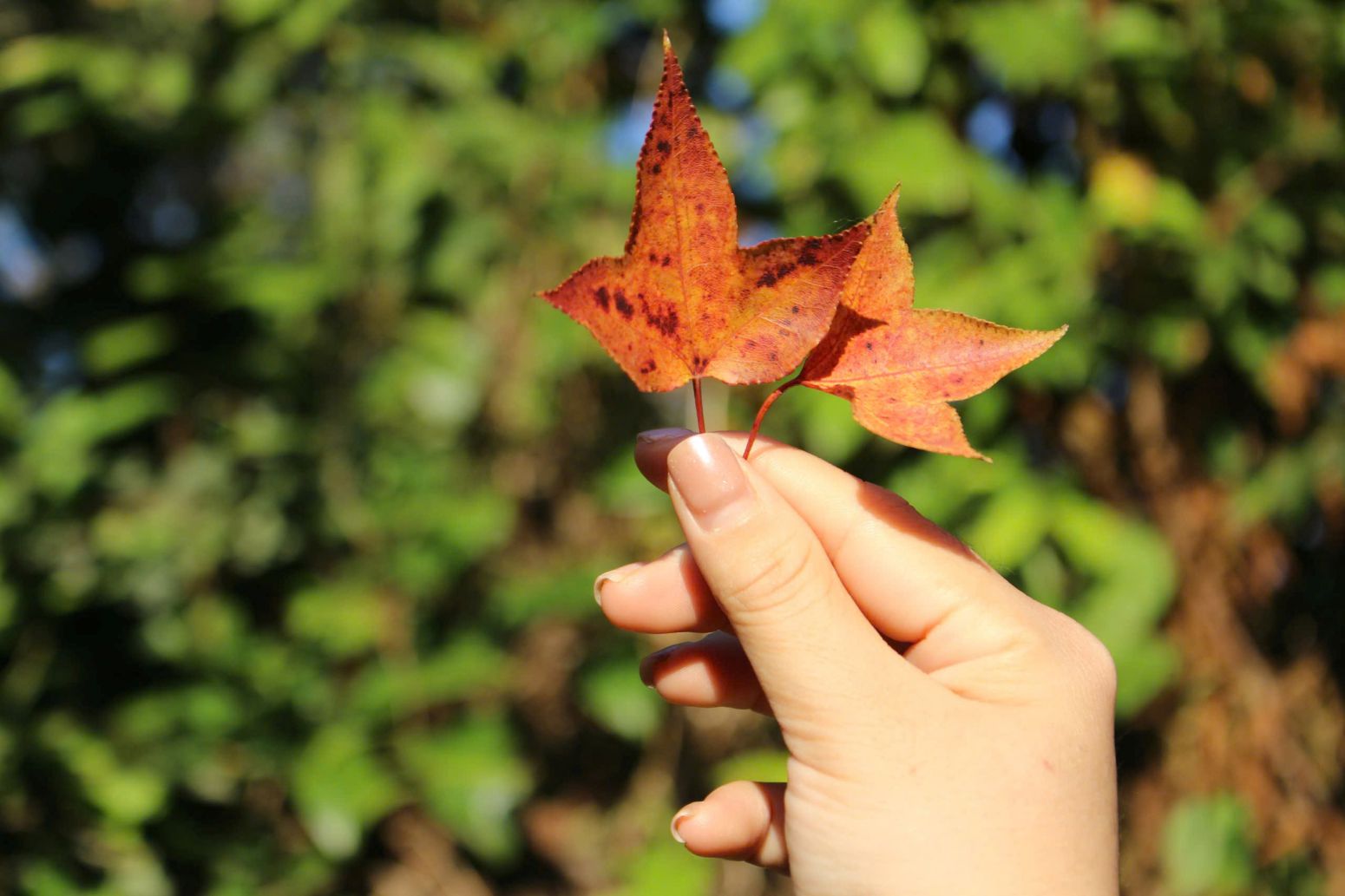
Fallen maple leaves are a vibrant red. Photo: Le Tuyen
Climb to the summit of Thanh Mai mountain amidst vast fields of reeds.
Instead of setting up camp right away, we continued climbing to the summit of Thanh Mai Mountain, a place many tourists have shared boasts a vast expanse of reeds offering panoramic views of the villages below. The path narrowed and twisted as we ascended, flanked by dense thickets of myrtle, wild guava, and scattered patches of yellow maple trees. Every now and then, we'd cross dry stream beds where fallen trees blocked the way, requiring us to climb, or even squeeze, through. When I looked up, the sky seemed much wider, and the distant landscape gradually came into view.
About four or five children were ahead of me. On the steep, rocky terrain, their feet moved swiftly and nimbly.
Ms. Nguyen Thi Nhan (38 years old, Hai Phong) said that two years ago, she also climbed Thanh Mai mountain, but the path wasn't as easy then as it is now. “My children have been climbing Ban Co Tien (a historical site in Con Son - Kiet Bac ) since they were 4 years old. This time, climbing Thanh Mai mountain wasn't too difficult and they were very excited. This activity also helps them experience nature and improve their physical fitness.”
The path to the summit of Thanh Mai Mountain is about 3km long, and the climb takes over 2 hours, depending on the number of rest stops taken by visitors. At the summit, there are no longer any tall trees providing shade; instead, a vast expanse of yellow reeds stretches out before you, swaying gently in the strong wind. After the tiring journey, visitors can lie down in the reed fields, enjoying the fresh air under the golden sunlight, with the expansive, undulating mountain landscape visible from the peak.
The distant river, like a thin thread under the sun, meanders around the villages. Is that the Kinh Thầy River – the river carrying heavy silt in the poem "Our Village's Rice Grain" by poet Trần Đăng Khoa? Perhaps, beyond simply seeing the Kinh Thầy River, the scenic tour of the temples and admiring the maple leaves is a journey that allows visitors to learn about the traces of the Trúc Lâm Yên Tử Zen sect, along with a panoramic view from the mountaintop overlooking the Hải Phòng region with its many historical and cultural relics: the Côn Sơn - Kiếp Bạc historical site, the Chu Văn An temple, the Cao temple...
Laodong.vn
Source: https://laodong.vn/du-lich/kham-pha/leo-nui-ngam-la-phong-tren-chua-co-700-nam-tuoi-tai-hai-phong-1624160.html



![[Photo] Two flights successfully landed and took off at Long Thanh Airport.](/_next/image?url=https%3A%2F%2Fvphoto.vietnam.vn%2Fthumb%2F1200x675%2Fvietnam%2Fresource%2FIMAGE%2F2025%2F12%2F15%2F1765808718882_ndo_br_img-8897-resize-5807-jpg.webp&w=3840&q=75)





























































































Comment (0)