

According to Military, the SM-6 anti-aircraft missile, also known as RIM-174, was developed by Raytheon Corporation for the US Navy. The core of the SM-6 is its "one missile, many missions" capability, serving as both an anti-aircraft missile, a ballistic missile countermeasure, a sea-based attack missile, and even a ground-based attack missile. The SM-6 is designed to comprehensively address modern warfare challenges, with the ability to perform multiple missions on a single platform.
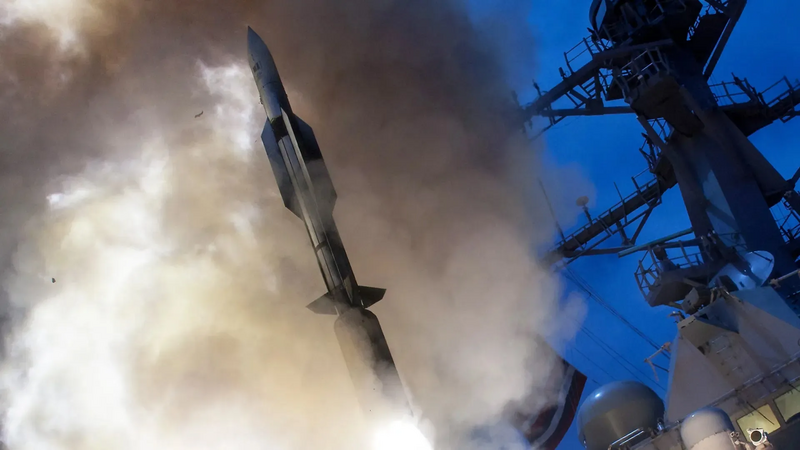
The SM-6 is a rare multi-purpose missile capable of air defense, missile defense, and sea-based target attack, redefining the standards of modern naval warfare.
This missile can effectively intercept aircraft, UAVs, and long-range cruise missiles, while also serving as a terminal interceptor for ballistic missiles, enhancing defensive capabilities against increasingly sophisticated threats.
In addition, the SM-6 is capable of attacking surface targets, including enemy warships, and ground targets within a certain range, significantly expanding the operational space of the navy. Thanks to its versatility and high adaptability, the SM-6 has become a cornerstone of the air defense and fleet defense systems of the US Navy and its allies using the Aegis system.
The SM-6 uses a two-stage solid-fuel engine, capable of reaching speeds 3.5 times the speed of sound, with a maximum range of up to 400 km. Its interception ceiling is over 34 km. With a launch weight of 1.5 tons, the SM-6 carries a 64 kg fragmentation warhead capable of attacking and destroying any flying target, including ballistic targets.
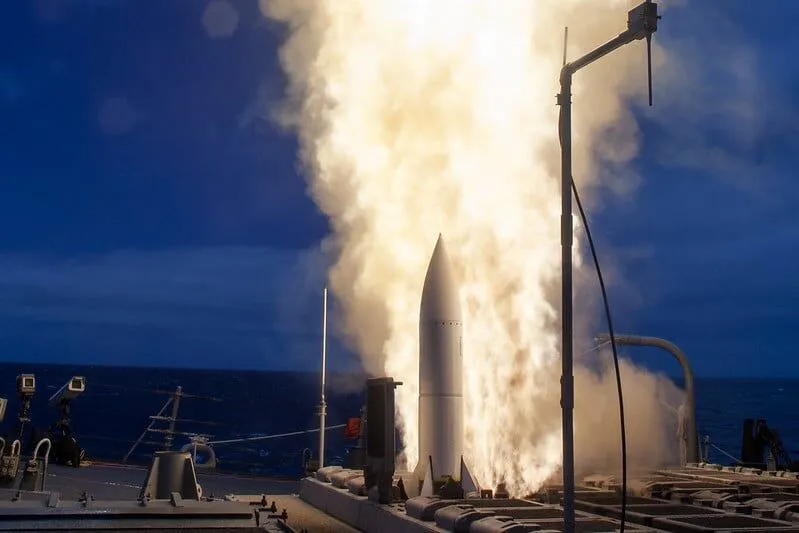
Thanks to its over-the-horizon guidance technology, the SM-6 allows warships to attack targets without directly detecting them.
Furthermore, the SM-6 stands out due to its combination of many modern technologies, creating key advantages in naval warfare. The missile is equipped with an active radar seeker, inheriting technology from the AIM-120 AMRAAM air-to-air missile, which enhances its self-guidance and target acquisition accuracy in the final stage.
In addition, the central network data link system allows the SM-6 to perform over-the-horizon guidance, significantly extending its operational range compared to traditional air defense systems.
In particular, the missile is capable of receiving target information from multiple sources, including ship-based radar, early warning aircraft, and even satellite systems. Thanks to these advantages, the SM-6 can effectively attack targets that the launching ship does not need to directly detect or observe, reinforcing its role as the primary air defense and fleet defense weapon of the US Navy.
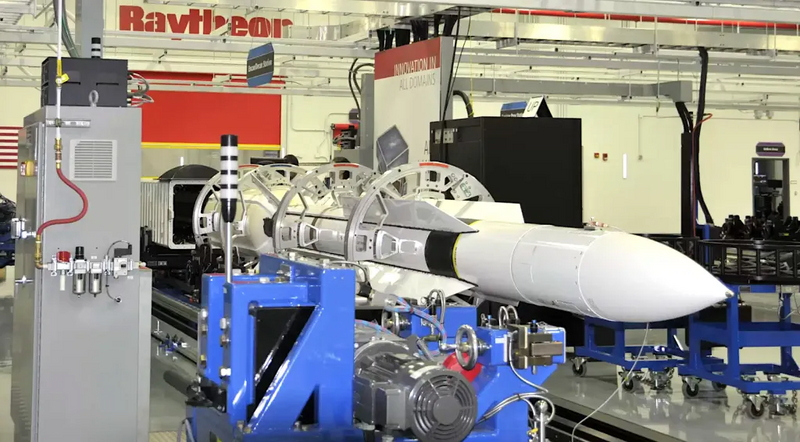
The SM-6 is not just an anti-aircraft missile, but a multi-purpose weapon that is changing the thinking and standards of modern naval warfare.
The missile is launched from the Mk-41 VLS vertical launch system, one of the most versatile and standard launch systems currently in use by the US Navy. This missile is integrated on Arleigh Burke-class destroyers and Ticonderoga-class cruisers, which are the main platforms of the US Navy using the Aegis combat system.
The SM-6 has been developed through several variants to gradually expand and improve its combat capabilities. The SM-6 Block I version is the initial standard configuration, focusing on long-range air defense missions, intercepting aircraft, UAVs, and cruise missiles.
Based on that, the SM-6 Dual I was enhanced with the ability to intercept ballistic missiles in the terminal phase, strengthening the missile defense capabilities of warships using the Aegis system. Next, the SM-6 Block IA is an improved version aimed at enhancing reliability, anti-jamming capabilities, and overall combat effectiveness, while maintaining its roles in air defense, missile defense, and surface target attack.
Most recently, the SM-6 Block IB has been equipped with a larger, improved engine, increasing its range, speed, and ability to intercept high-speed targets, including hypersonic missiles. This series of upgrades demonstrates that the SM-6 has evolved from a long-range anti-aircraft missile into a cornerstone multi-purpose weapon of the US Navy, meeting the requirements of modern and future warfare.
Please visit the Defense Industry section to view related news and articles.
Source: https://congthuong.vn/sm-6-ten-lua-da-nhiem-thay-doi-hoat-dong-tac-chien-tren-bien-434640.html



























































































Comment (0)