

The inscription is not only a tribute to the cultural significance, but also a powerful impetus to transform the risk of disappearance into an opportunity for sustainable development of this precious heritage.
"The colors of the ethnic groups shine brightly on the gilded paper."
The poet Hoang Cam once wrote: "It is the 'national colors' and 'gilded paper' that give this style of painting its unique character, along with other folk painting styles, enriching the treasure trove of Vietnam's artistic heritage."
Not only are they captivating in content, but Dong Ho paintings are also considered by art researchers to be true works of art, with their unique color combinations, distinctive line and area printing techniques, and a rustic artistic beauty that reflects the aesthetic sensibilities of folk songs and poetry.
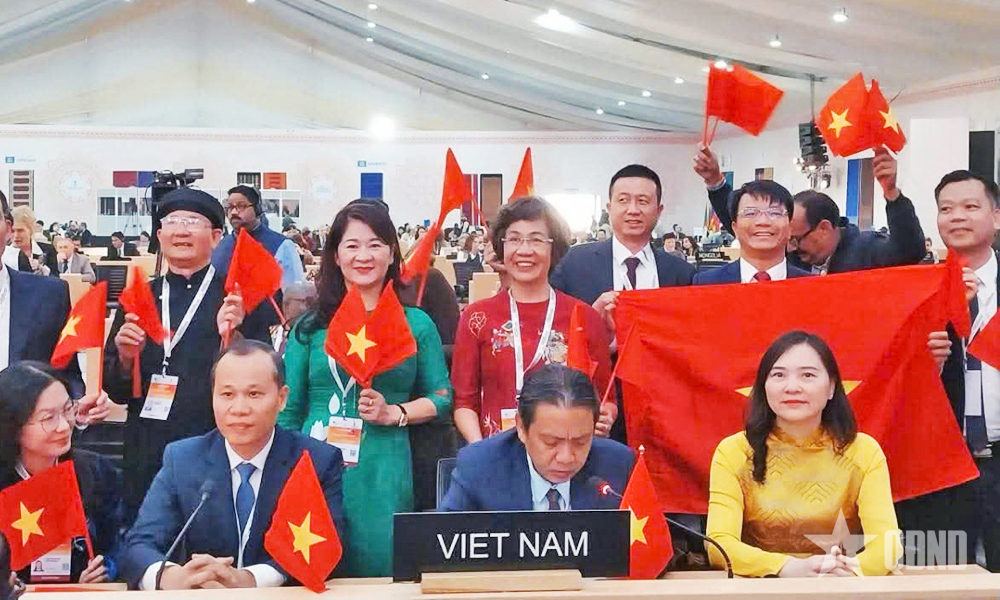 |
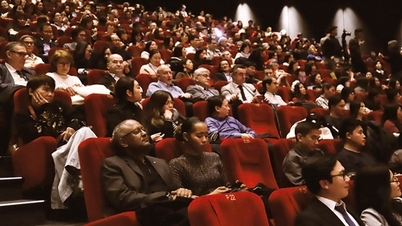
| The Vietnamese delegation at the 20th Session of the Intergovernmental Committee of the 2003 Convention on the Protection of Intangible Cultural Heritage of UNESCO, held in New Delhi (India). |
| International delegations congratulated Vietnam's Dong Ho folk painting craft ( Bac Ninh province) on being recognized. |
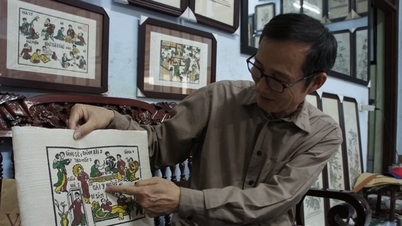
The artisans of Dong Ho village produce paintings belonging to the folk art form, with unique characteristics in terms of subject matter, printing techniques, colors, and graphics.
Dong Ho paintings come in many forms, including devotional paintings, celebratory paintings, historical paintings, narrative paintings, genre paintings, and landscape paintings, associated with the custom of hanging them during the Lunar New Year, Mid-Autumn Festival, ancestor worship, and deity worship. The craft of making Dong Ho paintings reflects the cultural life and social customs of the community, passed down from generation to generation.
Knowledge and skills in pattern making and material selection, covering various themes, woodblock printing (line and color), making dó paper with lacquer coating, and printing pictures, are passed down directly through practice between generations within families and clans, and between experienced individuals and apprentices. Some stages, such as pattern creation and woodblock printing, are very difficult, and only a select few with the talent to be taught and trained can master these skills.
The art of painting has become ingrained in the history, cultural life, and society of Dong Ho village, closely associated with the village's name and the "Painting Temple" dedicated to the village's guardian deity. This craft produces works of art with profound cultural value, reflecting the life, beliefs, and social ethics of the Vietnamese people in Northern Vietnam.
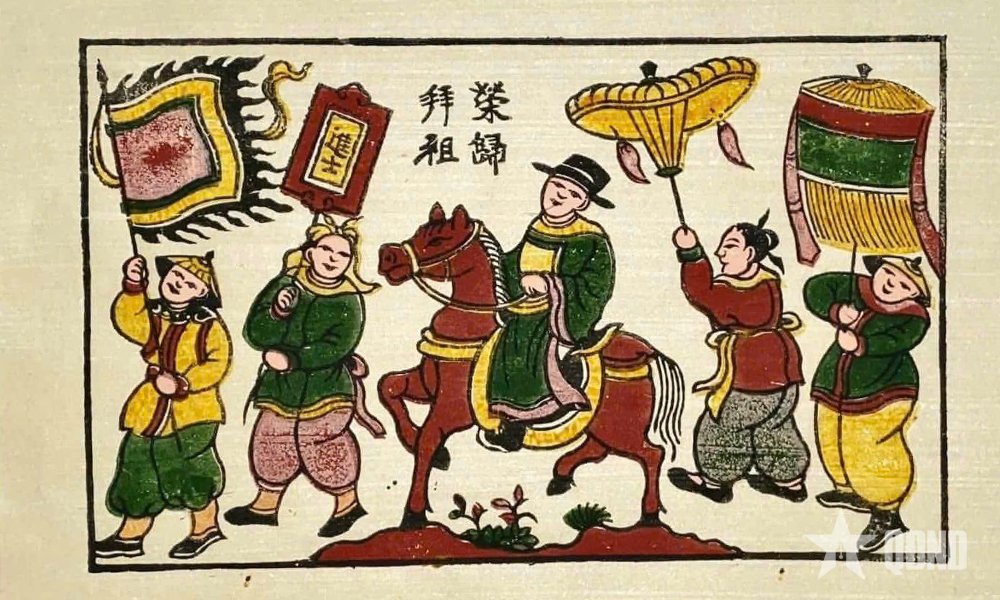 |
The Dong Ho painting "Returning Home in Glory to Pay Respect to Ancestors". |
The creators of the Dong Ho folk painting heritage were the Vietnamese people who lived in the ancient Dong Ho village (now Dong Khe neighborhood, Thuan Thanh ward, Bac Ninh province) in the Northern Delta.
Before the 1950s, Dong Ho village had 17 families involved in painting, including the Nguyen family (Nguyen Dang, Nguyen Huu, Nguyen Nhan, Nguyen Ba, Nguyen The, Nguyen Ngoc, Nguyen Duc, Nguyen Van, Nguyen Khac); the Tran, Ha, Duong, Le, Ly, and Vuong families, with approximately 180 households, of which about 80% participated in painting. Currently, only 3 families with about 30 people across 4 generations are still able to make paintings: the family of artisan Nguyen Dang Che, artisan Nguyen Huu Hoa, and artisan Nguyen Huu Qua.
Turn challenges into opportunities.
Attending the 20th session of the Intergovernmental Committee of the 2003 Convention on the Protection of Intangible Cultural Heritage of UNESCO, held in New Delhi (India), members of the Vietnamese delegation all assessed this as an opportunity to restore and develop the Dong Ho painting craft.
Deputy Minister of Culture, Sports and Tourism Hoang Dao Cuong, head of the Vietnamese delegation attending the session, said that this demonstrates the international community's high appreciation for the unique, historical values and profound humanistic significance of Vietnamese folk paintings, which have been closely associated with Vietnamese cultural life for hundreds of years, and is also a timely recognition of a heritage facing a high risk of disappearing.
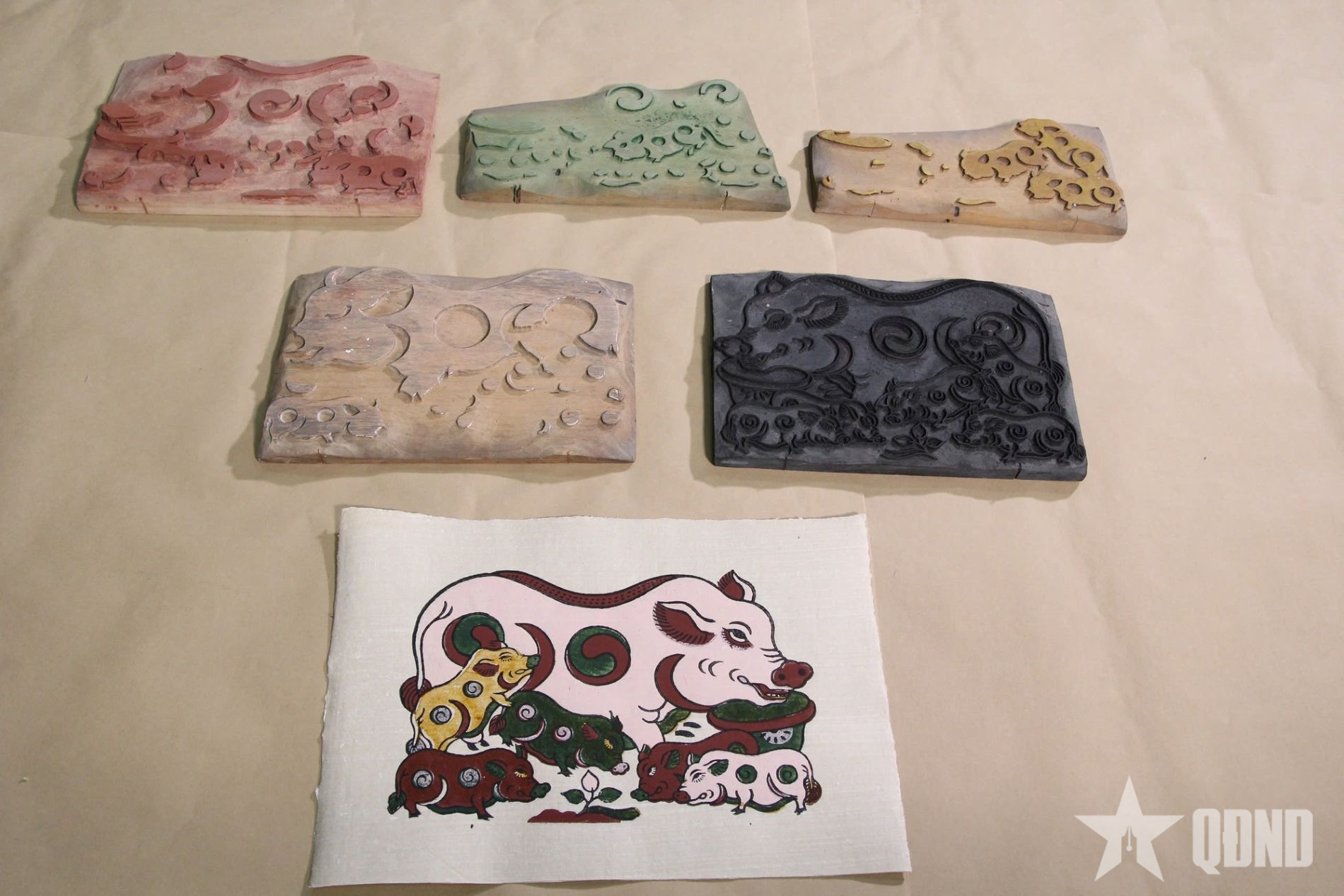 |
| Dong Ho woodblock prints are considered family heirlooms, tools for livelihood passed down from generation to generation. |
Comrade Mai Son, Standing Vice Chairman of the People's Committee of Bac Ninh province, said that at the moment the session considered inscribing the Dong Ho folk painting craft, the entire community of heritage custodians and many people of Bac Ninh province attentively followed and were extremely excited when the Dong Ho folk painting craft was officially inscribed on the UNESCO List of Intangible Cultural Heritage in Need of Urgent Safeguard.
First and foremost, the recognition affirms the outstanding global value of Dong Ho painting, not only in terms of art, but also in terms of folk knowledge, cultural identity, and the humanistic message that this heritage conveys.
UNESCO's recognition came at a time when the art of painting was facing many challenges: a shortage of successor artisans, a shrinking market, and the village's space being heavily impacted by urbanization. Therefore, this recognition serves as both a catalyst and a warning, helping to mobilize strong attention from the State, the community, and the international community to preserve the heritage in a more urgent, systematic, and sustainable way.
"More importantly, this is an opportunity for us to preserve and develop the art of painting in conjunction with tourism development, creative economy, creating livelihoods for the people, and spreading the quintessential values of Vietnamese culture more widely," emphasized the Standing Vice Chairman of the People's Committee of Bac Ninh province.
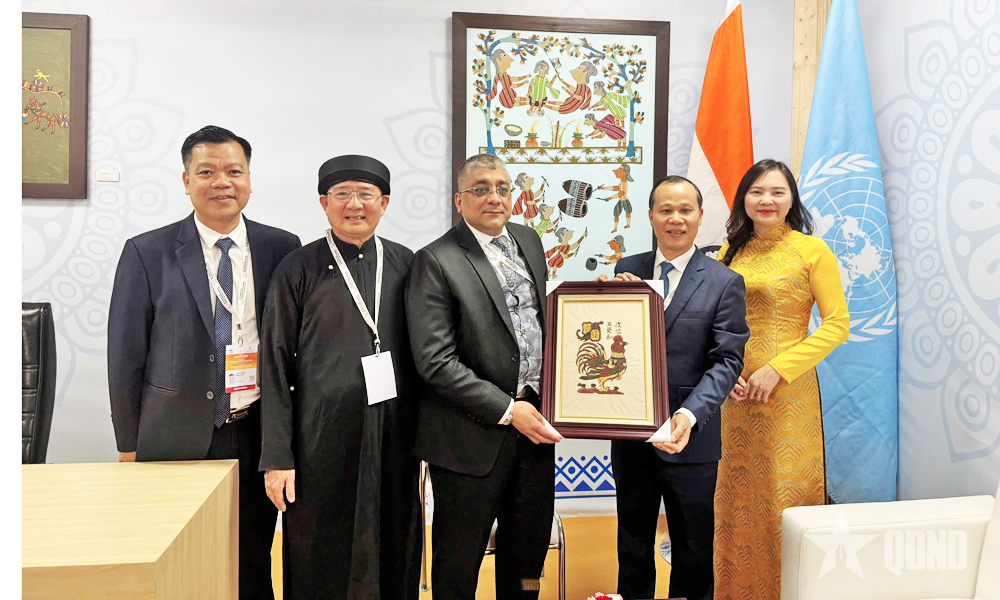 |
| Permanent Vice Chairman of the Bac Ninh Provincial People's Committee Mai Son and the delegation presented Dong Ho folk paintings to the international delegates at the 20th Session. |
According to Comrade Mai Son, immediately after the heritage site was inscribed by UNESCO, Bac Ninh province implemented the Action Program for the Emergency Protection of Dong Ho Folk Painting Craft in accordance with international commitments.
First, the province will direct specialized agencies and local authorities to coordinate with relevant units to strengthen the workforce of artisans, open classes to pass on knowledge and train the next generation, ensuring that the craft has people to continue it for a long time.
The directive focuses on preserving the spaces for traditional crafts, such as restoring some households practicing traditional crafts, building exhibition areas for creative works, improving the environment of craft villages, and linking preservation with cultural tourism activities.
Direct the Ministry of Culture, Sports and Tourism to coordinate with consulting units to inventory, digitize, and preserve the system of woodblock prints and related documents, forming a data bank to serve research, education and creativity.
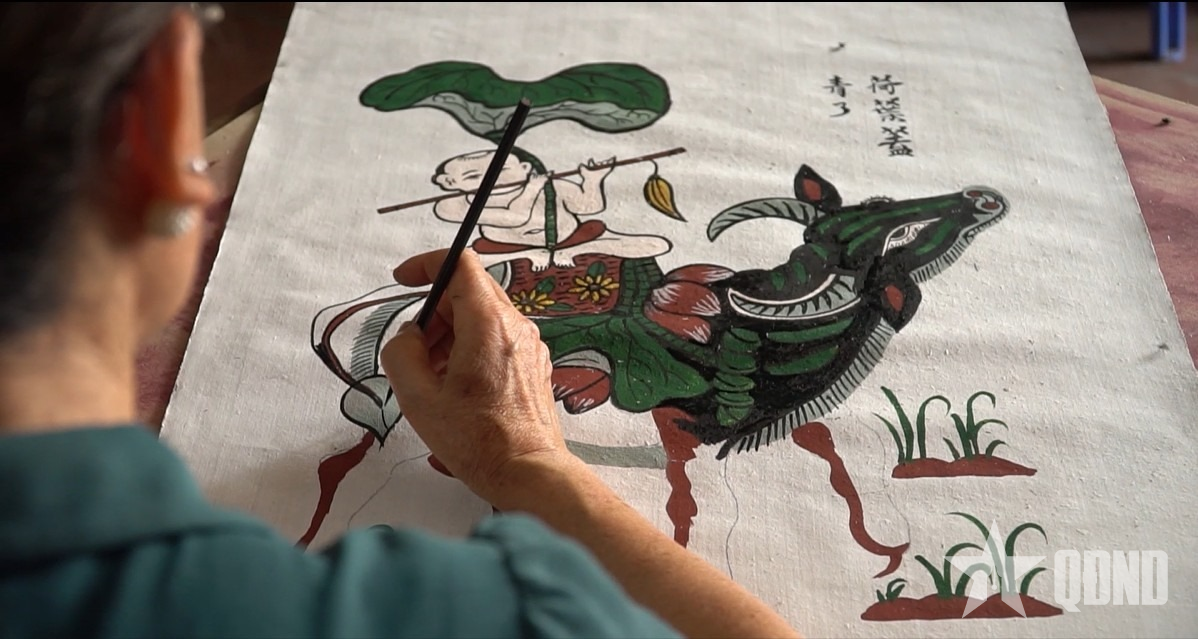 |
The inclusion of Dong Ho folk painting on UNESCO's List of Intangible Cultural Heritage in Need of Urgent Safeguard opens up many opportunities for the craft village to revive and develop. |
Strengthen international cooperation to research and learn from the best and most effective models of countries around the world in preserving, promoting, and publicizing the Dong Ho folk painting heritage internationally.
Furthermore, it is essential to strengthen communication, develop diverse experiential products, and connect with markets to ensure sustainable livelihoods for those involved in the craft. Most importantly, all activities will be implemented based on the principle that the community is the main stakeholder, and the management agency is the supporting unit, aiming to ensure that the heritage is preserved in its true value and to promote sustainable development.
Source: https://www.qdnd.vn/van-hoa/doi-song/nghe-lam-tranh-dong-ho-bien-nguy-co-thanh-co-hoi-phat-trien-ben-vung-1016651
![[Photo] Prime Minister Pham Minh Chinh attends the Conference summarizing and implementing tasks of the judicial sector.](/_next/image?url=https%3A%2F%2Fvphoto.vietnam.vn%2Fthumb%2F1200x675%2Fvietnam%2Fresource%2FIMAGE%2F2025%2F12%2F13%2F1765616082148_dsc-5565-jpg.webp&w=3840&q=75)







































































Comment (0)