

Reviving a fading heritage
Growing up amidst the sounds of grinding pigments and turning woodblocks, artisan Nguyen Dang Che belonged to Dong Ho as if it were a part of this land. But then times changed, and the paintings that once shone brightly at every spring market became scarce. People abandoned the craft, the woodblocks were forgotten, and the once vibrant colors gradually faded from memory.
Upon returning home after many years of teaching far from his hometown, he was struck speechless at the sight of the woodblocks infested with termites and the paper covered in dust. "If I give up too, the craft will truly be lost," he thought to himself. From then on, the journey of revival began, both quiet and persistent, just like the very lifeblood of this art form.
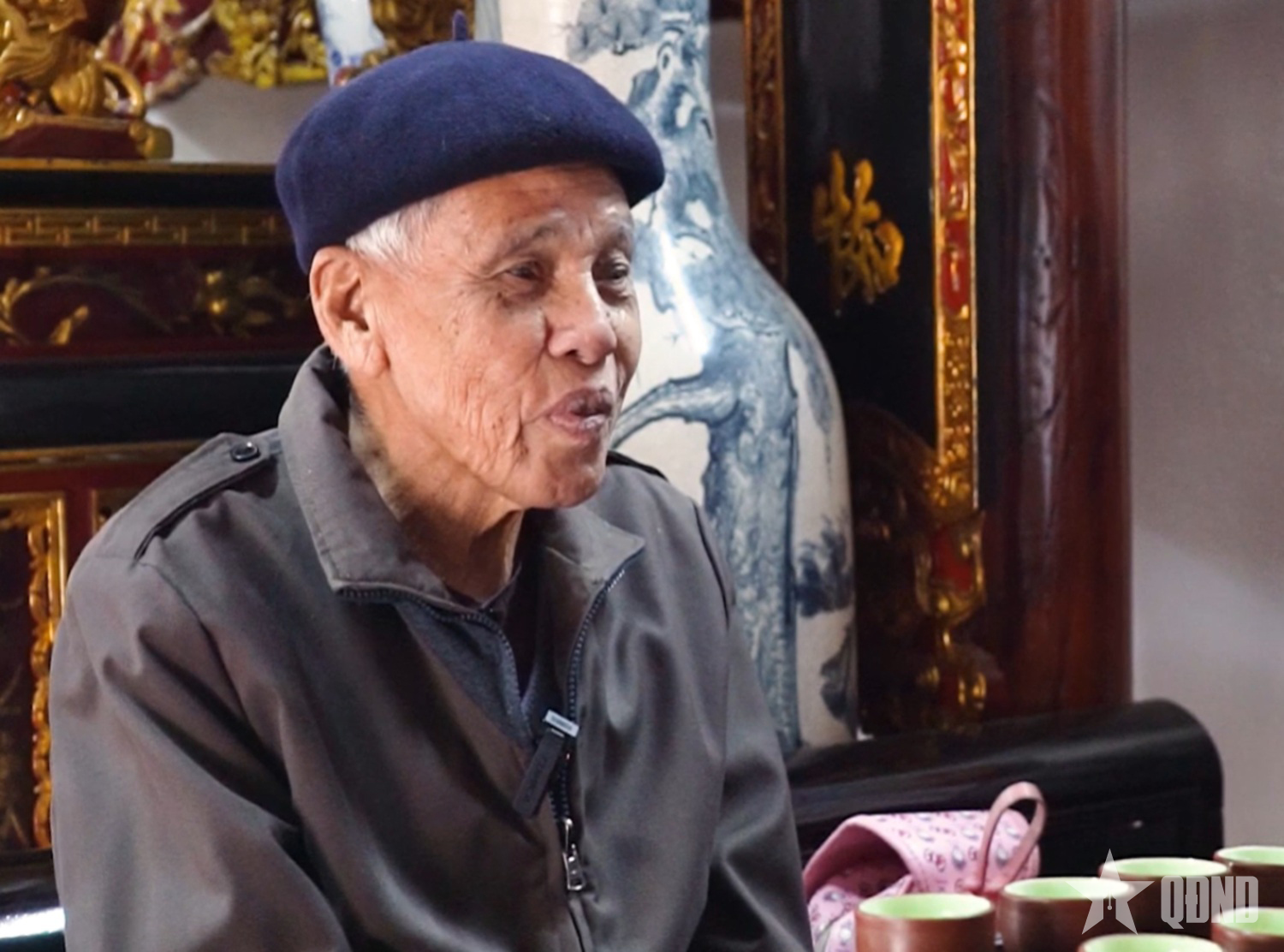 |
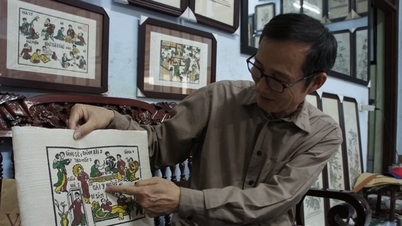
Artisan Nguyen Dang Che enthusiastically shared about the "reawakening" of Dong Ho paintings after a long period of decline. |
He wandered everywhere, searching through fragments of memories stored in old cupboards and kitchen corners of families in the village. Some woodblock prints were preserved intact, some were just fragments, and some he found brought him such overwhelming joy. Like the day he rediscovered the "Child Hugging a Chicken" print; when the paper was opened, the colors were still vibrant, the carvings soft and delicate, like a breath of the past unexpectedly returning. "I was so happy I cried," he said—because it wasn't just a picture, but a part of the village's soul that had just been found.
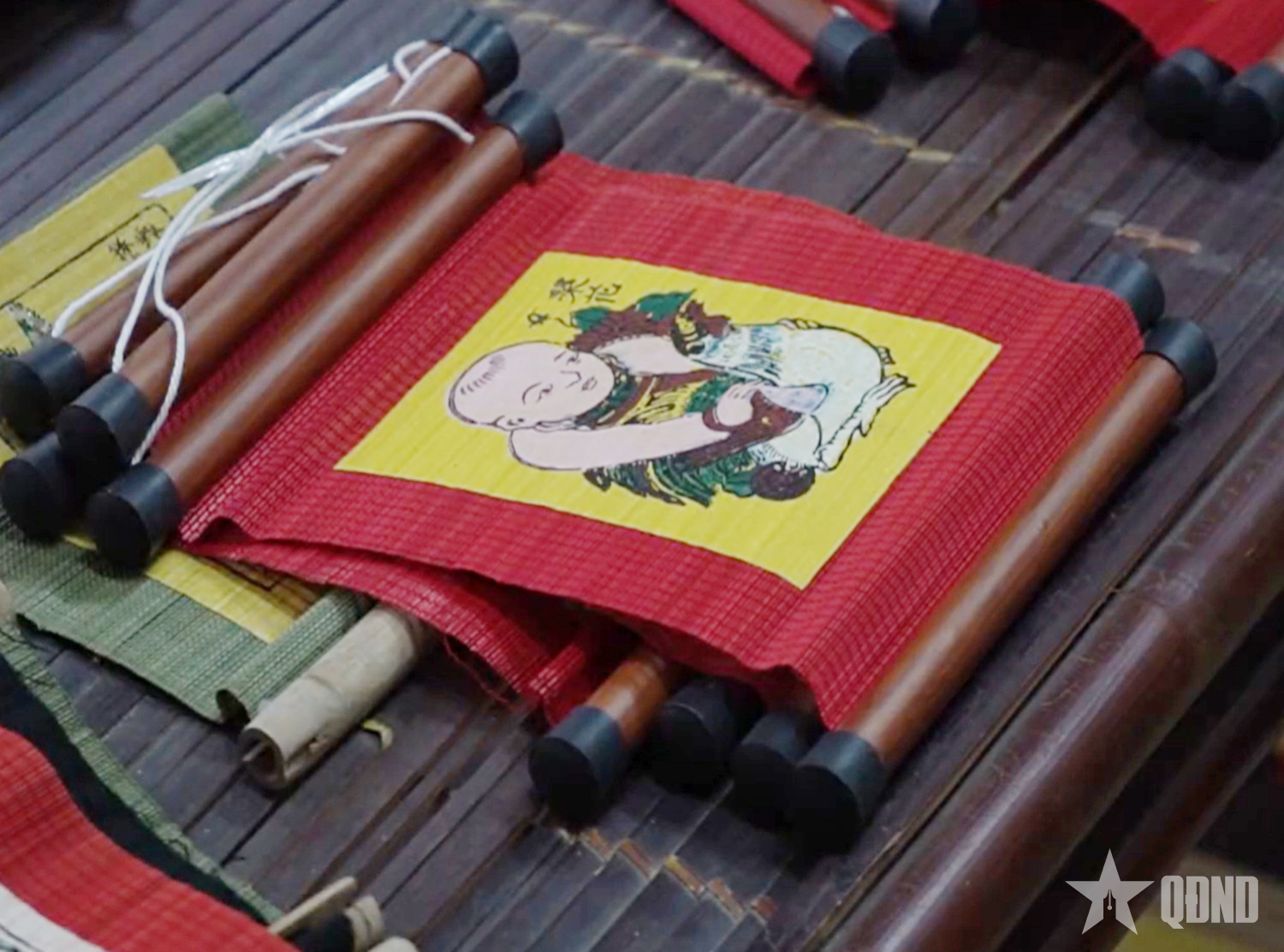 |
| The painting "Baby Hugging a Chicken" has been restored from an ancient woodblock print, preserving its exquisite details and rustic charm. |
Colors distilled from the earth and sky.
Stepping into his workshop, one can easily spot baskets of white clam shells like beach sand, baskets of vibrant yellow pagoda flowers, bright red pebbles, and deep green melaleuca leaves… All are cherished by him as if they were the essence of nature.
The dó paper, coated with a shimmering, dewy layer, is the soul of the painting. The colors are created from minerals and plants—simple yet enduring. "That's why paintings remain vibrant for a hundred years," he gently explained, his calloused hands turning each sheet of paper as if caressing memories.
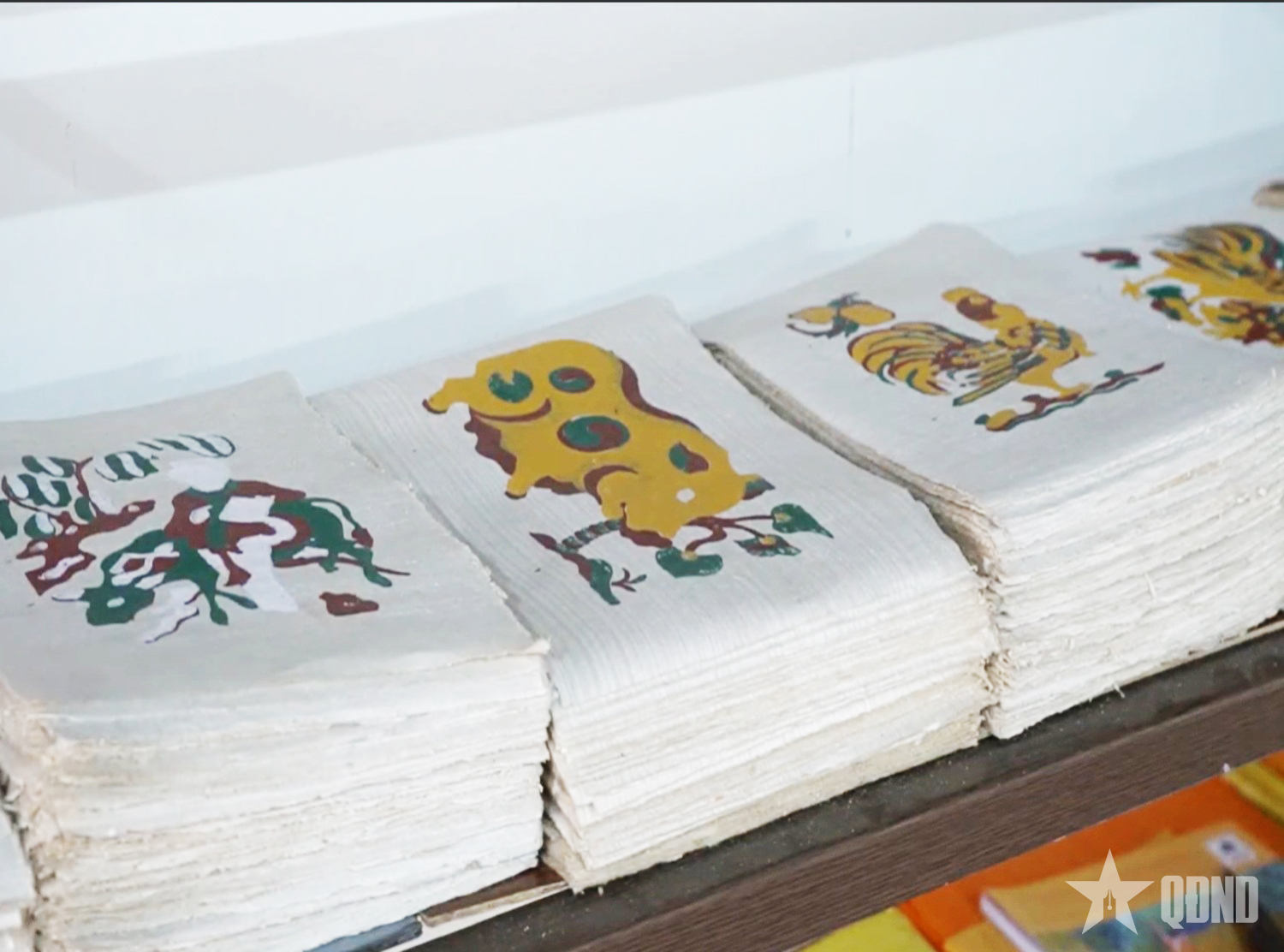 |
| Each Dong Ho painting tells its own story, illuminated by the natural colors of the earth and sky: shimmering seashells, warm red lacquer, gentle yellow pagoda tree flowers, and cool green melaleuca leaves. |
Among those dozens of seemingly simple steps, what he focused on most was not the printing technique but how to preserve the traditional "soul." How to make the colors not only beautiful, but also resonate with the stories of ancient Vietnamese people; so that each painting could be seen not only with the eyes but also felt with the heart.
The joy of a quiet yet brilliant revival.
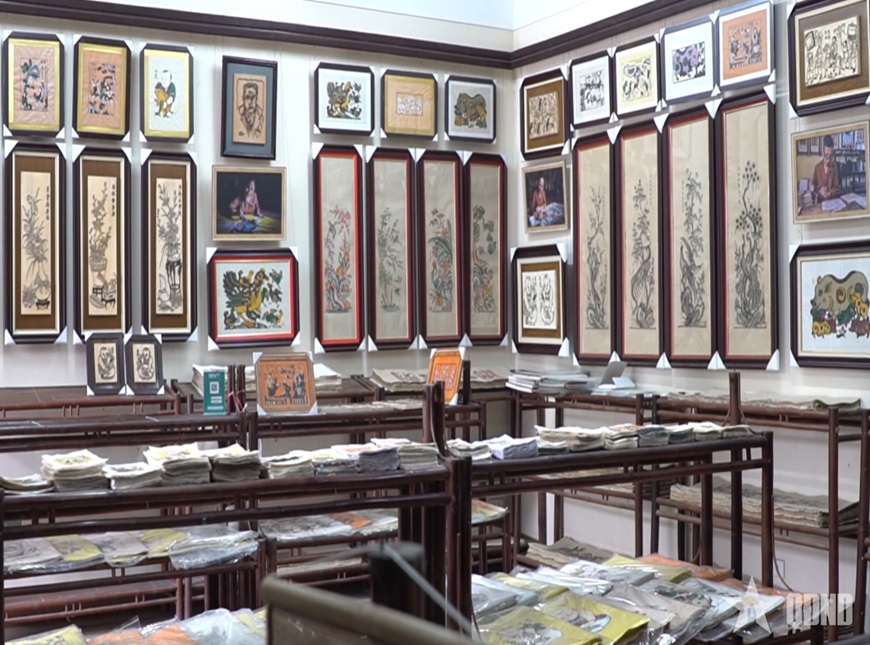
In April 2024, his family's folk painting exhibition opened its doors as a gift back to his homeland. No tickets were sold, no commercialization was pursued; the goal was simply to preserve and tell the story of the craft.
For nearly two years, that place unexpectedly became a popular destination: tiny schoolchildren eagerly watching the lacquer painting process; students curious about the painting techniques; and foreign tourists marveling at the rustic yet unique colors. This bustling atmosphere made the artisan smile: "So, Dong Ho paintings have never been forgotten."
 |
Passing on the torch to keep the craft alive forever.
For artisan Nguyen Dang Che, preserving the craft has never been a one-person endeavor. He often says that a craft truly comes alive only when its essence is passed down through many hands and generations. Therefore, in recent years, his greatest joy has not only been the restoration of the woodblock prints, but also the fact that his children have become successors, helping him preserve this precious art form.
In their house, nestled in the heart of the craft village, the family sat together by the printing plates, their conversations mingling with the rhythmic pounding of the mother-of-pearl, creating an atmosphere that was both warm and sacred. His children were accustomed to turning the mother-of-pearl paper, mixing colors from flowers, leaves, and red ochre, and carefully handling each engraving, just as their father had done for so many years.
"Seeing my children so passionate about their work brings me peace of mind," he smiled gently. The things he dedicated his life to preserving are no longer in danger of disappearing, but are being given a boost by younger, more enthusiastic hands.
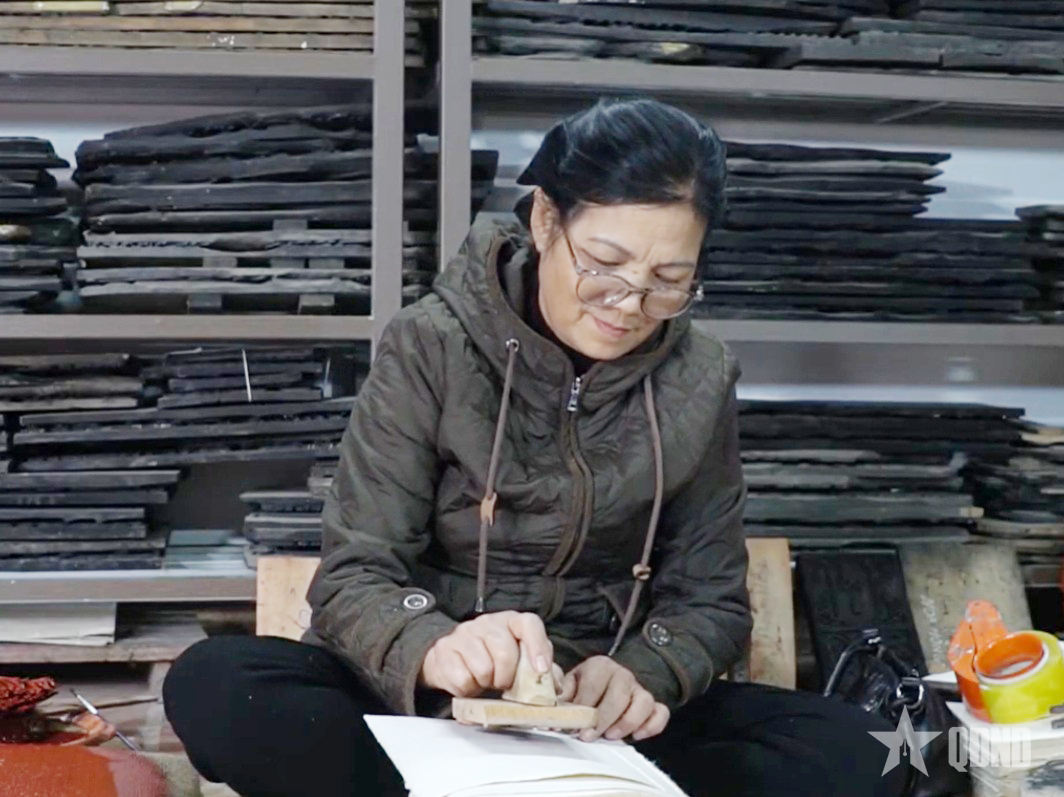 |
| The succeeding generations of the family of Meritorious Artisan Nguyen Dang Che are preserving every color and every carving of Dong Ho folk paintings. |
Ms. Ngo Hong Thuy, Director of the Culture, Sports and Communication Center of Thuan Thanh Ward (Bac Ninh), affirmed that protecting and developing the Dong Ho folk painting craft is an urgent task, receiving attention from management agencies and the community, especially the persistent contributions from the family of Meritorious Artisan Nguyen Dang Che. According to her, efforts to preserve the craft not only help restore a unique form of handicraft but also spread cultural values embodying the "soul of the nation," contributing to raising awareness of heritage preservation among Vietnamese people.
On the banks of the Duong River, the rhythmic pounding of the pestle continues to echo in the small house. That sound is like the heartbeat of a heritage that persistently lives on in the heart of the elderly artisan. And thanks to people like artisan Nguyen Dang Che, the colors of Dong Ho – simple, pure, and full of humanistic meaning – continue to shine on the dó paper, telling the story of Vietnamese culture from the past to the present.
Source: https://www.qdnd.vn/phong-su-dieu-tra/phong-su/nghe-nhan-uu-tu-nguyen-dang-che-nguoi-gin-giu-dong-tranh-dan-gian-dong-ho-1016227




![[Photo] Prime Minister Pham Minh Chinh holds a phone call with the CEO of Russia's Rosatom Corporation.](/_next/image?url=https%3A%2F%2Fvphoto.vietnam.vn%2Fthumb%2F1200x675%2Fvietnam%2Fresource%2FIMAGE%2F2025%2F12%2F11%2F1765464552365_dsc-5295-jpg.webp&w=3840&q=75)
![[Photo] Closing Ceremony of the 10th Session of the 15th National Assembly](/_next/image?url=https%3A%2F%2Fvphoto.vietnam.vn%2Fthumb%2F1200x675%2Fvietnam%2Fresource%2FIMAGE%2F2025%2F12%2F11%2F1765448959967_image-1437-jpg.webp&w=3840&q=75)
































![[OFFICIAL] MISA GROUP ANNOUNCES ITS PIONEERING BRAND POSITIONING IN BUILDING AGENTIC AI FOR BUSINESSES, HOUSEHOLDS, AND THE GOVERNMENT](https://vphoto.vietnam.vn/thumb/402x226/vietnam/resource/IMAGE/2025/12/11/1765444754256_agentic-ai_postfb-scaled.png)







































Comment (0)