

Overcoming drought, preserving crops, preserving harvests.
In early 2025, the Central Highlands experienced the most severe drought in many years. The prolonged heat caused hundreds of hectares of coffee plantations at Farm 720 (Army Corps 16) to wither, the soil cracked, and many areas faced the risk of total crop failure. This was a time that tested the resilience of the unit and the willpower of those dedicated to this land.
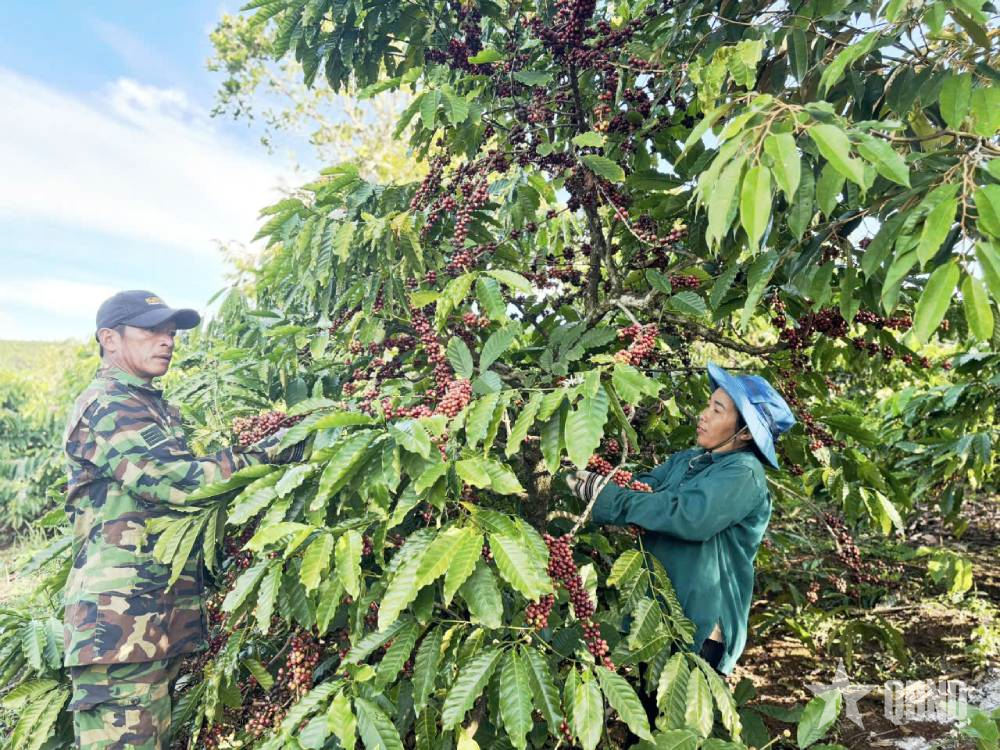 |
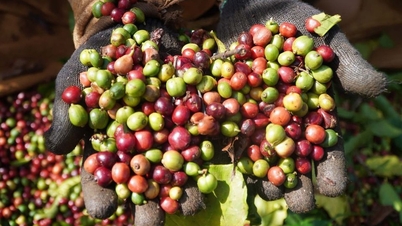
Workers at Farm 720 are harvesting coffee for the 2025 crop year. |
Faced with the urgent situation, Farm 720 launched a "Drought Relief Campaign" with the participation of all its forces. Streams, ponds, and lakes were dredged deeper; pumps were installed along the streams; wells were drilled; and water pipelines stretched for hundreds of meters, winding through the hillsides. Water tankers operated day and night, delivering water to high-lying areas far from the source. Production team officers closely monitored each area, guiding farmers to adjust pruning to reduce water loss and apply water-saving irrigation methods.
Lieutenant Colonel Tran Van Son, Director of Farm 720, shared: “Our highest goal is to save the coffee plants for the people. In unprecedented drought conditions, officers, soldiers, and the people have made extraordinary efforts. Thanks to their unity, we have preserved the entire area and created an important foundation for this year's harvest.”
Following the drought, pests and diseases intensified. Technical staff immediately organized training sessions in the gardens, instructing farmers on how to identify mealybugs, root-damaging fungi, and anthracnose; how to mix and spray pesticides correctly; and how to dig pits for green manure to improve soil and add organic matter. Proactive pest control efforts helped the coffee plants recover quickly, their foliage becoming lush and green again, fruit setting uniformly, and maintaining yield prospects.
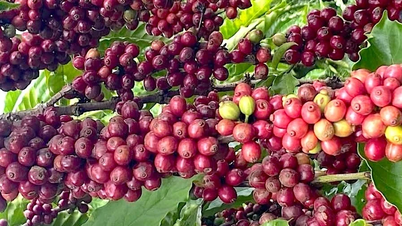
Towards the end of the year, as the cold winds sweep in, the once barren hillsides are now adorned with the vibrant red of ripe fruit. The bustling rhythm of harvesting fills the farm from early morning; the sounds of machinery, laughter, and footsteps echo through the vast forest—the sounds of a bountiful harvest after months of hardship.
Accompanying the local people were members of the young intellectual volunteer team working at the unit. These young people in their twenties immersed themselves in the labor: spreading tarpaulins, picking fruit, bagging, and transporting. At the same time, the team members also helped disadvantaged households from dawn. In the sunny and windy Central Highlands, this spirit of volunteerism shone even brighter, further beautifying the image of the military and civilians in the economic -defense project area.
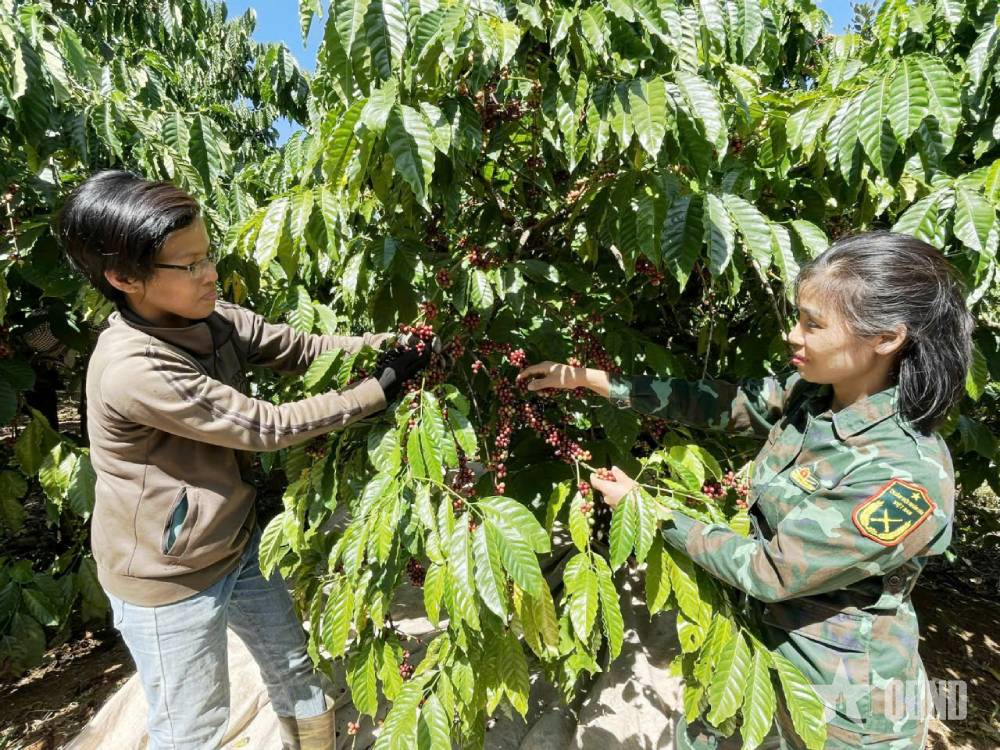 |
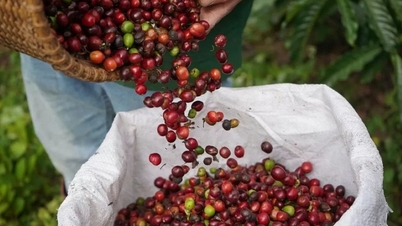
| The pace of work is hectic on the coffee plantations during harvest season at Farm 720. |
As evening falls, convoys of trucks carrying green coffee beans line up to arrive at Farm 720's warehouse. The sacks of coffee are neatly stacked, carefully covered with tarpaulins, and the sounds of engines and people calling out to each other create a vibrant rhythm of the harvest season. At the receiving area, technical staff check the moisture content and quality of the beans, weigh the yield, and record it in the contract ledger for each household, ensuring transparency and accountability. Although the atmosphere at the end of the day is bustling, everyone's eyes light up with joy.
During the day, along the villages and hamlets, the reddish-brown coffee drying yards glow like mosaic pieces of a harvest painting. Some households use bamboo rakes to turn the beans, others use tarpaulins, and some even use their feet to turn the coffee beans... each family has its own method, but they all share the same spirit of keeping the beans clean, dry, and up to standard. The hot steam rising from the coffee mingles with the afternoon breeze, creating a unique aroma of this land in the southernmost part of the Central Highlands.
This year, notably, some households that were still owed production from previous years have proactively collected and delivered their output early and in full. This clear shift in sense of responsibility shows the people's trust in the farm, in the transparent contract system, and in the dedicated support of the officers and soldiers.
The village is warm and the parishioners rejoice in the harvest season.
Among the households achieving high results, the household of Mr. Ma Seo Pao, Head of Sin Chai village, Quang Tan commune, Lam Dong province, is a prime example of persistent progress. He recounted: “Previously, we Mong people lived a nomadic life, migrating from the North to the Central Highlands. Life was very hard, with year-round food shortages, many people suffering from malaria; children did not go to school. When the soldiers of the 16th Army Corps encouraged us to settle at Farm 720, dividing up land for production and guiding us in contracting coffee and rubber plantations, we were initially worried. But the soldiers persistently persuaded us, so we trusted them and followed. Now life is much better, we have stable incomes, have built new houses, and some households have even bought cars.”
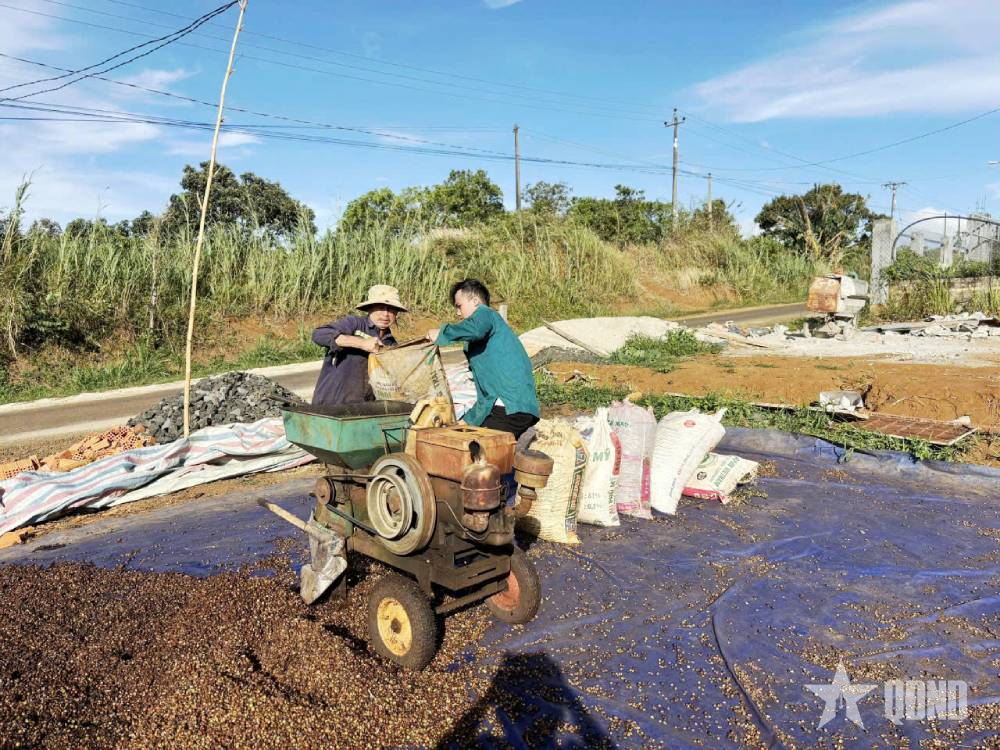 |
| Workers grind fresh coffee beans immediately after harvesting, ensuring bean quality. |
Entrusted with a coffee plantation and receiving meticulous technical guidance from the farm's staff, he gradually became familiar with the process: pruning and shaping the canopy; balanced fertilization; and regular pest and disease control. From initially hesitant hands, he gradually became a successful farmer. This year, Ma Seo Páo's 2.33-hectare coffee plantation, leased from the farm, yielded over 25 tons of fresh coffee beans, becoming a model plantation for the unit after overcoming the severe drought.
He excitedly shared: “Thanks to the soldiers' step-by-step guidance, I've been able to cultivate a successful coffee plantation like this. With the income, I've been able to renovate my house, buy a tractor, and send my children to school. Now, the people of Sin Chai village and other villages here can rest assured and stay on their land, no longer migrating.”
Nearby, the Binh An parish is in the peak of its harvest season. Ms. Dinh Thi Mua, from Production Team 3, one of the most diligent workers and parishioners in the parish, is picking ripe fruit and chatting sincerely: “At the beginning of the year, we thought we would lose everything. Thanks to the technical staff who came to the garden to guide us on how to irrigate efficiently and treat pests and diseases, the trees survived. This year the price is good, and everyone in the parish is happy. Delivery to the warehouse is quick and clear, and we feel very secure.”
Alongside the harvest, the Christmas spirit is approaching. Parishioners hang lights, build nativity scenes, repaint church fences, clean up, and install decorative lights. The festive colors blend with the ripe red fruits, making this southernmost region of the Central Highlands even more vibrant and warm.
Land stability, strong population, secure project area.
Simultaneously with the harvest, Farm 720 continued to implement its sustainable production strategy: standardizing VietGAP procedures; replanting aging areas; applying digital management to crop plots; forecasting seasonal pests and diseases; and providing guidance on timely preventative spraying. Technical teams not only provided technical guidance but also coordinated with the local government to promote forest protection, fire prevention and control, and maintaining security in villages.
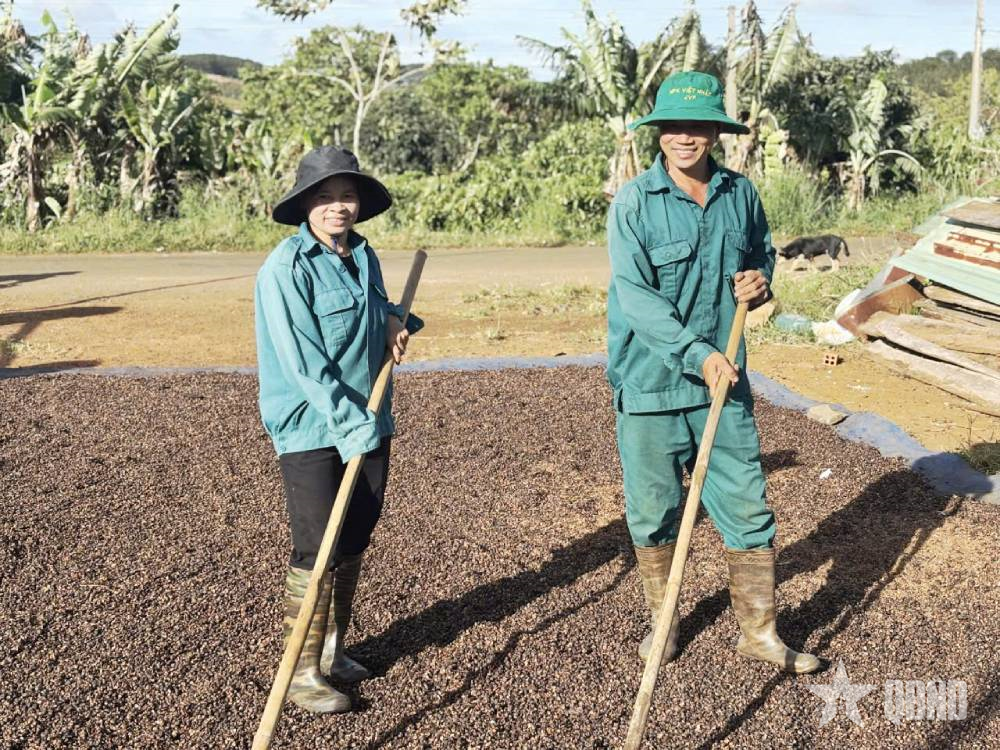 |
| The joy of the workers on the coffee drying yard. |
The atmosphere became even more vibrant as officers, soldiers, and local people erected banners, hung national flags, and cleaned the roads in preparation for the 81st anniversary of the founding of the Vietnam People's Army (December 22). As evening fell, the sound of coffee mills blended with the karaoke singing from residential areas via portable speakers, further highlighting the peaceful and close-knit atmosphere of this new land.
Lieutenant Colonel Tran Van Son affirmed: "The farm's long-term goal is to help people stabilize their livelihoods, improve production efficiency, and strengthen public trust. When people trust, are well-off, and are attached to their land, the project area will be stable."
This year's harvest of ripe red berries is not only a season of good prices and abundant yield, but also a season of trust, of the bond between the military and the people, and of the strength of unity in the economic-defense zone of Farm 720.
Source: https://www.qdnd.vn/phong-su-dieu-tra/phong-su/mua-qua-do-o-nong-truong-720-1016342
![[Image] National Assembly discusses the implementation of the socio-economic development plan.](https://vphoto.vietnam.vn/thumb/1200x675/vietnam/resource/IMAGE/2026/04/20/1776696707422_ndo_br_img-20260420-185419-jpg.webp)


![[Photo] General Secretary and President To Lam meets with National Assembly delegates from ethnic minorities.](https://vphoto.vietnam.vn/thumb/1200x675/vietnam/resource/IMAGE/2026/04/20/1776696701056_a1-bnd-8331-3342-jpg.webp)





































































Comment (0)