

"Blood is thicker than water."
In traditional Vietnamese village life, the clan was a distinctive social institution. The clan not only served as a place to unite the family community but also contributed to shaping the morals, customs, and cultural and ethical values of the Vietnamese village. Associate Professor Dr. Bui Xuan Dinh, a leading expert on Vietnamese villages, argues that clans always played a crucial role in maintaining order, educating descendants, preserving customs, and contributing to social life, from village and national affairs to education and examinations.
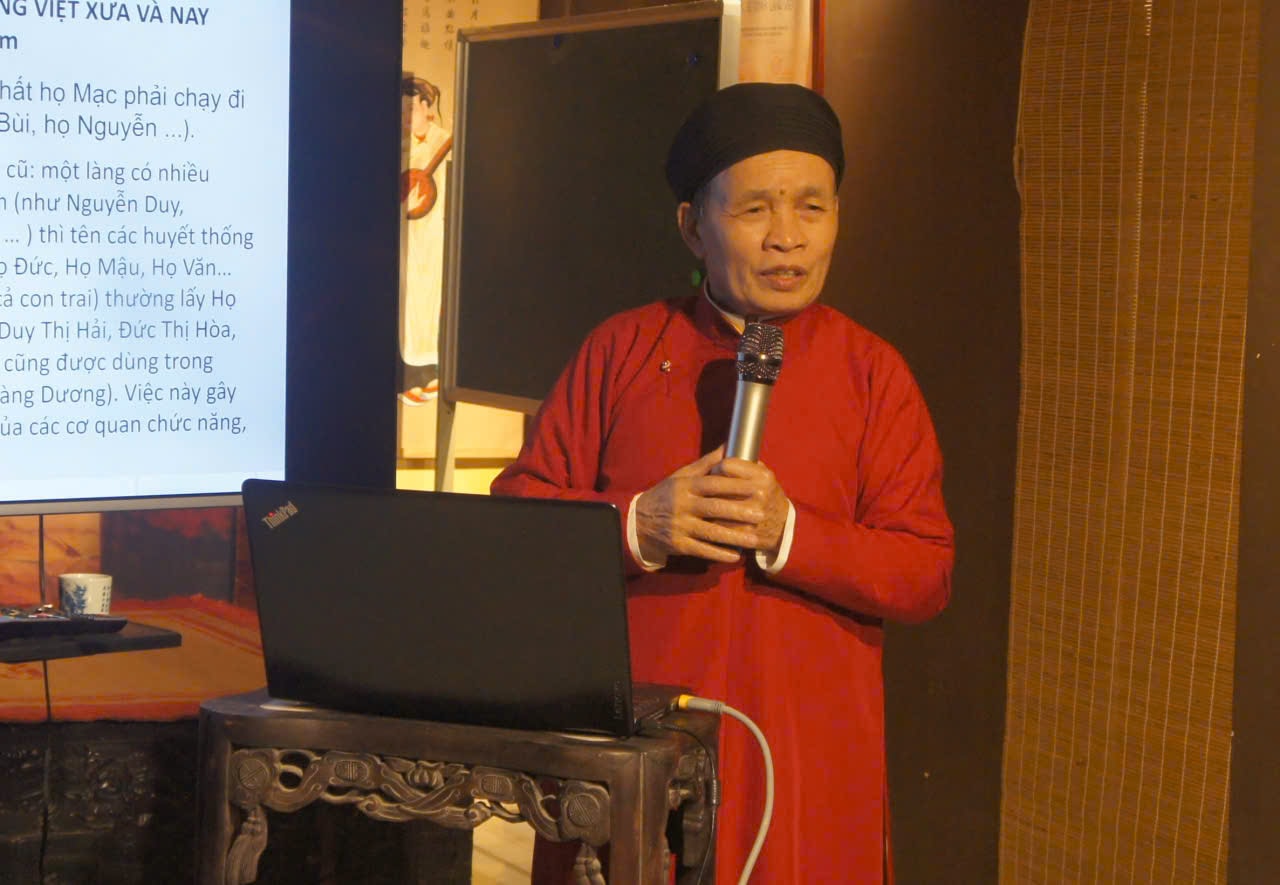
According to Mr. Dinh, the most important factor in determining a family lineage is blood relationship. Because of this blood relationship, our ancestors have long summarized it with sayings like, "Like father, like son," and "Children of the same lineage will resemble each other in some way." However, many people still cannot distinguish between surnames and bloodline, leading to the emergence of "named family lineages." People have created the Do family in Vietnam, the Nguyen family in Vietnam, the Bui family in Vietnam, the Le family in Vietnam, and so on.
“ I believe that there aren't just such clans; we should say ‘the Bui or Le clan communities of Vietnam.’ Because these are many different bloodlines. My village (Thach Than village, Quoc Oai commune, Hanoi ) has seven Bui clans, each with its own ancestor, its own ancestral commemoration day, and the people in each clan have different styles. So we shouldn't get confused,” Mr. Dinh explained.
Due to their bloodline, clans in traditional Vietnamese villages operated according to the principle of "elder/firstborn." The "elder" was the head of the branch or the eldest son, while the "firstborn" was the eldest son of the first wife – these were the representatives of the clan in external interactions and held inheritance rights. When the head/firstborn branch had no sons, or when the sons were unable to fulfill their duties for some reason, the representative role was passed to the younger son. According to research by Associate Professor Dr. Bui Xuan Dinh, this behavior is typical of the Northern Delta region of Vietnam, then spread to Central Vietnam with migration, and is still seen in Quang Ngai today, although it has faded somewhat. "In the past, if someone committed a crime, the state would first pursue the head of the clan," Dr. Dinh said.

Associate Professor Bui Xuan Dinh emphasized that, in traditional Vietnamese villages, the role of the clan was clearly evident in all aspects of an individual's life, from birth and wedding ceremonies to academic achievements, longevity celebrations, and funerals. A large and strong clan was a source of pride for each individual. Furthermore, a crucial element that connected individuals within the clan was the ancestral tomb. Vietnamese people believed that the wealth and success or the hardship and decline of a clan often depended on the ancestral tomb; therefore, the ancestral tomb was always a place of great care and maintenance for the entire clan. In addition, family genealogies played an extremely important role in the clan structure in Vietnamese villages. Besides being considered a chronicle of a lineage, genealogies also served as a source of historical data to fill in gaps and ambiguities in history. Some genealogies even recorded the secrets and traditional crafts of the clan, ensuring the continuation of the lineage.
According to Dr. Pham Le Trung (Hanoi University of Culture), today, despite many changes in modern society, the core values of the clan are still promoted through activities encouraging education, preserving traditional rituals, and contributing to building the moral and cultural foundation of the nation. In the social connections of traditional Vietnamese villages, each small family finds in the clan a spiritual support, and sometimes even a political and social support.
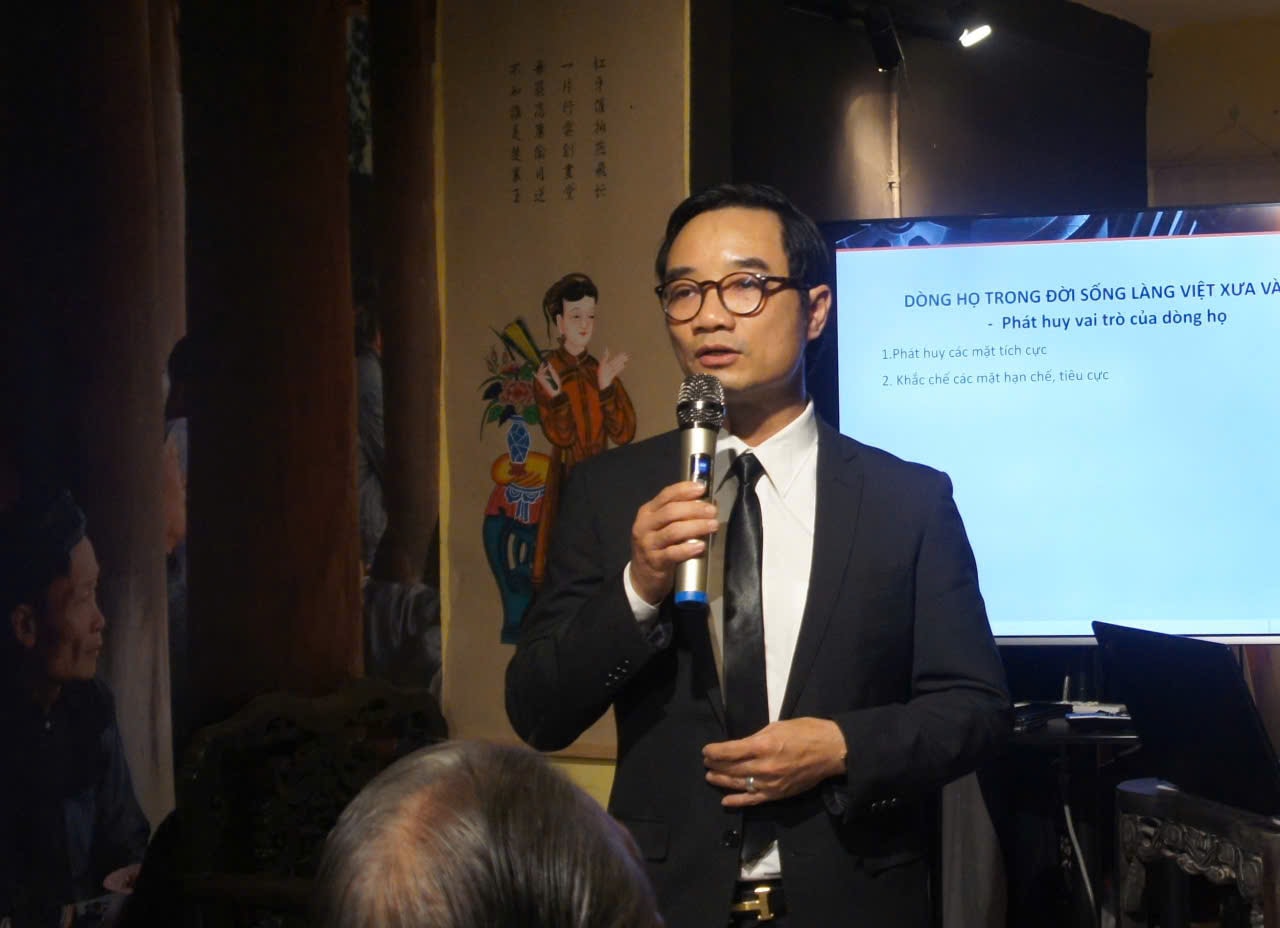
At the same time, through self-governance, the clan resolved internal conflicts according to the principle of "blood is thicker than water." This unique way of resolving conflicts allowed the clan to both foster a spirit of internal unity, sustainably maintain the traditional kinship and respect among the ancient rice-farming community, and contribute to ensuring peace and order in the village.
" The self-direction in education and character building within the clan makes an undeniable contribution to training individuals who are both scientifically knowledgeable and progressively developing in character for society," Dr. Pham Le Trung observed.
The notion of "no men, only women" is gradually being eradicated.
However, according to Associate Professor Bui Xuan Dinh, clan culture also has negative aspects, the most obvious of which is parochialism. Therefore, conflicts always existed in Vietnamese villages in the past: conflicts between clans that established the village and those that migrated elsewhere, between clans with many members and those with few, and clans holding positions of power often oppressing smaller, weaker clans… The manipulation by powerful clans led to the phenomenon of powerful village officials. “Currently, this situation continues in many different forms, and the mentality of ‘one person becoming an official benefits the whole clan’ remains quite common,” said Professor Dinh.
According to Dr. Pham Le Trung, globalization and urbanization have, to some extent, disrupted the structure of traditional Vietnamese family values and ethics. Many positive traditional cultural values are showing signs of degradation and decline, and many families and clans no longer maintain their traditional lifestyles and family traditions.
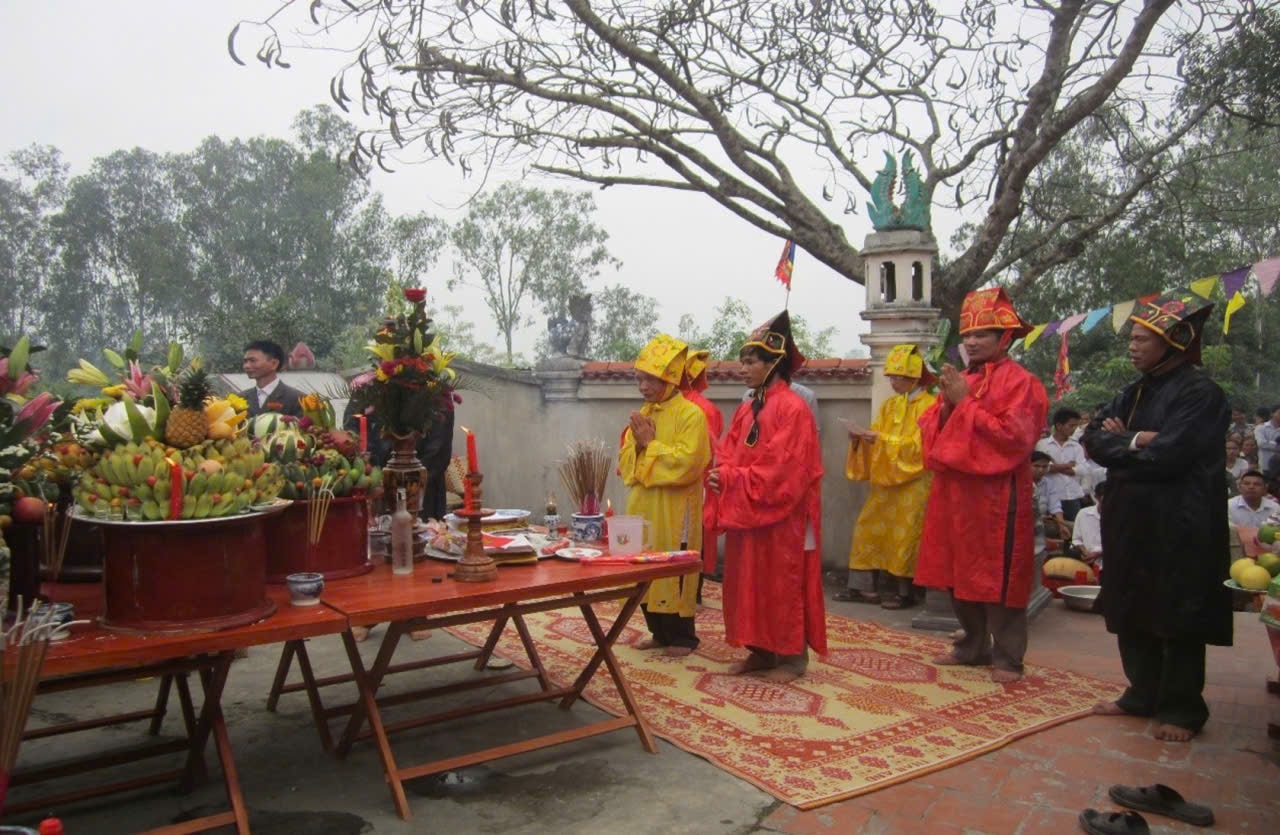
“ People from villages move to cities for work and residence… leading to the weakening of relationships within clans and affecting practicality, even pragmatism. Now, the care of ancestral worship at the clan's ancestral temple may be entrusted to women or younger children remaining in the village, which differs from the traditional family-clan culture, where the almost absolute position is given to men and the eldest son,” Dr. Pham Le Trung stated, highlighting the reality.
From this analysis, Dr. Pham Le Trung argues that the role of the clan head is sometimes diminished, or even replaced by women, often the eldest daughter-in-law – who remain to take care of ancestor worship and represent the clan in external interactions, thus gradually eliminating the long-standing concept of "no men, only women." There are also instances where some branches or sub-branches with economic potential separate from the ancestral temple, building their own temples and practicing ancestor worship separately, even in some cases bringing in external deities to worship alongside them. At the same time, the emergence of "named clans" also has a positive aspect, as these organizations contribute to strengthening unity, gathering communities, and creating national strength.
Despite its drawbacks, according to Associate Professor Dr. Bui Xuan Dinh, in today's vibrant and developing society, where many traditional values face the risk of being encroached upon, diluted, or even erased, the role and position of clans in preserving and promoting traditional cultural values are more important than ever. Dr. Dinh also believes that clan culture will endure as a beautiful aspect of the Vietnamese village landscape.
“ Vietnamese clans are being affected by industrialization, but I still believe that clans are closely tied to villages and communities, to the cause of nation-building and national defense since the time of the Hung Kings, so their cohesion is very strong. These are the positive factors that we must preserve,” Assoc. Prof. Dr. Bui Xuan Dinh emphasized.
Source: https://congluan.vn/dong-ho-trong-doi-song-lang-viet-xua-va-nay-10322148.html
![[Image] Pleasant weather helps students enter the 10th grade entrance exam with confidence.](https://vphoto.vietnam.vn/thumb/1200x675/vietnam/resource/IMAGE/2026/05/29/1780034401612_ngay-1-thi-lop-10-minh-duy-8-5009-jpg.webp)


![[Photo] Ba Lang An Lighthouse - the "eye of the sea" amidst the "rock museum" of Quang Ngai province.](https://vphoto.vietnam.vn/thumb/1200x675/vietnam/resource/IMAGE/2026/05/29/1780038698840_anh-man-hinh-2026-05-29-luc-14-10-42.png)












































































Comment (0)