

The Ho Chi Minh City People's Council will approve the amended Resolution 98 at the end of December.
In the spirit of "Resolution 98 precedes the law," immediately after the National Assembly officially passed the Resolution amending and supplementing Resolution 98 on December 11th, Ho Chi Minh City proactively prepared the necessary steps to be able to apply it from January 1st, 2026.
The emergency meeting to implement the "new version" of Resolution 98, held on the evening of December 12th, clearly demonstrated Ho Chi Minh City's proactive and forward-thinking spirit. Mr. Nguyen Van Duoc, Chairman of the People's Committee of Ho Chi Minh City, stated that holding the meeting that very night, immediately after the National Assembly approved the Resolution, aimed to promptly implement the tasks assigned to the city by the National Assembly, with a clear focus on specific targets and timelines.
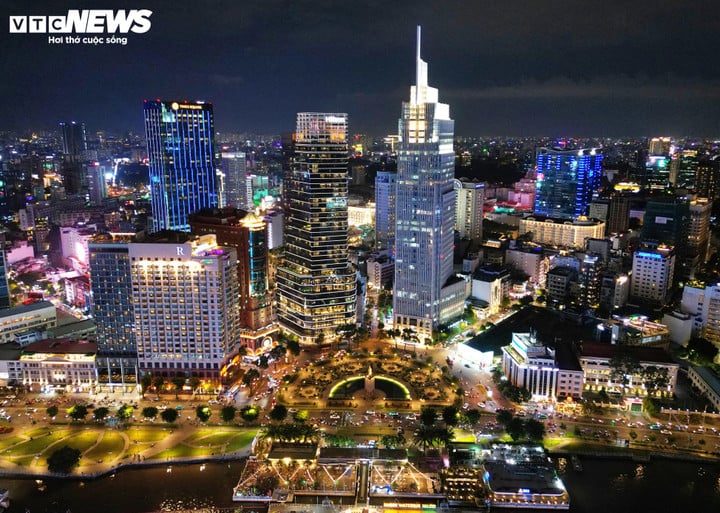
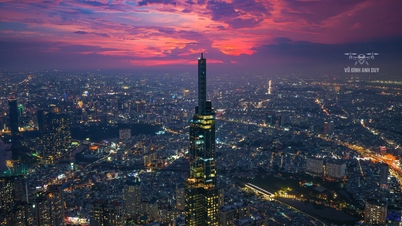
Ho Chi Minh City's megacity begins to operate in line with the 'new version' of Resolution 98. (Photo: Luong Y)
Meanwhile, the amended Resolution 98 will take effect from January 1, 2026, meaning there are only about two weeks left for departments and agencies to complete the relevant tasks and submit them to the City People's Committee for reporting to the City People's Council for consideration and approval by the end of December.
The Chairman of the Ho Chi Minh City People's Committee emphasized that this is a particularly important and urgent task. Implementation will be carried out in the spirit of flexibly applying Resolution 98, as some of its contents precede the law. The city is not aiming for perfection, not waiting for one step to be completed before moving on to the next, but rather implementing it in a phased manner to ensure progress within the very tight timeframe.
Previously, on December 10th, speaking at the year-end session of the Ho Chi Minh City People's Council, the Chairman of the Ho Chi Minh City People's Committee pledged that if the National Assembly approves the amended and supplemented Resolution 98, the city will immediately implement new mechanisms and policies to create a breakthrough in development, striving to achieve double-digit growth by 2026.
According to experts, "upgrading" Resolution 98 will lay the foundation for the formation of an open growth pole, where localities in the Southern Key Economic Region can all benefit, instead of just Ho Chi Minh City alone. Ho Chi Minh City's success will not be isolated but will become a driving force, pulling the entire Southern economic region to develop.
Thus, with the amended Resolution 98, Ho Chi Minh City takes on additional responsibility for promoting growth and spreading development throughout the region; in other words, "upgrading" Resolution 98 is not just a matter for Ho Chi Minh City alone.
Solving the investment and development problem.
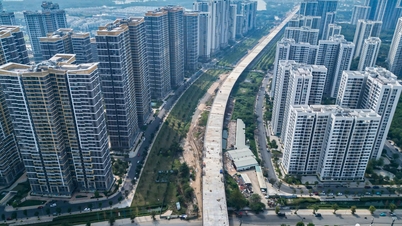
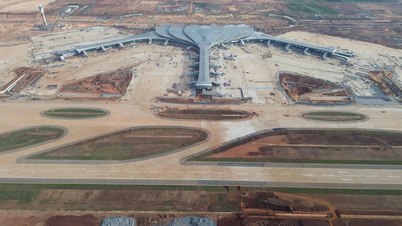
In the two years since the implementation of Resolution 98, Ho Chi Minh City has achieved many positive results, making a significant contribution to post-pandemic recovery. One project that clearly demonstrates the impact of this Resolution is the Ho Chi Minh City Ring Road 3 project. The special mechanism has helped the city expedite procedures related to land, site clearance, decentralization of power, and financial mechanisms.
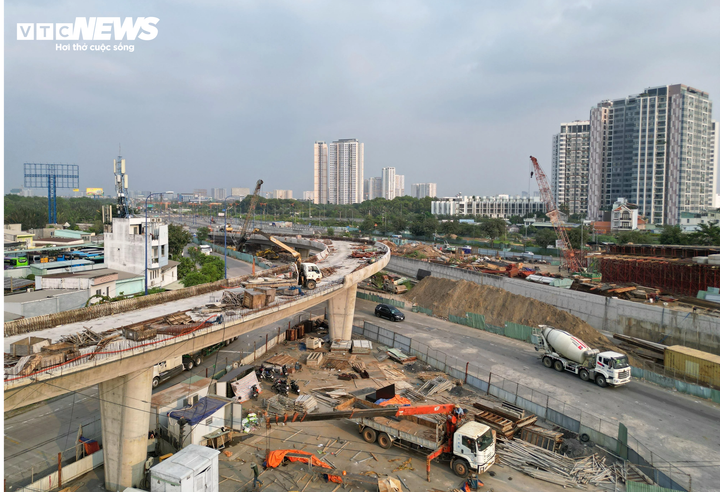
A series of special mechanisms have been opened up, especially in terms of infrastructure investment resources, creating momentum for Ho Chi Minh City to become a megacity in the new phase. (Photo: Luong Y)
Thanks to this, the construction of Ring Road 3 commenced simultaneously earlier than planned and will be completed, connecting the transportation network of the Southern key economic region in 2026 after 3 years of implementation.
Associate Professor Tran Hoang Ngan stated that, first and foremost, he highly appreciates and thanks the National Assembly for passing Resolution 98 in June 2023. The resolution has provided a "positive boost," offering additional tools and mechanisms for Ho Chi Minh City to recover and make breakthroughs after the pandemic. This has given the city more room for access to credit, poverty reduction, job creation, and expanded its ability to mobilize capital for PPP projects and key infrastructure projects.
However, from July 1, 2025, Ho Chi Minh City has donned a completely different "new look" with the merger of Ba Ria - Vung Tau and Binh Duong . This merger increases Ho Chi Minh City's population to approximately 14 million, or nearly 20 million if including visitors, making it a megacity among the top 20 largest cities in the world.
With an economy exceeding $120 billion, contributing a quarter of the country's GDP and a third of the total national budget revenue, it demands a compatible institutional framework.
And the Government has submitted to the National Assembly amendments and additions to Resolution 98 to suit the new Ho Chi Minh City.
Regarding the amended Resolution 98, Associate Professor Dr. Tran Hoang Ngan stated that he has high expectations for expanding resources for infrastructure development investment, thereby helping Ho Chi Minh City better utilize its existing advantages. According to him, infrastructure plays a crucial role in effective socio-economic development; without a synchronized infrastructure system, the city's potential is difficult to realize.
Mr. Ngan also emphasized that, in order to implement infrastructure projects serving development in a coordinated manner, Ho Chi Minh City needs a very large amount of resources, especially for inter-regional and international transportation infrastructure. However, the current challenge is that the city's budget is limited, requiring breakthrough mechanisms in mobilizing and utilizing capital.
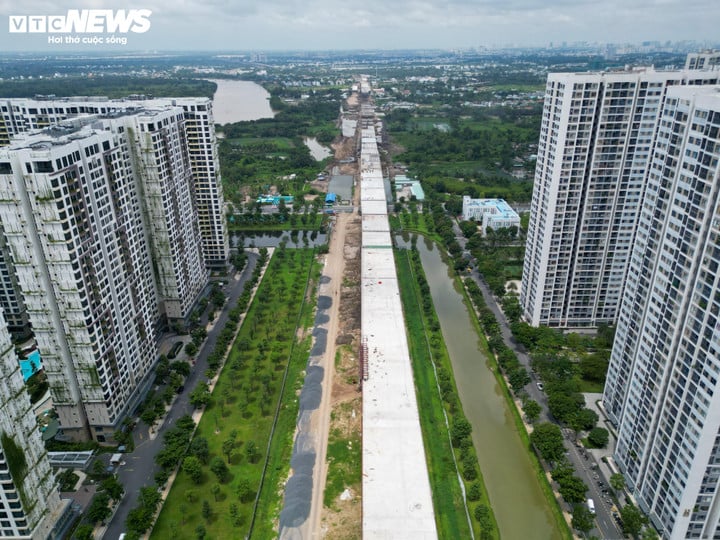
The Beltway 3 project connects the Southeast region, a project with a clear mark in applying the special mechanism of Resolution 98. (Photo: Luong Y)
"Let me give you an example so we can understand and share. In the period 2021–2025, the total budget revenue in the area is 3.3 million billion VND, but the city is only allowed to retain 890,000 billion VND, while 2.4 million billion VND is remitted to the central government. Thus, on average, about 480,000 billion VND is remitted each year."
According to the 2026 budget, the city's total revenue is estimated at approximately 803,000 billion VND; however, the city will only retain 227,000 billion VND, while over 576,000 billion VND will be transferred to the central government (lower than in 2025).
"The city shares resources with the whole country, but to play its leading role, Ho Chi Minh City needs strong mechanisms to attract non-budgetary resources into infrastructure investment ," Mr. Ngan said.
With its unique mechanism for attracting resources outside the state budget, Ho Chi Minh City will develop strongly and make a greater contribution to the whole country.
Economist Can Van Luc commented that the amended Resolution 98 continues to significantly expand the mechanisms for Ho Chi Minh City, creating more space and room for development. According to him, the city needs to quickly establish a "green channel" specifically for strategic investors, with a specialized service center, to shorten procedures and accelerate the implementation of key projects – the new growth breakthroughs for Ho Chi Minh City.
Mr. Can Van Luc also analyzed that the Resolution of the Ho Chi Minh City Party Congress for the 2025-2030 term has set a target of an average growth rate of 10-11% per year over the next five years. However, without sufficiently strong special mechanisms such as the amended Resolution 98, realizing this growth target will face many challenges.
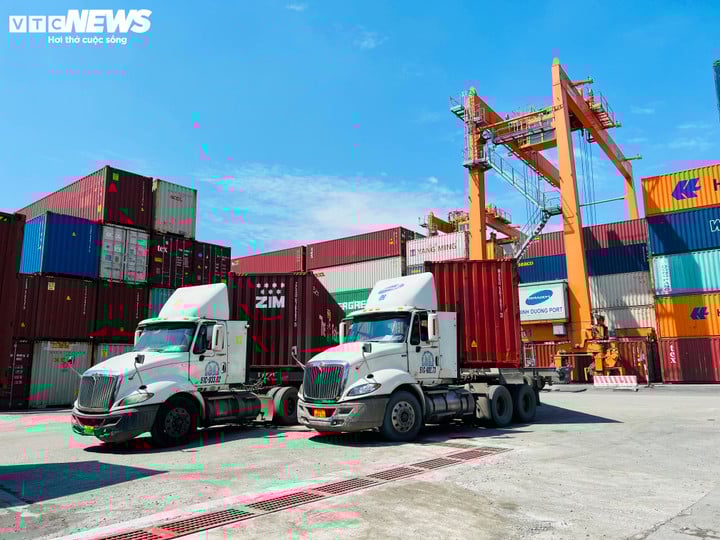
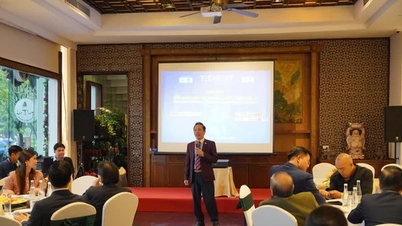
With the amended Resolution 98, Ho Chi Minh City will also take on additional responsibility for promoting growth and spreading development throughout the region. (Photo: Tung Quan)
"To achieve that, the city needs a huge amount of investment capital. According to calculations, in the period 2025-2030, Ho Chi Minh City needs about 75 billion USD annually for development investment. If there is a mechanism to attract strategic investors, the city will be able to solve this problem," Mr. Luc said.
However, Mr. Luc also stated that the most important issue is implementation. Ho Chi Minh City must fully utilize the specific mechanisms and policies. He said that Resolution 98/2023 has opened up more than 40 mechanisms, but due to obstacles, Ho Chi Minh City has not yet been able to take full advantage of many of them.
He also noted that with the amended Resolution 98, the city must resolve issues of land subsidence, flooding, traffic congestion, and environmental pollution in order to achieve sustainable growth and development.
On June 24, 2023, the National Assembly passed Resolution 98 with 44 specific mechanisms, effective from August 1, 2023.
On July 1, 2025, Ho Chi Minh City entered a new phase of development with 14 million inhabitants and an area of nearly 6,800 km2 after merging with Binh Duong and Ba Ria - Vung Tau.
On August 2, 2025, the People's Committee of Ho Chi Minh City proposed amendments and additions to Resolution 98.
On August 12, 2025, the Prime Minister approved the principle of researching and amending new, groundbreaking mechanisms and policies for Ho Chi Minh City.
On August 21, 2025, the Politburo provided feedback on the documents for the First Congress of the Ho Chi Minh City Party Committee, term 2025-2030, emphasizing the need for superior mechanisms, policies, and resources.
From mid-September to mid-October 2025, the reports and draft resolution documents will gradually be completed.
On December 3, 2025, the Government submitted the draft Resolution to the National Assembly.
On December 11, 2025, the National Assembly officially passed a resolution amending and supplementing Resolution 98, with 91.54% of delegates voting in favor.

Nguyen Minh Hang
Reporter
Reporter covering the socio-economic issues in the southern region.
Source: https://vtcnews.vn/sieu-do-thi-tp-hcm-bat-dau-chay-cung-nghi-quyet-98-phien-ban-moi-ar992364.html









































































Comment (0)