

For eight days, the Vietnamese tourist slept in a tent, living without electricity and with only intermittent internet access at night. Having visited 140 countries around the world , this was the first time Thuy Anh had witnessed how the local people survive in caves during the fierce rainy season.
"Socotra is truly one of the most unique destinations in the world that I have ever explored . Every day, my guide takes me to a place that is more beautiful than I could ever imagine," she shared.
The world's most bizarre island.
Socotra is an archipelago belonging to Yemen, located off the coast of the Indian Ocean, near Somalia. Thanks to its remote location from the mainland, it has remained largely unaffected by the ongoing conflicts in Yemen.
The main island of Socotra, which accounts for about 95% of the entire archipelago, was recognized as a UNESCO World Heritage Site in 2008 and has been described as "the most alien-looking place on Earth".
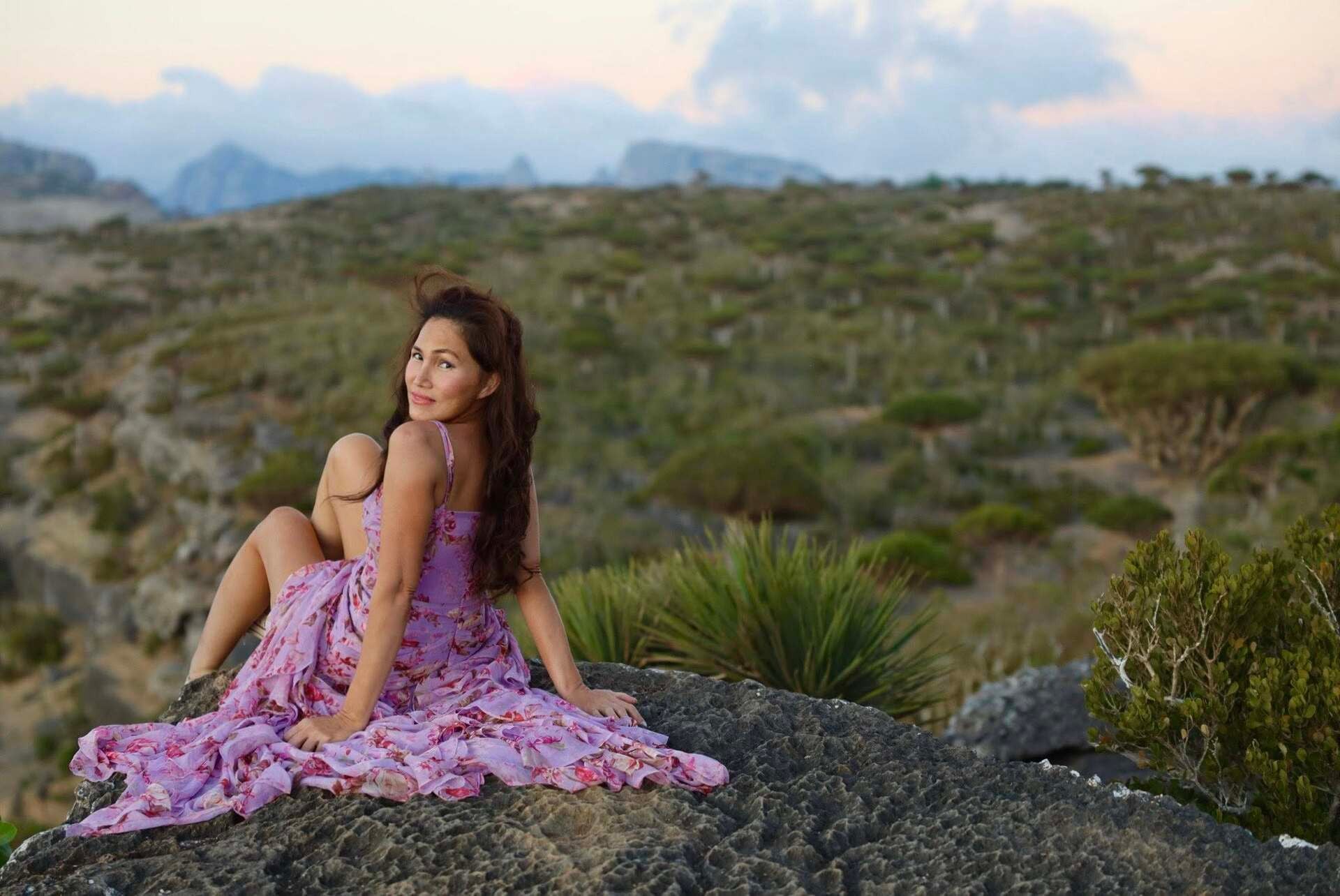
The island is home to hundreds of unique animal and plant species, the most famous of which is the dragon's blood tree (Dracaena Cinnabar). According to local legend, the red sap of this tree was once the blood of a dragon and has medicinal properties.
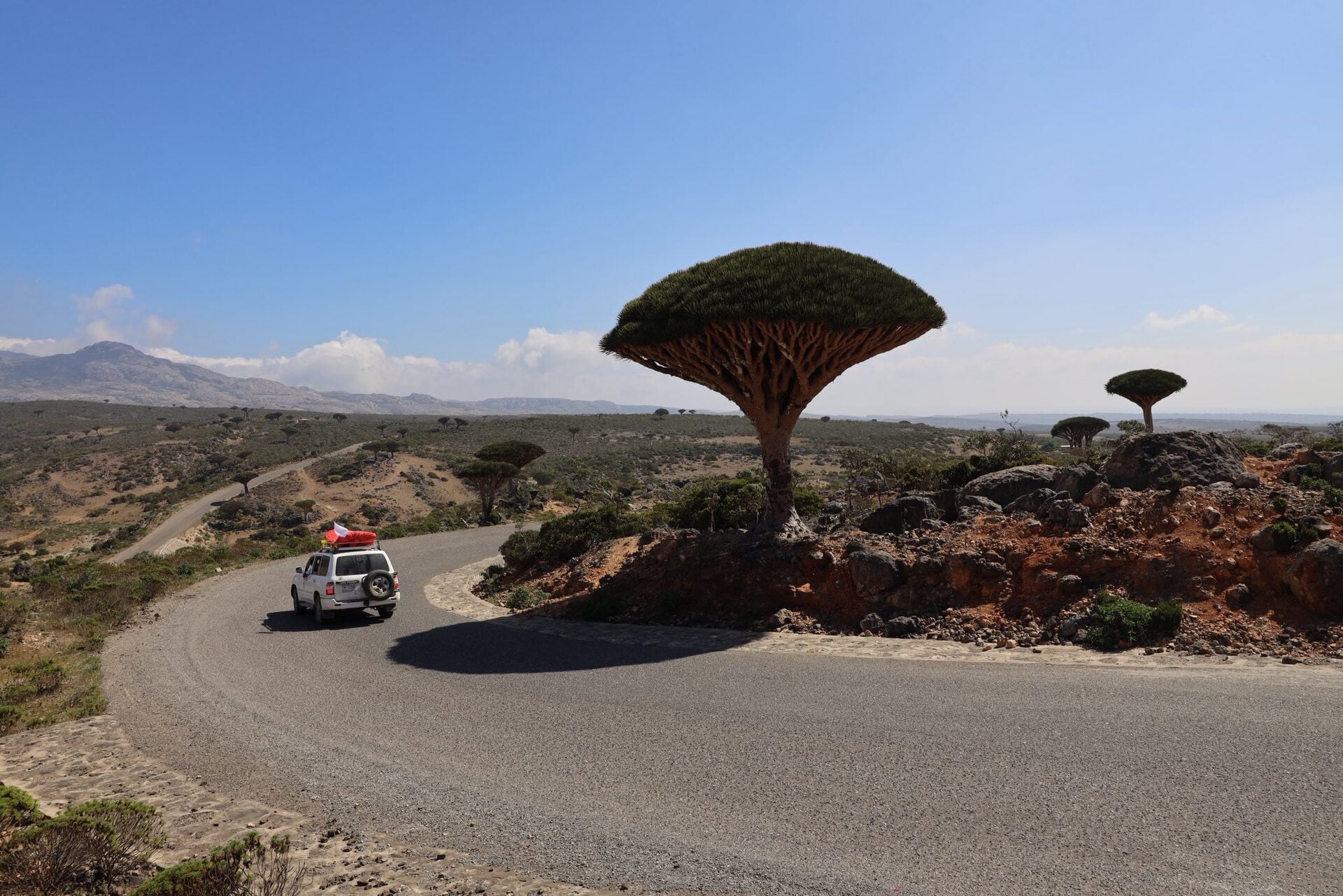
The dragon's blood tree has the shape of a giant mushroom, growing amidst dry, rocky soil.
"The images of these unique dragon's blood trees inspired me to visit Socotra. They grow densely on the arid hillsides, creating a scene like an alien landscape. I came across a broken branch with sap oozing out, bright red like blood. Visitors with weak hearts would certainly be frightened by this sight," Thuy Anh recounted.

Ms. Thuy Anh stands in front of a dragon's blood tree that is 12 meters tall, considered the tallest on Socotra Island.
Socotra also boasts another unique plant species: the "desert rose" (Adenium Obesium). Its trunk swells in the barren, rocky soil with an unusual shape, reaching up to 5 meters in height and 3 meters in width. Every April, these "roses" bloom brilliantly.
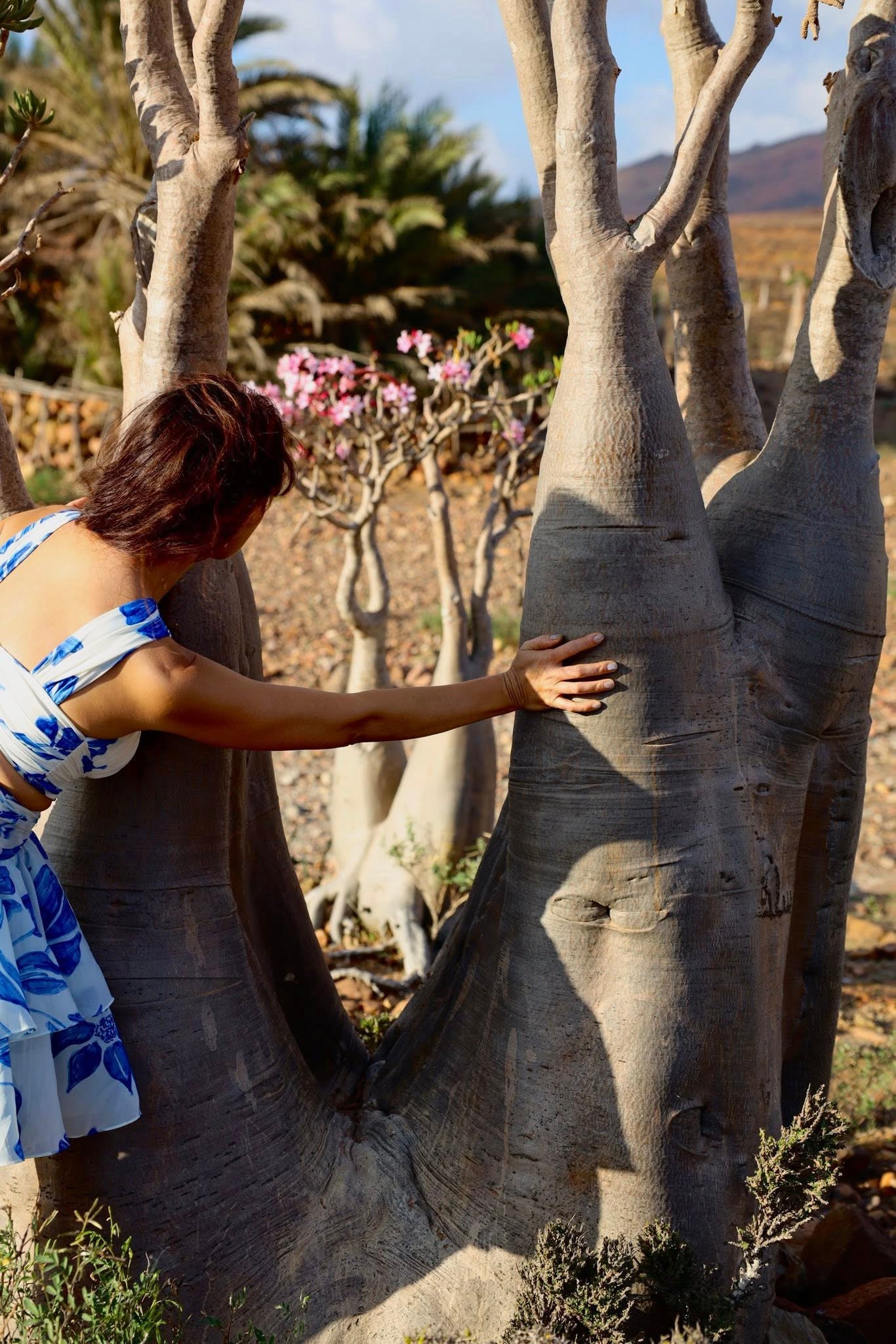
Desert roses are a species commonly found in the African and Arabian mainland. However, in Socotra, the stems are more swollen to retain water, and the flowers bloom more profusely.
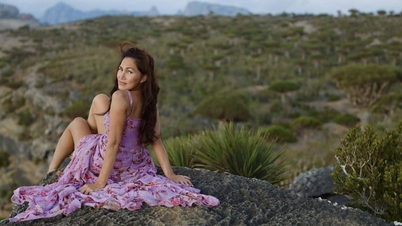
Socotra's landscape is also incredibly unique. It features vast, pristine white sand dunes, long stretches of coastline, and crystal-clear waters where you can see the seabed.
"Socotra beach is beautifully serene, like the paradise of Bora Bora, combined with the undulating sand dunes reminiscent of Namibia. I've never seen this landscape anywhere else in the world; it's truly breathtaking," Thuy Anh affirmed.
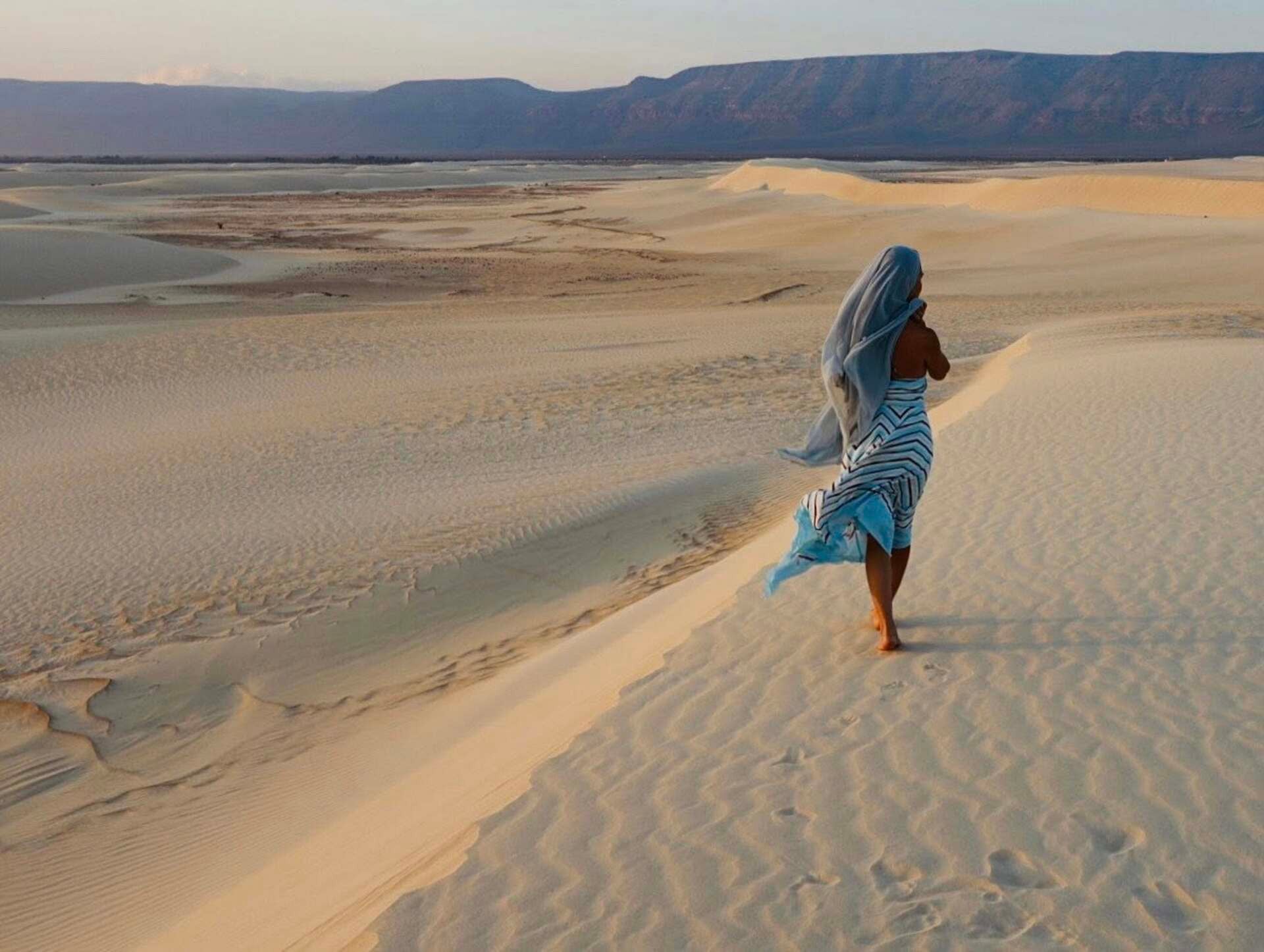
The scenery on the island is incredibly beautiful.
The journey is not easy.
The female tourist said that when she planned to visit Socotra, it took her more than two months to find a tour operator, and another three months to complete the flight booking and visa procedures.
Upon arriving at Socotra Airport, Thuy Anh was astonished to find that the airport was very small and lacked a computer system for data entry. They required her to declare her information entirely by hand.
"Leaving the airport, we were in the town of Socotra. Everywhere we looked, there was trash, even flying everywhere. The roads were rough, the houses simple and small. At that moment, I doubted the beautiful images shared online," she recounted.
However, as we left the town, villages began to appear. The scenery became peaceful and clean, simple yet beautiful. Throughout the trip, Thuy Anh had a local guide and driver to assist her.
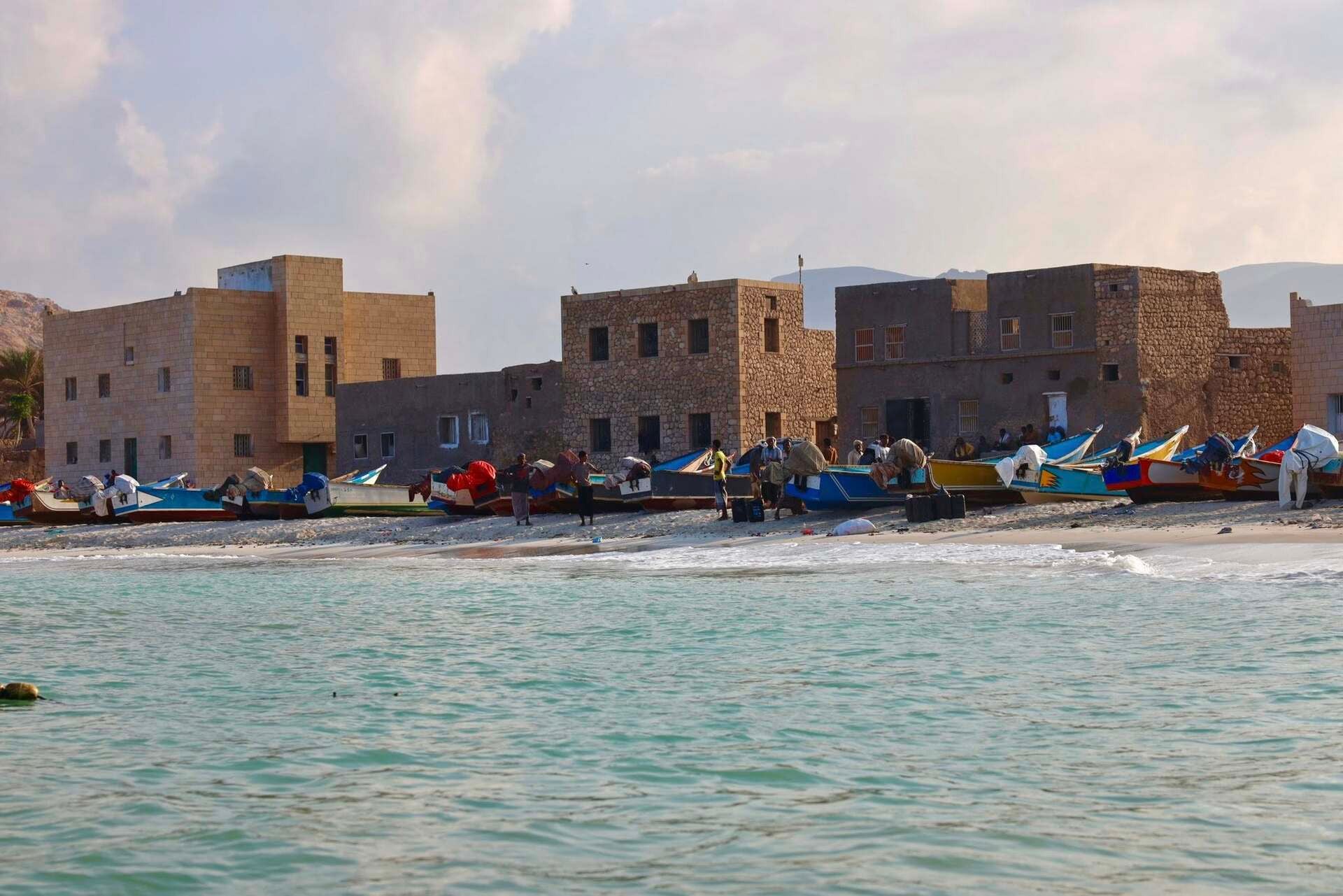
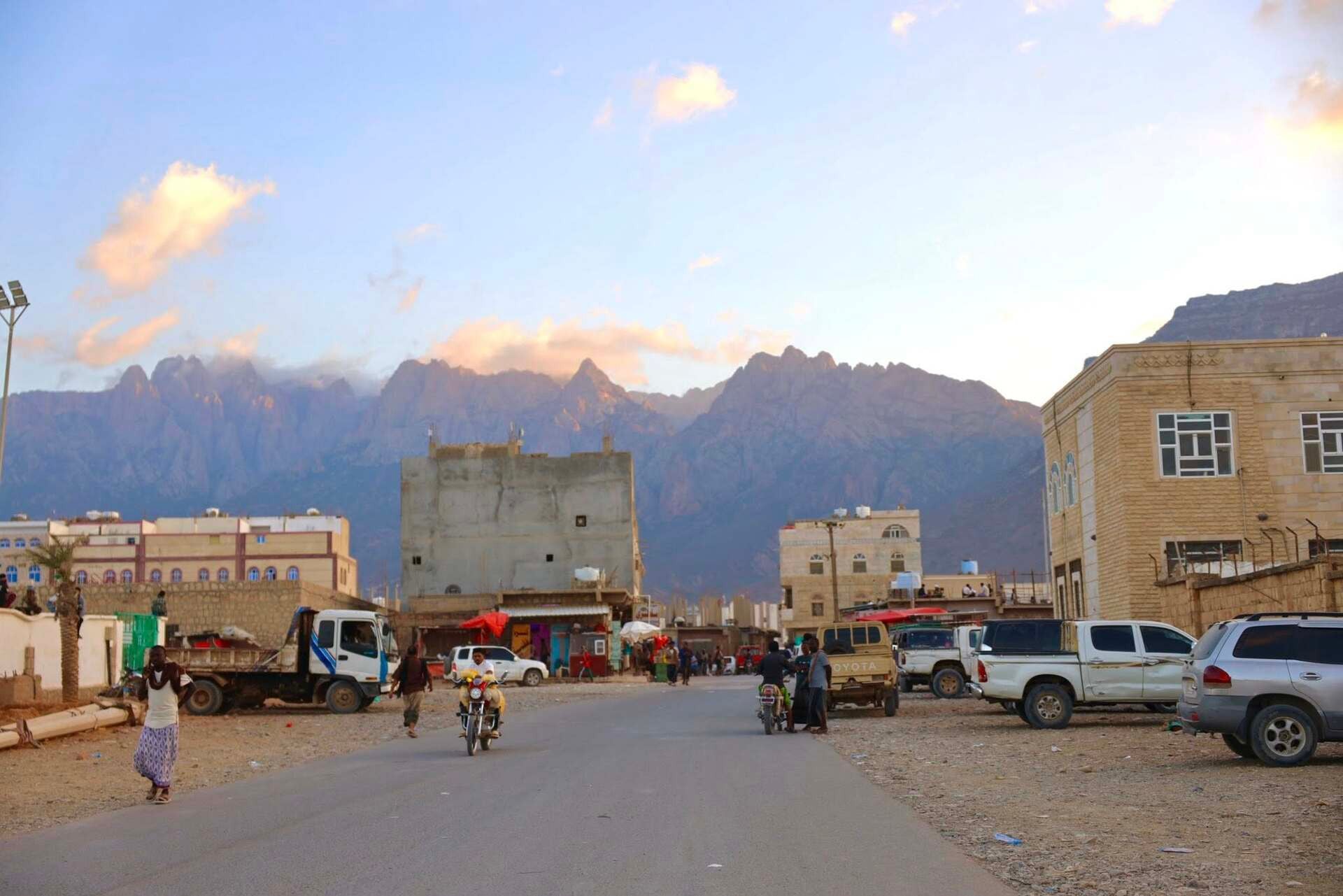
The busiest areas on the island
For the first two nights, the female tourist stayed at a campsite on the beautiful Detwah Lagoon beach. "Wherever we went, the guide and driver would set up camp there for me to rest. The tent only had a rickety mattress and a pillow. It was very difficult to expect comfort," she said.
The food here is very simple. A few vegetables like pumpkin, zucchini, and potatoes are imported from the mainland. The only fruit available are oranges and apples, and they are all tiny.
"Due to the harsh weather, vegetables are scarce on the island, with only dates available. Seafood is caught entirely by hand, so it's mostly small fish and crabs. They mainly boil or steam their food without using cooking oil," Thuy Anh recounted.
"They don't even have dish soap. The dishes are washed with seawater. If tourists saw this, they wouldn't dare eat," the female tourist added.

Tourists sleep in individual tents.
The worst thing for Thuy Anh was that the toilets on the island were extremely dirty and inadequate.
"Although the tourism services here are rudimentary, the people are incredibly friendly and enthusiastic. The scenery here is arguably one of the five most amazing places I've ever been," she said.
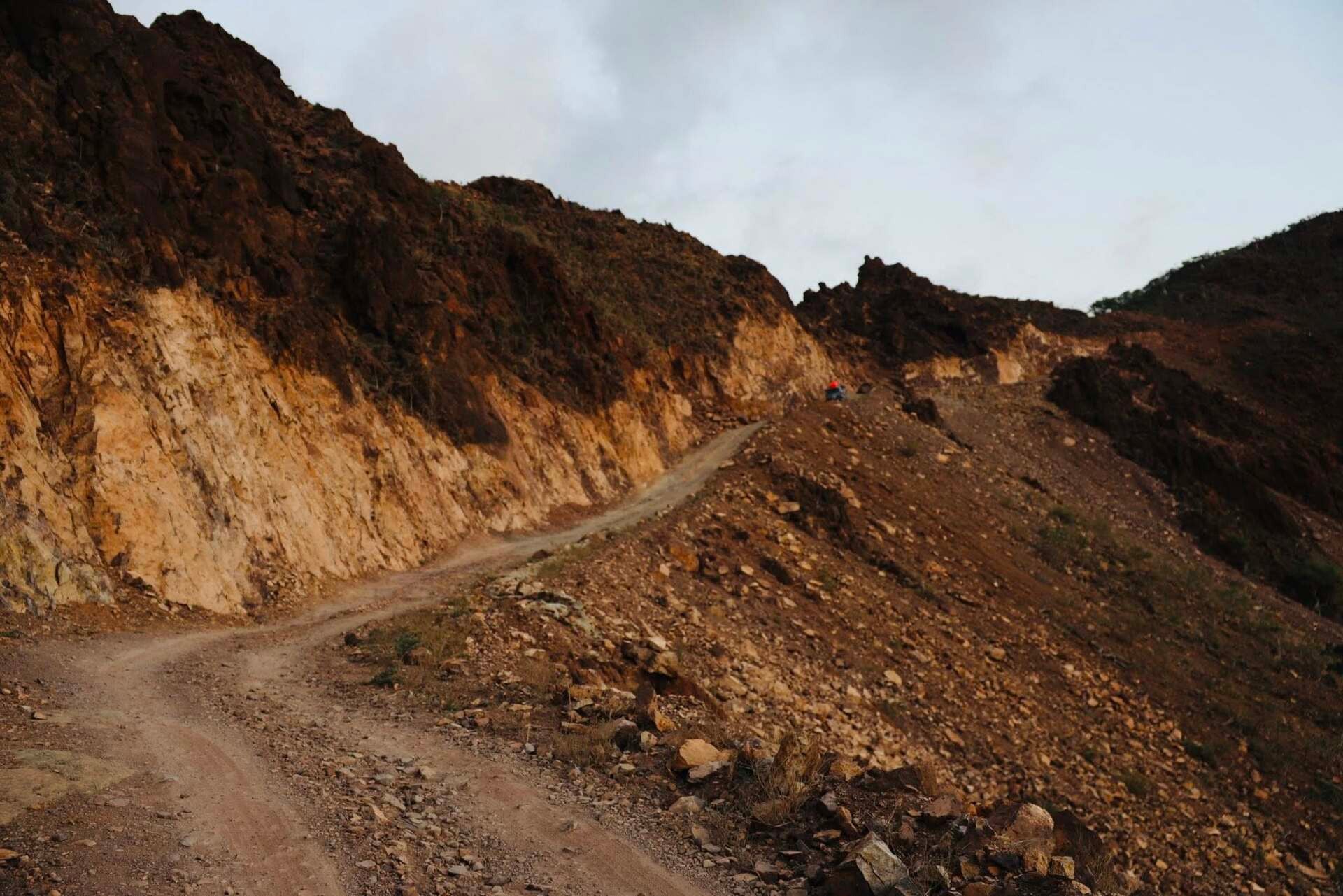
The roads on the island are mostly rough, rocky dirt roads, and sometimes the car would roll downhill without brakes, giving the female tourist a fright.
After dinner, the flickering lights were switched off. The tourists were overwhelmed by the sparkling starry sky. The constellations appeared very clear and brilliant because the island was free from smog and light pollution.
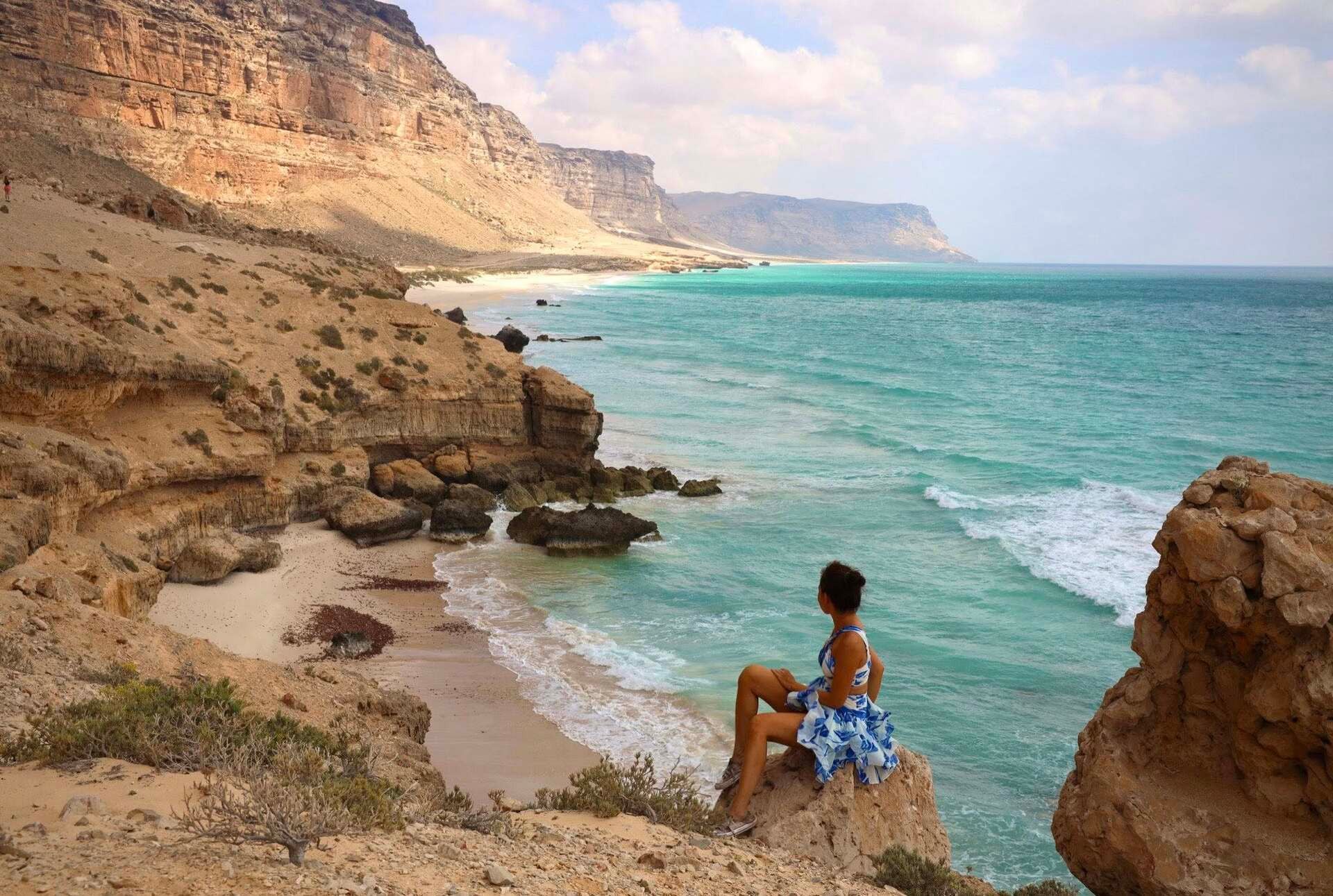
During the day, simply strolling along the smooth, white sand, free of pebbles, and watching the sunrise and sunset is enough to captivate female tourists.
In the following days, she went into the forest to admire the dragon's blood tree and desert roses. "One day we arrived at the mountain campsite too late, it was pitch black. Yet the guide and driver still carried the equipment along the rough, rocky road. They lived like primitive people, not dependent on electricity," she recounted.

Dragon's Blood forests make for an impressive backdrop for photography.
The most memorable experience for Thuy Anh was visiting the cave and observing how the locals take shelter and survive during the rainy and stormy season on the island.
These men, dressed only in loincloths, shirtless or with a simple T-shirt, guide tourists on how to collect oysters clinging to rocks or identify scallops underwater. This is the food that helps them survive when storms hit.
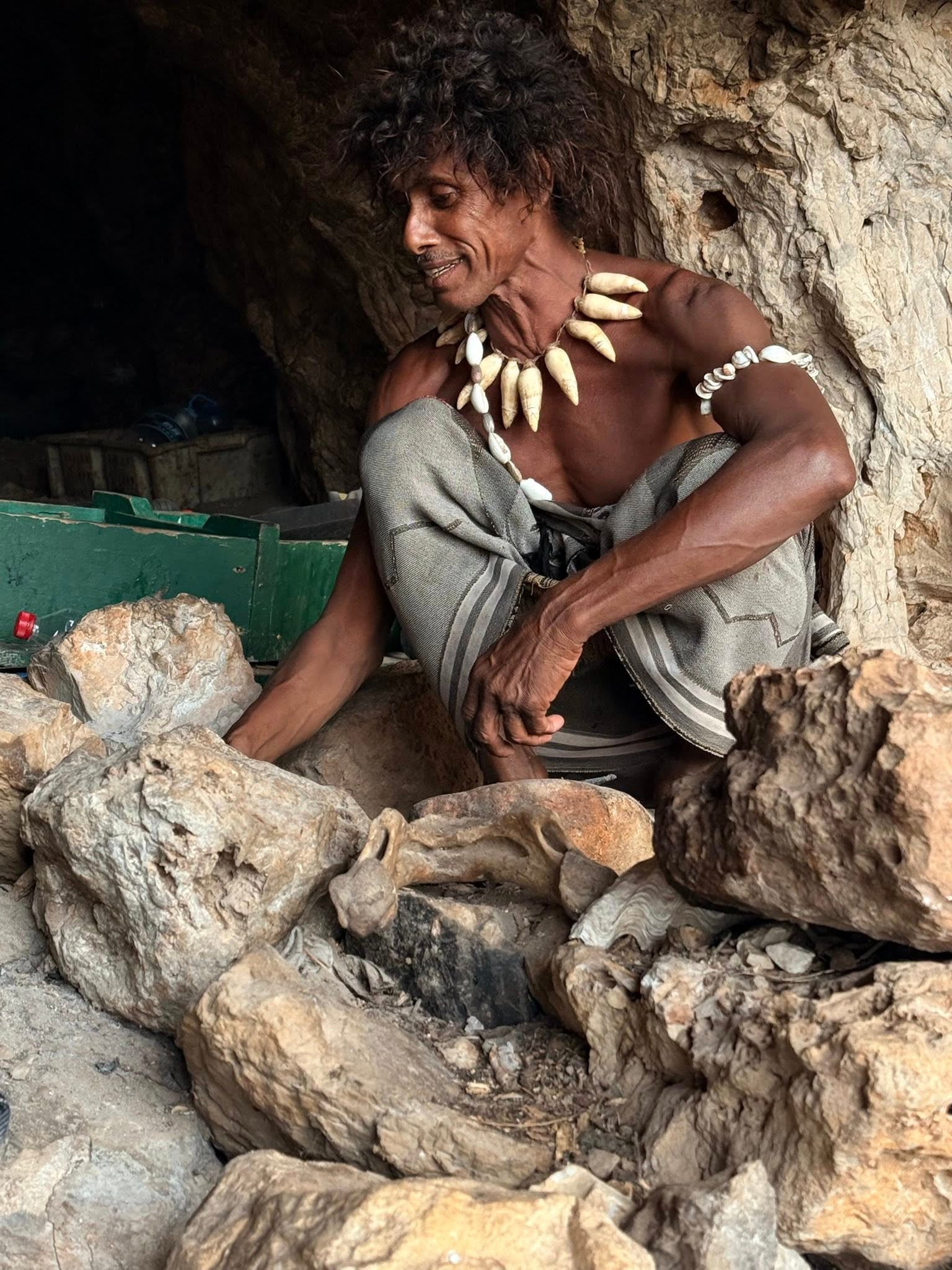
"The people live simple but happy lives. I can feel that," Thuy Anh shared.
In the villages, the locals never pester tourists to buy food or souvenirs. They have strict rules, prohibiting tourists from giving money to children.
"The people of Socotra are afraid that, 10 years from now, their children will still be standing here begging for money instead of working. If a tour guide lets tourists give money to children, they will be fired immediately. I was very surprised by their civilized and progressive thinking," the female tourist said.
According to Thuy Anh, the total cost for this trip was approximately $4,000 (over 105 million VND). "This cost is not cheap, but it's well worth it," the female traveler affirmed.
Photo/Video: Anh Hoang
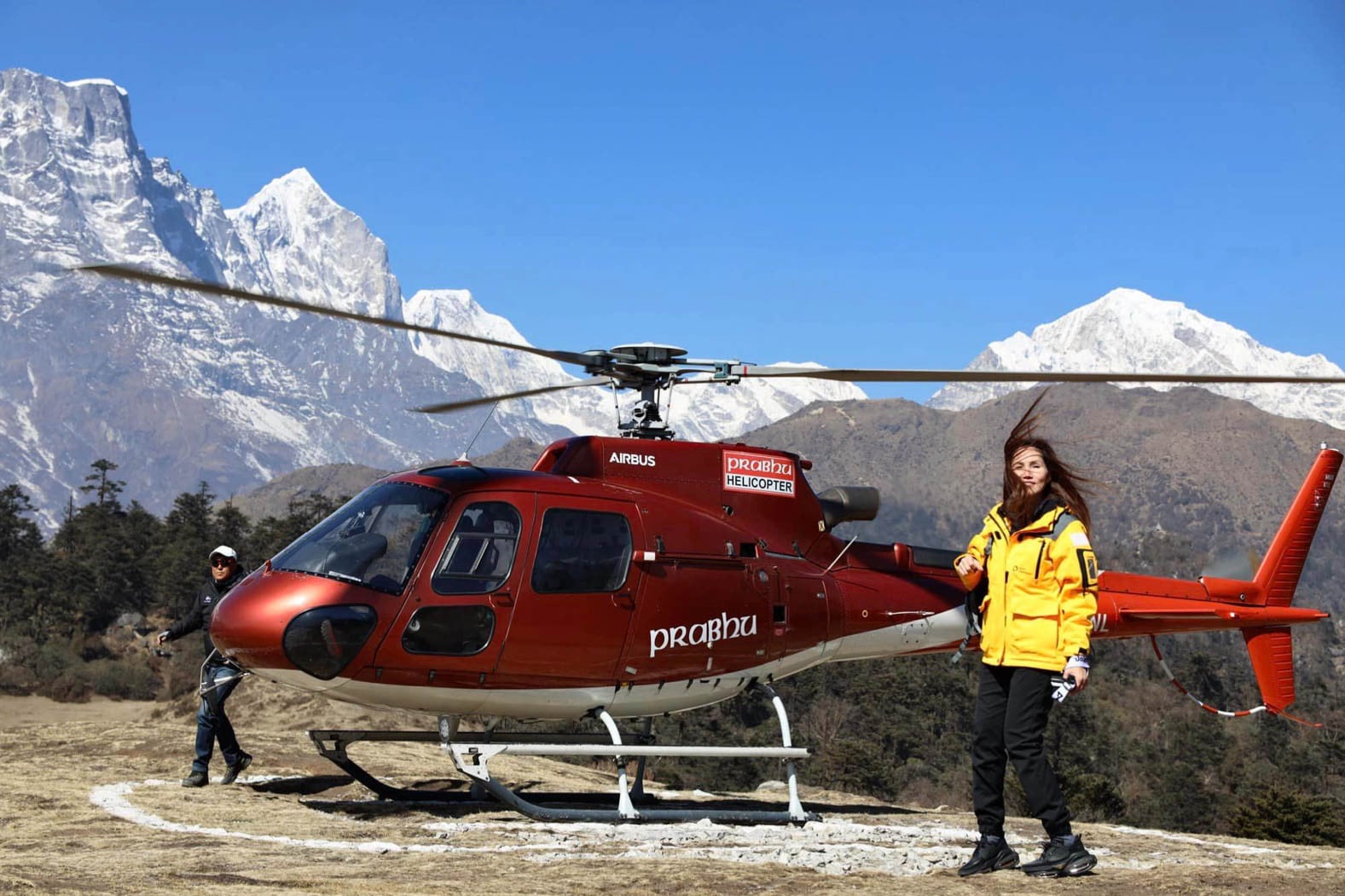
Vietnamese traveler spends 84 million VND, risks her life to reach the world's most dangerous airport. Ms. Thuy Anh has visited 113 countries and 6 continents. Her flight to Everest, via Lukla Airport – dubbed the "world's most dangerous airport" – was one of her most heart-stopping experiences.
Source: https://vietnamnet.vn/khach-viet-di-140-quoc-gia-chi-hon-100-trieu-toi-dao-ky-la-nhat-the-gioi-2470542.html








































































Comment (0)