

Cultural resources in community tourism development
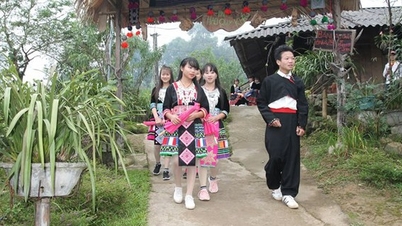
The villages with large Lu ethnic minority populations in the communes of Khun Ha, Binh Lu, Nam Tam, etc., all have stilt houses built on stone slabs, constructed with mortise and tenon joints, roofed with traditional materials, and divided into functional areas: a common living area, a sleeping area, an ancestral worship area, and a kitchen. The space under the stilt house is used for storing farming tools, livestock, or as a drying yard, suitable for mountainous conditions.
Thanks to its unique structure, the stilt house is both adapted to the climate and protects belongings and people, while also preserving knowledge, customs, and traditional lifestyles. By utilizing these spaces, community tourism can transform the stilt house into a hands-on experience, where tourists can participate in daily life, learn how to cook, weave, or attend agricultural rituals.
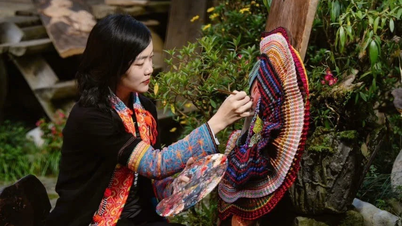
The craft of weaving brocade is one of the precious intangible cultural values of the Lu people. From growing cotton, spinning yarn, dyeing with indigo, weaving fabric, and embroidering patterns, Lu women play a leading role and also pass on these skills to the younger generation. Each family owns at least one loom, and the sound of the shuttle echoes throughout the village during the agricultural off-season.
Traditional brocade products not only meet the needs of traditional clothing but also become soft tourism products, serving tourists with traditional scarves, bags, shirts, or souvenirs. Integrating weaving into community tourism both preserves cultural identity and creates a sustainable source of income, while promoting the active participation of women in economic life.
The Lu people have many unique festivals and rituals associated with their agricultural life, beliefs, and community. The Kin Khau May New Rice Festival is a major ceremony marking the end of the harvest season, praying for a bountiful harvest and giving thanks to the gods and ancestors. The Su Khon Khoai Festival, dedicated to the spirit of the buffalo, reflects a humanistic philosophy of gratitude towards the animal that has been closely associated with their agricultural life.
Cultural festivals are held in villages such as Bản Thẳm and Bản Hon, as well as provincial-level events, showcasing excerpts of rituals, traditional dances like the xòe dance and khăn dance, folk songs of courtship, and weaving demonstrations. Visitors have the opportunity to gain a deeper understanding of local culture, learn traditional skills, and experience community life. This serves as a vibrant cultural education tool and a key factor in attracting tourists to Lai Châu.
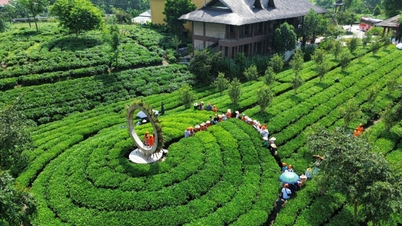
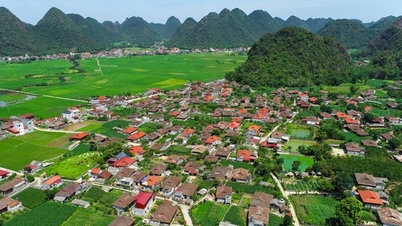
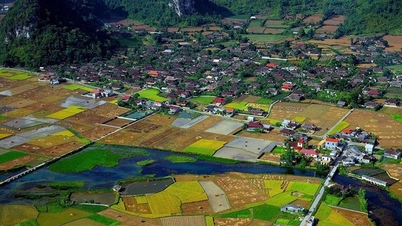
The traditional agricultural practices of the Lu people, such as reciprocal labor exchange for rice planting and the combination of wet rice cultivation with upland farming, create a flexible multi-cropping model that ensures food security and preserves customs. The terraced rice fields, irrigation canals, and stilt houses create a distinctive landscape, suitable for developing agricultural tourism experiences.
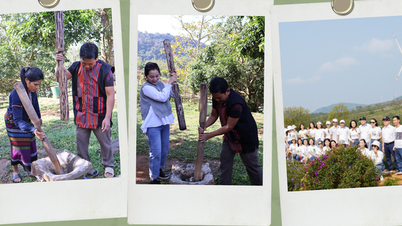
Tourists are guided on how to sow, harvest, and care for crops, and participate in community activities, thereby experiencing the working life and solidarity of the Lu people. This is a type of educational and recreational tourism that helps preserve both tangible and intangible cultural heritage.
Community-based tourism is a way to improve livelihoods and preserve culture.
Developing community-based tourism in Lu villages, such as Tham Village, creates opportunities to increase local income, reduce pressure on labor migration, and keep young people connected to their homeland. Homestays in stilt houses, combined with experiences such as weaving brocade, enjoying local cuisine, and participating in festivals, help people both preserve their culture and create economic value.
Local authorities have encouraged the community to maintain traditional architecture, supporting improvements to basic amenities without disrupting the unique identity of the stilt houses. Simultaneously, they have organized training and promoted cultural tourism products, helping the Lu people manage tourism services and serve visitors professionally.
However, despite its great potential, community-based tourism in the Lu villages also faces numerous challenges, such as: lack of resources and management skills (many households are unfamiliar with hosting tourists, and marketing of cultural products is limited), pressure to modernize (some families want to move to concrete houses, reducing traditional experiences), and the need for comprehensive cultural preservation (not only stilt houses, weaving, and festivals, but also the language and indigenous knowledge need to be preserved alongside tourism development).
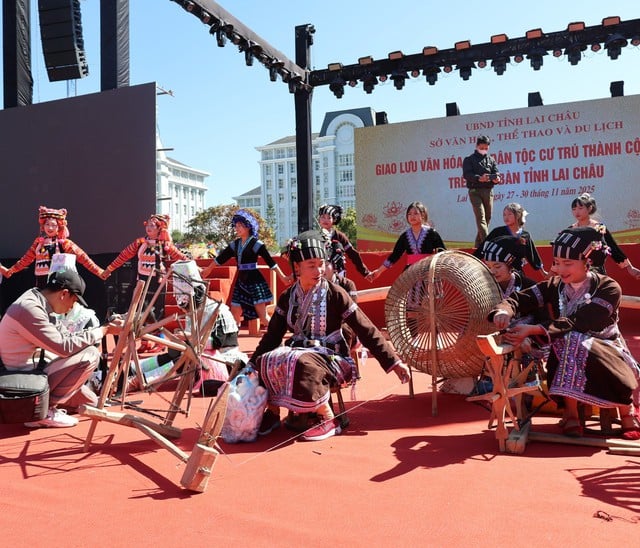
Spinning demonstration during the festival.
The solution lies in linking the community, government, and businesses: training tourism-related skills, mapping heritage sites, digitizing cultural knowledge, providing capital and materials to maintain traditional experiences, and promoting the image of Lu culture to domestic and international tourists.
The rich cultural heritage of the Lu ethnic group in Lai Chau, from stilt houses, weaving, festivals, agricultural rituals to labor practices, is not only a precious legacy but also a resource for sustainable community tourism development. When skillfully exploited, Lu culture helps improve economic life, educate the younger generation, and preserve ethnic identity amidst the flow of modernity.
Developing community-based tourism is not only about creating more livelihood opportunities, but also a tool for preserving living culture, where architectural and intangible heritage blend together, opening up a sustainable path for the Lu people and the entire diverse culture of Lai Chau province.
Source: https://phunuvietnam.vn/phat-trien-du-lich-cong-dong-tu-kho-tang-van-hoa-dan-toc-lu-o-lai-chau-238251202125952757.htm

































































Comment (0)