

After a long period of excavation, the Management Board of the My Son World Cultural Heritage Site (Thu Bon commune, Da Nang city) has officially announced the results of the archaeological research and excavation of the architectural access road to the My Son temple complex.
Researchers assert that this was the "sacred road" that led deities, kings, and Brahman priests into the My Son sanctuary around the 11th-12th centuries.
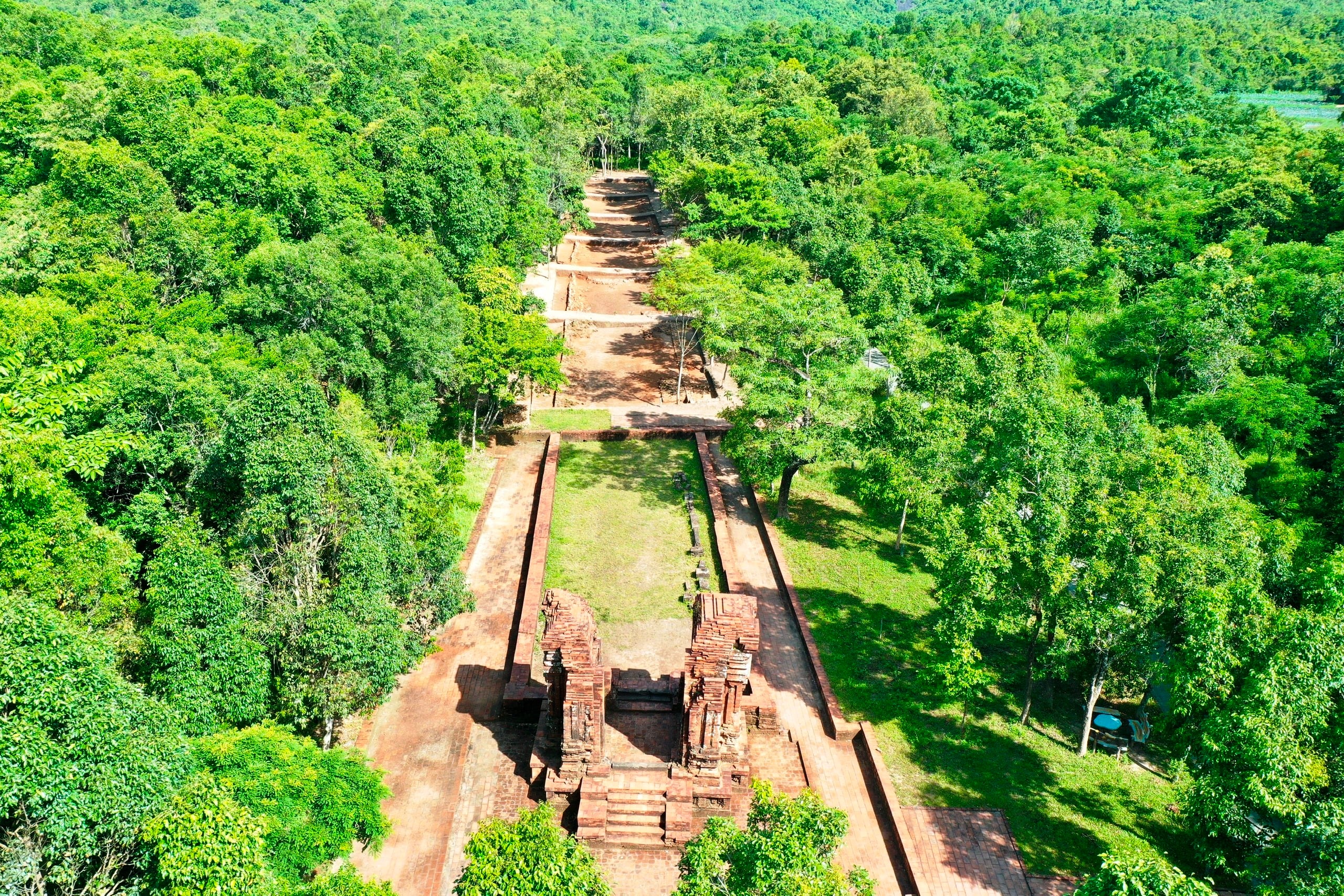
The "sacred road" leading to the center of My Son sanctuary, seen from above.
PHOTO: MC
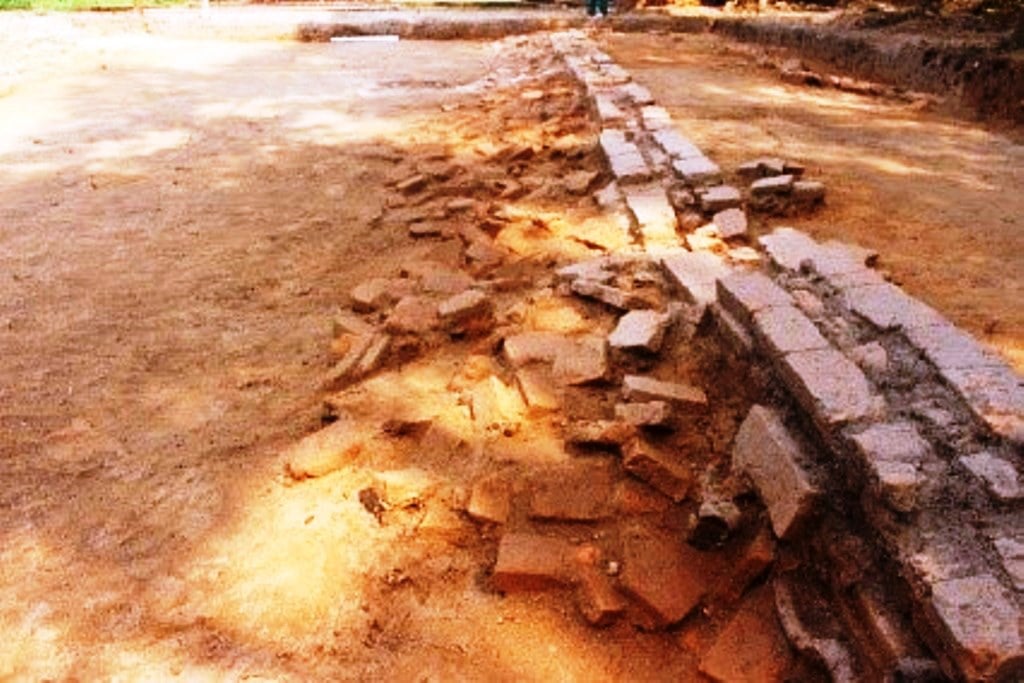
Remnants of a collapsed brick wall.
PHOTO: MC
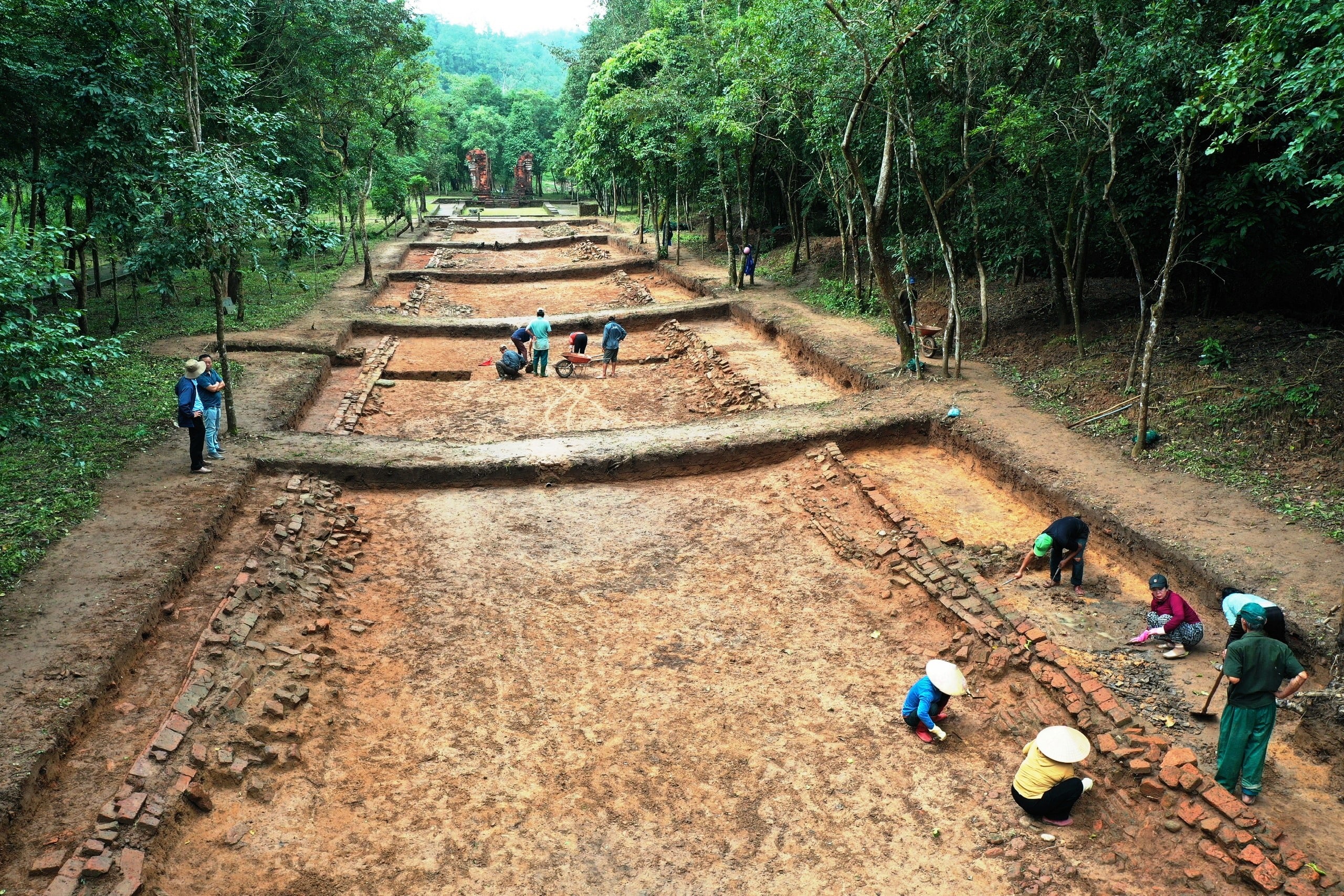
Research to clarify the architecture of the access road to the My Son Sanctuary has been carried out by the My Son World Heritage Management Board and the Institute of Archaeology (Ministry of Culture, Sports and Tourism) since 2023. In 2025, the largest-scale excavation (covering an area of 770 m2) was conducted, resulting in the identification of a road approximately 170 m long, extending from the eastern foot of Tower K to the western bank of a dry stream within the My Son relic site.
PHOTO: MC
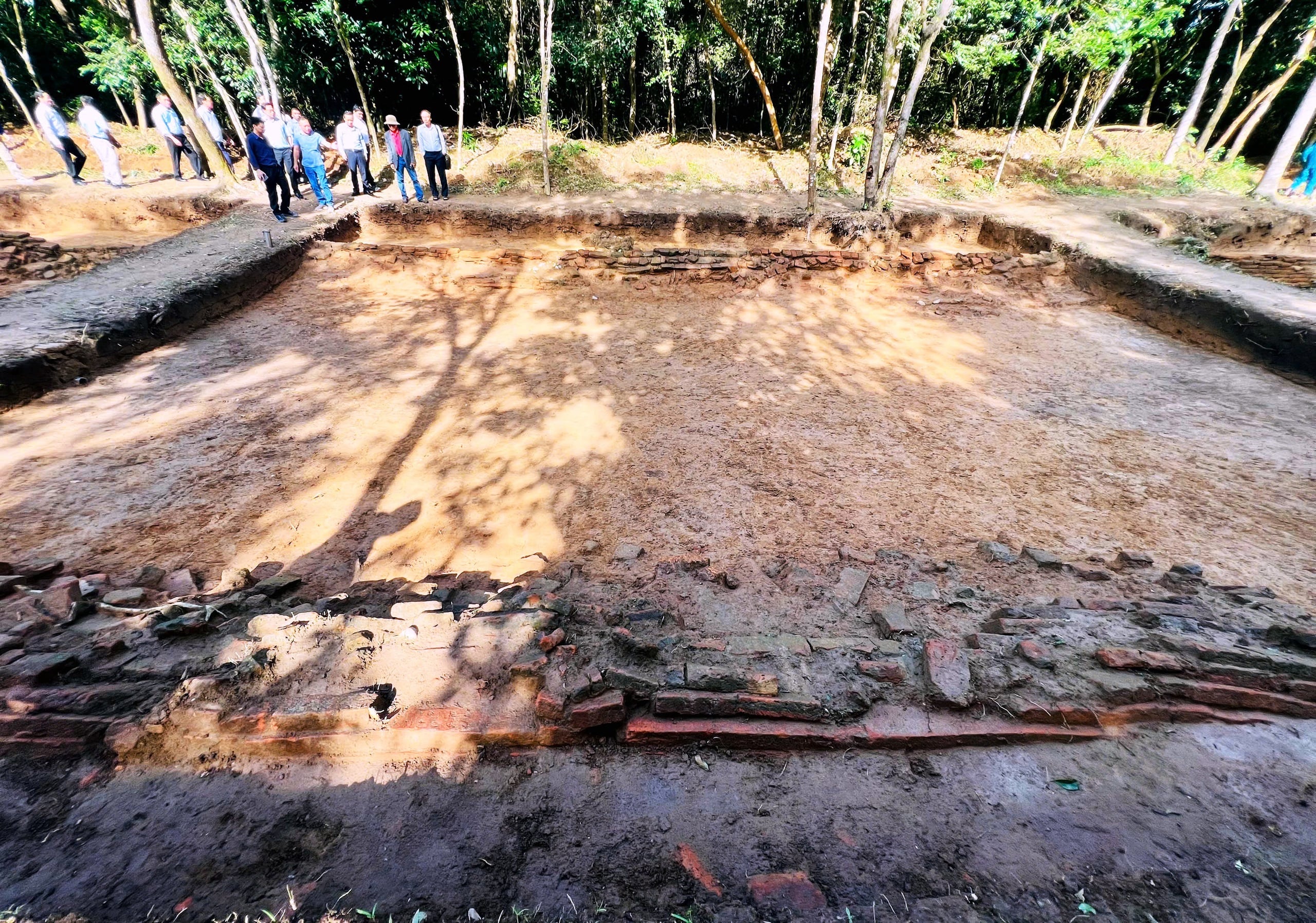
Currently, the My Son World Cultural Heritage Management Board is continuing to research and preserve the "sacred path" leading to the center of the temple complex.
PHOTO: MC
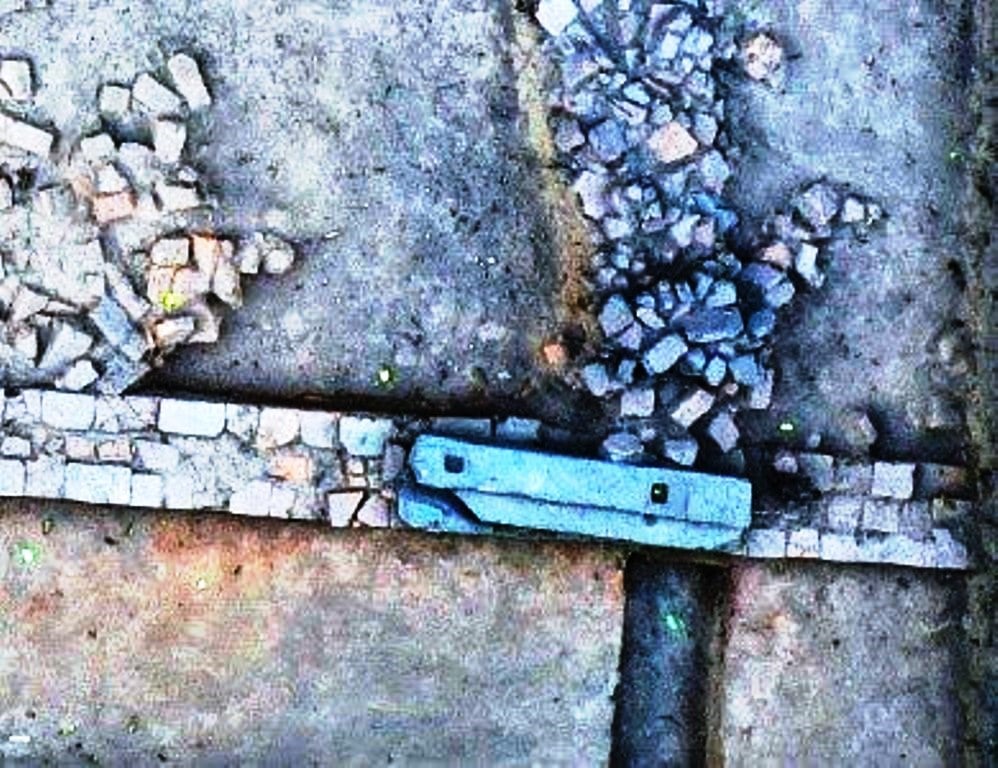
Remnants of doors and gates on the eastern wall of the pathway.
PHOTO: MC
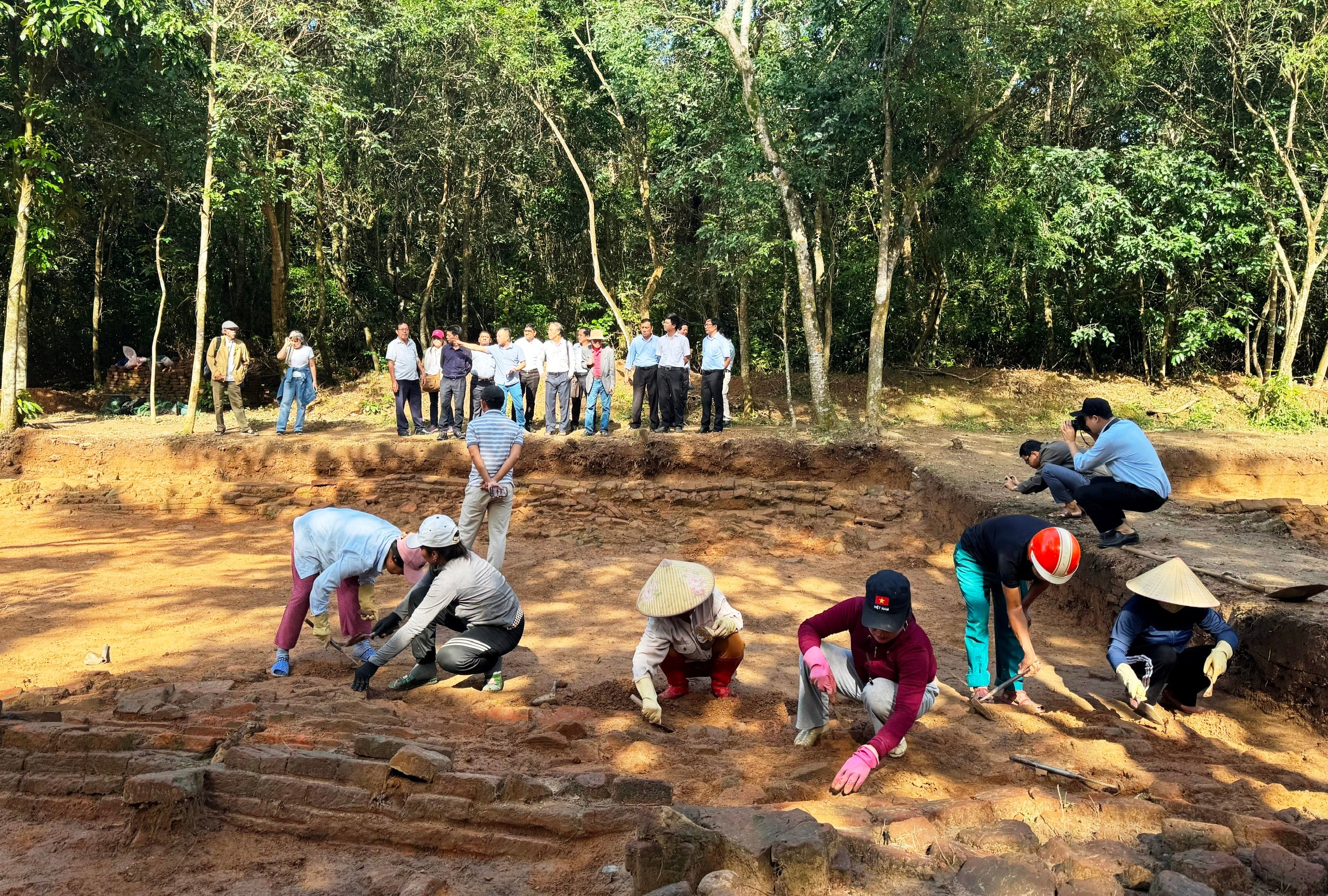
Preliminary comparative studies suggest that the "sacred road" at My Son is the only structure of its kind within the Champa archaeological site system.
PHOTO: MC
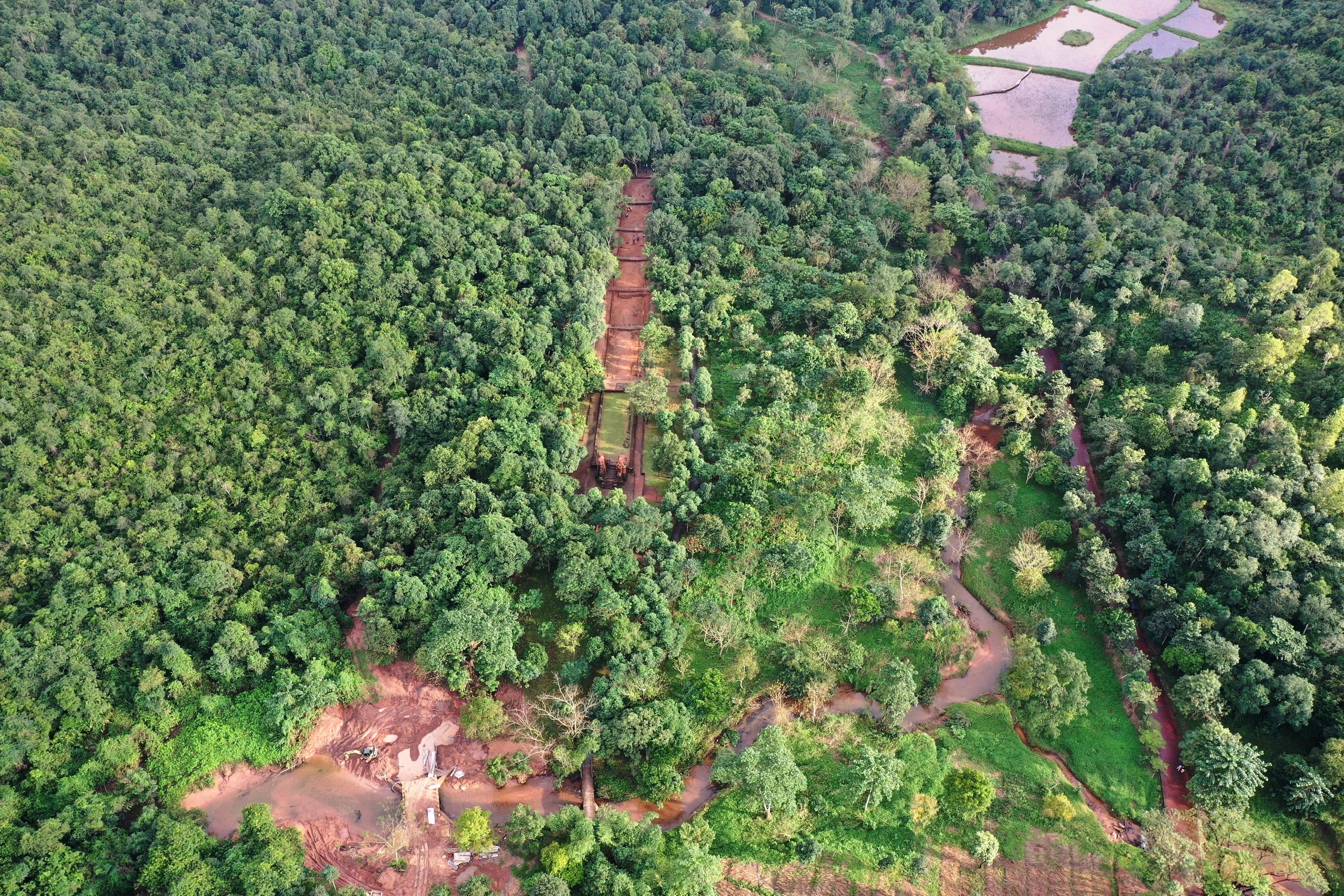
The ancient road system runs alongside a dry stream bed in the My Son historical site.
PHOTO: MC
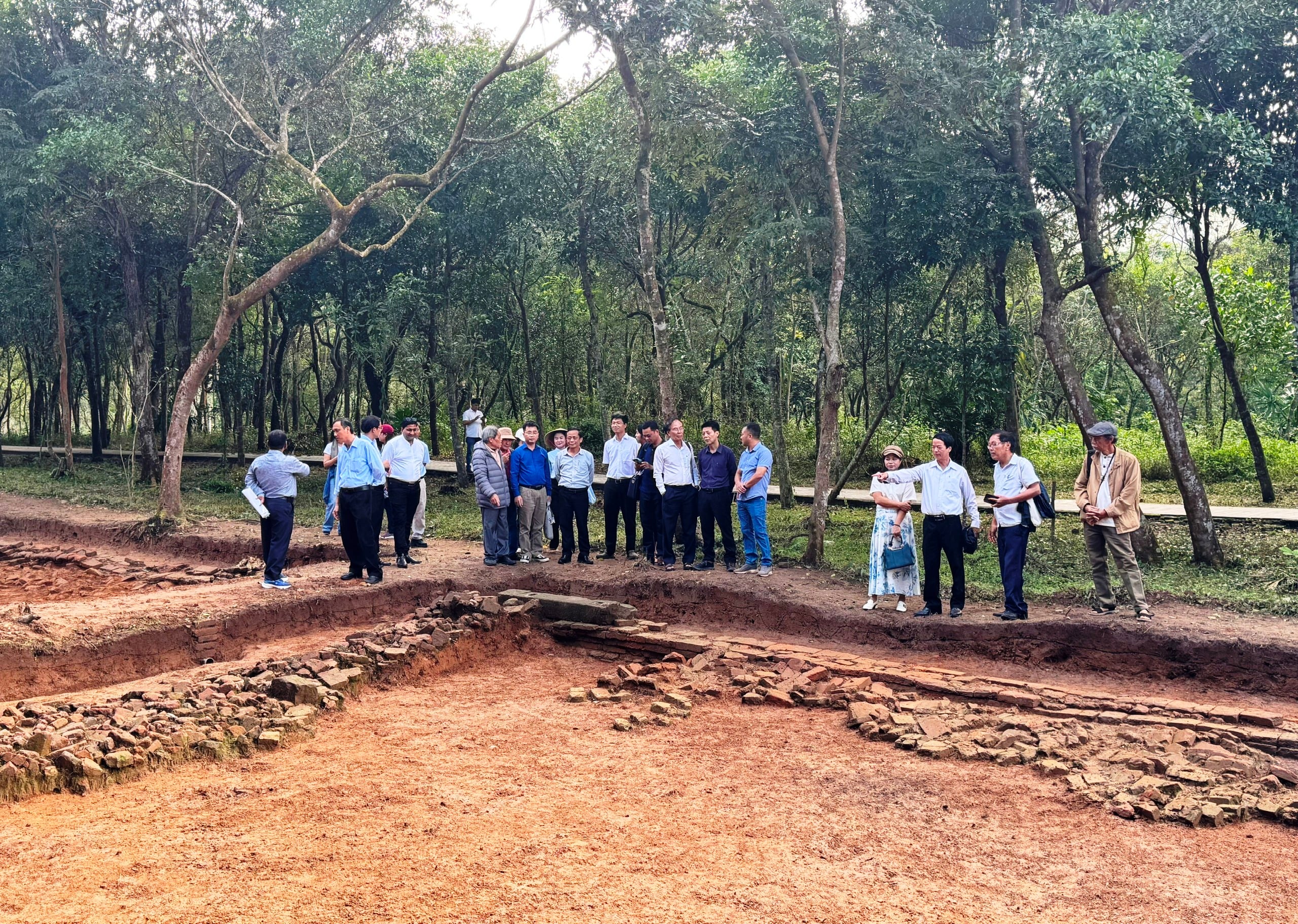
The road is considered a remnant of one of the previously unknown architectural structures at My Son in the history of this historical site.
PHOTO: MC
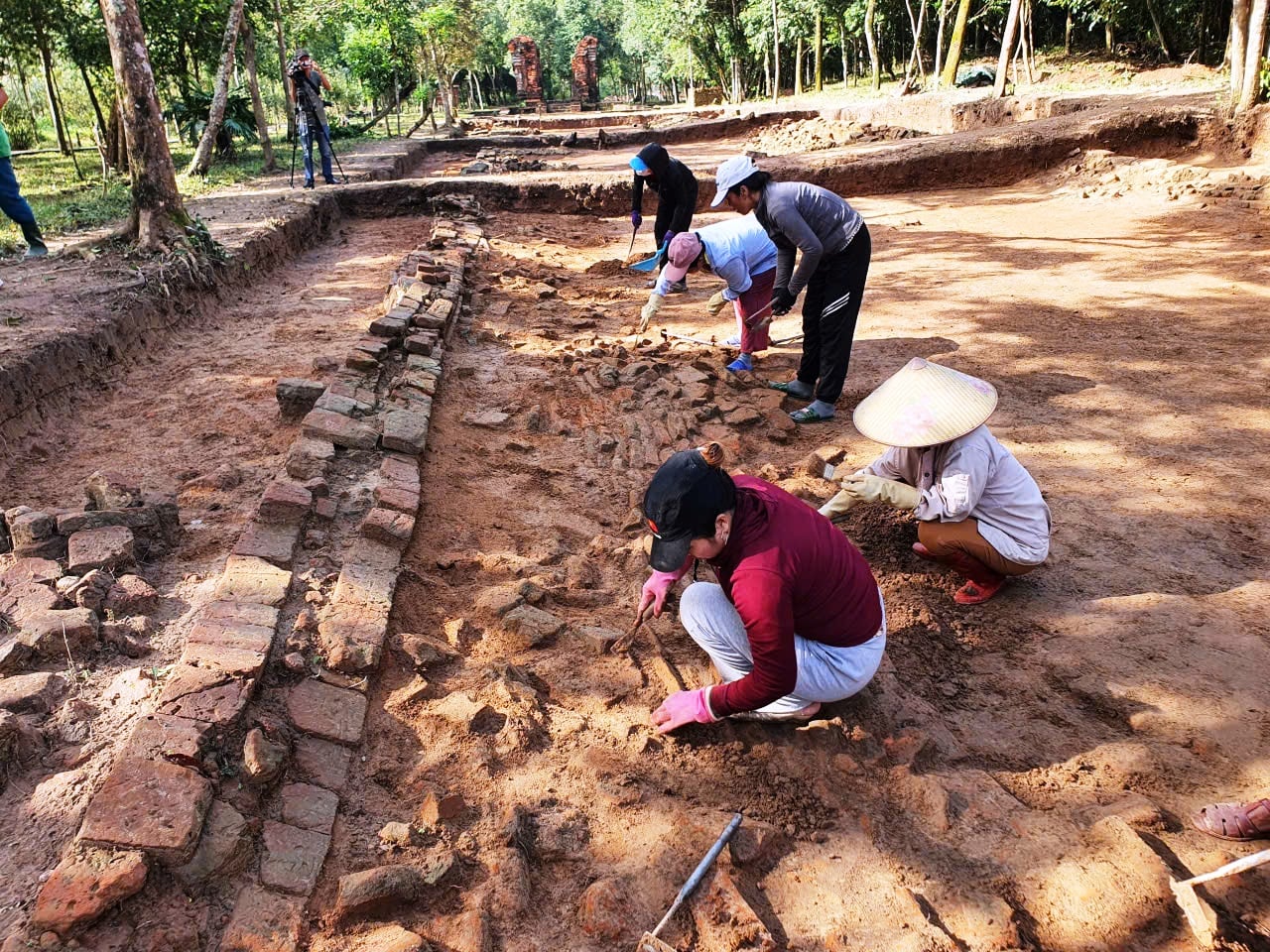
Workers and archaeologists continue the excavation work.
PHOTO: MC
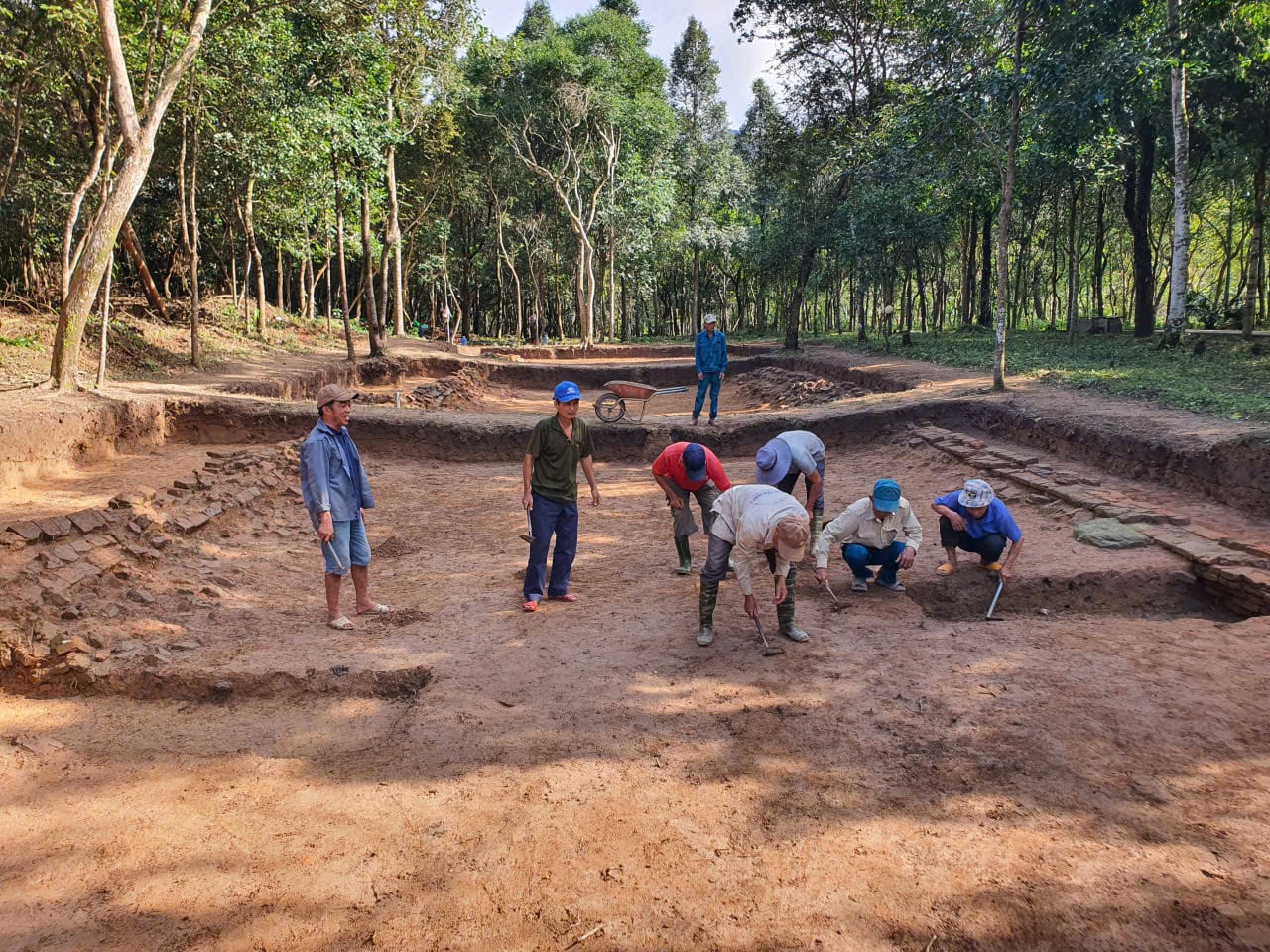
The road's cross-section is 9 m wide, with a carriageway width of 7.9 m; the surface is flat, composed of compacted sand, gravel, and broken bricks, with a thickness of 0.15 - 0.2 m.
PHOTO: MC
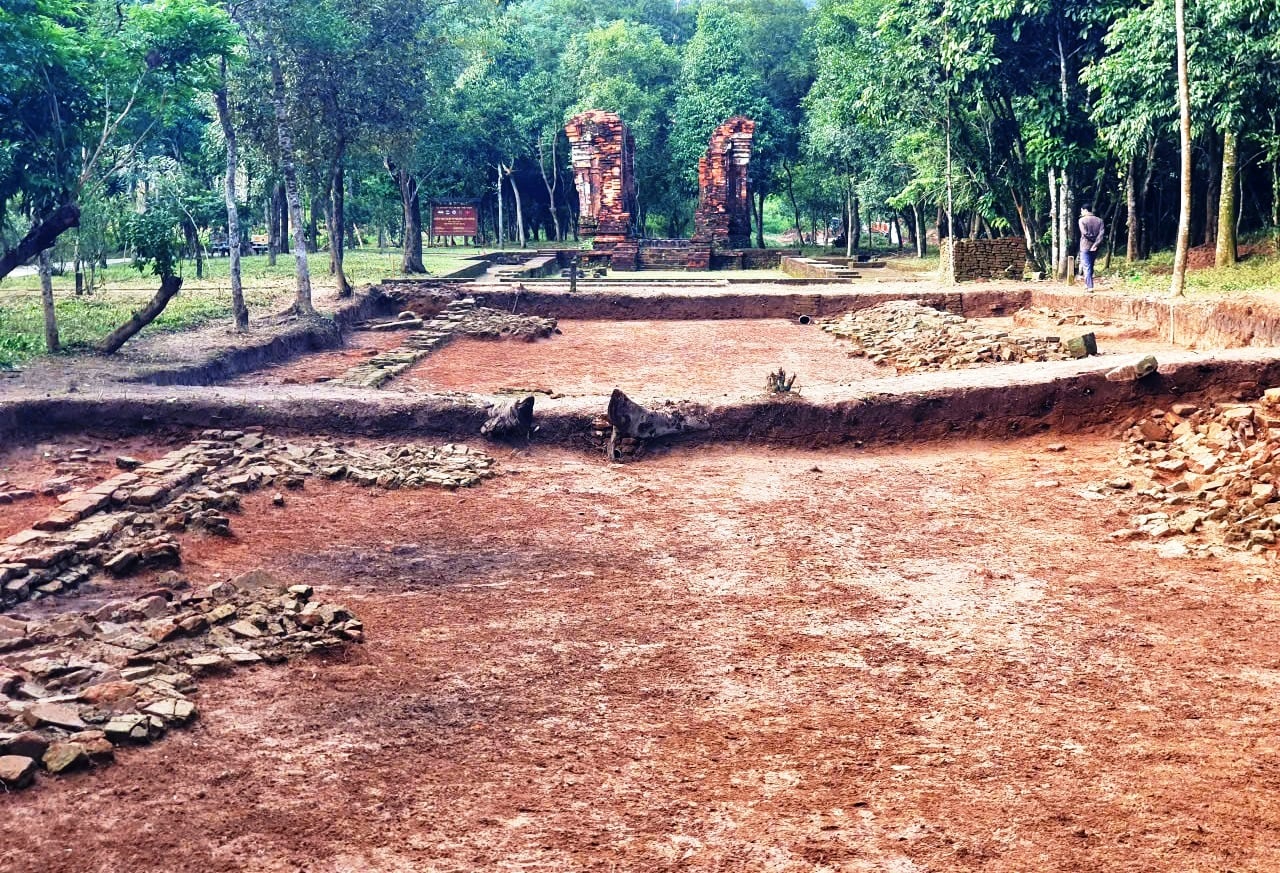
The results of the 2025 survey and excavation have added valuable documents confirming the religious function of the ruins as a sacred path leading deities, kings, and Brahmin priests to the My Son sanctuary, around the 11th-12th centuries.
PHOTO: MC
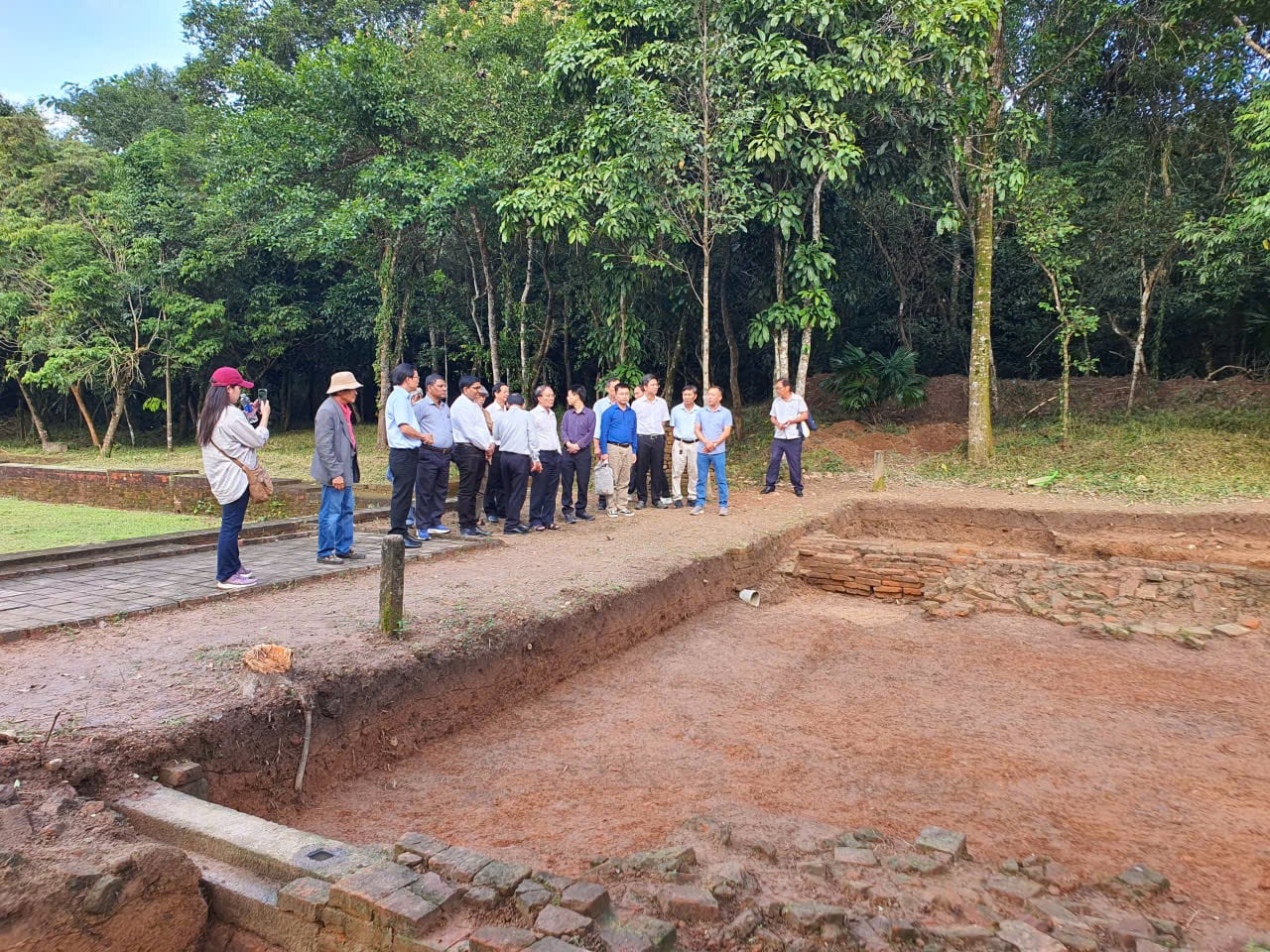
This is the remains of one of the previously unknown architectural structures at My Son in the history of the site's existence to date.
PHOTO: MC
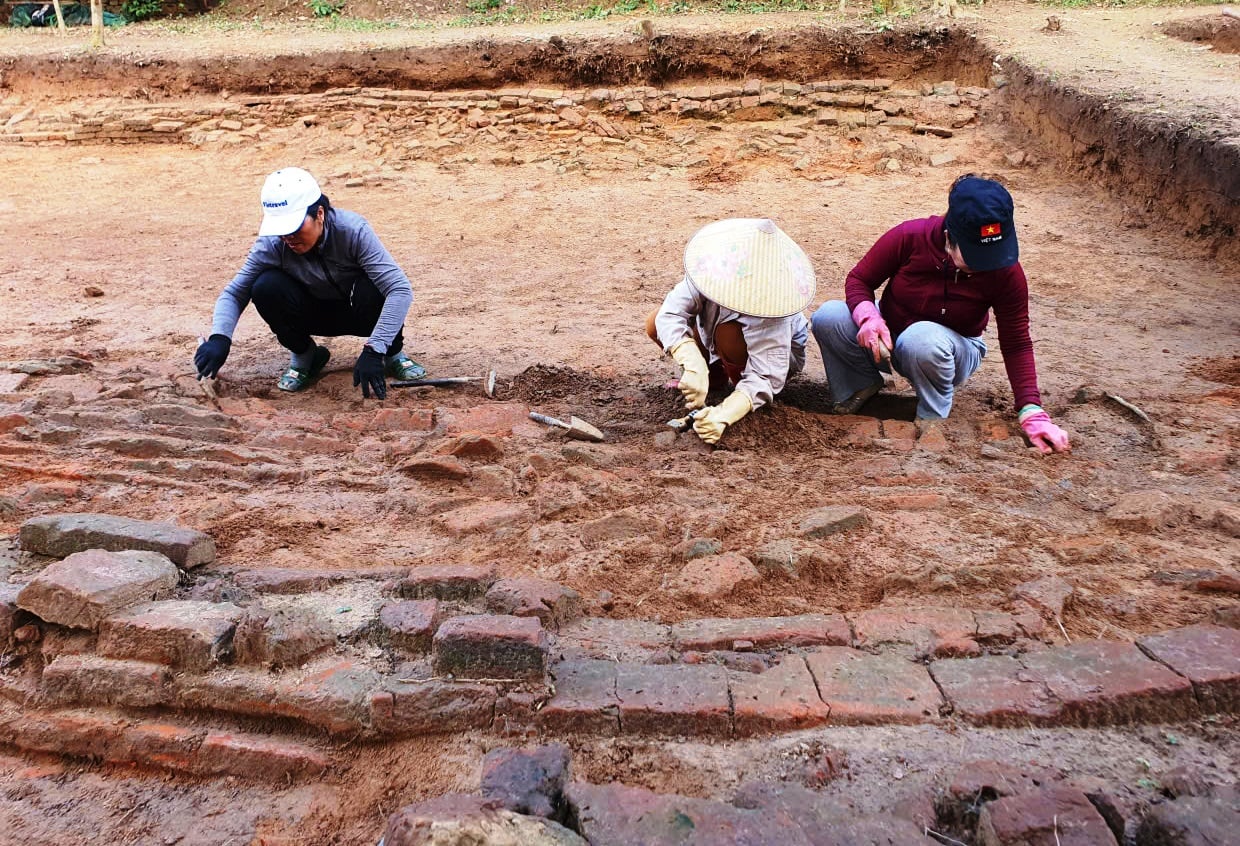
The discovery of this ancient road is valuable material for constructing a comprehensive account of the My Son temple complex.
PHOTO: MC
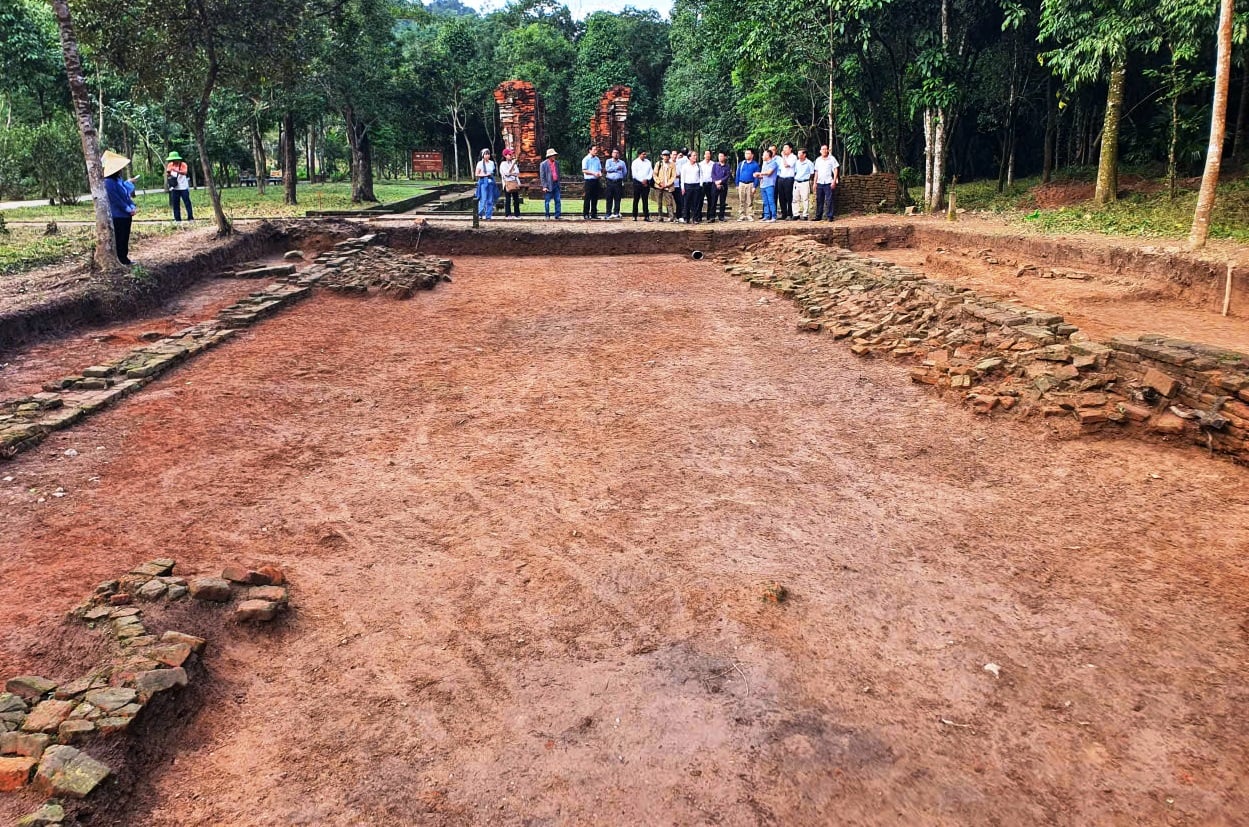
Mr. Nguyen Cong Khiet, Deputy Director in charge of the My Son World Cultural Heritage Management Board, said that in the coming time, archaeologists will continue to develop a collaborative research program to clarify the scale, structure, and appearance of the entire road within the overall context of the My Son relic site. This will help to better promote the historical and cultural value of the relic and organize tourist transportation along the heritage road left behind by the Cham people.
PHOTO: MC
Source: https://thanhnien.vn/can-canh-con-duong-thieng-o-thanh-dia-my-son-185251214130538993.htm




























































Comment (0)