

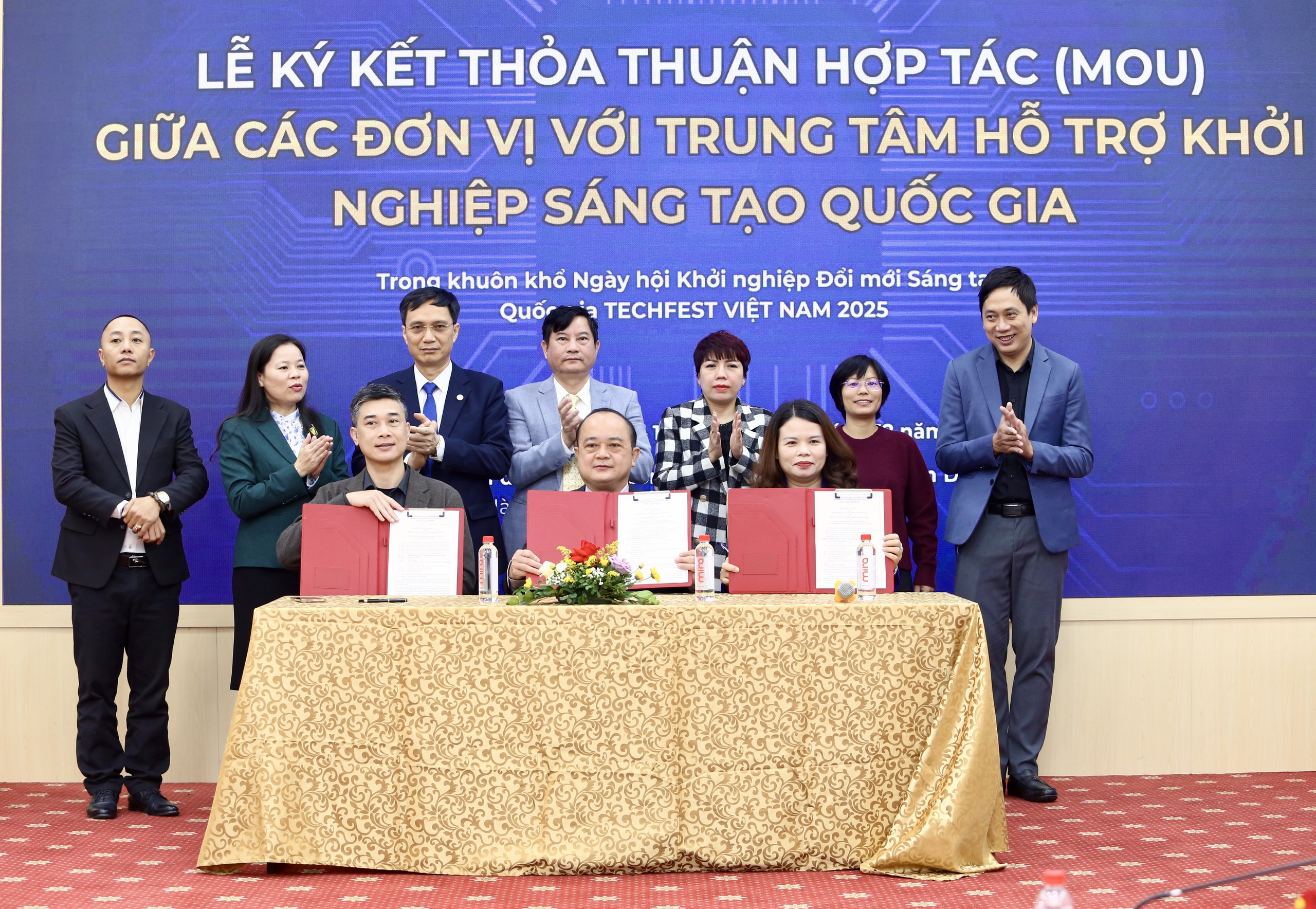
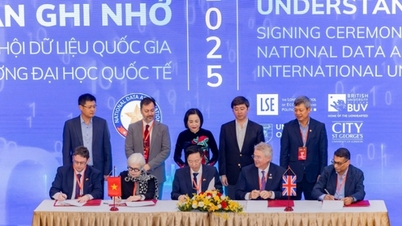
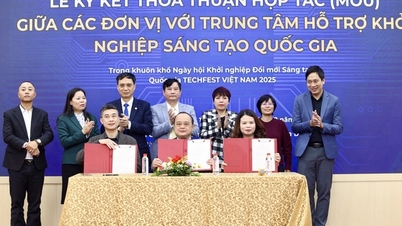
The signing ceremony for the cooperation agreement between the units and the National Center for Creative Startup Support was held at the conference.
Lack of a sufficiently transparent system to convince the market.
Speaking at the conference, Ms. Jlo Tran, co-founder and CEO of VBI Academy, representing GFI Ventures, presented a paper titled "Blockchain and Value Chain Transparency for Sustainable Startups." According to her, the crisis of trust in the global value chain is becoming a major challenge for businesses, especially startups and SMEs.
Citing research from the World Economic Forum (WEF, 2022), JLo Chan stated that 94% of consumers believe brand transparency increases trust, while 73% are willing to pay a higher price for transparent products. The global trend is shifting from building brands based on emotion to trust based on verifiable data, where supply chain transparency and traceability are becoming mandatory requirements.
In Vietnam, startups and small and medium-sized enterprises (SMEs) account for over 97% of all businesses (according to the Vietnam Business White Paper 2023). However, the majority of these businesses face numerous challenges such as small scale, increasing compliance pressure, fragmented data, and a lack of sufficiently robust transparency systems to convince the market, partners, and investors.

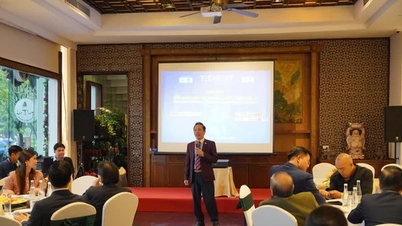
Ms. Jlo Tran, co-founder and CEO of VBI Academy, representing GFI Ventures, shared her insights at the conference.
According to JLo Chan, traceability is not simply about attaching QR codes or providing descriptive information, but rather the ability to track the entire product lifecycle, from raw materials, production, logistics to distribution and the consumer, with interconnected, consistent, and irreversible data. This is also why many current traceability systems are merely formal and lack the reliability to meet international standards, ESG, or green finance.
From a technological perspective, blockchain is considered a core solution to the data trust problem. With characteristics such as immutability, transparency, high security, decentralization, and automation capabilities through smart contracts, blockchain helps businesses demonstrate transparency through data rather than promises.
Notably, blockchain technology is being identified as one of the key national strategies for the 2025-2030 period. Policies such as Decision No. 942/QD-TTg of the Prime Minister , Circular 16/2020/TT-NHNN of the State Bank of Vietnam, and the National Strategy on the Application and Development of Blockchain Technology issued in 2024 have created an important legal framework for the application of blockchain in management, public services, and business operations.
"In the digital age, trust is no longer built on promises, but on data. Blockchain helps startups design transparency from the outset, standardize data according to international standards, and create a long-term competitive advantage," emphasized JLo Chan.
Circular business model – the competitive foundation of green startups.
Continuing the program, Dr. Nguyen Hong Hai presented a paper titled "Circular Business Model in Green Startups: Lessons from the Forest Ecopreneur – Viginseng Model," approaching the issue from a modeling and policy perspective.
According to Dr. Nguyen Hong Hai, the Circular Business Model (CBM) is a business operating structure designed to create, distribute, and capture value based on efficient resource utilization, rather than increasing the exploitation of natural resources. In CBM, "green" is not an attribute of the product, but rather how the business organizes its entire operational system, from the supply chain and technology to partnerships and value distribution.

Dr. Nguyen Hong Hai, Principal Lecturer, Faculty of Business Administration, University of Finance and Marketing, shared his insights at the conference.
CBM is built on three core engineering principles: extending the resource lifecycle (Slowing Loops), closing the material flow (Closing Loops), and reducing primary resource consumption (Narrowing Loops). These are specific criteria for evaluating the "true circularity" of a startup, rather than just environmental statements or messages.
Analyzing the case of Ginseng – Forest Ecopreneur, Dr. Nguyen Hong Hai showed that applying advanced extraction technologies such as ultrasonic-assisted extraction (UAE) not only helps reduce energy consumption by 40–70%, reduce solvents and waste, but also improve the efficiency of extracting active ingredients, thereby increasing economic value and reducing the carbon footprint.
However, according to Dr. Nguyen Hong Hai, green startups are still facing many "bottlenecks" such as linear value chains, technological limitations, lack of ESG transparency, and inequality in value distribution. These are major barriers that make it difficult for businesses to access green finance and scale sustainably.
From there, Dr. Nguyen Hong Hai emphasized three key policy messages: Circular business models are not an ethical choice but a foundation for competitiveness; resource regeneration can replace traditional exploitation methods; and a proper model can create a much greater impact than the scale of the business itself.
"The important thing is not how many green businesses there are, but how many green business models can be replicated and stand firm in the market," asserted Dr. Nguyen Hong Hai, while also suggesting that the State shift its focus from supporting individual businesses to designing tools to coordinate models such as Green Taxonomy, circular innovation clusters, and flexible green finance mechanisms.
Legal framework in the journey towards green and sustainable economic development.
The delegates also conducted in-depth analysis of new policies and laws that are creating a favorable environment for innovative startups linked to green growth. The 2020 Environmental Protection Law; Decree No. 08/2022/ND-CP, amended and supplemented by Decree No. 05/2025/ND-CP; and Decision No. 21/2025/QD-TTg (effective from August 2025) have for the first time issued a national classification framework, clearly defining what constitutes a green project.
In addition, the Law on Supporting Small and Medium-Sized Enterprises, with a separate chapter for innovative startups; Decree No. 264/2025/ND-CP on the National Venture Capital Fund and local venture capital funds; Decree No. 268/2025/ND-CP guiding the Law on Science , Technology and Innovation… have concretized the mechanism for using state budget to encourage innovation in enterprises, while also recognizing innovation centers and innovative startups.
In particular, the Law on Digital Technology Industry 2025, effective from January 1, 2026, is expected to become a new "risk assessment framework," helping credit institutions and investment funds to appraise digital projects associated with green finance more transparently and effectively.
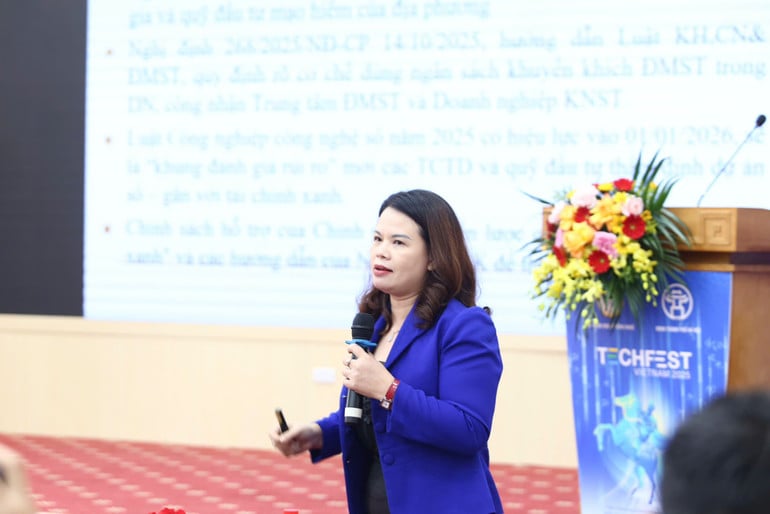
Associate Professor, Dr. Pham Thi Tuyet Nhung, Vice Rector of the Training and Development School for Cadres, Banking Academy, presented at the Workshop.
Associate Professor, Dr. Pham Thi Tuyet Nhung, Vice Rector of the Training and Development School for Cadres, Banking Academy, noted that many small businesses and startups currently have good products and sustainable business models, but lack data to demonstrate their environmental effectiveness, making it difficult for them to access green funding sources.
According to Ms. Nhung, based on Decision No. 21/2025/QD-TTg, businesses need to clearly identify which group their business model, product, or service belongs to in the Green Classification List, such as clean energy, green manufacturing, sustainable agriculture, waste management and circular economy, green transportation, or sustainable construction and urban development.
The consensus at the conference was that, in the digital age, trust is no longer built on commitments or promises, but on verifiable data. Blockchain, therefore, is not just a management tool, but is becoming a platform for creating transparency, helping innovative startups develop sustainably and expand into regional and global markets.
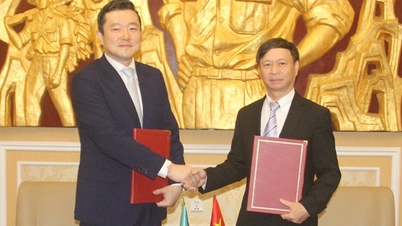
On this occasion, a signing ceremony for cooperation agreements between various units and the National Center for Creative Startup Support was held, opening up further opportunities for collaboration and providing practical support to the startup community in their journey towards green and sustainable economic development.
Source: https://mst.gov.vn/khoi-nghiep-sang-tao-trong-kinh-te-xanh-va-ben-vung-197251214194609094.htm























































































Comment (0)