

For over a month now, the water level in Southeast Asia's largest artificial irrigation system has been steadily rising. Tran Hoang Giang (a resident of Thanh Dien ward, Tay Ninh province), who works as a laborer on Nhim Island, brings out the rat traps from his hut. He carefully repairs any damaged parts and adjusts the springs to ensure they are taut. Afterward, he takes his stockpiled cassava roots, slices them into rings, and places them in the traps, preparing for the rat hunting season on the island.
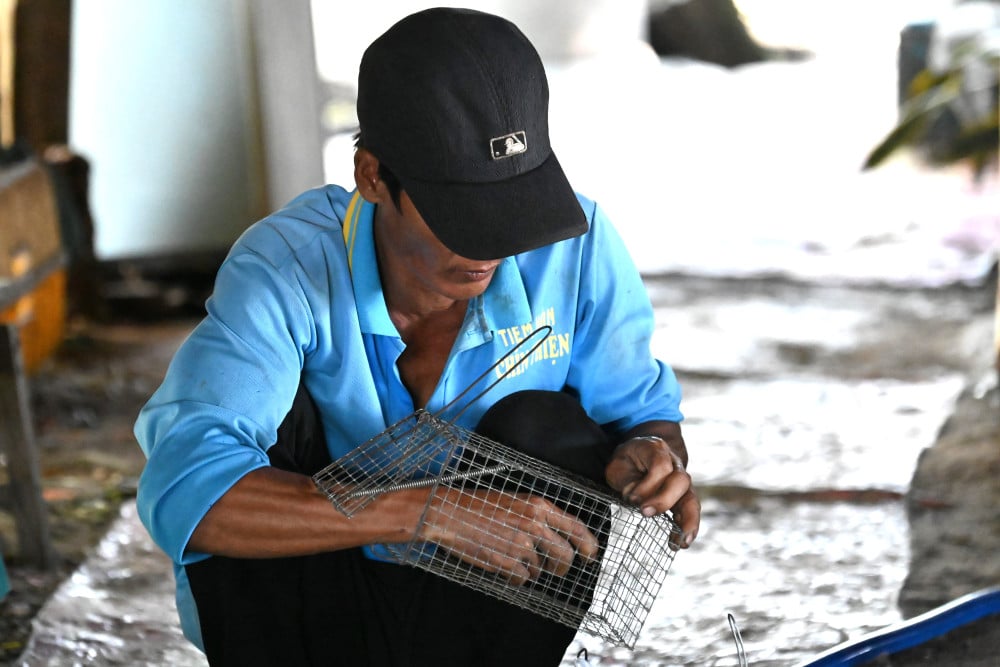
Mr. Giang is repairing his rat traps to begin the rat hunting season on the island.
In the afternoon, as the sun was setting, Mr. Giang carried dozens of rat cages and set off, following the edge of the forest – where it bordered the cassava fields and harvested rice paddies – to set his traps. He didn't place the traps in the middle of the usual rat trails, but instead cleared the grass, positioning the iron cages perpendicular to the rats' path. Mr. Giang explained: "If I place the traps in the middle of the path, rats coming from the front will fall into the trap, but if they come from behind, they'll see the obstacle and turn in another direction instead of falling."
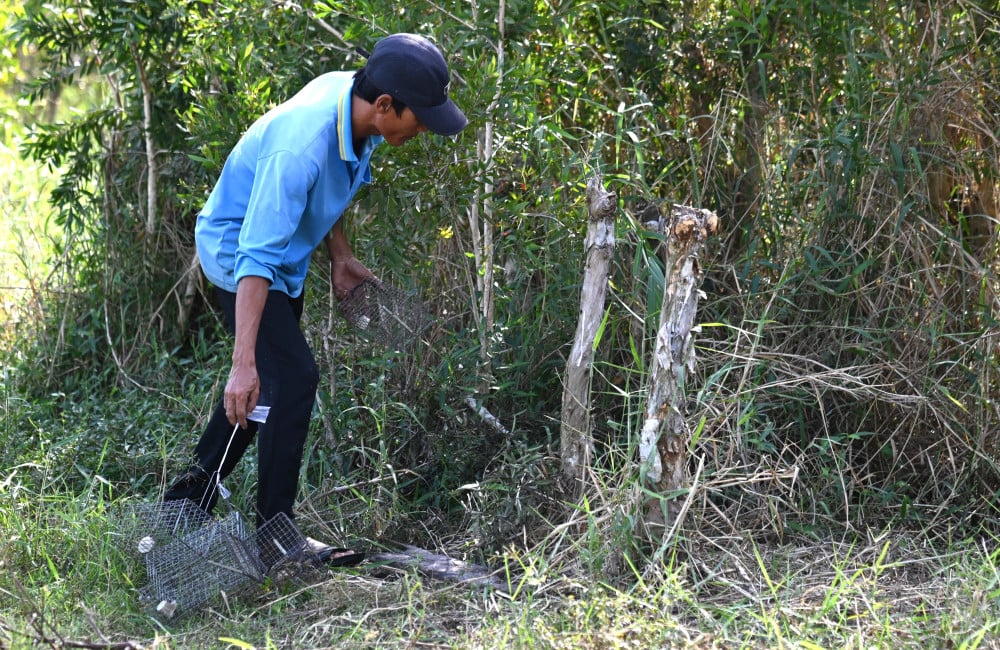
Mr. Giang looked for the paths that rats usually take to set traps.
After setting all the traps, he returned to his hut to eat, rest, and recharge his headlamp, ready for his next trip to check the traps a few hours later. Around 10 PM, the first cold winds of the season blew fiercely against his face. Giang put on his headlamp and returned to the path where he had set the traps that afternoon. The first trap caught a fairly large field rat. Seeing someone approaching, the rat thrashed violently and squeaked incessantly.
The second cage contained a golden-furred field mouse. Some cages even caught ground squirrels. After checking 15 traps, Mr. Giang had already caught 8 plump mice. "The other day I set up eight traps as a test. The result was that all of them caught mice, most of them large field mice, some weighing over 1kg," Mr. Giang boasted.
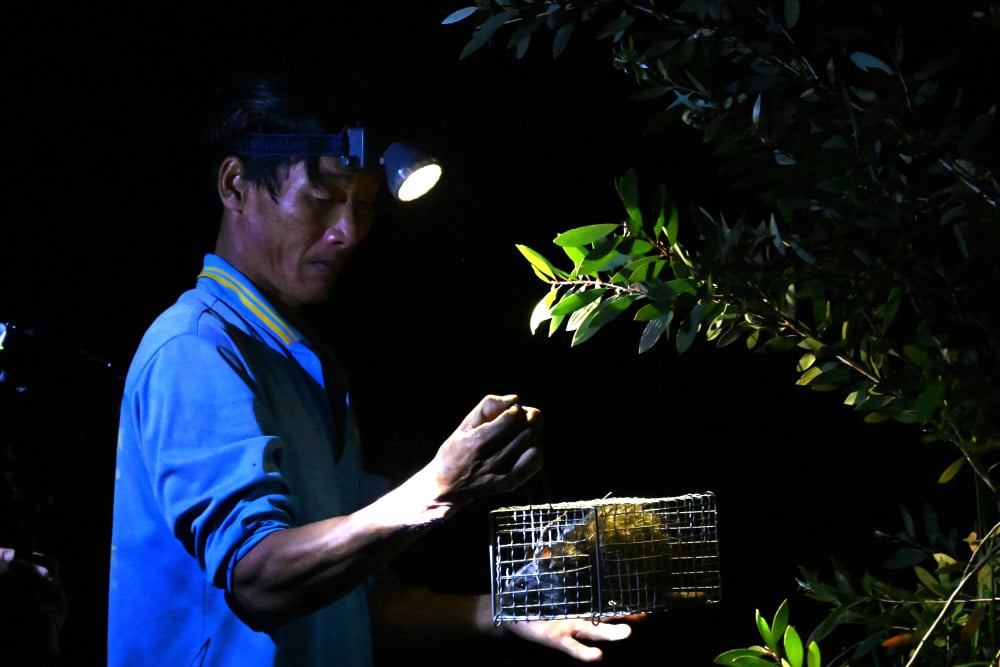
The first trap caught a rather large field rat.
After removing all the rats from the traps, Mr. Giang re-baited them with cassava and continued setting them along other trails to catch more rats the next morning. In the morning, he gathered all the rats, put them in a large cage, added cassava and other tubers, and placed a water trough inside for them to eat and drink. “In a few days, I’ll take them home and sell them to traders for 70,000 dong per kilogram. Thanks to this money, my wife and I can cover our living expenses and pay for our children’s education,” Mr. Giang shared.
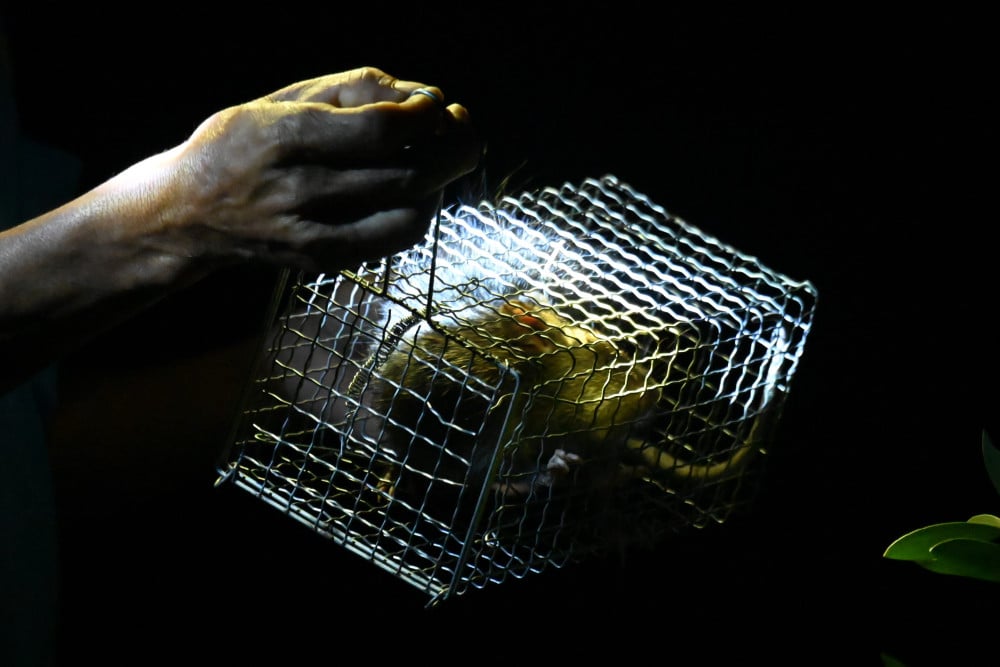
A spiny rat gets caught in a trap.
Mr. Tran Thanh Hanh, who has lived and worked on Nhim Island for over 30 years, said that the island is home to many golden rats and spiny rats. They reproduce quickly and destroy crops year-round. Many people on the island grow agricultural products, and when it's time to harvest, rats often come and gnaw at the crops, affecting yields.
Moreover, households that raise chicks or ducklings without properly confining them to a coop are frequently preyed upon by rats that sneak in and eat them. "I've suffered a lot of losses here too. Before, I didn't know better; I just let the mother hens lead their chicks out to forage, and then they would sleep on their own at night. At night, rats would crawl in and bite almost all the chicks," Mr. Hanh said.
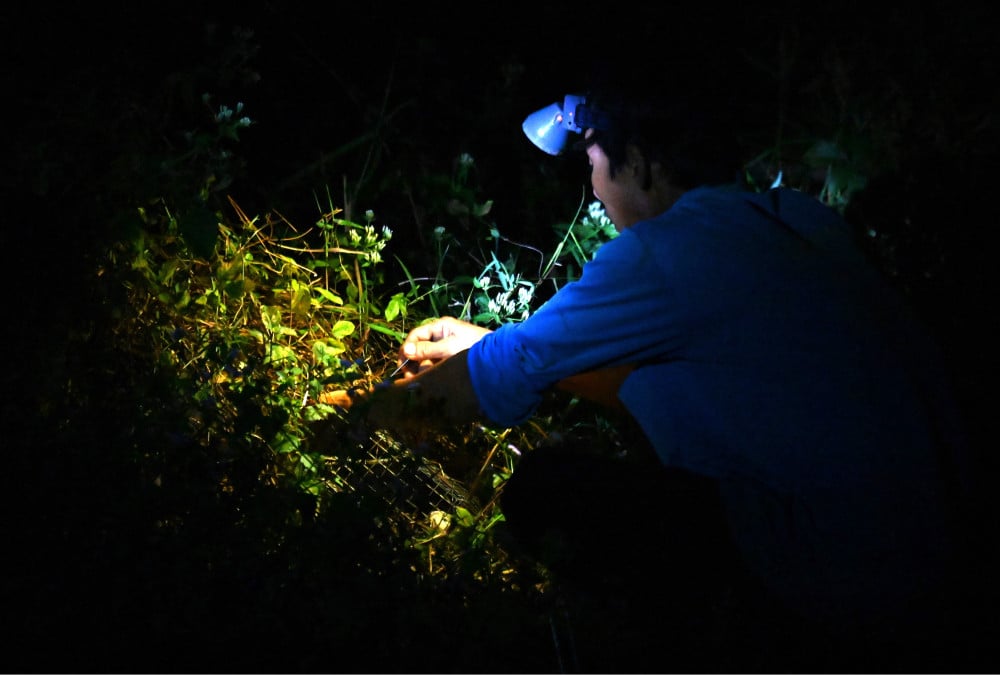
Mr. Giang re-baited the traps with cassava, and continued setting them along the trails.
Mr. Hanh said that recently, people on the island and some people from other areas have been trapping rats. Some nights, each person harvests 20-30 kg of field rats. Besides earning extra income, these rat hunters are also making a significant contribution to reducing the number of rats that damage crops and harm poultry on the island.
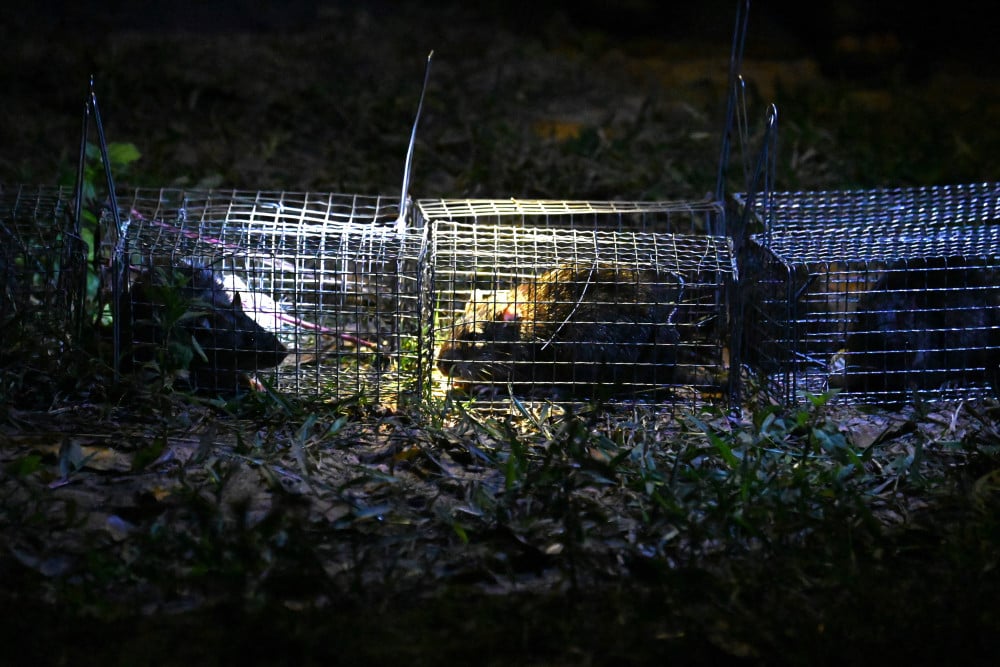
The fat rats got caught in the trap.
Nhim Island, covering nearly 1,000 hectares, is located in the middle of Dau Tieng Lake, Tay Ninh province. The island has nearly 300 hectares of elevated land with primary and planted forests, and orchards. The remaining area is semi-submerged, where locals cultivate cassava, sweet potatoes, peanuts, rice, and other crops. This provides a favorable environment for rats and squirrels to thrive. During the season when Dau Tieng Lake is full, rodents migrate from the semi-submerged areas to the higher ground, creating ideal conditions for island residents to earn extra income.
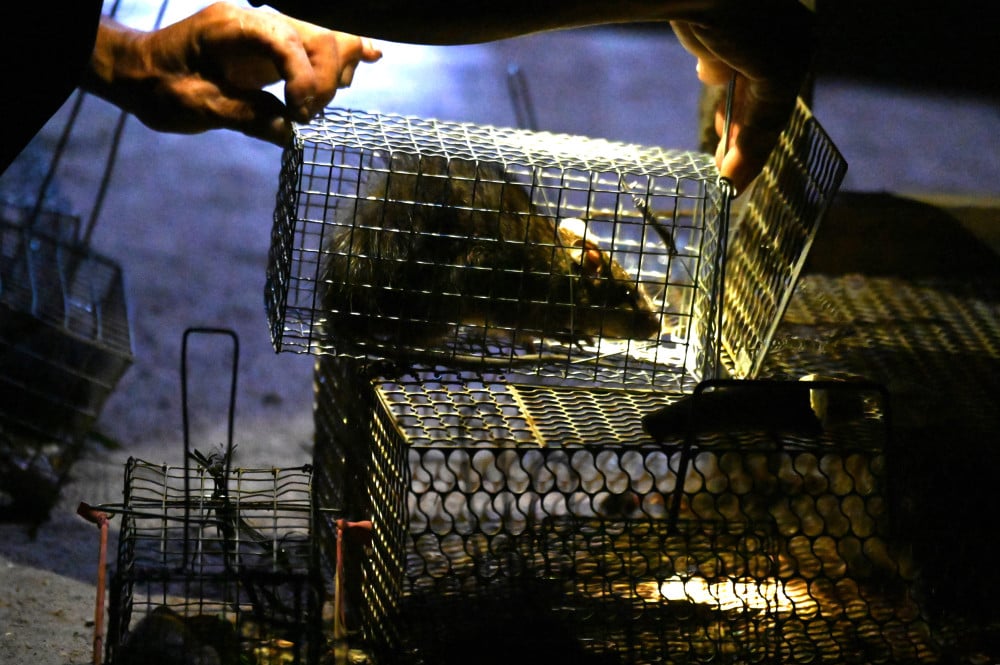
Mr. Giang put the rats he had just caught into a cage, waiting to sell them to traders.
Field mice are considered a delicacy in Tay Ninh province in particular, and in the Southwestern region of Vietnam in general. They are often prepared by roasting, grilling with salt and chili, or with lemongrass and chili. The meat is fragrant, fatty, and delicious, served with herbs, green mango, and cucumber dipped in salt, pepper, and lime, creating a unique flavor of rural cuisine .
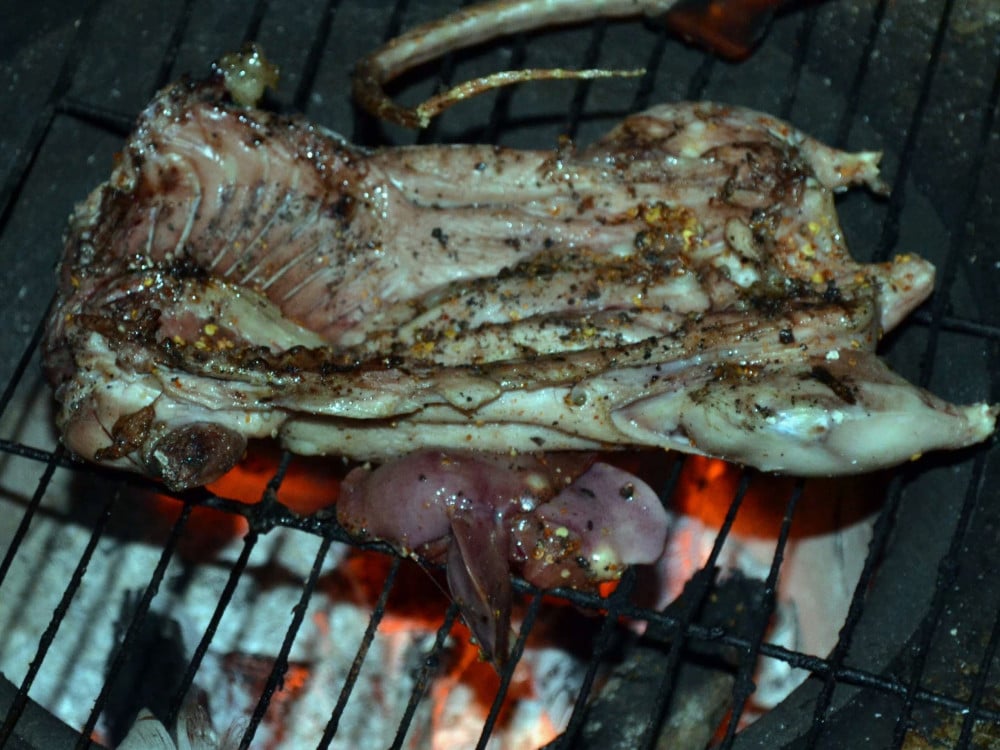
Grilled rat with salt and chili has become an appealing dish for many people.
Ocean - National Mountain
Source: https://baolongan.vn/mua-san-chuot-dong-tren-dao-nhim-a208374.html





















































































Comment (0)