


From bamboo tubes over a fire to a startup product.
Visitors to Chau's homestay are curious when they see the tea stored in bamboo tubes. Chau smiles and explains, "In the past, our grandparents used to store tea in these tubes. Preserving tea in bamboo tubes hung above the kitchen stove is preserving the story of the Hmong people," Chau shared. Therefore, these bamboo tubes hanging above the kitchen stove are not just containers for tea, but also a bridge connecting the past and the present.
Speaking about his entrepreneurial journey, Lu A Chau said he didn't start with expensive machinery or complex techniques. Chau simply used what his hometown had given him – ancient tea trees – combined with traditional bamboo tubes to create his products. This simplicity, however, created lasting value.
A Chau said that in 2019, after graduating from a tourism college, he decided to return to his hometown to get married and start a business. Without capital or experience, the early days were so difficult that he himself thought he wouldn't be able to survive. But the Hmong people are inherently accustomed to hardship, so he persevered. “Without capital, you have to rely on your own strength. If you don't know something, you have to learn. If you make mistakes, you have to try again. With determination and perseverance, you will achieve success,” A Chau confided.
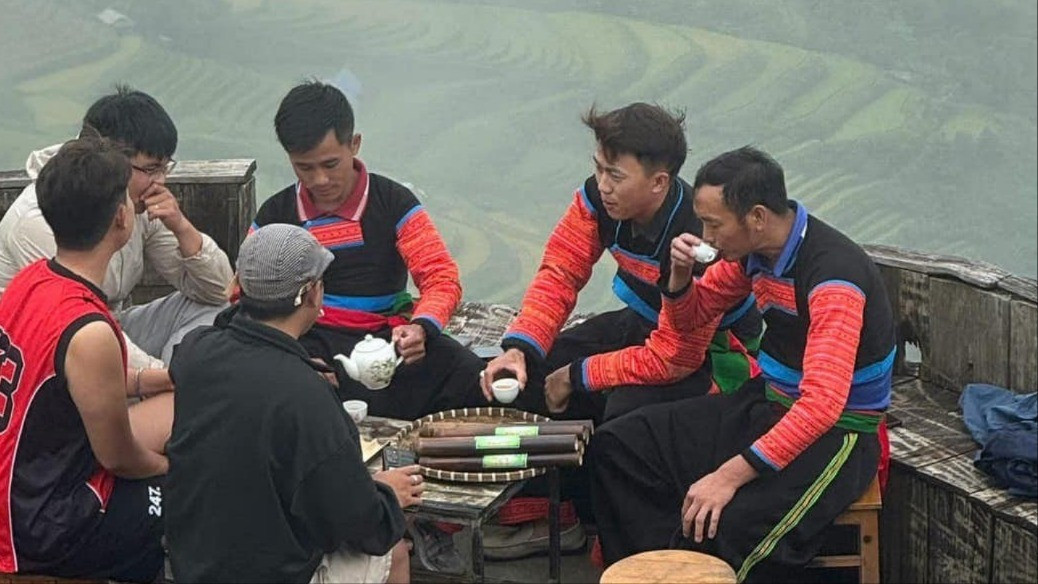
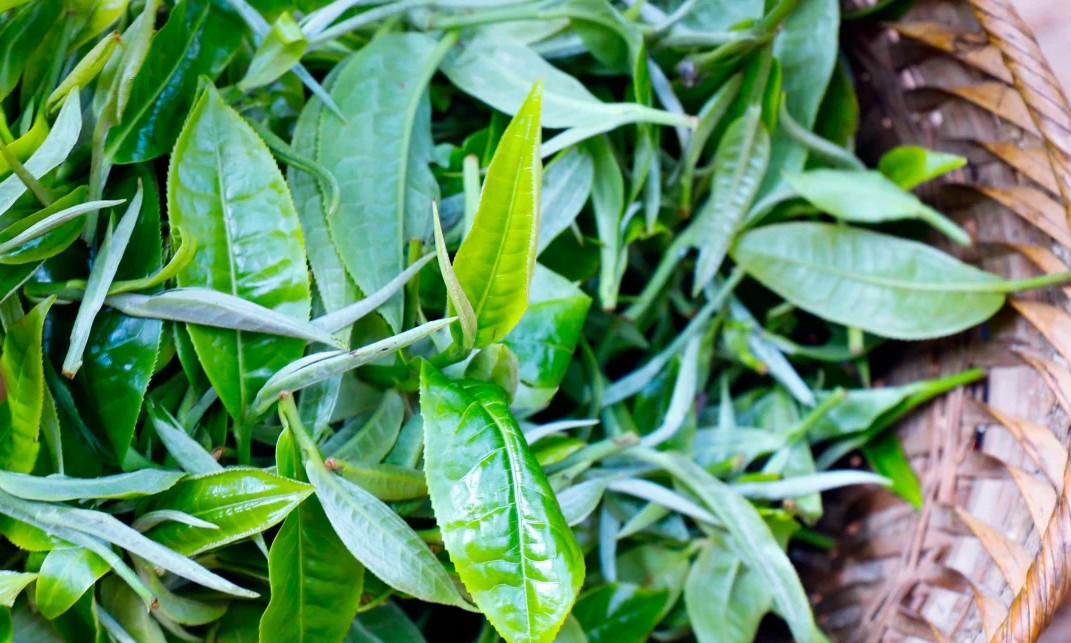
He chose something closest to the people of Ta Xua: the ancient Shan Tuyet tea tree , a tree that grows halfway up the mountain, considered a treasure of this land. A Chau said that Ta Xua is at an altitude of over 1,500 meters, and the centuries-old Shan Tuyet tea trees stand silently amidst the old forest canopy, their trunks covered in moss and lichen, their leaves large, their buds white as if covered in snow. They are considered by the Hmong people as treasures of heaven and earth.
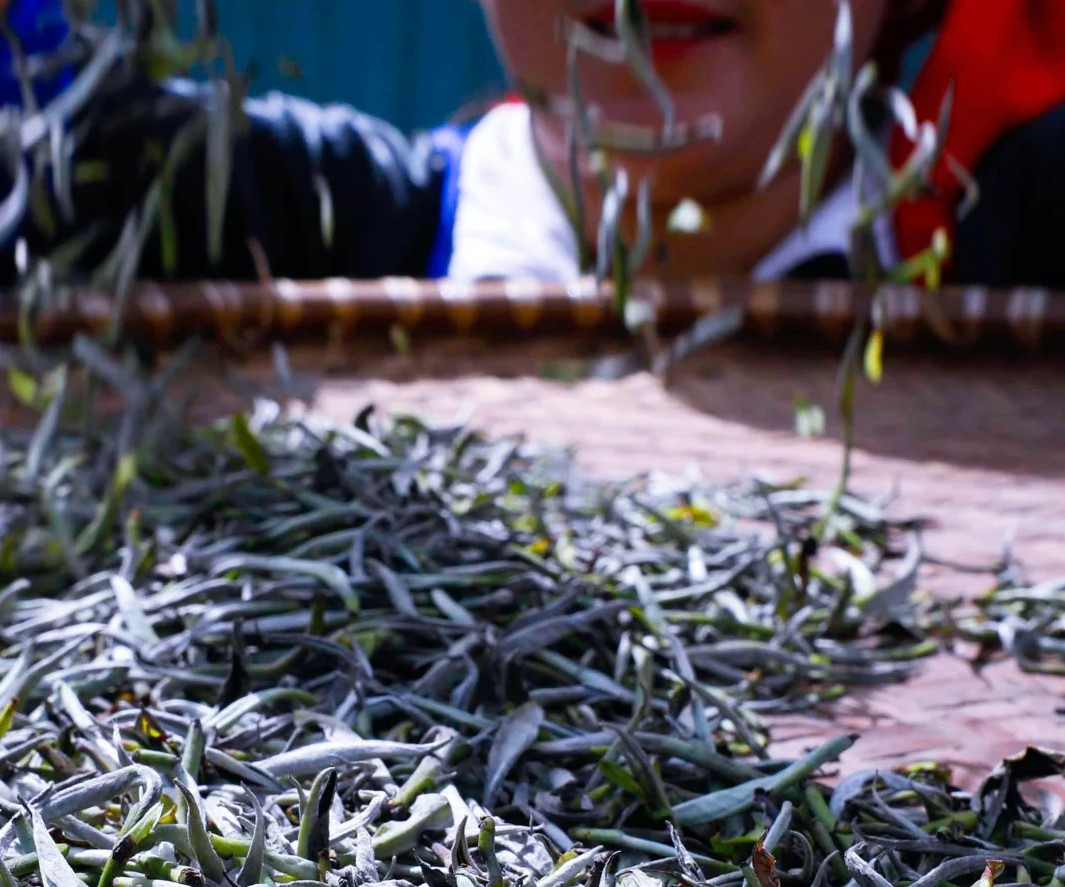
Every harvest season, Hmong women climb tea bushes tens of meters high, picking each bud, selecting only the finest, most fragrant ones. Ta Xua's ancient tea is so delicious, but in the past, it was only processed manually, on a small scale, sold raw, and of inconsistent quality. Its value was low. The tea plants were precious, but the lives of tea growers remained poor. Chau said that this was what troubled him and motivated him to increase the value of Ta Xua tea.
Lu A Chau shared that to succeed in entrepreneurship, one must create a product that no one else has exploited – one that is "beautiful, unique, and rich in culture." He thought, "People in the lowlands like novelty and stories. I have both. Why not give it a try?" That's how the idea for "Shan Tuyet Tea in Blue Tubes" was born.
In the early days of his experiment, Chau failed repeatedly. Incorrect fermentation methods caused the tea to lose its aroma, while thin bamboo tubes burned. Shipping over long distances resulted in broken tubes and returned goods. He meticulously adjusted his methods: selecting older bamboo tubes, ensuring the right level of smoking, changing the binding style, beautifying the labels, and preserving the traditional hand-processing techniques of the Mong ethnic group. Finally, a unique, rustic product, reflecting the character of the local people, was born. Each bamboo tube contains only 170g of tea, imbued with the fragrant aroma of wood smoke, reaching the hands of tourists.
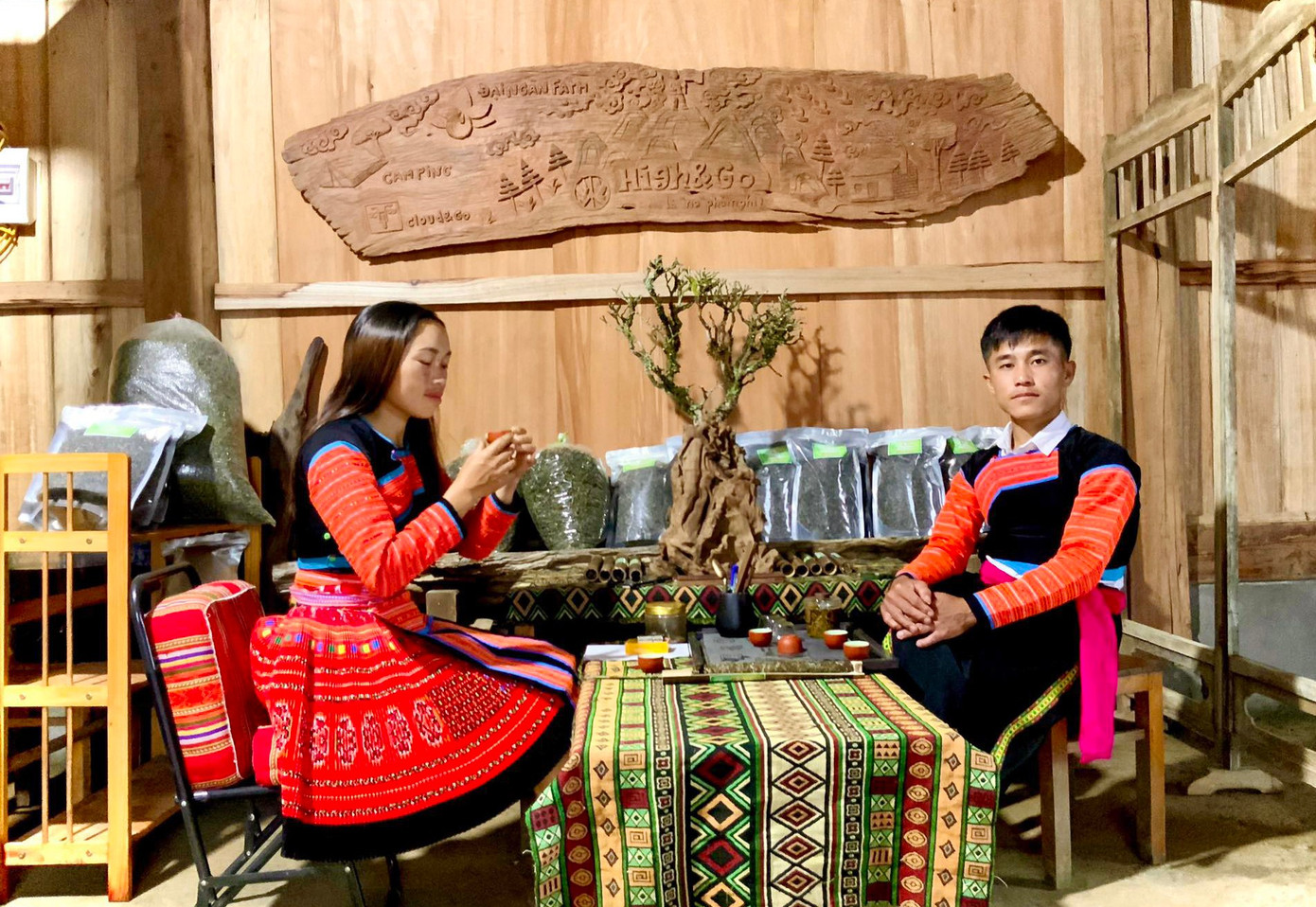
Chau lives in a remote mountainous area, where only tourists visiting Ta Xua buy tea as souvenirs, which wouldn't meet the demand and wouldn't generate a high income. Chau learned to film videos , take photos, and tell stories about the tea plants, the Hmong people, and life in the clouds, posting them on social media platforms. Images of bamboo tubes hanging in the kitchen, Chau climbing ancient tea trees, and white clouds drifting over the roof... touched many hearts and led to orders.
From just a few dozen tubes initially, he sells 500-600 tubes per month, not only in Son La but also shipping to Hanoi , Da Nang, and Ho Chi Minh City. Each month, his family sells nearly 100 kg of dried tea. Some months they earn tens of millions, then hundreds of millions, and finally millions of dong. Seeing this clear success, the Hmong people in the village began asking about his methods, learning from him, and adopting new ways of thinking and selling.
Thanks to taking the right approach, Chau's products sold well when launched on the market, providing a stable income for his family. Chau honestly shared: "We didn't have much capital, and we had just gotten married and started our business, so my wife and I worked very hard. But because we dared to bring unique, innovative, and high-quality products to the market, they were well-received by consumers."
From bamboo pipes to homestays, opening more doors to livelihoods.
Seeing more and more tourists coming to Ta Xua to chase clouds, Chau realized her hometown had a huge opportunity. At that time, the community tourism model was still in its infancy, with few homestays that couldn't meet the demand. Chau decided to take a risk, borrowing 400 million VND to build a homestay.
“No one at home believed in me. They said: 'You're so young, yet so reckless.' But I thought: 'If I don't try, when will I ever succeed?'” Châu recounted. He personally selected each piece of wood and each stone. He built a house that preserved the spirit of Northwest Vietnam while being clean and comfortable for guests. Then he used social media to promote it. To date, he has 15 homestay rooms, fully booked during peak season, and Châu's revenue exceeds 2 billion VND per year.
Starting from nothing, Chau built an entire business on his own land. Seeing Chau's efforts, many young Hmong people in the commune began to be more confident. They learned how to package products attractively, sell online, create videos, and promote their products. As a result, tea and tourism in Ta Xua have changed, and the lives of the people have improved dramatically.
Sharing about her success, A Chau humbly said that everything is still just the beginning, and the road ahead still holds many challenges: market competition, quality standards, tourism management, etc. Therefore, she must constantly strive to help her family have a better life. "I don't aspire to get rich quickly. I only hope to preserve the unique characteristics of the Hmong people, produce decent products, and make my hometown better and better," A Chau confided.

Ms. Mua Thi Lan, Secretary of the Ta Xua Commune Youth Union, said that A Chau is one of the most innovative and proactive young people in the commune. From bamboo tubes and ancient tea trees, he created products that are both unique and imbued with cultural stories. More importantly, Chau has inspired Mong youth in the commune to change their mindset, learn how to process, build brands, and sell products using technology.
"Models like A Chau's not only bring profits to the family but also open up a sustainable development path for the entire community. The commune wants to link tea cultivation with community tourism, turning it into a driving force for economic development. In the future, the commune will expand the tea growing area, preserve the native tea varieties, and encourage the establishment of cooperatives to develop production and increase income for the people," Ms. Lan said.
Source: https://tienphong.vn/chuyen-khoi-nghiep-bang-che-co-trong-ong-tre-cua-anh-chang-a-chau-post1802858.tpo
![[Photo] Prime Minister Pham Minh Chinh holds a phone call with the CEO of Russia's Rosatom Corporation.](/_next/image?url=https%3A%2F%2Fvphoto.vietnam.vn%2Fthumb%2F1200x675%2Fvietnam%2Fresource%2FIMAGE%2F2025%2F12%2F11%2F1765464552365_dsc-5295-jpg.webp&w=3840&q=75)


![[Photo] Closing Ceremony of the 10th Session of the 15th National Assembly](/_next/image?url=https%3A%2F%2Fvphoto.vietnam.vn%2Fthumb%2F1200x675%2Fvietnam%2Fresource%2FIMAGE%2F2025%2F12%2F11%2F1765448959967_image-1437-jpg.webp&w=3840&q=75)










































![[OFFICIAL] MISA GROUP ANNOUNCES ITS PIONEERING BRAND POSITIONING IN BUILDING AGENTIC AI FOR BUSINESSES, HOUSEHOLDS, AND THE GOVERNMENT](https://vphoto.vietnam.vn/thumb/402x226/vietnam/resource/IMAGE/2025/12/11/1765444754256_agentic-ai_postfb-scaled.png)







































Comment (0)