

In the final months of the year, the fields producing vegetables like cabbage, cauliflower, tomatoes, kohlrabi, and scallions should be lush and green, but only now are leafy vegetables ready for harvest. Behind this lies a series of unprecedented hardships for the farmers.
Prolonged rain leaves farmers penniless.
Ms. Nguyen Thu Phuong, a technical officer of the Chuc Son Clean Vegetable Cooperative, pointed to the fields in front of her, which used to be nearly 14 hectares of VietGAP-certified vegetable farms. From September to November, Hanoi was repeatedly affected by typhoons No. 9 and 10, flooding the fields. For some crops, farmers had to replant up to three times to save the plants. Especially kohlrabi; even though the bulbs were large, after a week of heavy rain, all the roots rotted, forcing farmers to uproot them.
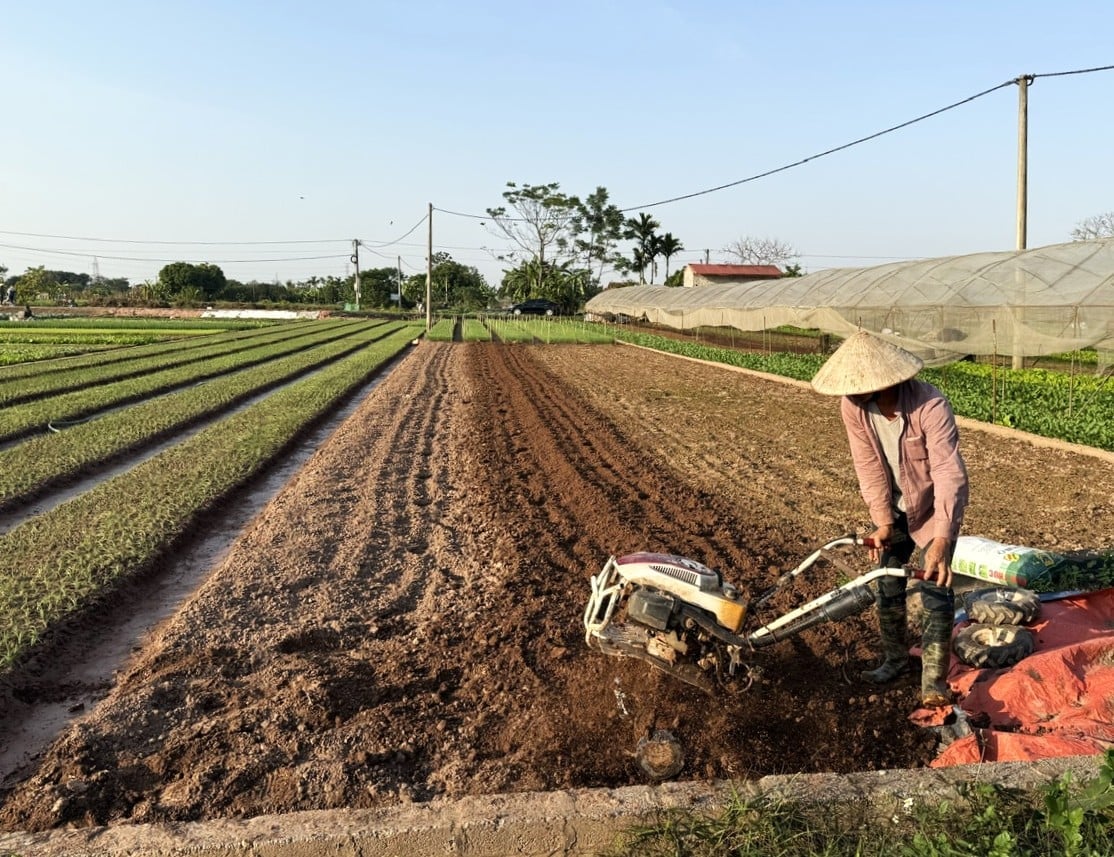
Farmers prepare the land and let it dry in the sun before planting scallions. Photo: Khanh Ly.
The disruption to production left cooperative members with virtually no income for nearly three months. Mr. Hoang Van Tham, Chairman of the Board and General Director of Chuc Son Clean Vegetable and Fruit Cooperative, shared: "The area of vegetables completely destroyed in the main growing region reached 90%. In terms of yield, the cooperative lost an average of 70 tons of leafy vegetables per month, equivalent to over 200 tons in three consecutive months. Including fruit vegetables, the total loss is nearly 300 tons. To ensure supply to partners, the cooperative was forced to collaborate with other units and switch to sourcing some root vegetables and fruits from Moc Chau to compensate for the shortage."
Due to crop failure and low vegetable yields, the cooperative raised the purchase price from farmers to support affected households, but the selling price remained unchanged according to the contract with partners from the beginning of the year, accepting heavy losses from August to November. In September alone, the cooperative also lost a greenhouse worth over 300 million VND.
As soon as the floodwaters receded, the cooperative mobilized technical staff to go to the fields to guide households in preparing the soil, spreading lime, drying the soil, and using biological products to stimulate root growth. For short-term vegetables such as sweet cabbage, mustard greens, spinach, etc., farmers can replant after 3-4 days. But for green onions, the soil must be left to rest for up to 10 days before planting seedlings.
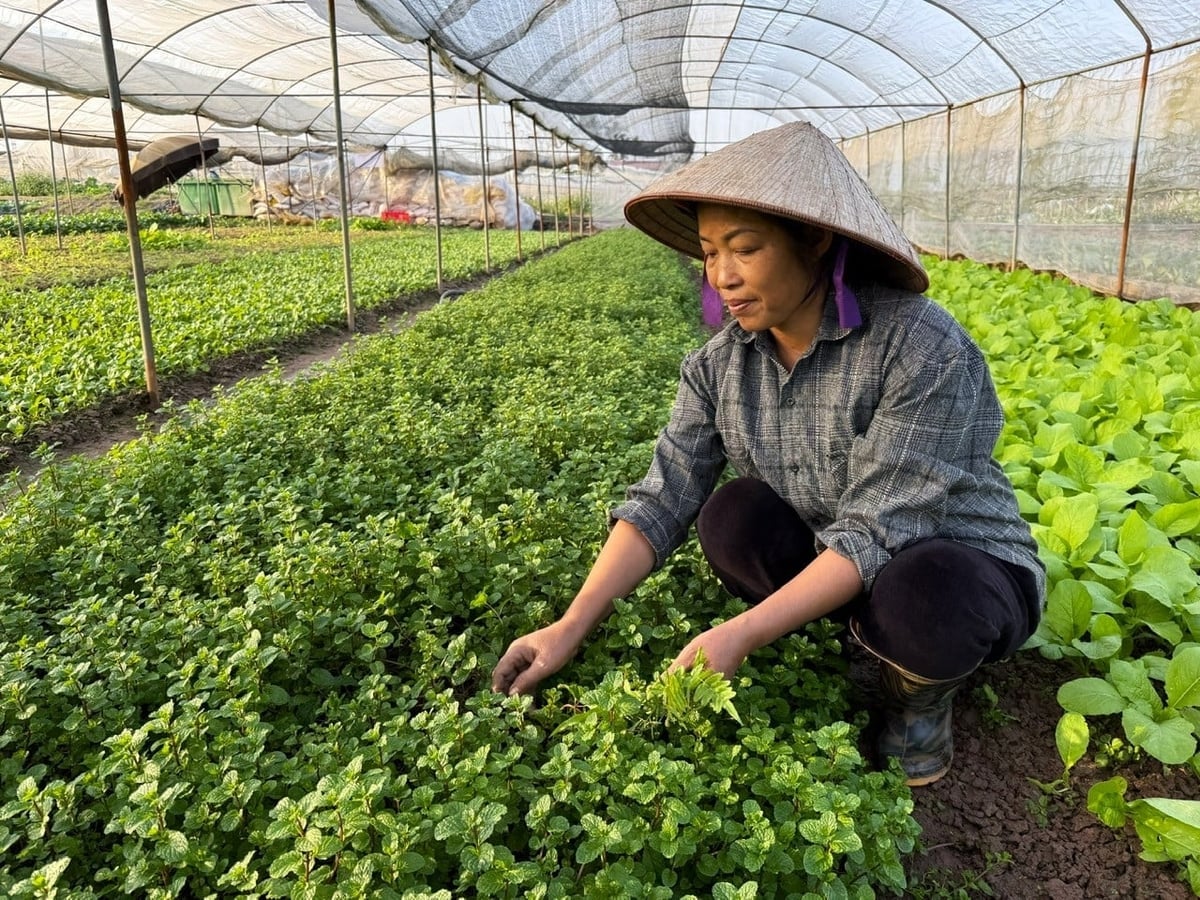
Short-season leafy vegetables and herbs have resumed regular harvests. Photo: Khanh Ly.
To date, the cooperative has partially restored production. Short-term vegetables such as sweet cabbage, Chinese cabbage, mustard greens, spinach, and some herbs have resumed harvesting. As a result, prices are gradually stabilizing.
Living with natural disasters
Mr. Tham shared that, after more than 30 years in agriculture and 15 years operating a cooperative, this year has been the most extreme in terms of weather. Heavy, prolonged rains followed by sudden, severe cold spells have slowed crop growth, especially for fruit trees.
Based on years of production experience, the cooperative has expanded its production scale by an additional 14 hectares in Moc Chau and 4 hectares along the riverbank to avoid dependence on a single growing area, thus diversifying weather risks. “This year, Hanoi experienced continuous rain, but Son La and Dien Bien provinces remained dry, resulting in better yields. Under normal conditions, the cooperative has a diverse range of vegetables and fruits. When natural disasters occur, this serves as a reserve source of vegetables, reducing pressure on the supply for our customers,” Mr. Tham explained.
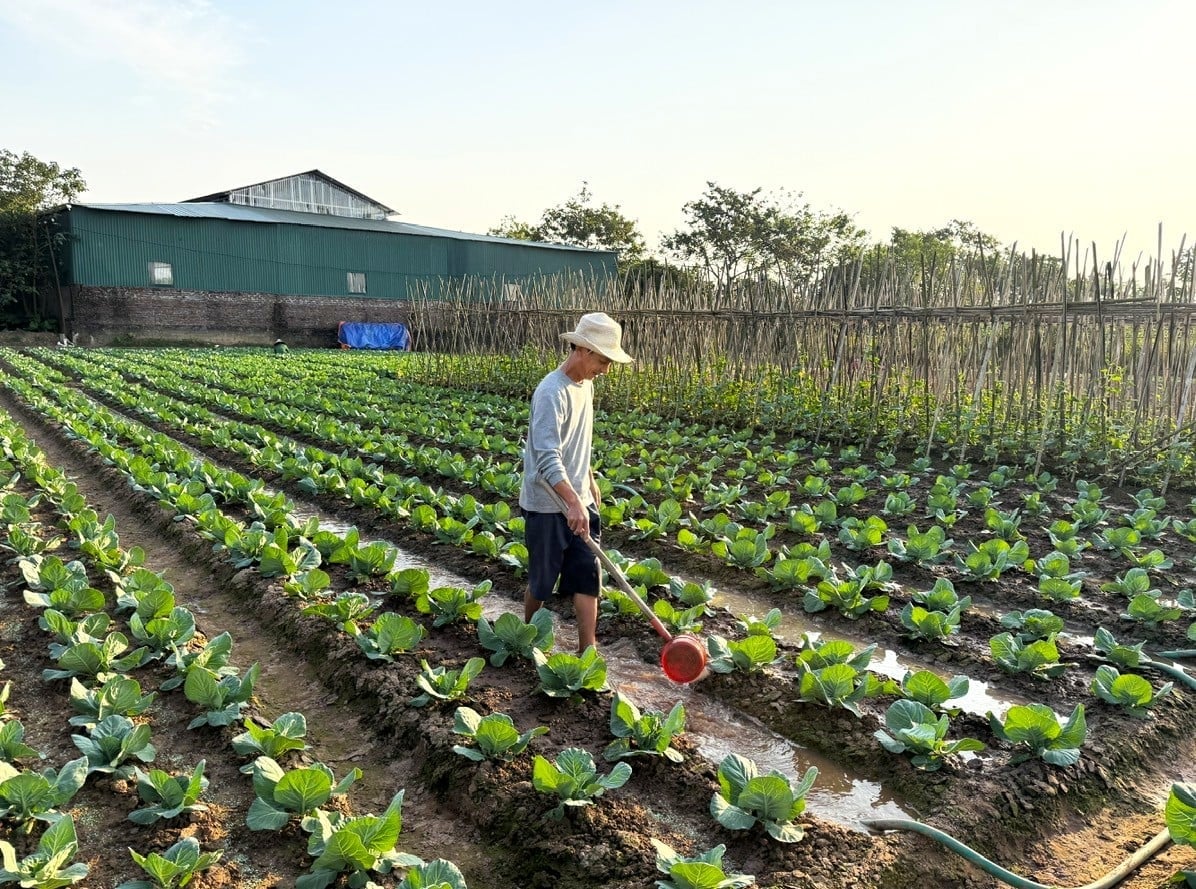
Some long-season crops like cabbage, kohlrabi, cauliflower, and tomatoes are carefully tended to increase supply during the year-end season. Photo: Khanh Ly.
The cooperative is also connecting with other cooperatives through the Cooperative Union system and the Agricultural Academy to stabilize input and output. Furthermore, the cooperative continues to provide fertilizers and plant protection products to help member households resume production. The technical team closely monitors the fields, supporting farmers from seed selection and cultivation to disease prevention.
The Chuc Son Cooperative aims to provide "clean vegetables for the community." With over 70 member households and nearly 60 regular workers, they are striving daily to restore production, maintain stable income, and prepare a supply of vegetables for the upcoming Tet (Lunar New Year) season.
Source: https://nongnghiepmoitruong.vn/khoi-phuc-vung-rau-sach-sau-thien-tai-d788608.html

![[Photo] Closing Ceremony of the 10th Session of the 15th National Assembly](/_next/image?url=https%3A%2F%2Fvphoto.vietnam.vn%2Fthumb%2F1200x675%2Fvietnam%2Fresource%2FIMAGE%2F2025%2F12%2F11%2F1765448959967_image-1437-jpg.webp&w=3840&q=75)











































![[OFFICIAL] MISA GROUP ANNOUNCES ITS PIONEERING BRAND POSITIONING IN BUILDING AGENTIC AI FOR BUSINESSES, HOUSEHOLDS, AND THE GOVERNMENT](https://vphoto.vietnam.vn/thumb/402x226/vietnam/resource/IMAGE/2025/12/11/1765444754256_agentic-ai_postfb-scaled.png)







































Comment (0)