

Many rare species listed in the 'red book' have been discovered.
Xuan Lien National Park, formerly known as Xuan Lien Nature Reserve, was established in 2000. Currently, the park manages over 25,600 hectares of forest and forestry land, located in five communes and towns of the former Thuong Xuan district ( Thanh Hoa province). Of this, over 23,800 hectares are special-use forest land, divided into three sub-zones: strictly protected zone, ecological restoration zone, and service-administrative zone. In addition, the area also includes over 912 hectares of production forest land and over 873 hectares of semi-submerged land belonging to Cua Dat Lake.
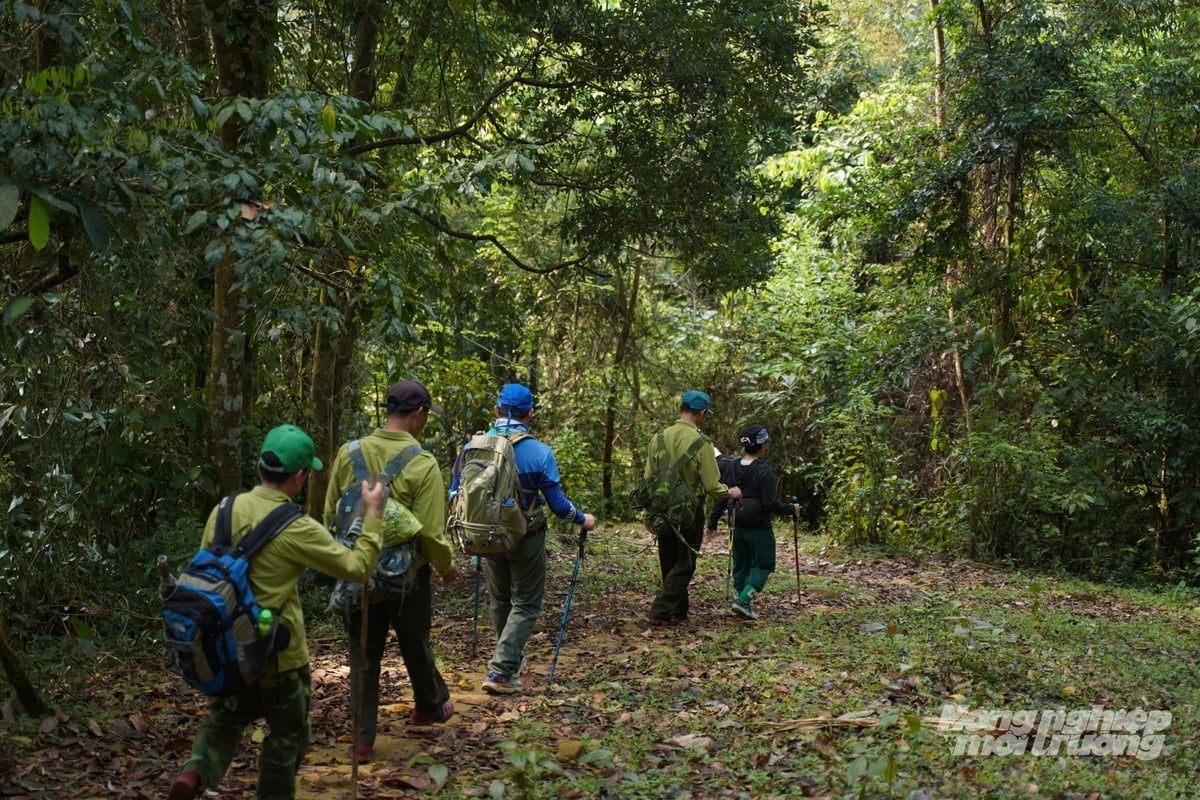
Officers of Xuan Lien National Park patrol the forest. Photo: Quoc Toan.
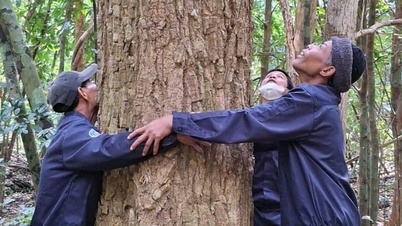
Xuan Lien National Park is home to over 1,228 species of higher plants and 1,811 species of wild animals belonging to 241 families. It is a concentrated area of two ancient cypress and fir trees, including two trees over 1,000 years old, recognized as Vietnamese Heritage Trees by the Vietnam Association for Nature and Environment Protection. The group of endangered and rare plants currently comprises 56 species, 35 of which are listed in the Vietnamese Red Book.
Notably, Xuan Lien is also home to the largest population of white-cheeked gibbons in Vietnam, with 64 troops and 182 individuals; along with over 200 gray langurs. Particularly, in October 2014, scientists discovered approximately 30 Roosevelt's muntjacs (also known as Lao muntjacs) in Xuan Lien – a species believed to have been extinct for nearly 100 years and once inhabited Hua Phan province (Laos). Currently, the only skull specimen of this species is preserved at the American Museum of Natural History.
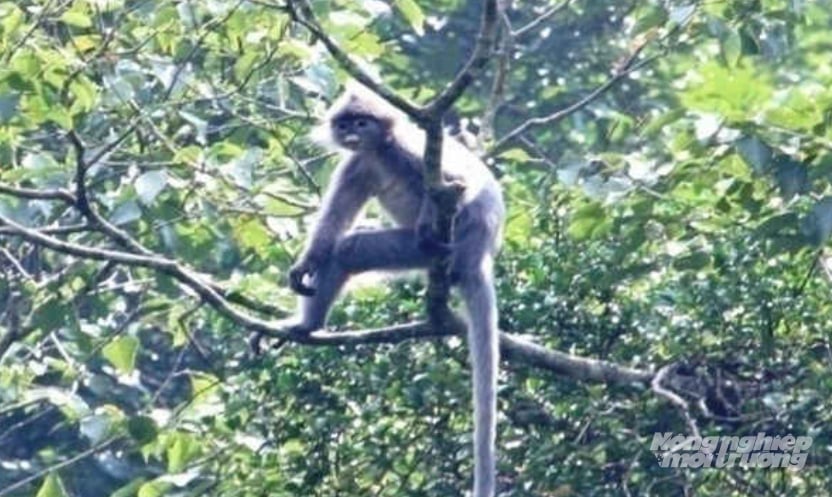
Gray langurs at Xuan Lien National Park. Photo courtesy of the Agriculture and Environment Newspaper.
In addition, the first plant species discovered in Xuan Lien, previously unrecorded worldwide, is named Aristolochia xuanlienensis, belonging to the Aristolochiaceae family. The species is named after the location where the specimen was collected in Xuan Lien, and the type specimen is currently preserved at the Plant Specimen Room of the Vietnam Institute of Ecology and Biological Resources.
During the biodiversity survey, scientists also discovered three new plant species: Lindernia megaphylla PC (erect vine), Kailarsenia lineata R.Br (white waterweed), and Didymocarpus pupureobracteatus Smith (purple bract-leaved dicotyledon).
According to scientists, Xuan Lien National Park is currently one of the most biodiverse national parks in Vietnam, with many animal and plant species listed in the Vietnamese and global Red Books, possessing exceptional scientific and ecological value. Many rare animal species have been discovered through camera traps, such as the gray langur, white-cheeked gibbon, golden pangolin, northern yellow-headed box turtle, and Xuan Lien king cobra.
Linking conservation with ecotourism development.
Implementing the Project on Ecotourism, Resort, and Recreation in Special-Use Forests according to Decision No. 4023/QD-UBND of 2023, Xuan Lien National Park is promoting the sustainable development of ecotourism, linked with the protection of the forest ecosystem.
From the beginning of 2025, the park has intensified its communication efforts to attract tourists through articles posted on the "Xuan Lien Green Tourism" fanpage and official website, focusing on introducing the landscape, tourism products, experiential activities, and community culture of the buffer zone. The park also collaborated with VNPT to upload information to the province's smart tourism system, helping tourists easily access tours and attractions.
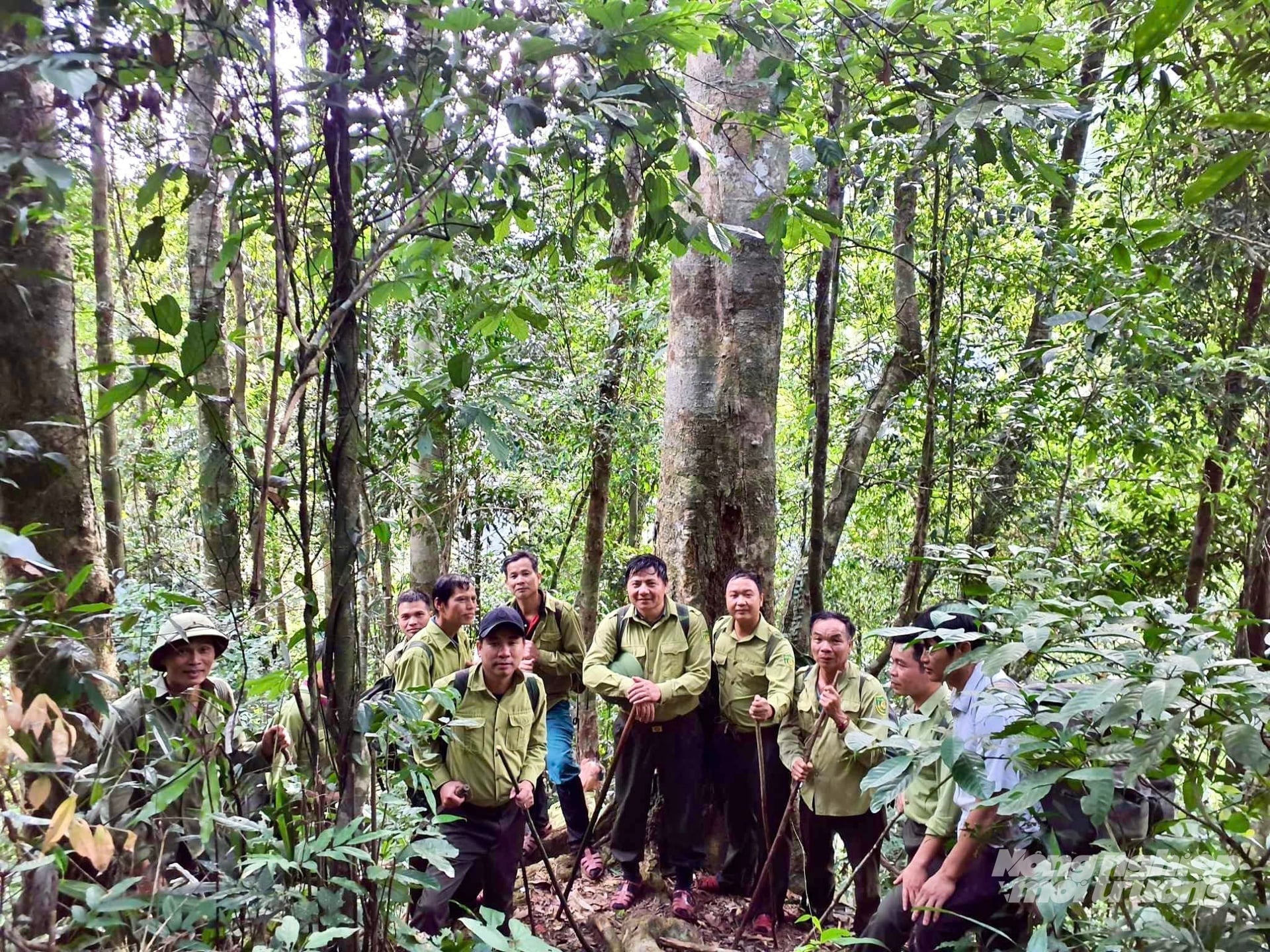
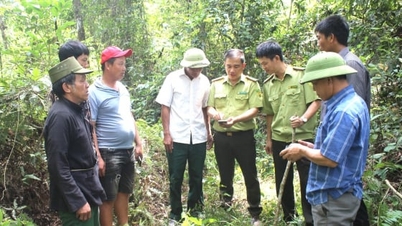
Law enforcement officers take a break after patrolling the forest. Photo: Quoc Toan.
Leveraging its advantages in the special-use forest ecosystem, Xuan Lien has developed many distinctive tourism products such as: ecotourism within the National Park; community-based homestay tourism in Ban Vin; tours to Yen Waterfall and Thien Thuy Waterfall; exploring the primeval forest and heritage tree clusters. Many supporting services have been implemented, including boat trips on Cua Dat Lake, culinary services, picnics, stream bathing, campfires, fishing, and photo opportunities.
In 2025, Xuan Lien National Park welcomed 14 groups of visitors, totaling 346 people, for research and sightseeing. While this number is still modest, it lays the foundation for expanding activities as infrastructure is gradually improved.
A notable highlight is the development of adventurous trekking tours, suitable for tourists who enjoy exploration. Through cooperation with the Vietnam Institute for Sustainable Tourism (ART Vietnam) and the Vietnam Institute for Sustainable Tourism Development (VNST), the park has surveyed and announced four tours: Conquering the 1,600m high Pu Gio peak; Visiting the heritage trees of Pơ Mu and Sa Mu; Observing the gray langur and white-cheeked gibbon; Combining primate observation and exploration of heritage tree species. These tours not only create unique tourism products but also raise community awareness about wildlife conservation and endemic forest ecosystems.
Mr. Pham Anh Tam, Director of Xuan Lien National Park, said that tourism development is implemented on the principle of not sacrificing forest resources for tourism growth. Each tour route is thoroughly surveyed to ensure that it does not affect the natural habitat. Simultaneously, the policy of payment for forest environmental services not only creates resources for conservation but also opens opportunities for tourists to directly participate in the forest protection value chain, contributing to maintaining a sustainable ecosystem in Xuan Lien.
According to Mr. Tam, with its pristine landscape and rich flora and fauna, Xuan Lien has many conditions to become an ecotourism center of the province. "In the coming time, Xuan Lien National Park will continue to improve its tourism products, promote tourism, expand cooperation with businesses, and strengthen links with the community to develop services associated with conservation. Ecotourism not only helps improve the lives of people in the buffer zone but also contributes to protecting the 'green lung' and promoting the green economic development of the locality," Mr. Tam shared.
Source: https://nongnghiepmoitruong.vn/vuon-quoc-gia-xuan-lien-gan-bao-ton-voi-phat-trien-du-lich-d788705.html


![[Photo] Closing Ceremony of the 10th Session of the 15th National Assembly](/_next/image?url=https%3A%2F%2Fvphoto.vietnam.vn%2Fthumb%2F1200x675%2Fvietnam%2Fresource%2FIMAGE%2F2025%2F12%2F11%2F1765448959967_image-1437-jpg.webp&w=3840&q=75)





































![[OFFICIAL] MISA GROUP ANNOUNCES ITS PIONEERING BRAND POSITIONING IN BUILDING AGENTIC AI FOR BUSINESSES, HOUSEHOLDS, AND THE GOVERNMENT](https://vphoto.vietnam.vn/thumb/402x226/vietnam/resource/IMAGE/2025/12/11/1765444754256_agentic-ai_postfb-scaled.png)











































Comment (0)