

On the morning of December 10th in Thanh Dong commune ( An Giang province ), the An Giang Provincial Agricultural Extension Center, in coordination with specialized units, organized a communication conference on the Sustainable Development Project for 1 million hectares of high-quality, low-emission rice cultivation linked to green growth in the Mekong Delta, under the Large Field Project to meet raw material needs and respond to climate change by 2025. The conference aimed to disseminate and replicate the model of high-quality, low-emission rice production in the area.
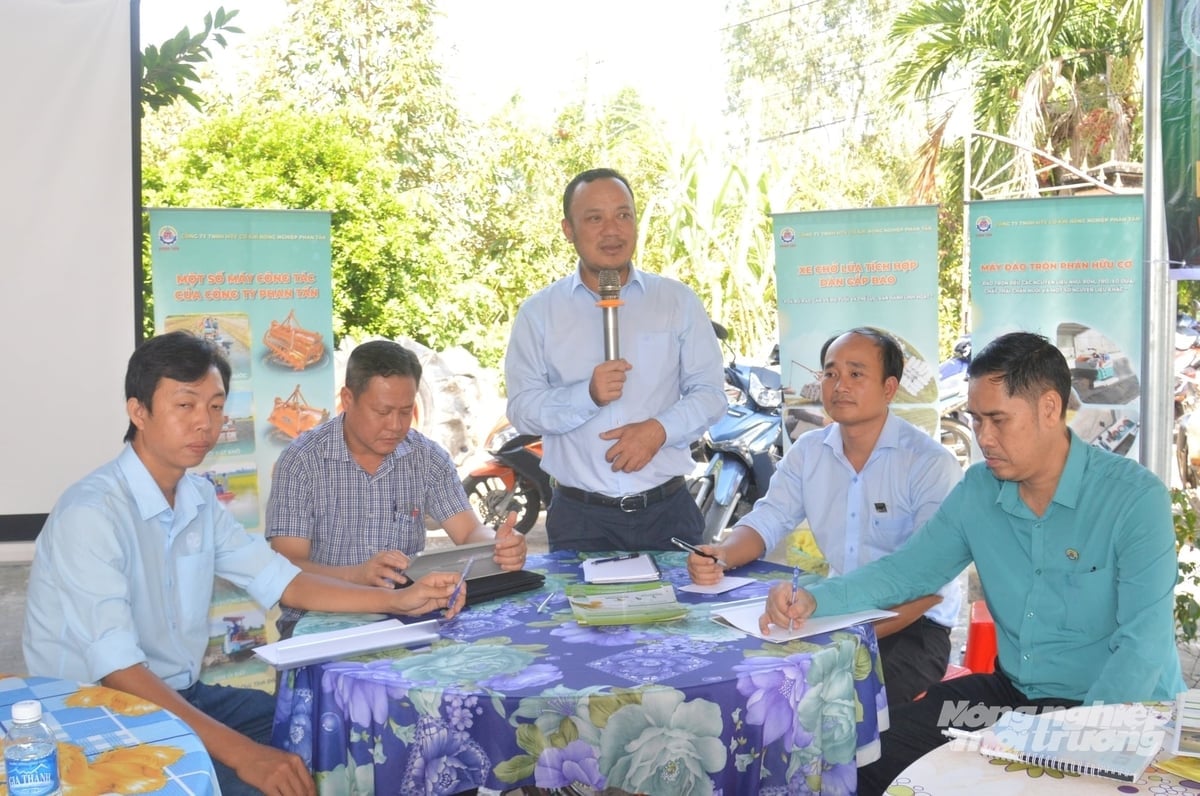
Dr. Le Van Dung, Deputy Director of the An Giang Agricultural Extension Center, answers farmers' questions about the technical process of cultivating high-quality, low-emission rice. Photo: Trung Chanh.
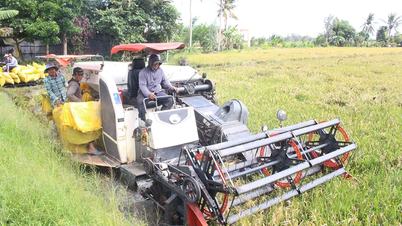
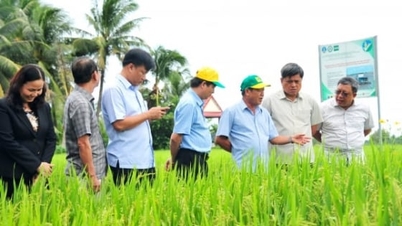
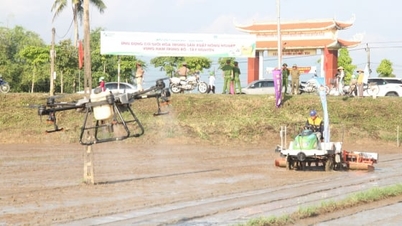
At the conference, more than 100 delegates representing cooperatives, businesses, and farmers visited a demonstration model of land preparation, fertilization, and sowing using mechanized equipment. A panel discussion was also held to answer farmers' questions about high-quality, low-emission rice cultivation techniques.
The model applies advanced techniques in a coordinated manner, including alternating wet-dry irrigation (AWD), machine sowing with low seed density, use of certified seeds, rational fertilization combined with reduced nitrogen, and integrated pest management (IPM). These are core practices in the High-Quality, Low-Emission Rice Production Technical Procedure issued by the Department of Crop Production and Plant Protection.
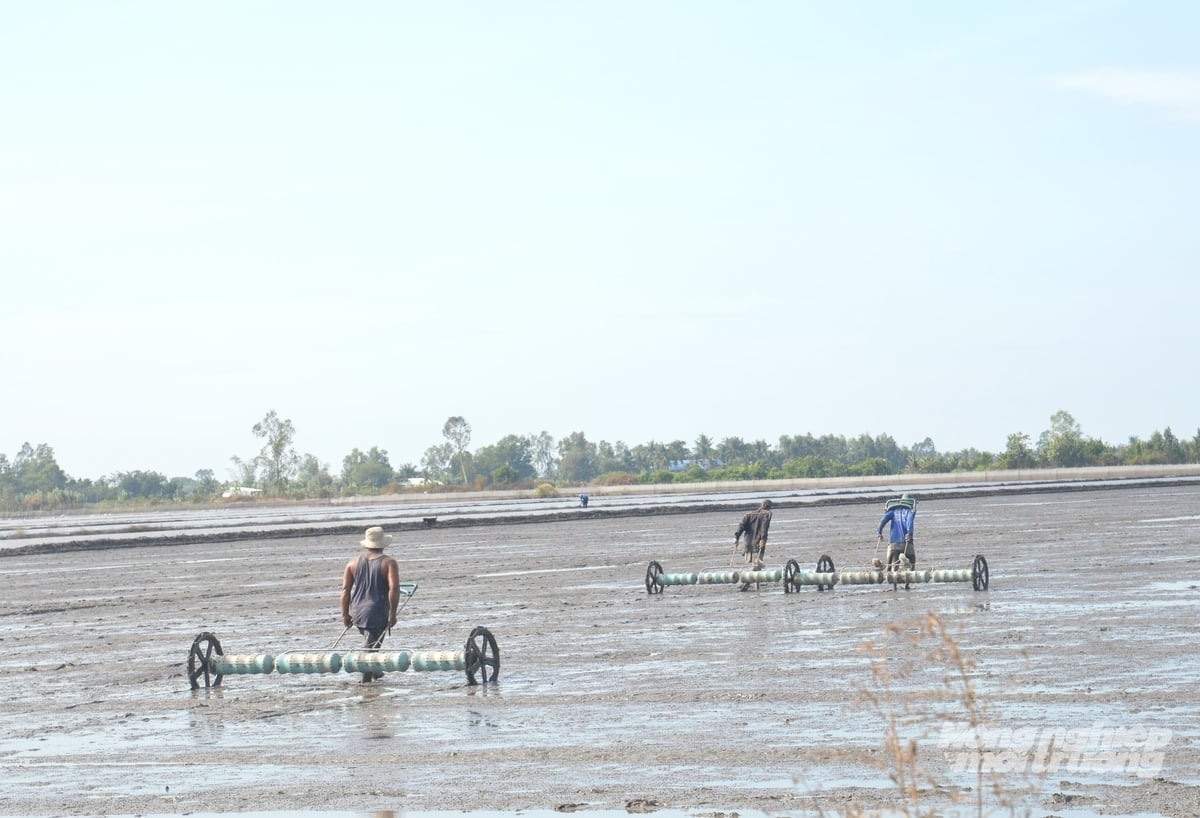
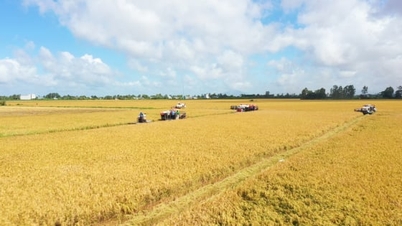
Fields participating in the 1 million hectare high-quality rice project are applying a comprehensive set of technical solutions. Photo: Trung Chánh.
Many farmers appreciate that AWD techniques and reduced fertilizer and pesticide use help lower input costs, resulting in healthier rice growth and fewer pests and diseases. Limiting straw burning and increasing the collection and reuse of by-products also contribute to reducing greenhouse gas emissions, aligning with the circular agriculture approach.
From a business perspective, the model helps to create large raw material areas, standardize production processes, facilitate procurement and traceability, especially in the market for reduced-emission rice.
According to Dr. Le Van Dung, Deputy Director of the An Giang Agricultural Extension Center, the process of producing high-quality, low-emission rice with many technical requirements needs to be applied uniformly in the fields throughout the growing season. Therefore, communication plays a crucial role in replicating the model, creating consensus among farmers participating in production, and standardizing techniques among cooperatives.
This is an important preparatory step for An Giang to expand the area of high-quality, low-emission rice production, contributing to the goal of the 1 million hectare rice project being implemented by the Ministry of Agriculture and Environment in the Mekong Delta.
Source: https://nongnghiepmoitruong.vn/truyen-thong-nhan-rong-mo-hinh-lua-chat-luong-cao-phat-thai-thap-d788596.html





























































Comment (0)