

A new step forward in the rice value chain.
According to the Southern Institute of Agricultural Science and Technology (IAS), in the 2025 Summer-Autumn crop season, the Center for Research and Transfer of Agricultural Technological Advancements will continue to support localities in expanding greenhouse gas emission-reducing rice cultivation models, increasing the number of existing models from 4 to 6 in the Mekong Delta region. This is a project under the Central Agricultural Extension Program managed by the National Agricultural Extension Center.
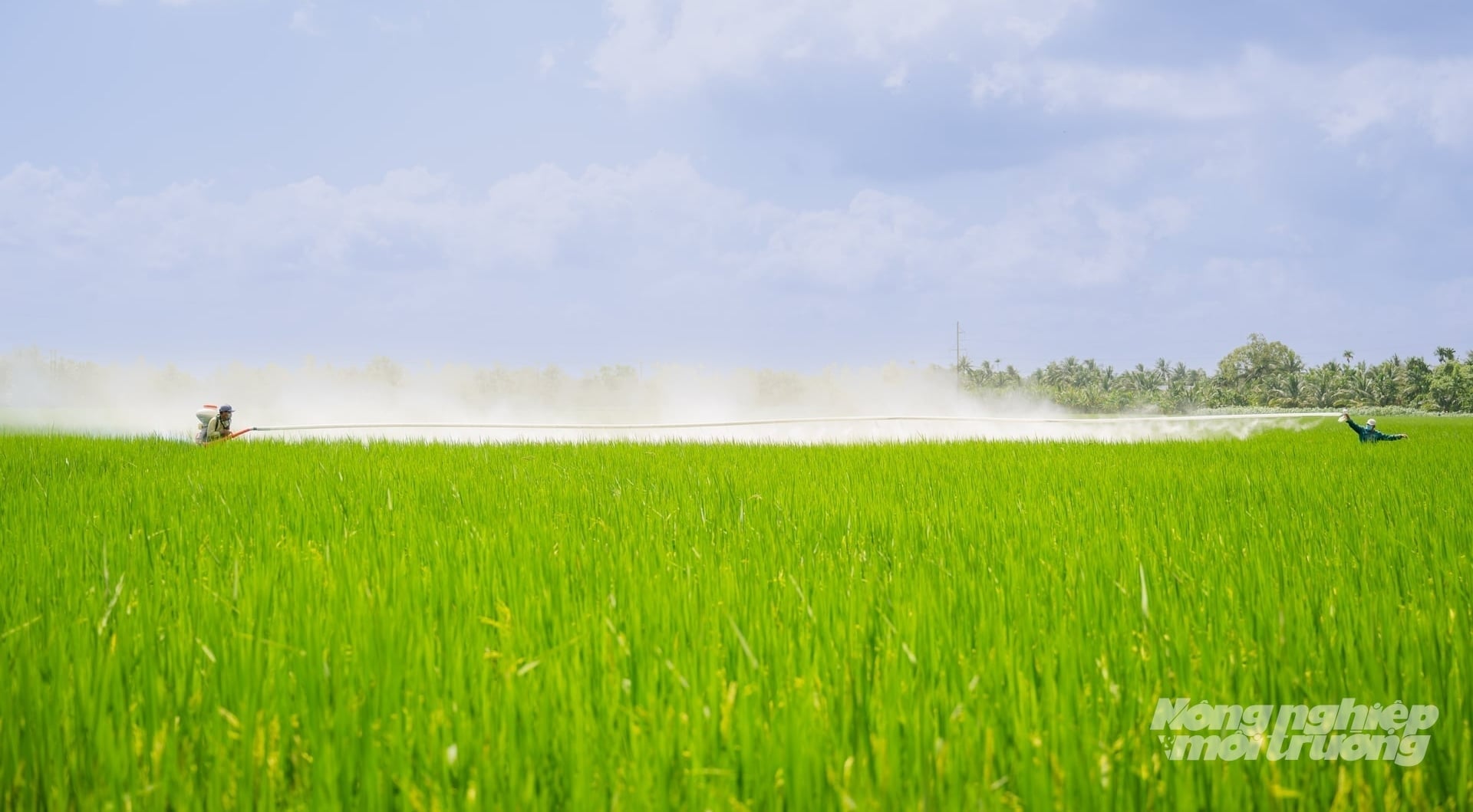
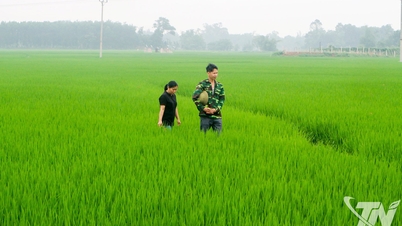
During the 2025 Summer-Autumn crop season, the Center for Research and Transfer of Agricultural Technological Advancements will continue to support localities in expanding rice cultivation models that reduce greenhouse gas emissions. Photo: Minh Sang.
Notably, Vietnam is piloting the Monitoring, Reporting, and Verification (MRV) process for rice production for the first time. This activity is being implemented in collaboration with the International Rice Research Institute (IRRI) and the World Bank. Initial results show a significant reduction in input costs, while maintaining rice yield and quality, leading to increased profits for farmers.
Mr. Ngo Xuan Chinh, Director of the Center for Research and Transfer of Agricultural Technological Advancements, stated that this is an important prerequisite for localities to replicate the model, contributing to the effective implementation of the 1 million hectare high-quality rice project. However, because this is the first time a comprehensive emission reduction project has been implemented, the process still faces many difficulties, requiring proactive and flexible resource mobilization.
A notable highlight in the green transition process is the goal of bringing internationally certified organic rice to market at a price comparable to traditional rice. According to Mr. Nguyen Dang Khoa, founder of the Neorice technical initiative, the company aims to commercialize USDA Organic certified organic rice at a competitive price by 2026.
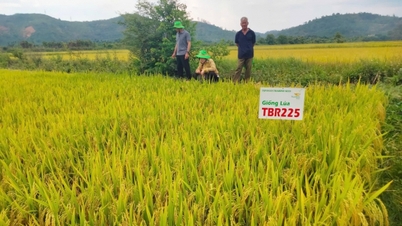
Neorice's production process is built on the foundation of advanced technical regulations issued at the ministerial level, notably the rice cultivation process using natural minerals and the application of unmanned aerial vehicles (drones) for spraying. This process was developed by AHA Agricultural Chemicals Joint Stock Company in collaboration with the Mekong Delta Rice Research Institute, the Center for Agricultural Technology Transfer Research under the Southern Institute of Agricultural Science and Technology, and other specialized agencies. This process has been implemented on an area of over 2,000 hectares.
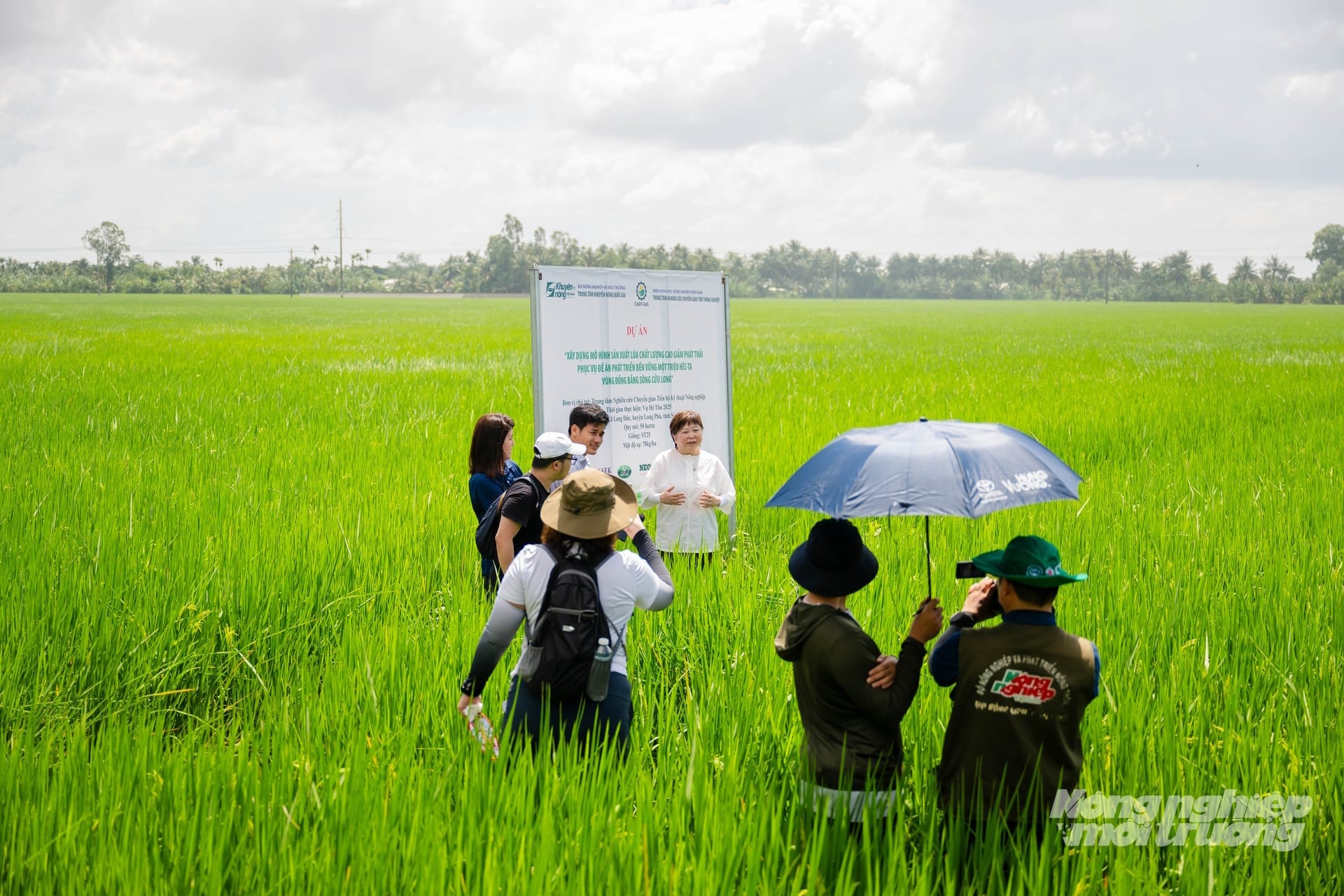
The rice cultivation process using natural minerals and applying drones for spraying was researched by AHA Agricultural Chemicals Joint Stock Company in collaboration with the Mekong Delta Rice Research Institute, the Center for Agricultural Technology Transfer Research under the Southern Agricultural Science and Technology Institute, and other specialized agencies. Photo: Ho Thao.
The results show that the model helps reduce NPK fertilizer use by 20%, seed usage by 50%, spraying costs by 80%, and completely eliminates chemical pesticides, while reducing greenhouse gas emissions by approximately 50% per unit area. Farmers' income increases by about 20% compared to traditional farming methods, equivalent to 50 million VND/ha/year. If the rice-fish farming model is combined with intercropping of duckweed, the value can reach 100 million VND/ha/year.
According to Mr. Nguyen Dang Khoa, the advantage of the model lies in building a closed ecosystem in the rice value chain, from supplying agricultural materials and services, purchasing, to processing and issuing carbon credits. Thanks to diversified revenue sources, the enterprise can accept lower profit margins in the purchasing stage to keep rice prices competitive. Currently, Neorice aims to serve approximately 10,000 hectares of rice in 2025 and increase to 20,000 hectares in 2026, with the strategic investment of Cam Chau AgriGroup.
Promoting international cooperation towards green agriculture.
Recently, the Center for Research and Transfer of Agricultural Technological Advances and AHA Agricultural Chemicals Joint Stock Company collaborated with Temasek Foundation (Singapore) to promote improvements in high-quality, low-emission rice cultivation. This is part of a project supporting the plan to develop 1 million hectares of high-quality rice in the Mekong Delta.
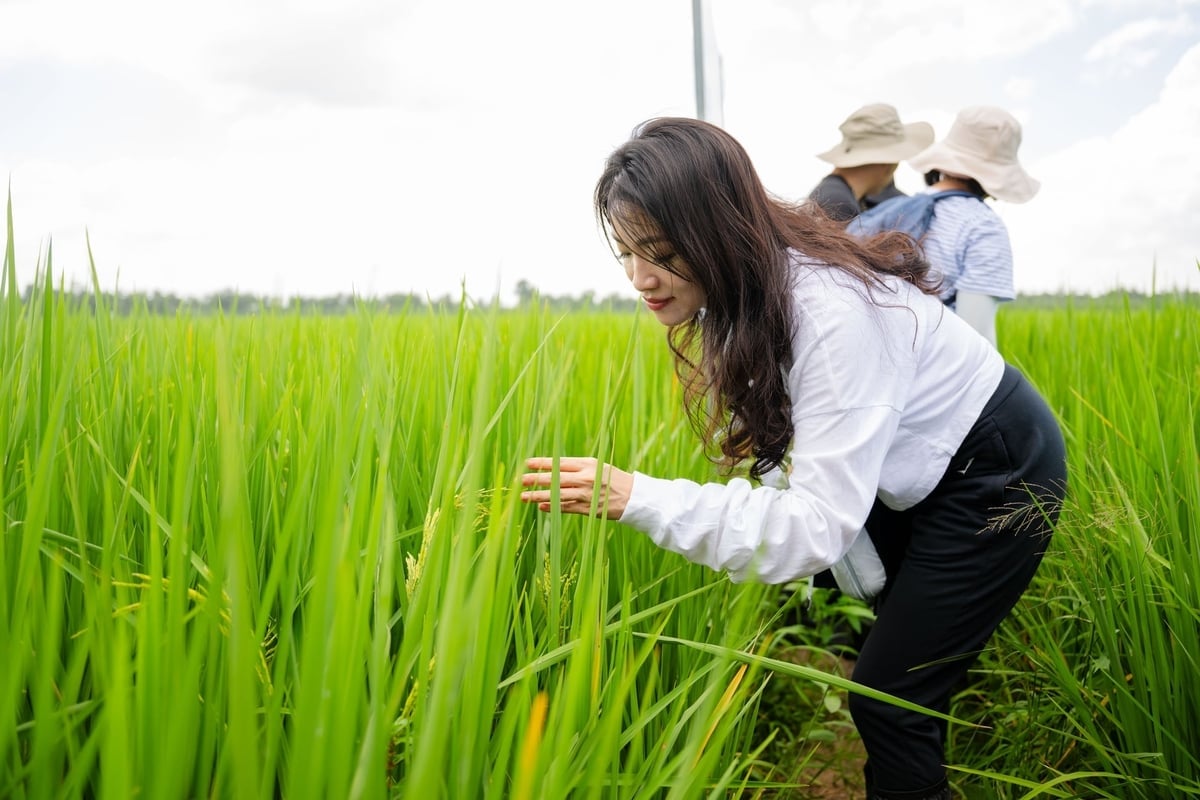
The model aims to produce high-value, environmentally friendly rice, increase farmers' income, and contribute to efforts to reduce greenhouse gas emissions and meet the global trend of green consumption. Photo: Minh Sang.
According to Mr. Ngo Xuan Chinh, the model aims to produce high-value, environmentally friendly rice, increase farmers' income, and contribute to efforts to reduce greenhouse gas emissions and meet the global green consumption trend. Temasek Foundation is also calling on organizations and individuals to continue proposing sustainable farming initiatives in the future.
Currently, Vietnam achieves rice export revenue of nearly 5 billion USD per year with approximately 7.1 million hectares of cultivated land and a production of over 43 million tons. However, the challenge of sustainable development is posing many difficulties as arable land is rapidly degrading, the amount of chemical fertilizers has nearly doubled in the past 10 years to maintain productivity, while microbial, organic matter, and soil pH indicators are sharply declining.
According to experts, transitioning to sustainable, low-emission rice production is not only a solution for environmental protection and land restoration, but also an essential path to enhancing the brand value of Vietnamese rice, increasing farmers' income, and adapting to global consumption trends. The biggest challenge now lies not only in developing technical processes, but also in bringing the model to farmers on a large scale. This requires farming solutions that are truly effective, easy to apply, and offer clear economic benefits to change long-standing production habits.
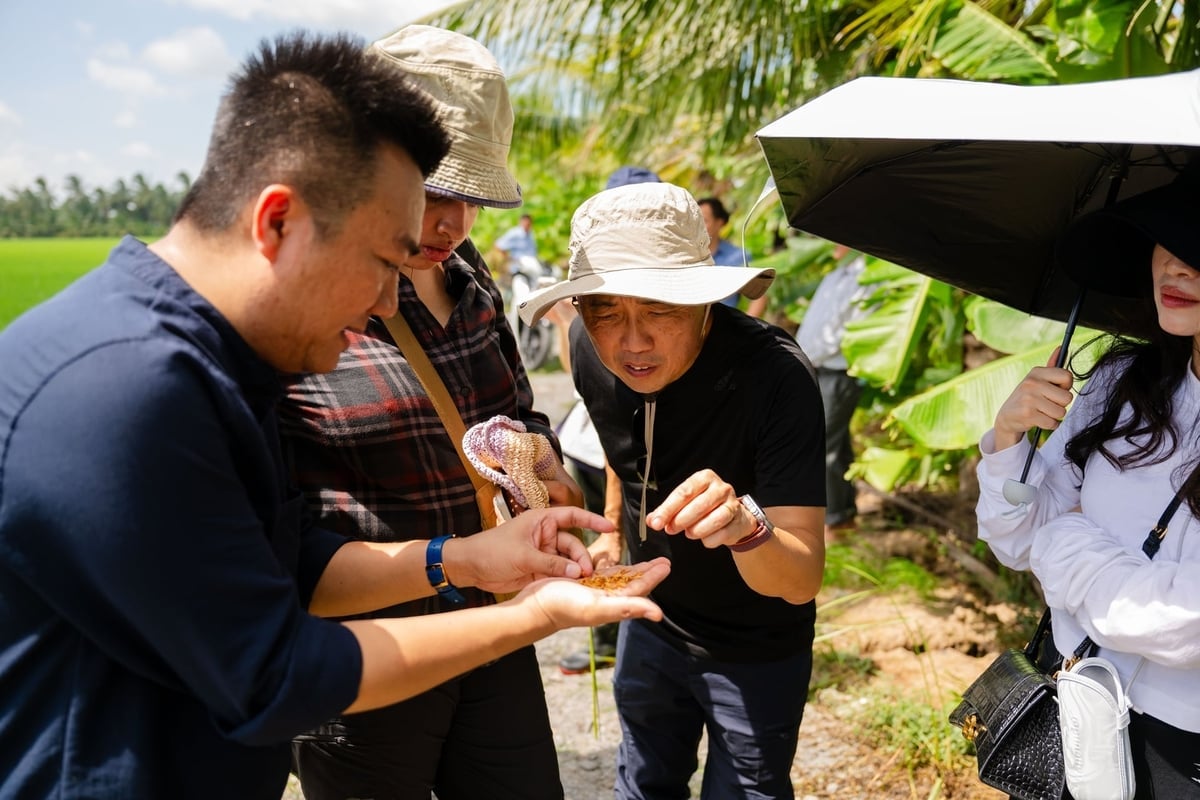
Transitioning to sustainable, low-emission rice production is not only a solution for environmental protection and land restoration, but also an essential path to enhancing the brand value of Vietnamese rice. Photo: Minh Sang.
The Ministry of Agriculture and Environment, along with other relevant agencies, is stepping up support for training and capacity building for farmers, cooperatives, and businesses, while encouraging production linkages along the value chain. Initial results from high-quality, low-emission rice models are opening up new avenues for agriculture in the Mekong Delta, ensuring food security while contributing to the commitment of net zero emissions by 2050.
Source: https://nongnghiepmoitruong.vn/lua-phat-thai-thap-nang-cao-gia-tri-hat-gao-viet-d788666.html

![[Photo] “Red Journey” 2026: Vietnamese Youth Continue Building the Bridge of Friendship Between Vietnam and China](https://vphoto.vietnam.vn/thumb/1200x675/vietnam/resource/IMAGE/2026/04/20/1776629730866_4055880775670638308-9618-4200-jpg.webp)



























































Comment (0)