

Large area, limited personnel.
According to Mr. Pham Tuan Linh, Director of Yok Don National Park, the major challenge for forest management and protection in Yok Don National Park stems from the fact that the park lacks adjacent forest corridors because the surrounding forests have been converted to other uses.
Furthermore, Yok Don National Park has a vast area (115,545 hectares), spanning the administrative boundaries of two provinces, Dak Lak and Lam Dong, with a border extending hundreds of kilometers (including nearly 70 km bordering Cambodia and over 250 km bordering villages, farms, and transportation routes). The large area and long border, coupled with the lack of adjacent forest corridors, present numerous difficulties and challenges in managing and protecting the forest within Yok Don National Park.
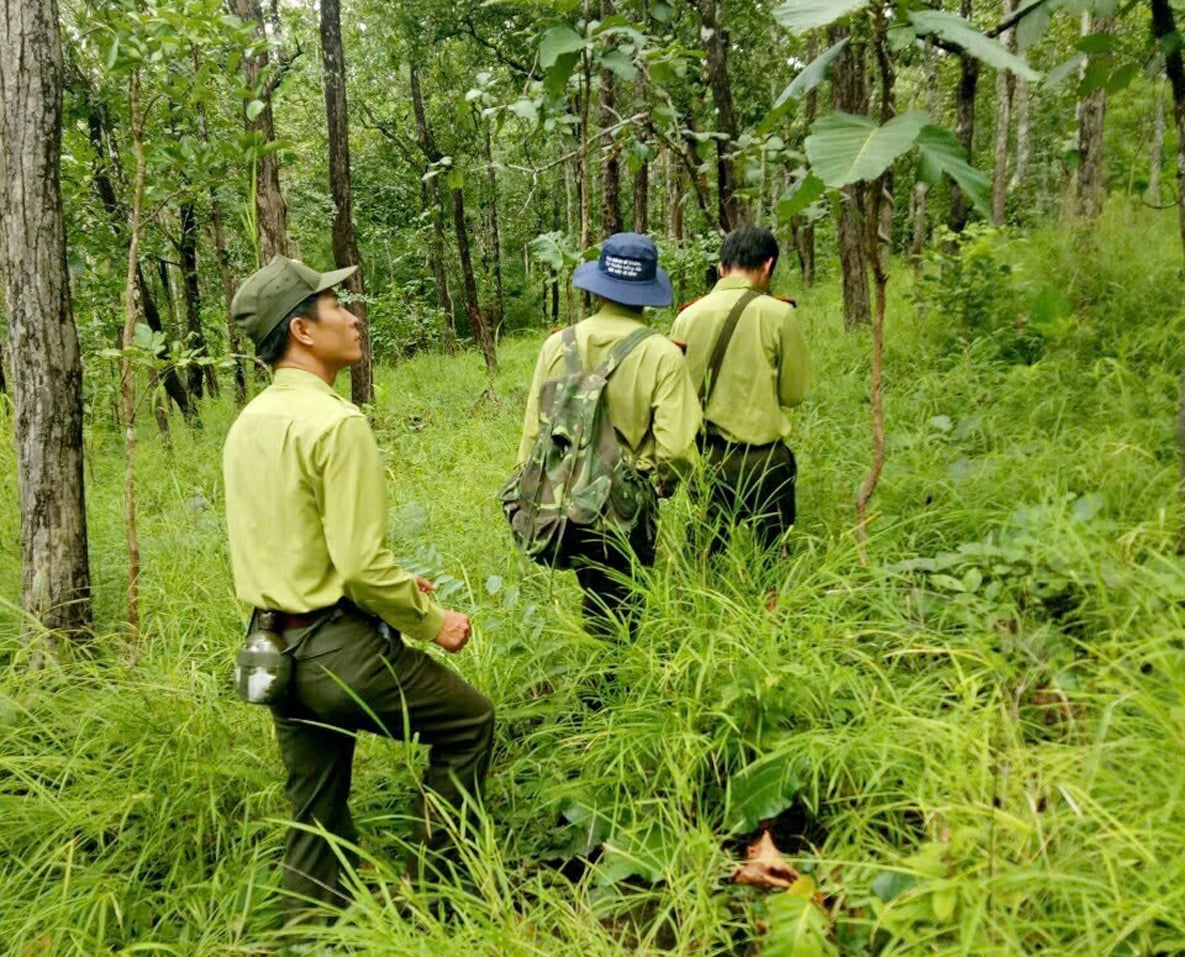
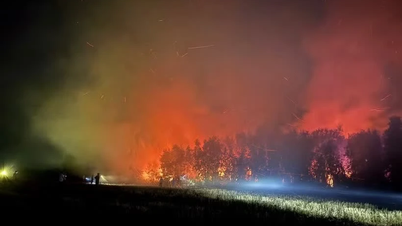
The large area and limited manpower make forest protection in Yok Don National Park very challenging. Photo: Yok Don National Park.
Yok Don National Park is tasked with managing, protecting, and developing special-use forests; conserving biodiversity; preventing and fighting forest fires; controlling pests; rescuing and promoting the value of ecosystems, genetic resources, and landscapes; conducting scientific research, teaching, and practical training; providing forest environmental services; and developing ecotourism.
The main tasks of Yok Don National Park include: forest management, protection and development; conservation of forest ecosystems; scientific research and international cooperation; and providing forest environmental services, ecotourism, and environmental education .
Mr. Pham Tuan Linh stated that by 2025, Yok Don National Park will be allocated 212 personnel but is currently employing only 185, with nearly 80% directly involved in forest protection duties in the field. Given the vast and flat terrain, the current "thin" workforce makes it difficult to cover the entire forest area. Furthermore, the park's forest rangers are all civil servants, which limits their ability to enforce forestry laws.
However, in terms of personnel, alongside the difficulties, there are also certain advantages. Mr. Pham Tuan Linh stated that the majority of officials and staff at Yok Don National Park are highly responsible. Local residents have shown positive changes in their awareness, and the open illegal transportation of timber has ceased. Forest protection efforts also receive support from the government and forces stationed in the area.
Potential risk of forest encroachment.
The biggest challenge currently facing forest management and protection in Yok Don National Park is the encroachment on forest land and illegal deforestation for farming. According to Mr. Pham Tuan Linh, the demand for agricultural land is high, while the majority of the people's livelihoods still depend on agriculture. Currently, there is a village of ethnic minorities located in the core area of Yok Don National Park with 135 households and 519 inhabitants; there are more than 502 hectares of old farmland belonging to 253 households that are being cultivated before the park's expansion. The people's farming areas are interspersed within the park's forest, so there is a potential risk of expanding the cultivated area when the opportunity arises.
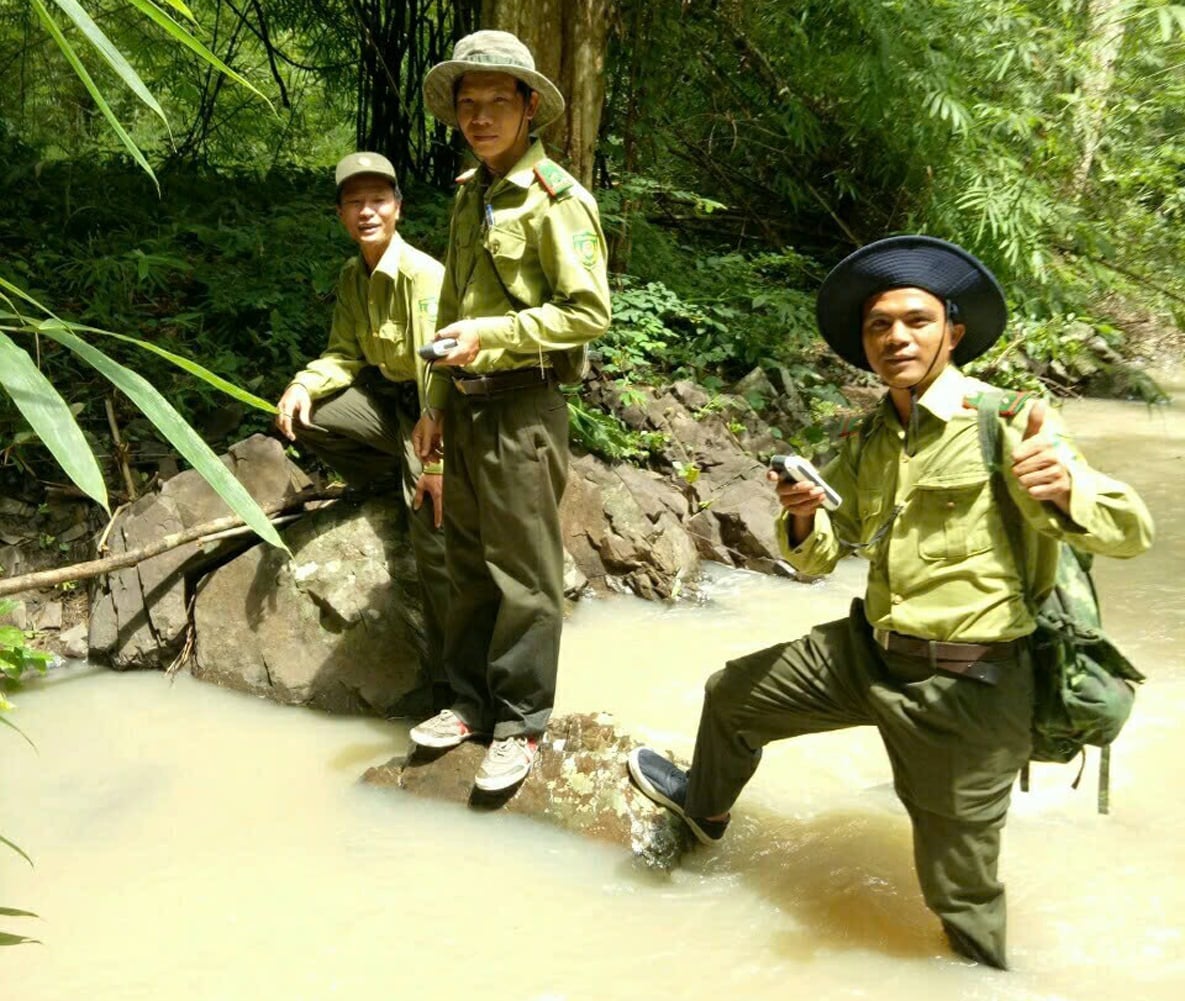
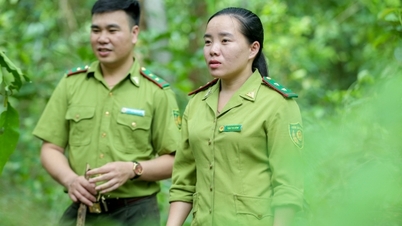
Officials and staff of Yok Don National Park demonstrate a strong sense of responsibility and determination in fulfilling their forest protection duties. Photo: Yok Don National Park.
According to Mr. Bui Trung Dung, a forest ranger at Yok Don National Park, he has worked at the park for over 15 years and has spent 13 Lunar New Year holidays at the unit to protect the forest area and sub-areas under his management.
Another difficulty is controlling access to the forest. Currently, in addition to some households living and cultivating fields, there are over 100 households grazing livestock in the Yok Don National Park, with over 3,000 buffaloes and cows. With many people entering and leaving the forest daily, it's inevitable that some individuals will take advantage of this to enter and engage in activities that harm forest resources.
According to Mr. Pham Tuan Linh, although there are regulations prohibiting livestock grazing in the forest, grazing has become a custom of the local people, making it very difficult to completely ban it.
Furthermore, projects converting border forests to rubber plantations have led to a significant decline in forest resources in the area adjacent to Yok Don National Park. Currently, there are over 400 makeshift huts along the park's border. These are often exploited by individuals to infiltrate the forest and commit illegal acts, encroaching on or damaging the forest.
In recent years, in residential areas near Yok Don National Park, there has been a situation where many workers have left cities and factories to return to their hometowns. They need land for production and jobs to earn a living, and this situation has created considerable pressure on forest management and protection efforts.
Source: https://nongnghiepmoitruong.vn/gian-nan-giu-rung-yok-don-d788501.html





![[Photo] General Secretary and President To Lam presides over the meeting to approve the draft report on the results of the second inspection by the Politburo of the Standing Committee of the Hanoi City Party Committee.](https://vphoto.vietnam.vn/thumb/1200x675/vietnam/resource/IMAGE/2026/05/26/1779789811432_a2-bnd-4430-9620-jpg.webp)
















































































Comment (0)