

- Promoting green growth through the Coastal Forest Protection Project.
- Where the land blossoms, the forests are green, and the people are full of affection.
- Expanding investment policies for the protection of special-use forests.
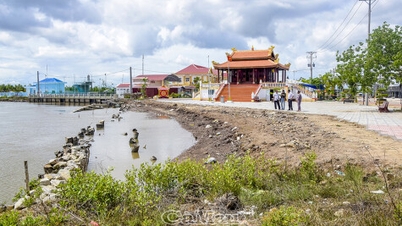
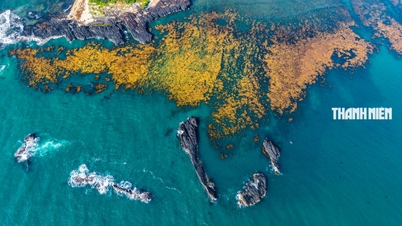
 Alluvial deposits at Ca Mau Cape.
Famous shrimp and crab from Ca Mau
As a quintessential symbol of Vietnamese aquaculture , shrimp has also made a name for itself in Ca Mau's fisheries industry. With its advantageous area and ecosystem, Ca Mau has consistently held the leading position nationwide in shrimp farming and export for many years. From traditional extensive farming methods under mangrove forests to shrimp-rice farming in floating ponds and high-tech greenhouses, Ca Mau shrimp has always been closely linked to the livelihoods and wealth-building journeys of the local people.
Besides its economic value, Ca Mau tiger shrimp has also affirmed its position in the international market thanks to its superior quality. These ecologically farmed shrimp, raised under mangrove forests, are present in more than 60 countries and territories, conquering demanding markets such as the United States, Japan, Australia, and Europe.
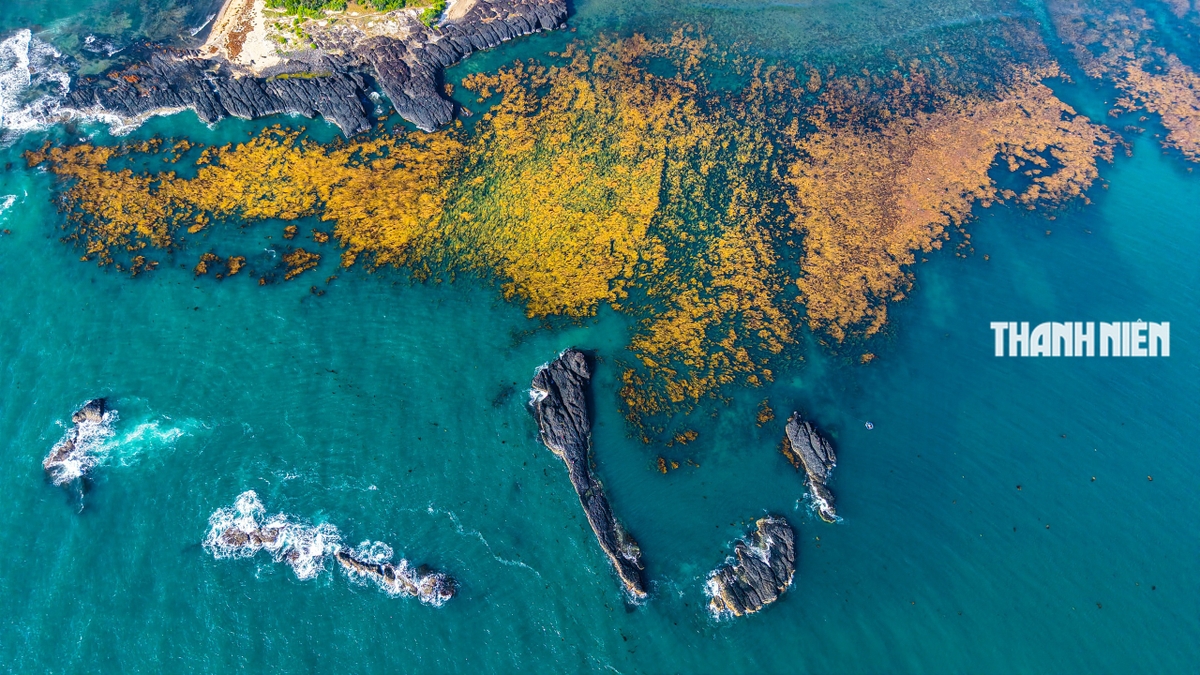
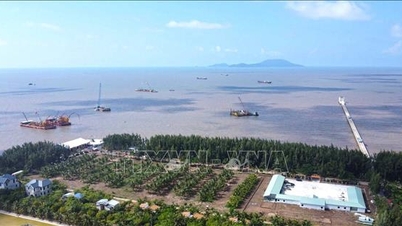
 From the vast mangrove forests and expansive seas, many renowned products have emerged, creating the brand of Ca Mau. Photo: THANH DUNG
Currently, the total shrimp farming area in Ca Mau reaches nearly 418,000 hectares, accounting for more than 55% of the total shrimp farming area nationwide; production reaches over 565,000 tons, equivalent to nearly 45% of the national production. Shrimp export revenue reaches over 2.27 billion USD, contributing more than half of Vietnam's total shrimp export value.
According to Mr. Pham Van Muoi, Deputy Director of the Department of Agriculture and Environment of Ca Mau province, shrimp farming in the locality is strongly shifting from extensive to intensive development, meeting the increasingly high demands of the global market. To date, the area of shrimp farms with international certifications such as Naturland, EU Organic, ASC, Selva Shrimp… has exceeded 37,800 hectares. Many modern technologies such as water recirculation systems, Biofloc, sensor equipment, automatic feeding, and digital management are widely applied, linking economic growth with environmental protection, aiming for sustainable development.
Alongside shrimp, Ca Mau's sea crab has also become a famous product, considered by experts and consumers alike to be "unparalleled." The value and brand of Ca Mau crab are clearly affirmed through major events such as the Ca Mau Crab Festival, attracting the attention of domestic and international tourists. With over 365,000 hectares of farming area and a production of over 36,000 tons per year, sea crab not only provides livelihoods for more than 45,000 households but also contributes to spreading the "flavor of the forest - taste of the sea" to the world.
 Ca Mau is developing a shrimp industry development strategy with ambitious goals, aiming to create a breakthrough in the locality's development in the new era.
Long road ahead for aquaculture
The Ca Mau sea crab industry is being oriented towards developing according to modern processes, with quality certification and traceability. The goal is to establish at least 30,000 hectares of farming areas meeting VietGAP standards or equivalent by 2030; to form a key crab farming area of approximately 50,000 hectares with high-value models such as molting crab, egg crab, and recirculating aquaculture systems (RAS), striving to reach 5,000 RAS farming boxes.
For the shrimp industry, Ca Mau aims to expand the high-tech super-intensive farming model, establish a high-tech seafood processing center, develop the "Ca Mau Ecological Shrimp" brand associated with carbon credit exploitation, and strive for net-zero emissions. The shrimp industry value chain will be organized according to the four-party linkage model, building new-style seafood cooperative unions.
Following the merger, Ca Mau not only maintained its position as Vietnam's shrimp capital but also has the potential to become a leading center for clean, high-tech, and sustainable agriculture in Southeast Asia.
Unlike shrimp and crab, many other products from Ca Mau, found along the rivers leading to the sea, have also gained nationwide renown. The western coast, with large estuaries like Song Doc and Khanh Hoi, is famous for dried squid; Cai Doi Vam for dried sweet potato fish; the eastern coast for dried shrimp from Rach Goc and Dat Mui; and the freshwater areas in the inland regions boast dried fish from Tran Van Thoi, freshwater fish from U Minh, fermented snakehead fish from Thoi Binh, and honey from U Minh Ha… These products have given rise to traditional craft villages, not only providing livelihoods but also preserving the essence of local culture.
 The seafood cuisine of Ca Mau, featuring crab, has been promoted and become a famous dish associated with the land and people of Ca Mau, as well as a high-quality Vietnamese dish favored by tourists.
Ca Mau – a land constantly evolving and growing day by day from its alluvial soil – is where people live in harmony with nature. Like the mangrove tree holding the mud, the Rhizophora tree taking root amidst the waves and winds, the land and people of Ca Mau are closely intertwined in the journey of territorial expansion. And from this very land, renowned products have spread far and wide, contributing to the pride in our homeland at the southernmost tip of the country.
Tran Nguyen
Source: https://baocamau.vn/tinh-hoa-tu-rung-bien-a126260.html



![[Photo] General Secretary and President To Lam receives Amazon's Senior Vice President David Zapolsky](https://vphoto.vietnam.vn/thumb/1200x675/vietnam/resource/IMAGE/2026/05/22/1779466547770_a1-bnd-3513-6601-jpg.webp)































































Comment (0)