Exploring the Venice of Vietnam
Our companion today is Mr. Truong Hoang Vinh, Head of the Monument Management Department at the Hoi An Heritage Management and Conservation Center.
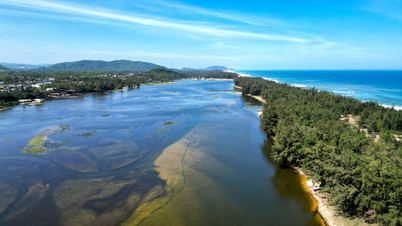
It's easy to spot the image of the Japanese Bridge in Hoi An right on the 20,000 Vietnamese Dong banknote. Hoi An is a land where the river meets the sea; the Thu Bon River is where the land connects with the ocean. We started our tour of the city from the sea entrance.
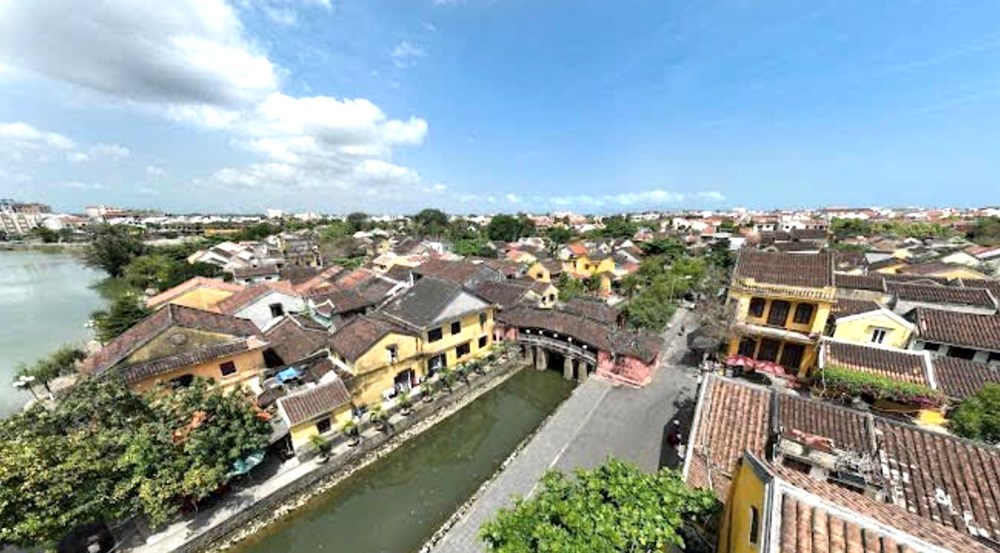
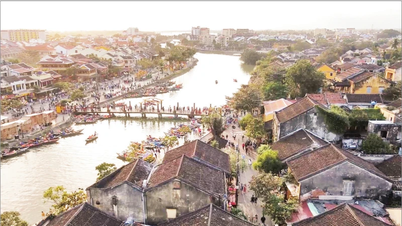
Hoi An city, where the river meets the sea.
Cua Dai, the confluence of the Thu Bon River and the East Sea, was mentioned in Cham inscriptions from the late 4th century. This estuary, known as Dai Chiem Hai Khau, was a stopping point for merchant ships on the pottery and spice trade routes, traveling from east to west and vice versa. Numerous ancient documents and texts from China, Arabia, India, and Persia confirm that the Cua Dai area was once the main seaport of Champa. Foreign merchant ships frequently stopped here to replenish their water supply and exchange goods and products.
According to historical documents, the Vietnamese began to appear in this region in the 15th century. In the 16th century, the ancient Champa trading port welcomed additional merchants from Portugal, Japan, and China who settled and traded there. This long-standing international port city began its period of prosperity.
Our boat passed by a riverside village with a beautiful name: Kim Bong village. This ancient village is over 400 years old. The villagers were farmers who followed Le Thanh Tong south to expand the territory from the 15th century.
People originally from Thanh Hoa and Nghe An provinces brought their Northern carpentry skills to this new land. They are the masters of the skillful chiseling on the sides of Hoi An's ancient houses. It is also in this ancient carpentry village that thousands of wooden boats were built, serving the seafaring needs of the people of Hoi An.
Today, with the increasing development of modern seafaring methods, the once bustling shipyards have gradually shrunk, now only serving the inshore fishing industry.
Market Street
This riverside market street has existed for hundreds of years. The townhouses face both the river and the street, with boats docked above and below. Hundreds of years ago, this riverside location was where foreign ships weighing hundreds or thousands of tons docked.
Today, due to changing currents, this harbor has become silted up and gradually lost its deep-water location. Hoi An has lost its role as an international port city. The Hoi An Museum houses artifacts related to the formation of this ancient city.
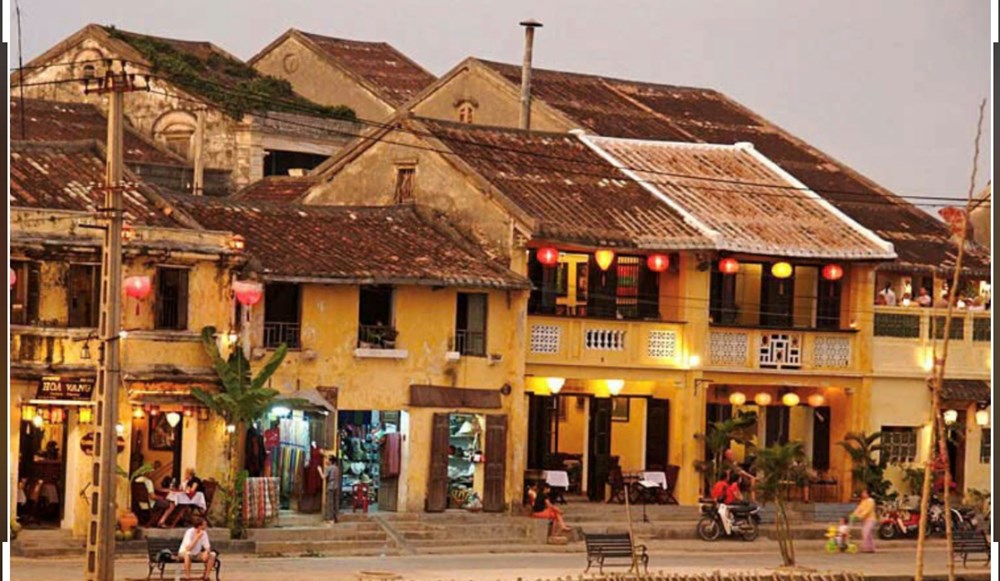
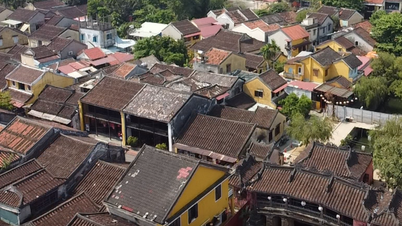
The tube house architecture contributes to the bustling atmosphere of Hoi An.
Following the name Dai Chiem Hai Khau during the Champa era, Westerners in the past called Hoi An Faifo. Alexandre de Rhodes, in his map of Annam encompassing Dang Trong and Dang Ngoai published in 1651, recorded it as Haifo.
Later, on official maps of the Indochina government, the French consistently used the name Faifo to refer to Hoi An. The Hoi An Museum also records images of various merchant ships from Japan, China, the Dutch, and Vietnam that once docked at Hoi An port. Large pieces of ship wood show that this was once a deep-water port capable of accommodating large vessels.
Leaving the bustling streets behind, we entered a quiet alleyway, yet the atmosphere was as cool and airy as a village. Our new destination was a square well at Ba Le's house.
This Cham-style well is probably at least 400 years old. In the past, Hoi An was a supply point for ships on their East-West trade voyages, so sailors, like myself, surely didn't miss the opportunity to refresh themselves with the cool, fresh water from the ancient well after a long journey at sea.
The well at Ba Le's house, formed 400 years ago, is still in good working condition.
We arrived at Hoi An Parish Church. This is the final resting place of three Western missionaries from the 17th century. According to Catholic historical records, from 1615 onwards, Jesuit missionaries from the Vatican came to Vietnam, arriving in Hoi An on Western merchant ships to spread Christianity.
Hoi An at that time was extremely bustling and crowded, with an abundance of goods – as reported by Father Borry in his letter to his superiors at the Vatican in 1621, along with some of the early missionaries such as Francesco De Pina, Christopho Borry, Francesco Buzomi…
From Hoi An parish, we walked through the windy Truong Le - Cam Ha fields to visit the resting place of a Japanese merchant. The tomb dates back to 1665.
Later generations envisioned a beautiful love story from the inscriptions in four languages—Vietnamese, Japanese, English, and French—placed near the tomb of Ta ni Ya ji ro bei, a Japanese merchant. The inscription reads: "Due to the Japanese Emperor's policy of prohibiting trade with overseas countries, Ta ni Ya ji ro bei had to leave Hoi An and return to his homeland, but later found a way to return to live with his lover, a girl from Hoi An, until his death."
This site reflects the close relationship between Japanese merchants and the residents of Hoi An during the period when Hoi An was a thriving trading port in the early 17th century.
Symbol of Cau Pagoda
The covered bridge looks like something out of a fairy tale. It was built around the 17th century with contributions from Japanese merchants, which is why it's sometimes called the Japanese Bridge.
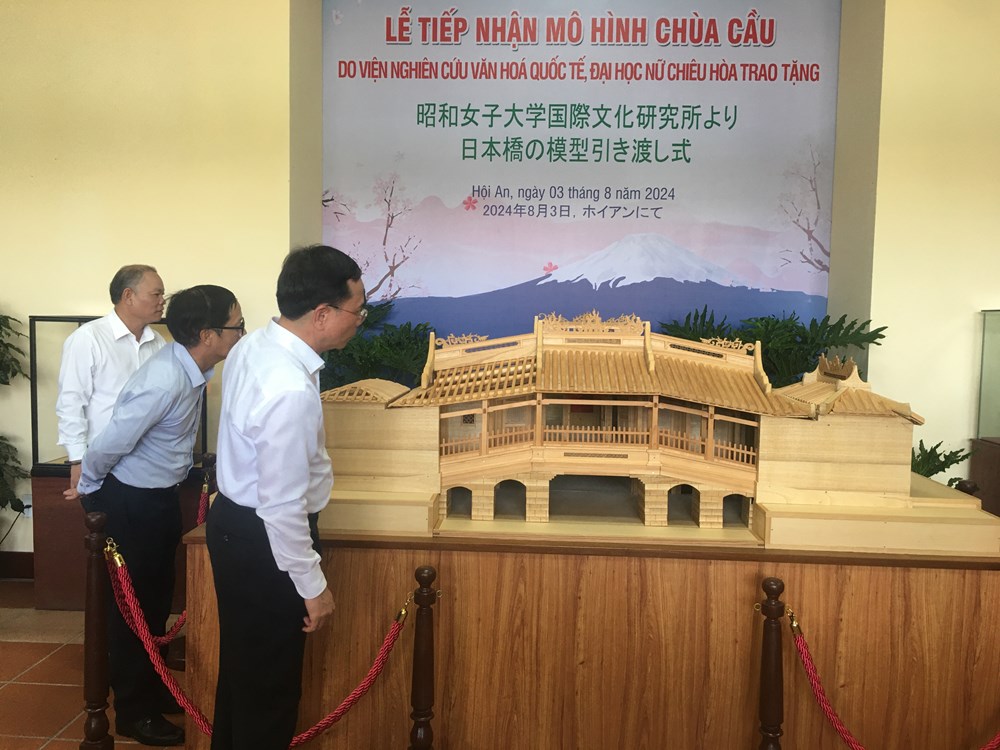
The Institute for International Cultural Studies, Showa Women's University, Japan, presented a model of the Japanese Bridge to the Hoi An authorities on the occasion of the inauguration of the renovated Japanese Bridge on August 3, 2024.
According to legend, the temple is considered to be a sword piercing the back of the monster Namazu, preventing it from thrashing its tail and causing earthquakes. In 1653, an additional part of the temple was built, connecting to the northern railing and protruding into the middle of the bridge, hence the local name, Bridge Temple.
In 1719, Lord Nguyen Phuc Chu visited Hoi An and named the bridge Lai Vien Kieu, meaning "Bridge welcoming guests from afar." This bridge is a symbol of the period of strong trade between Vietnam and Japan.
The local authorities allowed the establishment of a Japanese quarter here, and hundreds of Japanese merchants settled and married local people. Therefore, Western records from this period refer to Hoi An or Faifo as the Japanese quarter.
Recently, on August 3, 2024, the Institute for International Cultural Studies of Showa Women's University in Japan organized a ceremony to present a model of the Japanese Bridge, marking nearly two years since the completion of the Japanese Bridge's renovation.
Scattered throughout the town are many Chinese guildhalls. After the Japanese Emperor's lockdown order, many Japanese people had to return home, and the Chinese became the majority in the foreign quarter of Hoi An.
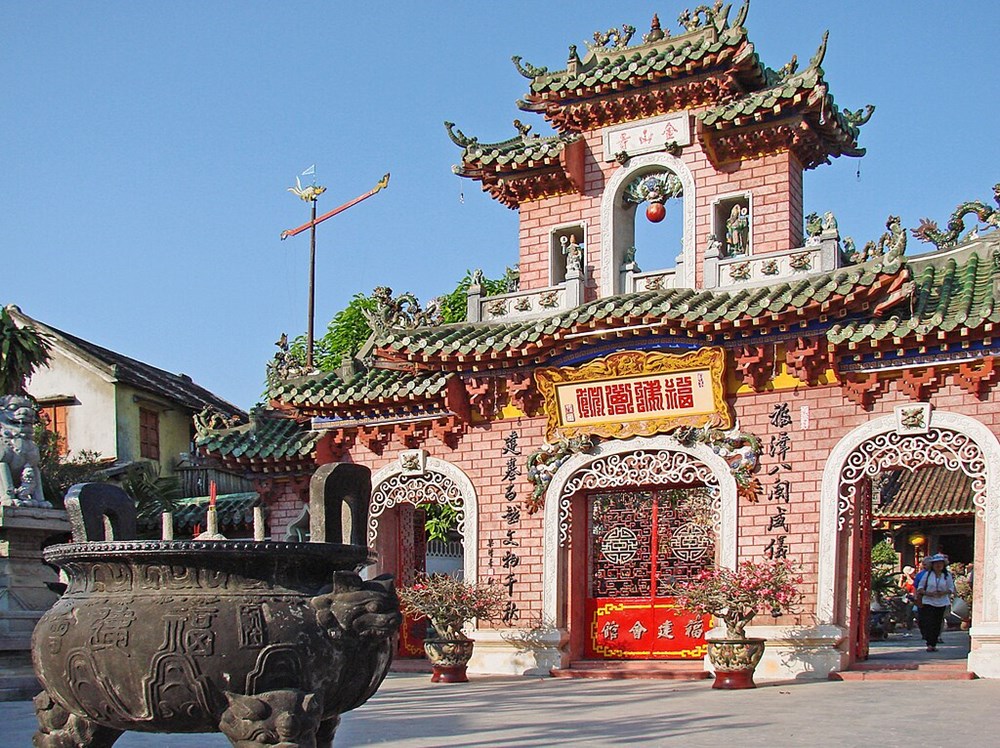
The Fujian Assembly Hall has a shrine dedicated to the Goddess Thien Hau.
The Fujian Assembly Hall was built from its predecessor, a small shrine dedicated to the statue of Thien Hau Thanh Mau (the goddess who protects merchants navigating the stormy seas), which was salvaged from the coast of Hoi An in 1697.
Tò he is a traditional Vietnamese folk toy, produced by the people of Thanh Ha pottery village in Hoi An. This toy was brought to Hoi An by potters from Thanh Hoa province in the 15th century. Since then, the Vietnamese, along with the Chinese and Japanese, have formed a multi-ethnic, multi-cultural community living in harmony and developing together for centuries.
The image of the old woman selling clay figurines and the foreign language this 83-year-old woman uses to communicate with foreigners made us suddenly imagine Hoi An hundreds of years ago, during the time of Dai Chiem Hai Khau, Faifo, Haifo, or Hoai Pho…
The Vietnamese people of the southern region, with their friendly, open, and generous nature, have taken on the mission of representing the nation in creating a new playing field for integration, paving the way for the country's development.
Source: https://baovanhoa.vn/van-hoa/ve-pho-co-hoi-an-103851.html


![[Photo] General Secretary and President To Lam receives Amazon's Senior Vice President David Zapolsky](https://vphoto.vietnam.vn/thumb/1200x675/vietnam/resource/IMAGE/2026/05/22/1779466547770_a1-bnd-3513-6601-jpg.webp)



















































Comment (0)