Hue was once a historical capital city. The Hue Imperial Citadel complex was the first UNESCO World Heritage Site in 1993. This complex includes a system of relics related to the Nguyen Dynasty, distributed in Hue city and the districts of Huong Tra, Huong Thuy, Phu Vang, and Phu Loc in Thua Thien Hue province.
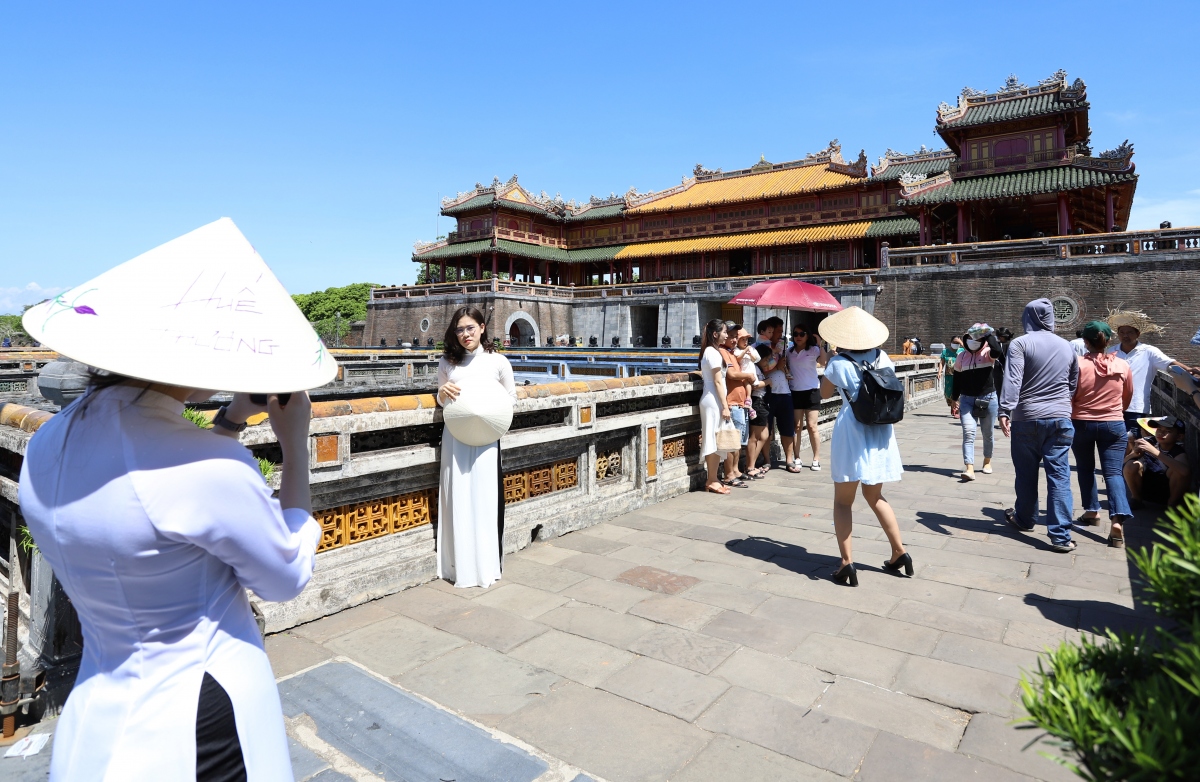
Hue is attracting more and more tourists.
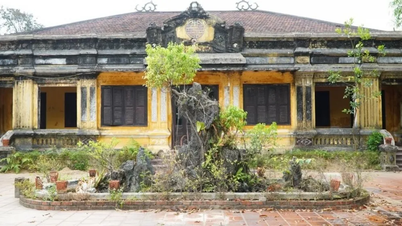
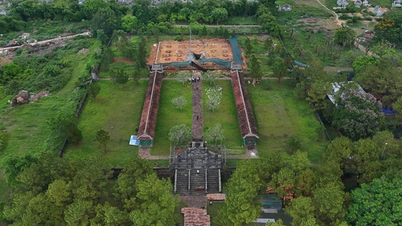
As part of the Hue Imperial Citadel Complex, the Hue Imperial Citadel bears the distinct cultural, historical, and architectural imprint of the Nguyen Dynasty. It's a must-see destination on any trip to Hue. Tour guide Nguyen Hoang Anh, a native of Hue, explains that the Imperial Citadel was the political center and residence of all 13 Nguyen emperors. Spanning 40 hectares, its construction spanned 27 years, beginning in 1805 during the reign of Emperor Gia Long and completed in 1832 during the reign of Emperor Minh Mang.
"In front of the Imperial Citadel, as the crow flies, is Ngu Binh Mountain, a screen that prevents harmful winds from entering all the Nguyen Dynasty palaces. The Perfume River flowing through the Imperial Citadel is a bright and auspicious element, a path that accumulates blessings and virtue for the Nguyen Dynasty. In the middle of the Perfume River, there are two naturally formed mounds of land. The one on the left resembles a green dragon, known as Con Hen. The one on the right resembles a white tiger, known as Con Da Vien. The Left Green Dragon and Right White Tiger bow towards the Imperial City. The rear of Hue Imperial City is the Truong Son mountain range. This is an extremely important element applied to the palaces, tombs, temples, and houses of the ancient kings," said tour guide Nguyen Hoang Anh.
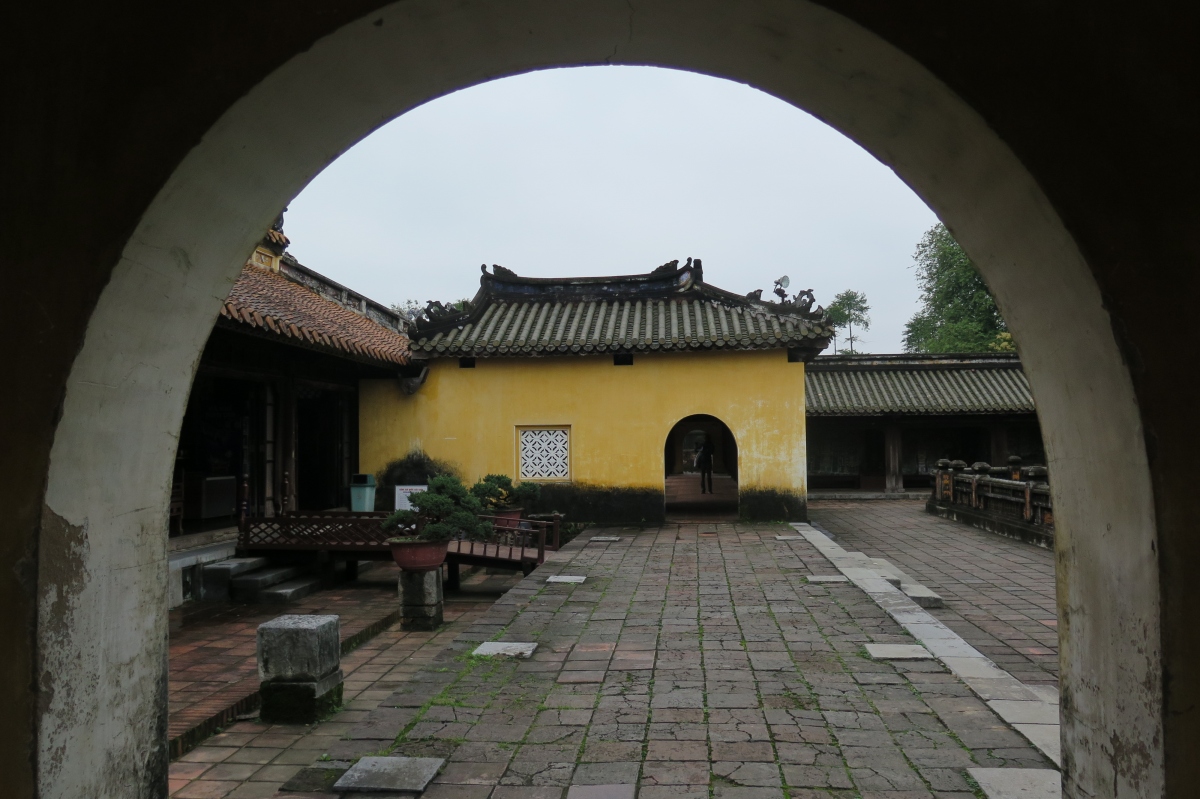
The ancient atmosphere inside the Forbidden City.
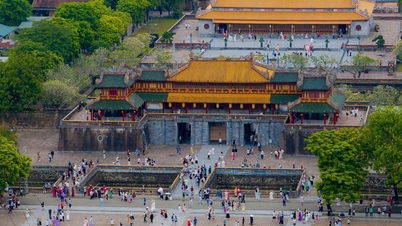
Upon arriving at the Hue Imperial Citadel complex, visitors will pass through three concentric walls. The outermost wall is the Citadel; the second is the Imperial City, also known as the Forbidden City; and the innermost is the Forbidden City. The gate used by the King is called Ngo Mon. Above Ngo Mon is the Ngu Phung Pavilion, where the Nguyen Dynasty kings held three major ceremonies a year… The Ban Soc ceremony, near Tet (Lunar New Year), involved the king distributing a calendar to each household for the new year.
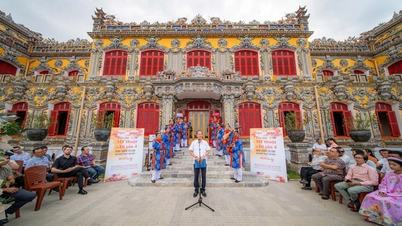
To the east of the Forbidden City lies a two-story building, the Duyet Thi Duong Theatre. This is the oldest theatre in Vietnam that remains almost completely intact. Over 200 years old, Duyet Thi Duong is now the Hue Royal Court Traditional Arts Theatre, where Hue court music, dance, and opera are performed for tourists. According to People's Artist Phan Thi Bach Hac, Director of the Hue Royal Court Traditional Arts Theatre, alongside restoration and performances, artists and performers are constantly striving to promote Hue court music to the community through festivals, celebrations, and Tet (Lunar New Year).
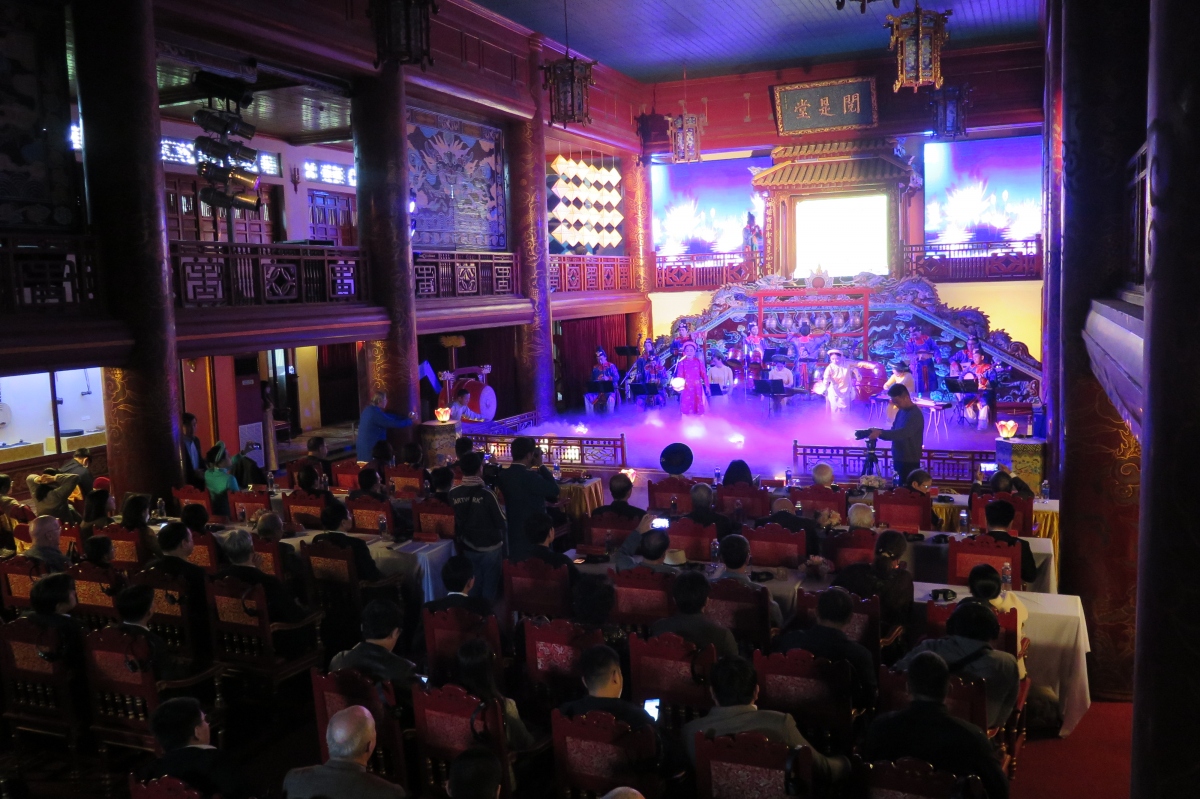
Duyệt Thị Đường is the Hue Royal Court Traditional Arts Theatre.
People's Artist Bach Hac said: "Our theater team constantly hones our skills. Unlike other theaters, we have our own research room. We discuss together to improve our performances while still preserving the essence of Hue's royal court, creating our own unique staging style. For example, we write new lyrics based on the melodies of Chau Van and Hue folk songs."
Tet in Hue is like a harmonious thread connecting the past and the present. Previously, Tet rituals in Hue began in the twelfth lunar month with the Ban Soc ceremony (distributing calendars), the Nghinh Xuan ceremony (welcoming the beginning of spring), the Phat Thuc ceremony (cleaning the seals and scriptures), the Cap Huong ceremony (inviting ancestors to celebrate Tet), the Thuong Tieu ceremony (erecting the New Year's pole)...
Ms. Dang Thi Ngoc Yen, nearly 70 years old, residing in Dong Ba ward, Hue City, said that Hue residents still preserve many customs during Tet (Lunar New Year), omitting rituals that are no longer suitable for contemporary life: “For us people of Hue, Tet today still retains the flavor of Tet from the past. There have been many changes, but we also preserve the characteristics of old Hue, such as going to the pagoda at the beginning of the year to ask for fortune telling…”
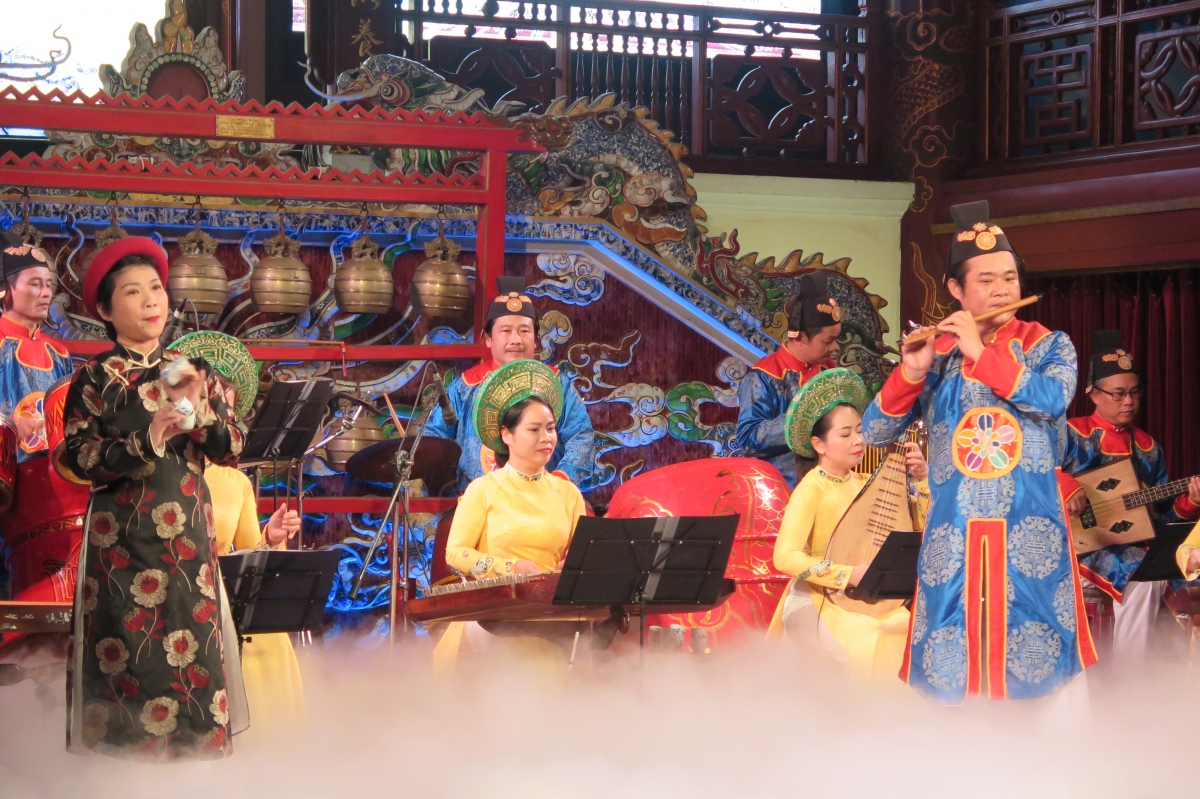
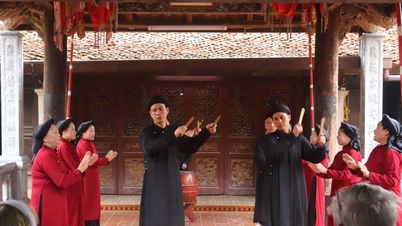
Artists and performers are constantly striving to promote Hue Royal Court Music.
The ancient capital of Hue is home to many traditional Vietnamese cultural rituals and customs. Starting in 2022, Thua Thien Hue province organized the Hue Festival annually, following a four-season model. The 2023 Hue Festival included a series of year-round activities aimed at honoring and promoting the unique values of Hue and Vietnamese culture; showcasing the mystical beauty of scenic spots and spiritual festivals; attracting numerous tourists from near and far; and contributing to the socio-economic development of the locality.
Mr. Nguyen Van Phuc, Director of the Thua Thien Hue Department of Tourism, stated that the locality aims to become a distinctive Festival City of Vietnam: “According to the general orientation, Thua Thien Hue is being developed into a centrally-governed city based on its cultural heritage. The province has many programs and orientations for heritage preservation; ensuring that the preserved structures and relics will be utilized most effectively. The Department of Tourism, in coordination with the Center for Conservation of Relics and other relevant units, is organizing additional activities in heritage areas to help tourists and the community better understand the value of heritage, art, architecture, as well as a part of Vietnamese culture and history, and the Nguyen Dynasty.”
In 2023, the Hue Imperial Citadel Complex was recognized by UNESCO as a World Cultural Heritage site, and Hue Royal Court Music was recognized as a Representative Intangible Cultural Heritage of Humanity. These two events are highlights in the series of activities taking place in 2023. With the theme "Cultural Heritage with Integration and Development," the Hue Festival 2023 will feature many continuous activities throughout the year, hoping to bring visitors exciting experiences of the ancient capital – a destination with five heritage sites.
Source: https://vov.vn/du-lich/san-tour/kham-pha-co-do-hue-mien-dat-di-san-post997330.vov



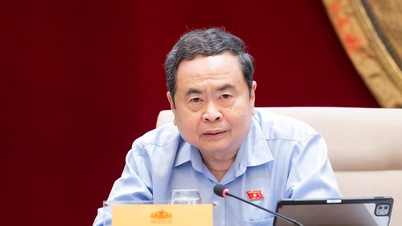
![[Photo] National Assembly Chairman Tran Thanh Man working with the Standing Committee of the Law and Justice Committee](https://vphoto.vietnam.vn/thumb/1200x675/vietnam/resource/IMAGE/2026/05/21/1779378929214_ndo_br_1-4610-jpg.webp)
![[Photo] General Secretary and President To Lam presides over a working session with the Central Policy and Strategy Committee on the development of the materials industry.](https://vphoto.vietnam.vn/thumb/1200x675/vietnam/resource/IMAGE/2026/05/21/1779359935432_a3-bnd-3129-1412-jpg.webp)



























































Comment (0)