

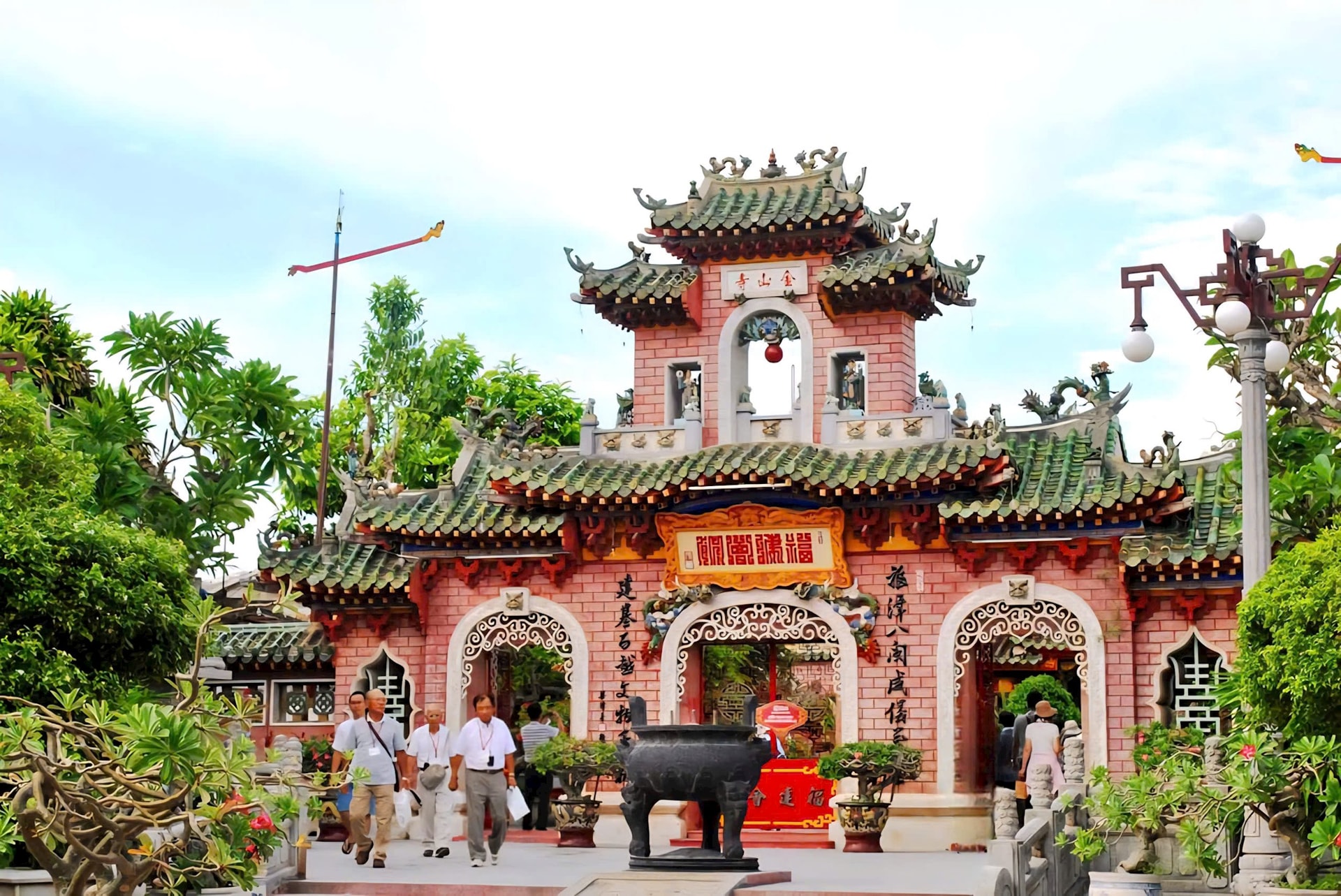
There are two Fujian Assembly Halls, one on Lan Ong Street (Hanoi), and one on Tran Phu Street, Hoi An (Da Nang). Both were built by Chinese people of Fujian origin, both worshipping Thien Hau Thanh Mau, but they have two opposite fates: one quietly hidden in the shadows of a school, the other splendidly shining in the flow of tourism and culture.
Living heritage in the heart of the old town
The Fujian Assembly Hall at 46 Tran Phu, Hoi An was built in 1690, originally a small temple, later restored into a majestic assembly hall, the religious center of the Fujian Chinese community - one of the earliest and most populous immigrant groups to Hoi An.
With its “Tam”-style architecture, winding dragon gate, balanced East-West rows of houses, main hall worshiping Thien Hau Thanh Mau and rear hall worshiping other gods such as Luc Tanh Vuong Gia, Ba Mu, Than Tai…, the assembly hall is a typical architectural and religious space. Details such as the ancient boat statue from 1875, parallel sentences, worship statues, bronze bells with elaborate carvings… create a vivid and spiritual cultural picture.
Not only a place of worship, the assembly hall has also been the center of community activities of the Chinese people in Hoi An for hundreds of years. Major festivals such as Thien Hau Festival (March 23rd of the lunar calendar), Nguyen Tieu Festival, Vu Lan Festival... are held regularly and solemnly, attracting not only the Chinese community but also local people and tourists from all over, making this place a meeting point between the present and the past, between spiritual life and vibrant cultural heritage.
Recognized as a national monument since 1990, the Fujian Assembly Hall has gone beyond the framework of a normal tourist attraction to become an indispensable soul in the exploration of Hoi An ancient town. Unlike many relics that only exist as "static exhibits", this place maintains its original function - as a center of belief, community activities and cultural exchange, truly a living heritage.
Every day, thousands of visitors come, not only to admire the architectural beauty or listen to the explanations, but also to feel the vitality of the spiritual space operating in the heart of the ancient city.
Not only sightseeing, visitors can also participate in spiritual rituals that bear the mark of Chinese culture. One of the most special experiences is lighting a large incense ring to pray for health, fortune, and peace for family and loved ones.
Sleeping relics
In the midst of modern Hanoi , where skyscrapers and a bustling pace of life increasingly dominate the space, few people know that there is still a Fujian Assembly Hall in the heart of the old town. Located at 40 Lan Ong Street, the assembly hall was built around 1817 and was once the center of beliefs and activities of the Fujian Chinese community who migrated to the North.
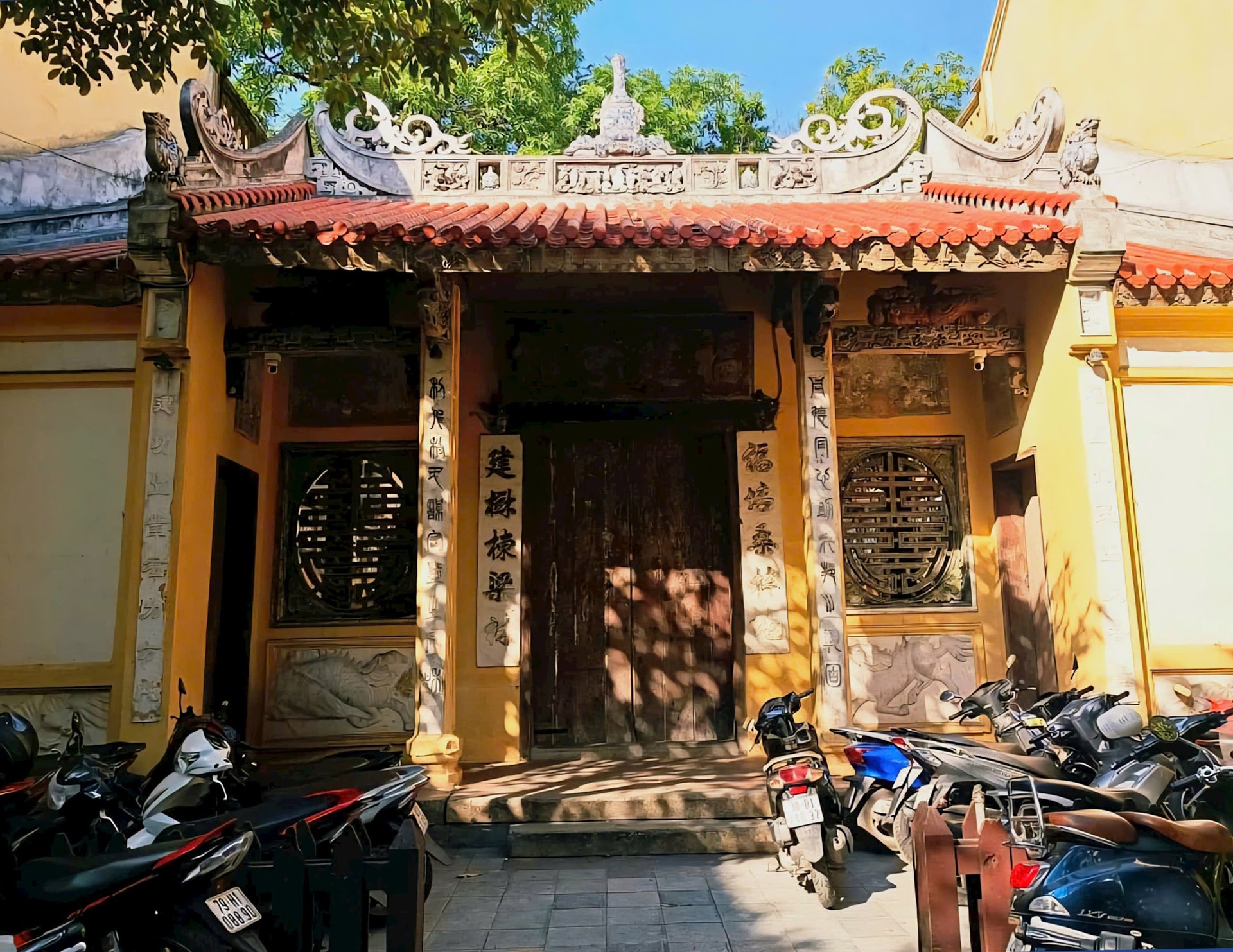
The Phuc Kien Assembly Hall in Hanoi has a quiet appearance and simpler architecture, but still retains all the typical elements such as the altar of Thien Hau, the God of Wealth, horizontal lacquered boards with parallel sentences in Chinese characters, and a sacred atmosphere imbued with the East.
After a major restoration in 1925, the assembly hall still retains its traditional structure, including the gate, courtyard, pavilion, sanctuary, school building, and two rows of auxiliary buildings. Details such as the overlapping roof, the “three-sided support” technique to support the roof, lotus buds hanging from the rafters... the assembly hall is not only a space of worship but also a testament to the unique architectural fusion between Chinese culture and Vietnamese identity.
Lan Ong Street was formerly Phuc Kien Street (in 1947 it was renamed Lan Ong Street), which partly demonstrates the golden age of this assembly hall associated with the Chinese community in the Old Quarter of Hanoi. However, the original community and religious role of the assembly hall no longer exists.
Although it was ranked as a National Architectural and Artistic Relic since 2007, the Fujian Assembly Hall is currently not open to visitors and does not appear on the old town tourist routes.
The name “Phuc Kien Assembly Hall” gradually faded from the community’s memory. Long-time residents of Lan Ong Street said that because the building looked as big as a village communal house, they often called it “dinh” without knowing that it was an assembly hall.
In 2015, the entire building was renovated under the Hong Ha Primary School - Phuc Kien Assembly Hall project with the main function of a school. The area that used to be the school building is now the library of Hong Ha Primary School. The main gate of the assembly hall is often used as a parking lot for student shuttle buses.
The two Fujian Assembly Halls, both vestiges of the ancient Chinese community, exist in two very different ways. The difference does not only come from location or urban circumstances, but also reflects the way each locality approaches cultural heritage. When they no longer continue to serve their traditional function, will the cultural values associated with them still have the opportunity to be properly promoted?
Source: https://baodanang.vn/hai-hoi-quan-phuc-kien-mot-mach-nguon-hai-so-phan-3299598.html

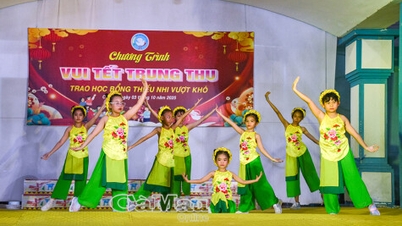
![[Photo] Students of Binh Minh Primary School enjoy the full moon festival, receiving the joys of childhood](https://vphoto.vietnam.vn/thumb/1200x675/vietnam/resource/IMAGE/2025/10/3/8cf8abef22fe4471be400a818912cb85)
![[Photo] Prime Minister Pham Minh Chinh chairs meeting to deploy overcoming consequences of storm No. 10](https://vphoto.vietnam.vn/thumb/1200x675/vietnam/resource/IMAGE/2025/10/3/544f420dcc844463898fcbef46247d16)























































Comment (0)