

The urgent need for marine conservation.
Speaking at the project launch conference on the morning of December 11th, Deputy Minister of Agriculture and Environment Phung Duc Tien emphasized: For many years, the British Embassy in Vietnam has been an important partner, collaborating on programs related to environment, climate, livelihood adaptation, and marine resource management in many coastal provinces and cities.
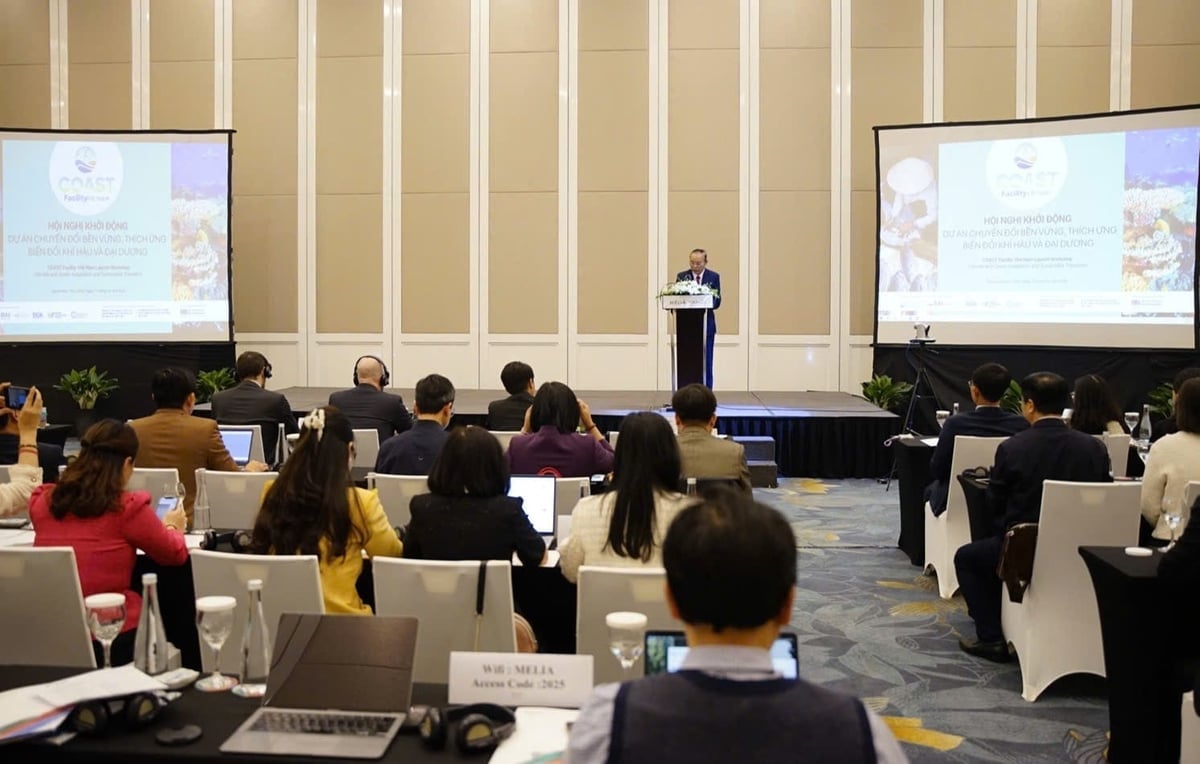
The launch conference for the 'Sustainable Transformation, Climate Change Adaptation and Oceans' (COAST) project was held on the morning of November 12th. Photo: Linh Linh.
According to the Deputy Minister, the Vietnam Fisheries Development Strategy to 2030, with a vision to 2045, as outlined in Decision 339/QD-TTg, has identified the task of forming large, branded, and deeply integrated marine economic centers. By 2030, the goal is to build a large-scale, commodity-producing, reputable fisheries industry that participates deeply in the global value chain, possesses high competitiveness, and achieves sustainable development. However, investment resources for environmental conservation, protection of fisheries resources and marine resources remain limited; the industry still faces many pressures regarding conservation, reducing fishing intensity, and meeting international regulations.
Vietnam is also one of the countries most severely affected by climate change. Coastal areas with high population density frequently face erosion, flooding, sea level rise, and biodiversity loss, while the demand for economic development, tourism , aquaculture, fishing, and logistics services continues to increase. “In this context, the implementation of the COAST project is of great significance, supporting Vietnam in responding to climate change and managing marine ecosystems, increasing the sustainability of fisheries, and improving the lives of local people,” said Deputy Minister Phung Duc Tien, adding that the program's objectives are “very practical and necessary for Vietnam.”
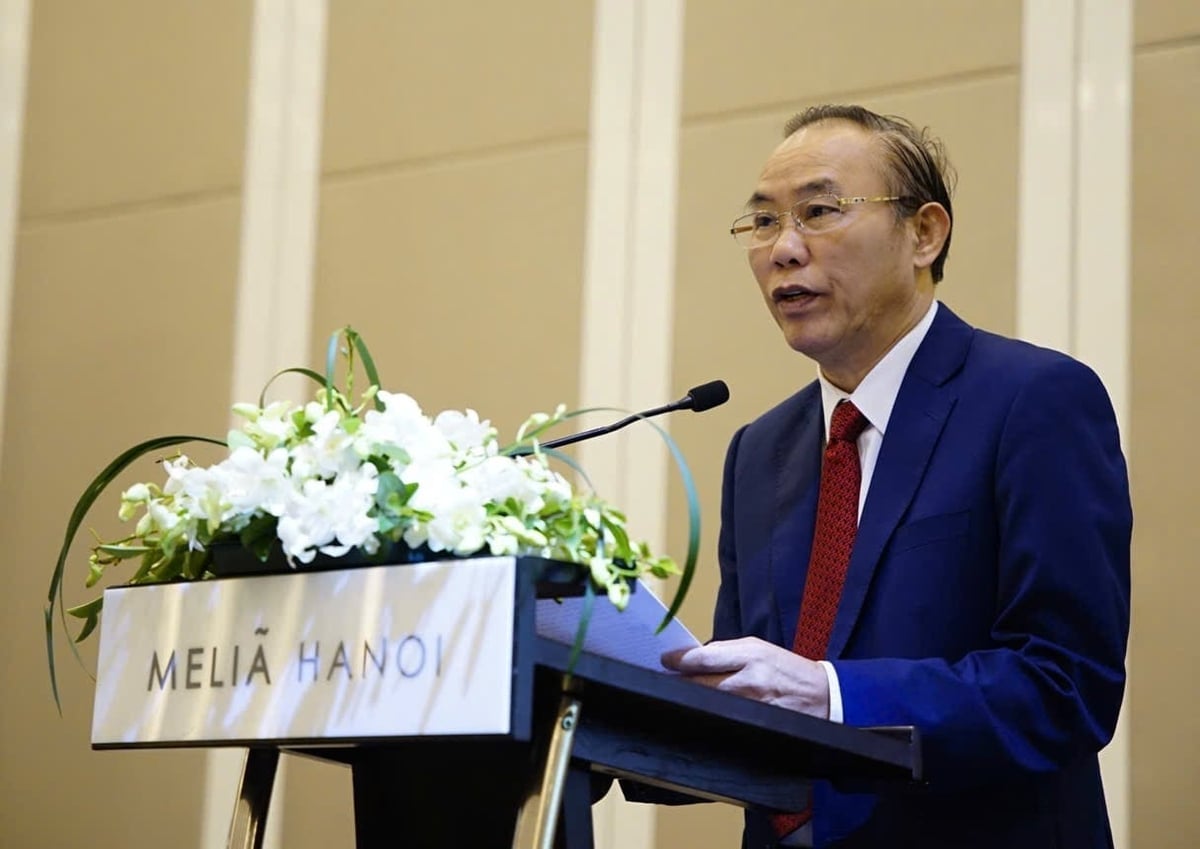
Deputy Minister Phung Duc Tien highly appreciated the practicality and relevance of the COAST project in Vietnam. Photo: Linh Linh.
Regarding the COAST project, Mr. Pham Ngoc Sao, from the Agricultural Projects Management Board (Ministry of Agriculture and Environment), introduced that the project is being implemented with a total capital of 18.19 million British pounds. The implementation period lasts 55 months, from October 2025 to March 2030, in Hanoi and eight provinces and cities: Quang Ninh, Hai Phong, Da Nang, Gia Lai, Khanh Hoa, Can Tho, Ca Mau, and An Giang.
Mr. Sao stated that COAST is designed to closely align with major strategies and plans regarding the marine economy, fisheries, biodiversity, and climate change, as well as decisions on resource protection and combating IUU fishing.
The overall objective of the project is to protect and develop marine and coastal fisheries resources, ecosystems, and biodiversity, while enhancing climate adaptation and sustainable livelihoods for coastal communities, especially vulnerable groups. The project consists of three components: resource protection and sustainable exploitation, sustainable aquaculture adapted to climate change, and project management.
With the resource protection component, the project plans to support the establishment of three marine protected areas, the restoration of two degraded coral reefs, the deployment of artificial reefs, and the enhancement of biodiversity indices in 14 protected areas for aquatic resources. Seven protected areas will utilize monitoring technologies such as UAVs and cameras. Artificial breeding of four rare marine species will be studied, and 16 models for transitioning from inefficient fishing practices to more sustainable activities will be developed, along with technical documentation and communication and training programs.
In the aquaculture component, the project will review and reorganize 7 marine aquaculture zones and 7 brackish water shrimp farming zones to ensure environmental carrying capacity and apply sustainable certifications; develop 3 high-tech marine aquaculture models and 23 climate-adaptive, emission-reducing aquaculture models; pilot a marine aquaculture insurance model; and develop artificial intelligence-based software to integrate environmental and disease monitoring data. The project will also research emissions in marine aquaculture and the carbon sequestration capacity of seaweed, while finalizing technical documentation on broodstock, farming processes, and biosecurity.
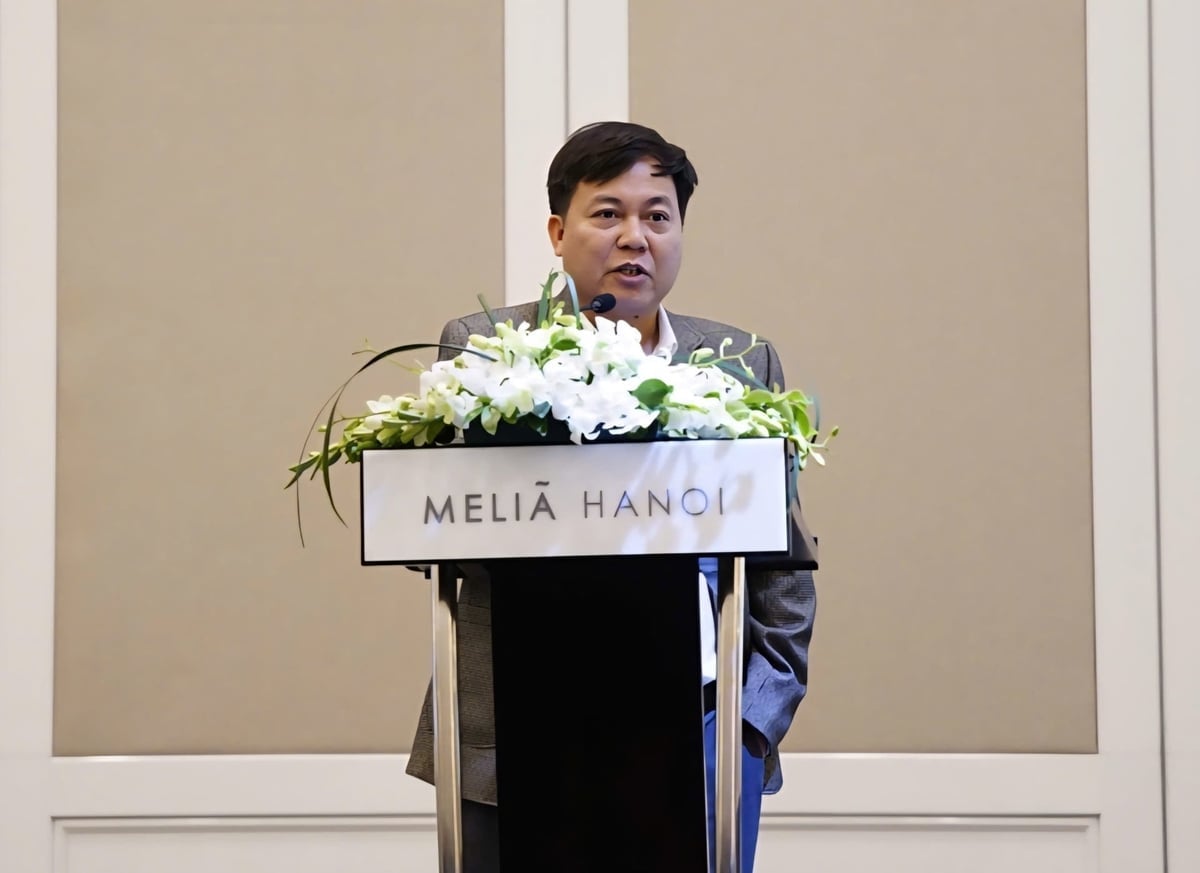
Mr. Pham Ngoc Sao, Head of the Agricultural Projects Management Board (Ministry of Agriculture and Environment). Photo: Linh Linh.
According to Mr. Sao, fishermen and coastal communities will be the direct beneficiaries through more stable livelihoods and better risk resilience. State management agencies from central to local levels will receive support to enhance their capacity and have access to more evidence-based management tools. The private sector and research institutions will have the opportunity to access new models, technologies, and financial mechanisms for marine aquaculture and conservation.
The COAST framework is shaping a new model of coastal governance.
From a donor perspective, Dr. Ingrid Kelling, Director of the COAST Facility at DAI Global UK, stated that COAST is a key initiative within the Blue Planet Fund aimed at supporting countries in addressing climate change, biodiversity loss, and ocean pollution. The program pursues three main outcomes: protecting ecosystems and communities, enhancing productivity through sustainable production and exploitation, and ensuring equitable access for vulnerable groups to coastal resource management. In Vietnam, COAST will focus on restoring mangrove forests, seagrass beds, and coral reefs; supporting climate-adaptive agriculture and fisheries; promoting inclusive governance; and expanding green finance opportunities.
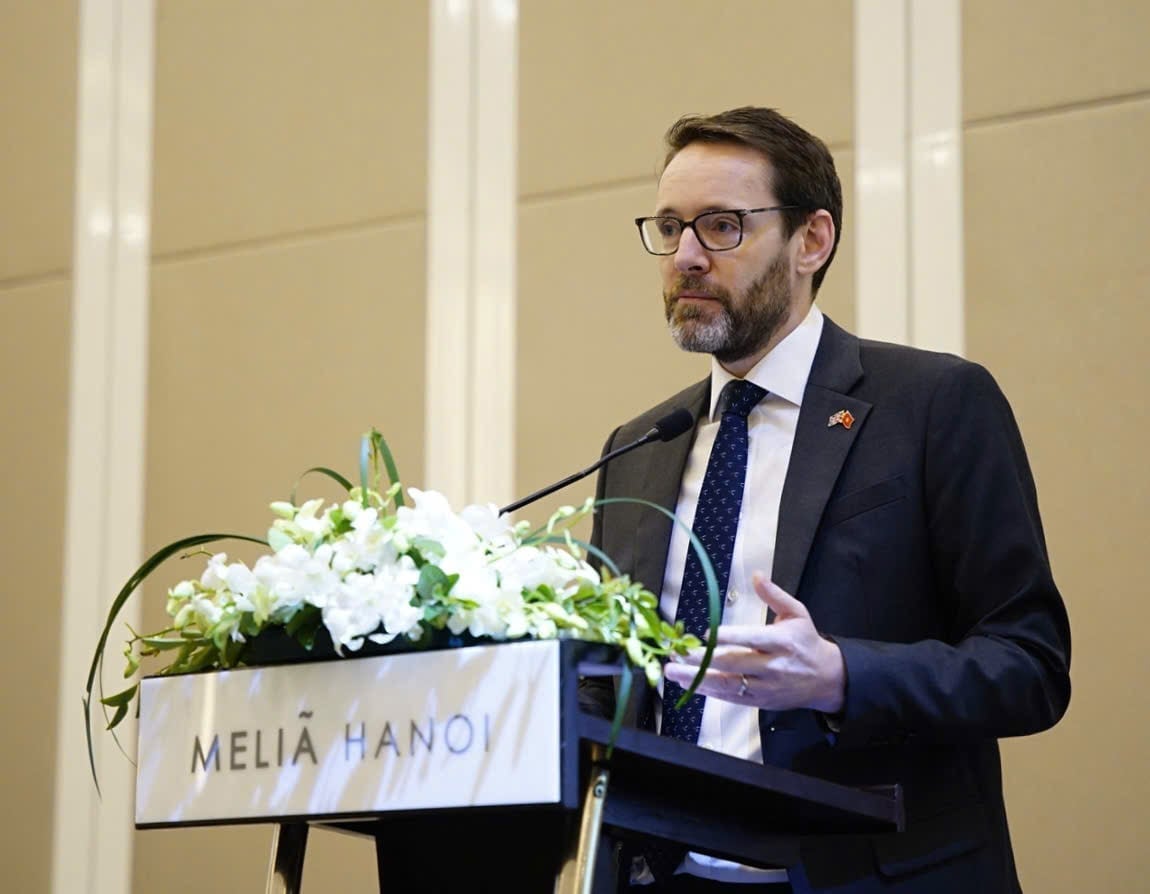
Ambassador Extraordinary and Plenipotentiary of the United Kingdom and Northern Ireland to Vietnam, Iain Frew. Photo: Linh Linh.
Ambassador Extraordinary and Plenipotentiary of the United Kingdom and Northern Ireland to Vietnam, Iain Frew, stated that this is one of the largest programs that the UK has supported in Vietnam in the field of environment and climate. He said the COAST project is "a clear example of turning commitment into action," focusing on supporting people in the most severely affected areas.
"We will implement this through cooperation with ministries and departments in Hanoi and, more importantly, with the provinces where the challenges are most felt and where solutions must be effective for the people," he said.
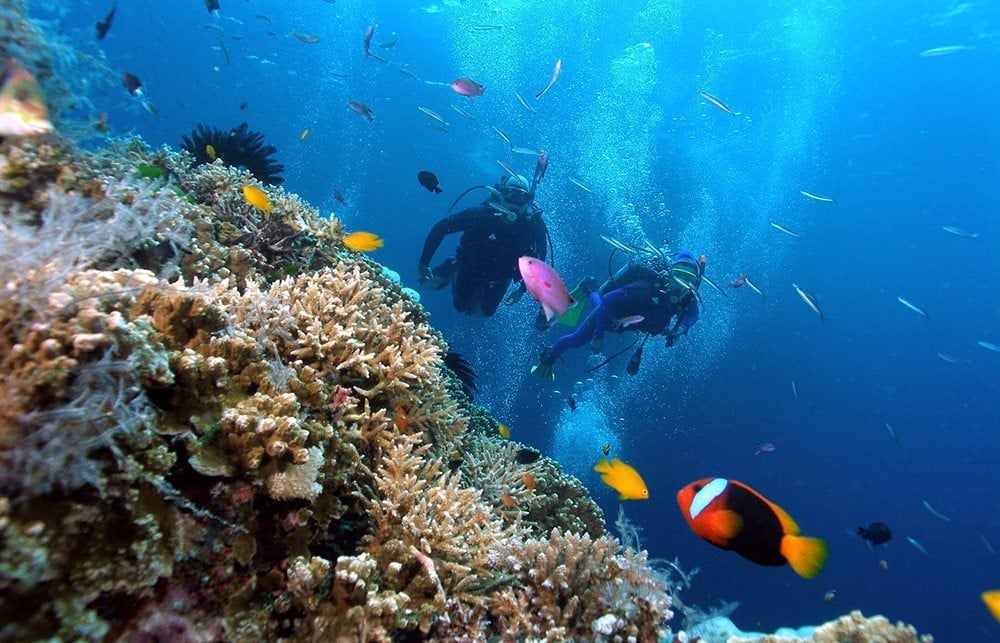
Local authorities expect the COAST project to help the province achieve its development goals, strengthen biodiversity conservation, and enhance community resilience... Photo: VASI.MAE.
From a local perspective, Mr. Tran Van Ninh, Deputy Head of the Fisheries Sub-Department, Gia Lai Department of Agriculture and Environment, stated that Gia Lai is located in an area heavily impacted by climate change, adverse climatic conditions, and frequent natural disasters, increasing vulnerability and potentially slowing down socio-economic development. He expects the COAST project to help the province achieve its development goals, strengthen biodiversity conservation, enhance community resilience, promote sustainable livelihoods, and support the fight against illegal, unreported, and unregulated fishing.
"With international resources and experience, and with close coordination between the central government, local authorities, and communities, COAST could become an important stepping stone for Vietnam's coastal, lakeside, and fisheries areas to better adapt to climate change in the coming decades," Mr. Ninh said.
Source: https://nongnghiepmoitruong.vn/18-trieu-bang-anh-giup-viet-nam-phat-trien-kinh-te-bien-d788832.html

![[Photo] Closing Ceremony of the 10th Session of the 15th National Assembly](/_next/image?url=https%3A%2F%2Fvphoto.vietnam.vn%2Fthumb%2F1200x675%2Fvietnam%2Fresource%2FIMAGE%2F2025%2F12%2F11%2F1765448959967_image-1437-jpg.webp&w=3840&q=75)

![[Photo] Prime Minister Pham Minh Chinh holds a phone call with the CEO of Russia's Rosatom Corporation.](/_next/image?url=https%3A%2F%2Fvphoto.vietnam.vn%2Fthumb%2F1200x675%2Fvietnam%2Fresource%2FIMAGE%2F2025%2F12%2F11%2F1765464552365_dsc-5295-jpg.webp&w=3840&q=75)




































![[OFFICIAL] MISA GROUP ANNOUNCES ITS PIONEERING BRAND POSITIONING IN BUILDING AGENTIC AI FOR BUSINESSES, HOUSEHOLDS, AND THE GOVERNMENT](https://vphoto.vietnam.vn/thumb/402x226/vietnam/resource/IMAGE/2025/12/11/1765444754256_agentic-ai_postfb-scaled.png)









































Comment (0)